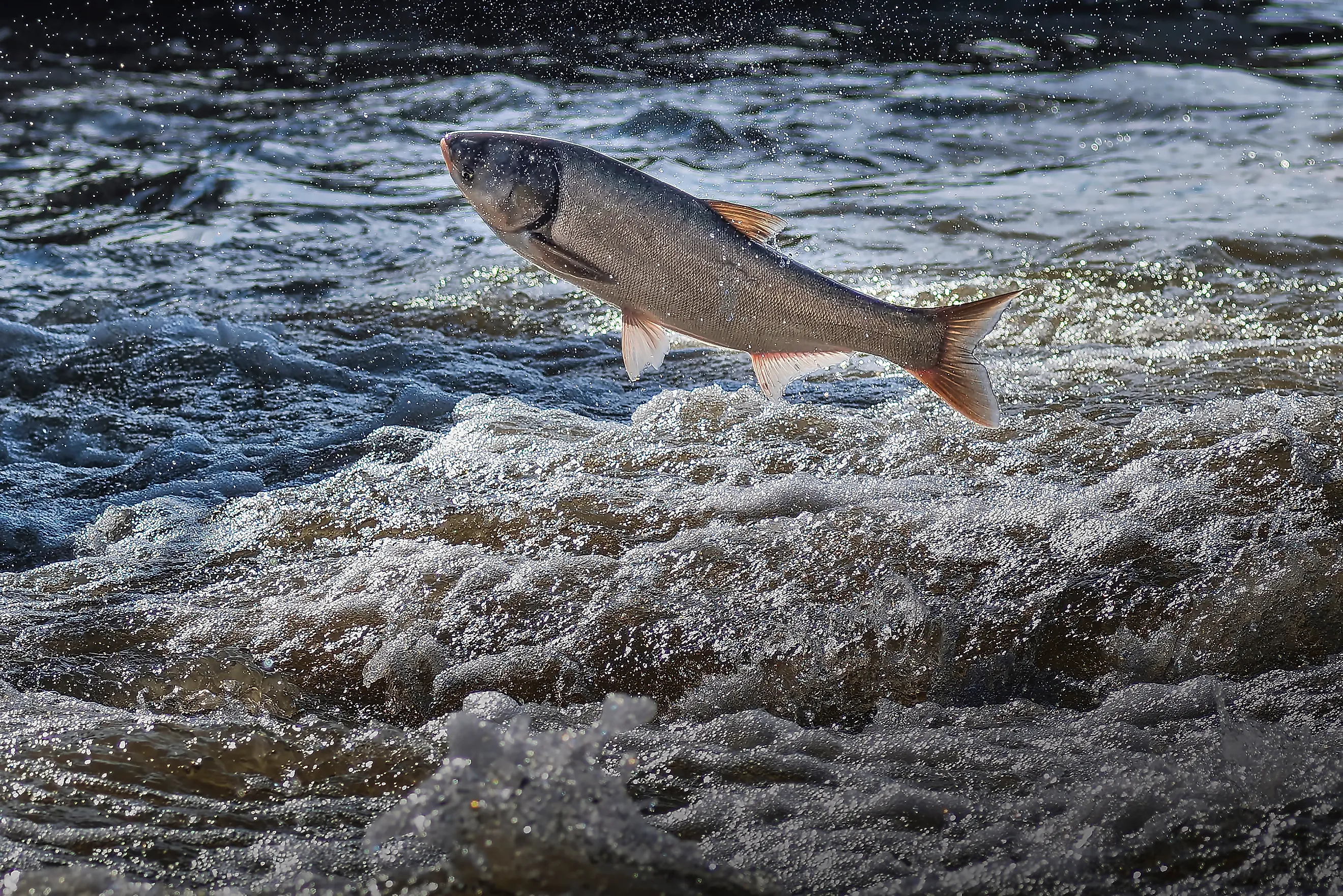
How Electric Barriers Keep Asian Carp Out Of Lake Michigan
Lake Michigan and the Great Lakes more generally have faced many threats, especially from invasive species such as sea lampreys. One invasive species that is especially threatening to Lake Michigan is Asian carp. Should they enter Lake Michigan through the Mississippi River Basin, it could outcompete fish for resources and devastate the fishing industry and the ecosystem of Lake Michigan. In response, government authorities have used many tactics to delay or deter these fish from entering Lake Michigan, including electric barriers. In this story, we will look at Asian carp, the threat they pose, and how electrical barriers and other tools are addressing this threat.
What are Asian carp

Asian carp isn't a scientific term but rather refers to several species of carp that originally came from China. There are four Asian carp species considered invasive. They are bighead, black, grass, and silver carp. The silver carp and bighead are some of the most common species of Asian carp found in the U.S.
Asian carp are distinct from the common carp, which was first introduced in the 1800s by the Commission of Fish and Fisheries. The common carp was native to Europe and was brought over as a source of game and food. The common carp is an invasive species as well, quickly consuming food and growing up to 80 pounds. They are also known to make the water murky at the bottom of lakes.
Out of the four major Asian carp species, all of them have a similar lifecycle. They spawn in high-flow rivers, and eggs hatch while drifting along.
The larvae that emerge from these eggs have to swim to slow or no-flowing nursery areas where they can grow into adulthood. One noteworthy fact about these carp is the sheer size they can grow. They can grow up to 110 pounds, with an average weight of 30 to 40 pounds. They can eat up to 20% of their body weight per day, which is why they grow so large. Silver and bighead carp feed on plankton, while black carp feed on clams, snails, and mussels, and grass carp feed on weeds.
This is also why they are considered invasive, as they consume so much food that they disrupt the ecosystem and outcompete other fish for resources.
How did they enter the US?

Asian carp were purposely introduced as a way to deal with another ecological threat, algal blooms. Authorities used the silver and bighead carp at aquaculture ponds and wastewater treatment facilities in the Southern U.S. to consume algae and aquatic vegetation in the 1970s. These fish were also used for fresh fish markets.
The silver and bighead carp would later escape from containment due to flooding, causing pond waters to rise, allowing these carp to enter the Mississippi River Basin. From there, they have devastated both the Mississippi and Illinois Rivers. In some cases, they have consumed so much biomass that they now make up 97% of all the fish biomass in the areas. Commercial fishers can catch as much as 25,000 pounds of Asian carp daily.
The grass carp and black carp were also intentionally brought over to the U.S. The grass carp was used for weed control in lakes and waterways, while the black carp was used to control snail populations in aquaculture. Both of these species of fish would escape as well, with grass carp being found within or next to 45 states and black carp in the Missouri and lower Mississippi River basins.
Are they in the Great Lakes?

Currently, the bighead and silver carp have yet to establish in the Great Lakes, but they have gotten closer over the years, and if left unaddressed, could overwhelm the fishing industry and ecological diversity of Lake Michigan and the entire Great Lakes as a whole.
After they initially escaped from containment into the lower Mississippi, they spread across the Arkansas, Red and White Rivers to the west, and the Ohio, Tennessee, and Cumberland Rivers to the north. Now, they are in the Illinois River, which is connected to Lake Michigan through the Illinois Waterway, a human-made route controlled by the Chicago Sanitary and Ship Canal. Asian carp have been found in this canal, which puts them within striking distance of Lake Michigan.
Furthermore, an adult Asian carp was caught just nine miles away from Lake Michigan on June 22, 2017, in the Little Calumet River. If Asian carp were to enter Lake Michigan, scientists believe they could survive across 97% of the lake between June and November, and consume food sources in the lake such as fecal matter from zebra and quagga mussels. Recent studies have also shown that this fish can survive in the deeper waters of Lake Michigan.
If the Asian carp enters Lake Michigan, it could use the lake as a waterway to spread further in the Great Lakes region, causing further devastation.
Electric barriers

The Cities Initiative and Great Lakes Commission first convened the Chicago Area Water System Advisory Committee in 2010 as a way to analyze the best ways to keep the Asian carp out of Lake Michigan and the other Great Lakes overall.
Currently, many efforts center around the Chicago Sanitary and Ship Canal as it is the primary entry point for Asian carp to invade Lake Michigan. One tool for preventing them from entering the lake is electrical dispersal barriers.
These barriers create electrical fields which discourage Asian carp from traveling through the canal onward to Lake Michigan. They do not kill Asian carp, but instead act as a deterrent. The U.S. Army Corps of Engineers has installed these barriers in stages, with Barrier I in 2002, Barrier IIA and IIB in 2009, Barrier IN in 2019, and Barrier IS in 2024.
Part of the reason for this project is that the University of Notre Dame, the U.S. Forest Service, and Resources for the Future conducted a study in 2014 looking at the best ways to prevent Asian carp from entering Lake Michigan. The researchers argued that strobe lights and water cannons would be less effective in driving away Asian carp.
Instead, they argued that the best method was to deploy physical dam structures in Chicago's waterway, or electrical barriers. They argue that physical barriers could prevent 95 to 100% of all Asian carp from entering, barring flooding or anglers dumping a bait bucket with young carp into the water, while electrical barriers can prevent up to 85 to 95%. Physical barriers are less attractive due to the cost and time, as it could take up to 25 years to fully install.
Researchers noted that the reason for electrical barriers being less effective overall than physical barriers was due to "the possibility of mechanical failures of the electric barriers, which is also expected for other strategies that require a constant power source."
Are electrical barriers foolproof?

Studies agree that no method is completely foolproof. On June 22, 2017, the adult Asian carp was found to the north of the electrical barrier in the Chicago Sanitary and Ship Canal. There are many ways Asian carp can still enter the Great Lakes, such as by hiding in barges that then pull them through the barrier. The silver carp found north of the barrier was analyzed and found to have spent most of its life in the Middle Mississippi and Illinois Rivers before passing through the electrical barriers.
Some have argued that the only way to completely prevent Asian carp from reaching Lake Michigan is by separating the Mississippi River Basin and the Great Lakes entirely through physical barriers.
Most recently, the Brandon Road Interbasin Project in Joliet, Illinois was approved under the Water Resources Development Act of 2020. This project will utilize a variety of deterrents to steer away Asian carp, including an electrical barrier, an acoustic array, a bubbler, and an automated barge clearing system to sweep away any carp hiding in the barges. The Federal government is providing $274 million for this project.
The acoustic deterrents consist of underwater sounds that have been shown in studies to make Asian carp turn around and leave, while having far less effect on native fish.
How regular people can help
The effort to control Asian carp isn't limited to government projects. It also falls upon normal fishers or those who spend time out on the water. In particular, if one catches an invasive carp, they should kill it, put it in a bag on ice, and then notify state natural resource agencies. This can provide vital information for those agencies on the spread of carp close by to Lake Michigan or other major waterways. In addition, one should never re-release an Asian carp back into the waters, regardless of how close one is to Lake Michigan. When controlling an invasive species, it requires buy-in from local, state, federal and average citizens.