5 Most Snake-Filled Bodies Of Water In Rhode Island
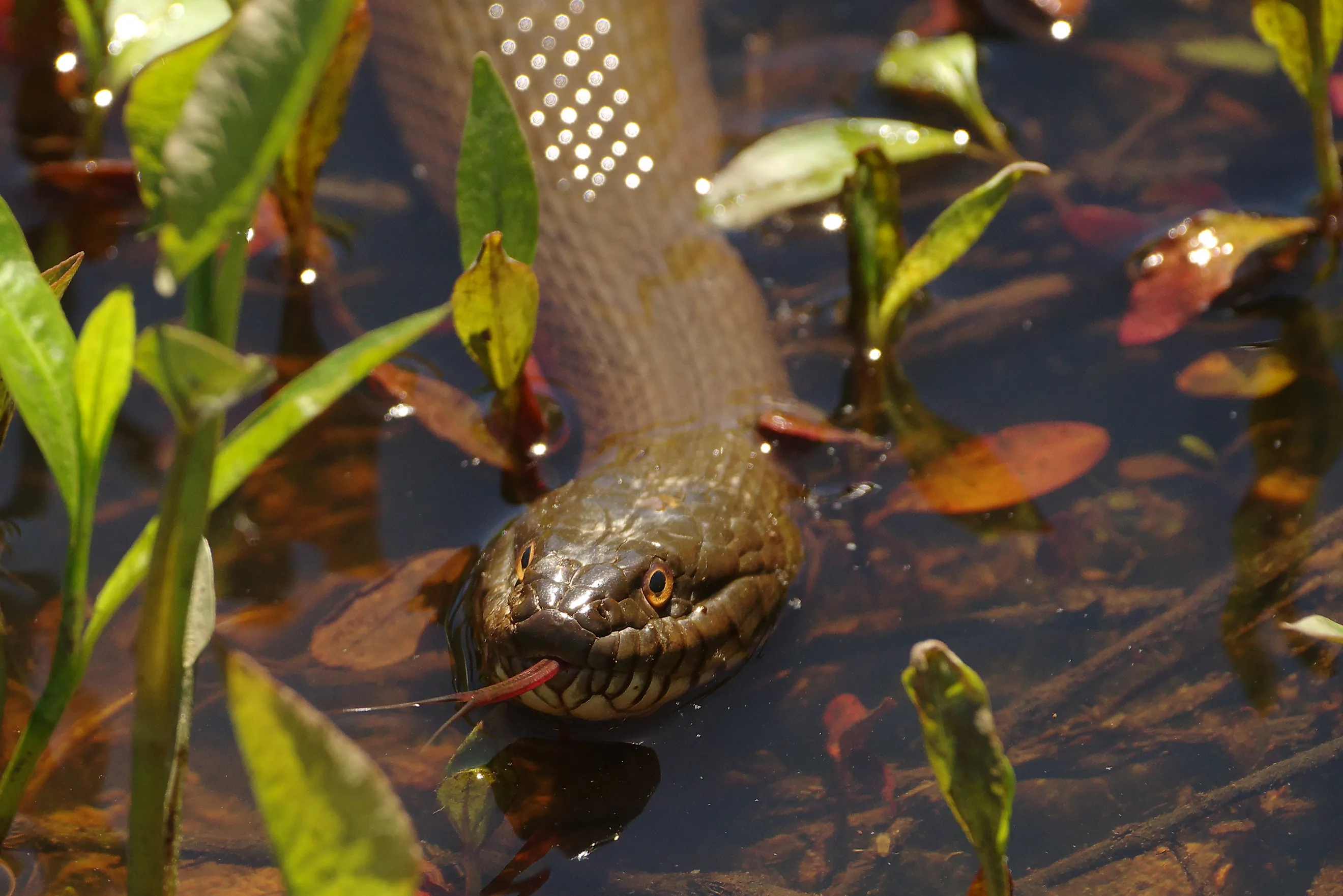
Rhode Island is home to 12 native snake species, with three semi-aquatic species doing the most swimming in its bodies of water: the northern watersnake (Nerodia sipedon), the eastern ribbon snake (Thamnophis sauritus sauritus), and the eastern garter snake (Thamnophis sirtalis sirtalis). Three others are not strictly semi-aquatic, but are known to enter the water to cross habitats or hunt in wetlands or the shallows along the water's edge. None of Rhode Island's snakes are venomous, a fact worth knowing before wading into a pond, lake, or river. Statewide, these snakes emerge from late March through October before they retreat underground for the winter.
Five bodies of water in Rhode Island support a diverse and thriving population of semi-aquatic snakes and species known to swim or hunt near water.
Worden Pond and the Great Swamp

Worden Pond, South Kingstown, Rhode Island. Editorial credit: Wikimedia Commons
Worden Pond, directly adjacent to Rhode Island's Great Swamp, is one of the most snake-active regions in the state. The pond covers 1,049 acres, making it Rhode Island's largest natural body of water. It borders the 3,349-acre Great Swamp Management Area. Wetlands make up 2,262 of these acres with forest covering the rest. That combination puts open water, marsh, and forested upland all within a short slither of each other. Snakes here rarely need to cross a road or a housing lot to move between hunting grounds, birthing sites, and a winter den. They may, however, appear along or across the 4.7-mile Great Swamp Management Trail, which cuts through the marshes, meadows, and cedar freshwater wetlands.
The pond and adjacent swamp's scale supports several species. Eastern ribbonsnakes favor the marshy fringe where cattails and shrubs meet shallow water. The swamp's sandier margins also draw in eastern hognose snakes (Heterodon platirhinos). Their diet of toads is well-suited here. Their digestive system can neutralize the toxins toads secrete as a defense, something few other predators can manage.

Smooth greensnakes (Opheodrys vernalis) turn up in the marshy edges around the pond, their bright green scales blending in amongst the surrounding vegetation. Around the swamp and pond, they hunt insects, spiders, and snails.
Northern watersnakes are active in both the pond and swamp area, feeding largely on small fish and other amphibians. They prefer still or slow-moving water, and can move quickly and efficiently both below and across the water to catch aquatic prey. Eastern gartersnakes share this same environment but hunt differently. They enter shallow water only along the edges to catch tadpoles and small fish.
Pawcatuck River

Pawcatuck River, Westerly. Editorial credit: Wikimedia Commons
The Pawcatuck River begins at the outlet of Worden Pond and runs 35 miles west to Little Narragansett Bay. About 20,000 years ago, retreating glaciers deposited the Charlestown Moraine, a ridge of sediment that blocked the region's rivers from draining south and pooled them into slow-moving channels instead, leaving behind the sandy soils and wetlands that still define the watershed's banks today. Those moist, sandy margins suit the eastern hognose snake, a thick-bodied burrower that uses their upturned snout to dig for buried toads. While they are not frequent swimmers, eastern hognose snakes will cross bodies of water to reach food, denning sites, or to find mates.
The river holds 67 fish species, more than any other Rhode Island watershed. That abundance draws the eastern ribbonsnake to hunt small fish and green frogs along the banks and slow-moving shallows. When startled in the water, this species flees across the water's surface and darts into dense bank vegetation.
The Grills Preserve contains over 2.5 miles of river frontage on the Pawcatuck River where visitors can hike and potentially spot a snake. The 2.6 mile Pawcatuck River Loop passes through this preserve and the trail passes along the water and wetland connected to the river for about half of the hike.
Wood River

The Wood River corridor, running from its headwaters in Exeter and West Greenwich, is the only stretch of southwestern Rhode Island where the state's largest snake turns up: the eastern ratsnake (Pantherophis alleghaniensis). Large adults can reach up to seven feet long, with shiny black scales and a white throat.
Much of this river corridor flows through the massive Arcadia Management Area. Hikers walking the popular Ben Utter Trail, a 2.7-mile path that follows the river's edge up to Stepping Stone Falls, are most likely to see eastern ratsnakes from May through late October. The National Wildlife Federation describes them as excellent swimmers and climbers.
Northern watersnakes appear here as well. When threatened they will retreat into deep water at the first sign of trouble, and are capable of staying underwater for over an hour at a time. A cornered watersnake will flatten their head into a triangular shape, mimicking a venomous cottonmouth even though this snake carries no venom at all. The bluff works well enough to fool most predators.
Watchaug Pond

Watchaug Pond in southern Rhode Island.
Snakes at the 573-acre Watchaug Pond split their time between the open water and the pond's surrounding meadow. Watchaug Pond’s combination of open water, wetland, and surrounding meadows appeals to several species because it provides a diverse, high-yielding food supply of both aquatic prey and land insects alongside ideal basking areas and shared winter shelters.
An occasional swimmer, the smooth greensnake hunts the wetland edges for insects, spiders, and snails. They are characterized by bright green, smooth scales and a plain cream belly. They overwinter communally, sometimes sharing a den with garter snakes. While they can be difficult to spot as they blend in with the grassy landscape, hikers might see them while traversing the 8-mile John Vincent Gormley Trail loop around the pond.

The eastern ribbonsnake can also be found here, foraging for prey within the pond's shallow margins. Green frogs make up a large share of the adult diet, alongside small fish and salamanders. The eastern gartersnake is a highly adaptable resident of these meadow edges. They are opportunistic hunters, feeding on earthworms, amphibians, and small rodents. The northern watersnake may compete with the eastern ribbonsnake in the shallow margins of the pond, but only they will dive into the depths of the open water to chase down their meal.
Trustom Pond

Semi-aquatic snakes find one of their most secluded coastal habitats in Rhode Island at Trustom Pond. Situated within the 787-acre Trustom Pond National Wildlife Refuge and behind a barrier beach, it's the only undeveloped salt pond in the state, providing a haven for snakes. The refuge's marshlands, woodland, and meadows support over 20 species of reptiles and amphibians, a diversity tied directly to the pond's ideal habitat and supply of small aquatic prey.
Trustom presents particularly prime habitat for northern water snakes, who can work both the open water and the surrounding marsh to hunt fish and amphibians. The eastern ribbon snake and eastern garter can find plenty of prey as well near the banks of the ponds and within the adjacent, shallow wetlands.
Visitors walking along the refuge's 1.3 mile Osprey Point Trail or .5 mile Otter Point Trail might spot snakes near the path or through viewing platforms overlooking the pond and its shoreline lined with dense vegetation.
A Crucial Ecological Network of Waterways
The wetlands, ponds, and rivers of Rhode Island's diverse aquatic environments provide the necessary habitats for semi-aquatic snakes to thrive. These five bodies of water offer overlapping habitats, including slow-moving shallows, sandy banks, wet meadows, and fragmented forests, that allow multiple species to coexist. From the northern watersnake diving deep into a pond's cove, the eastern ribbonsnake darting along marshy fringes, and the eastern gartersnake pursuing earthworms along a river's edge, each species plays a vital role in maintaining the balance of the state's freshwater ecosystems.