Why Coral Reefs Can't Grow In Cold Water
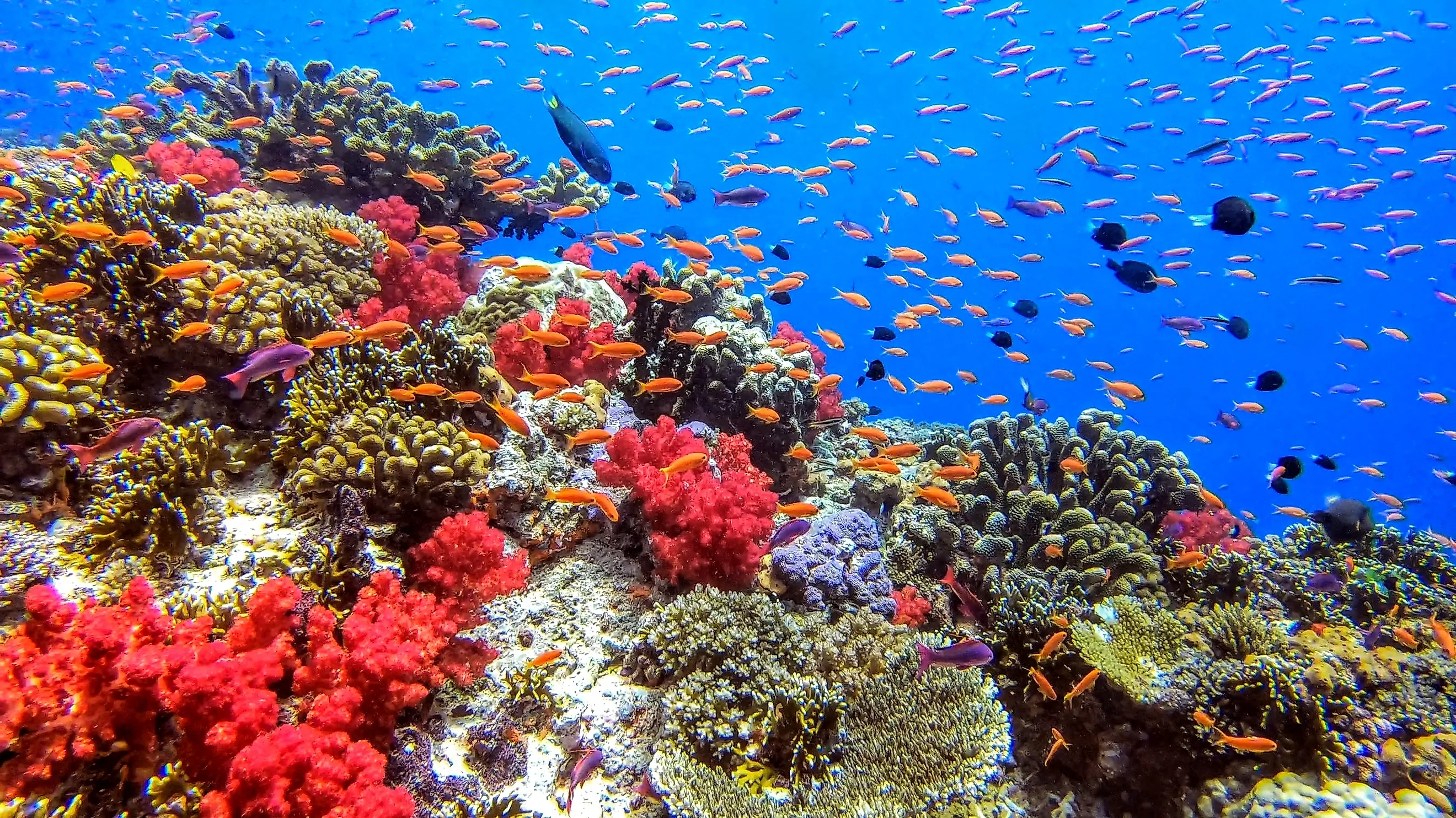
A coral is a colony of polyps, small, soft, and tube-shaped animals related to jellyfish and sea anemones, each a sac-like living animal with a central mouth surrounded by tentacles that sting and catch tiny prey. The coral itself is made up of hundreds, even millions, of connected genetically identical polyps that share a unified calcium carbonate skeleton, functioning as an organism and as a collective while becoming a habitat for marine life. A further organic component of the coral is zooxanthellae, tiny algae that live inside the coral and provide most of its energy through sunlight. There are two types of corals, and hard corals are the stone-like colonies that build calcium carbonate skeletons, which are the basis of coral reefs. Soft corals are plant-like and feathery, and although they are made up of colonies of polyps and sometimes zooxanthellae, they do not build reefs. Soft corals live in salt water and can thrive in warm, tropical waters but also in cold, deep ocean environments, while warm and shallow water is necessary for the growth of coral reefs.
Coral Reefs
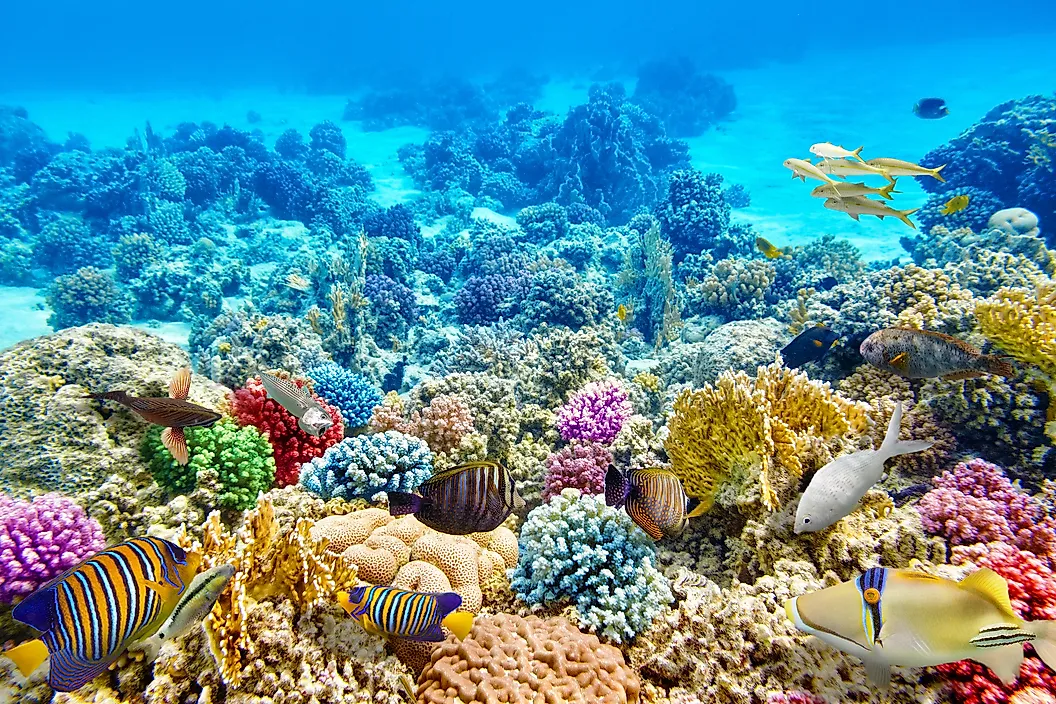
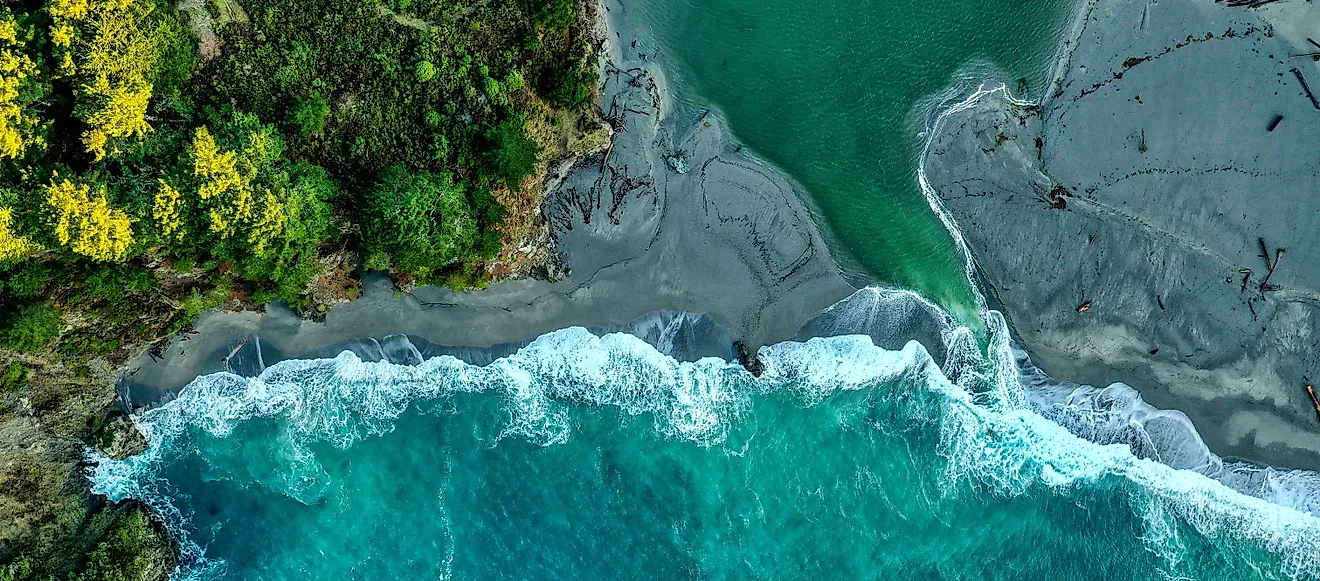
Coral reefs are built by hard corals, meaning that they construct calcium carbonate skeletons that make up the coral reef. These sometimes massive structures support area marine life, and are directly home for thousands of sea animals. Massive reefs also protect nearby land from ocean waves, fulfilling a crucial role in ocean management. Once the polyps and algae construct the outside shell of the reef from minerals found in the water, over time these stacked shells form into massive underwater rock-like structures that protect marine life and act as nurseries for fish. Reefs grow best in warm, clean, and shallow water where they are able to absorb direct sunlight. One-fourth of all ocean life is housed within the oceans' coral reefs. The ecosystem created and sustained in turn provides sustenance and income for humans living nearby. Reef-building corals cannot grow in cold water. They require a warm climate, sunshine, and to be near the particular algae that form a symbiotic relationship with the polyps, enabling the coral reefs to grow.
Warm-water corals thrive in temperatures between 73°F and 84°F. They struggle when temperatures drop below about 64°F, though reef-building corals in some locations can tolerate cooler seasonal dips. Cold environments lack the crucial balance between the biological components and the water's chemistry. The algae, zooxanthellae, that live inside the polyps require sunlight to make food through photosynthesis, something unavailable in deep, cold water. Saltwater is also important, which is why coral reefs are not found in freshwater. Cold temperatures also inhibit the rapid growth necessary for reef development. Cold water slows the metabolic rates of coral polyps. Processing food to build hard calcium carbonate skeletons cannot be done fast enough in cold water, nor would they have the ability to repair themselves against erosion. Algae and other organisms found in cooler and deeper waters outcompete the corals for space.
Cold-Water Corals

Cold-water corals thrive in deep ocean water with temperatures ranging from 39°F to 53°F. Cold-water corals do not rely on symbiotic algae, since sunlight cannot reach the depths where they live. Soft corals survive by catching plankton with their tentacles, and their overall growth as colonies is much slower than reefs. They form soft and flexible colonies that appear more plant-like, as feathery sea fans. The deepest corals that can thrive are found one or two miles under the dark water, where they form scattered thickets. Soft corals can live outside a colony, living as solitary organisms. These solitary corals are found in these deep, cold waters, relying on the soft ocean floors to anchor them.
Coral Habitats Around the World

Reef-building corals exist globally in warm, shallow waters. The reefs themselves cover less than 0.1% to 0.2% of the ocean floor. The conditions necessary for coral reef growth are only available in specific locations. Nevertheless, these coral reefs support 25% of all known marine species. Individual coral colonies, while covering a relatively small percentage of the ocean floor, still number in the half-trillion range, much of it in the Pacific and Indian Oceans. Known global coral species number around 6,000. The depths where soft corals are found make collecting data difficult, but estimates show that soft corals make up around 1,000 to 1,288 species of known coral species globally. This represents anywhere from 21% to 54% of all known coral species, depending on whether deep-water solitary corals are counted. There are around 830 to 1,500 species of reef-building corals. All individual polyp populations across all deep-sea and shallow oceans remain unquantified, however. The key differences between the two types of corals are evident in the ways they interact and exist within their ecosystems. Over the course of millions of years, reef-building coral polyps secrete calcium carbonate, building skeletal structures into massive reefs.
The most notable example of this is the Great Barrier Reef, located in the Coral Sea, off the north-eastern coast of Queensland in Australia. The Great Barrier Reef stretches 1,400 miles down the Queensland coast between the Cape York Peninsula and Bundaberg. It is the largest coral reef system in the world, and is composed of 3,000 individual reefs and 900 islands, some of the latter being coral cays built directly from reef debris. It is the largest structure on Earth built by living organisms, and while satellites capture it clearly, astronauts have noted it is not easily distinguished by the naked eye from orbit. The Great Barrier Reef houses more than 1,500 fish species, among the richest fish diversity of any reef system on Earth. It also supports 30 species of whales, dolphins, and porpoises, and is a crucial feeding ground for six of the world's seven sea turtle species. Soft corals are easily identified due to their movement. Hard corals are rigid, while soft corals sway underwater like plants. The structures that are formed by soft coral colonies, sea fans, and sea whips are extremely durable, being able to bend in the water without breaking. Because of their plant-like appearance, early naturalists identified soft corals as plants rather than animals.
Problems Facing Global Coral Colonies
Reef-building corals are at risk of extinction due to climate change, bleaching, and pollution. Both hard and soft corals face uncertain futures due to global environmental degradation, with both shallow tropical reefs and deep-water soft coral colonies suffering from significant population declines. Many global coral reefs still sit outside strongly protected marine reserves, and with rising global water temperatures, there is little direct protection for hard or soft corals. The Great Barrier Reef is in critical danger of an ecosystem collapse, and it remains under serious scrutiny with its rapid decline. Scientists stress that all coral reefs and soft corals currently endangered have a self-healing capability if water temperatures stabilize and global emissions are reduced.