3 Snake Hotspots In South Carolina
South Carolina’s long stretches of wild coastline, expansive wetlands, and protected hardwood forests — combined with a warm, humid climate — create ideal conditions for a wide variety of snake species. In fact, the Palmetto State is home to 38 native snakes, including six venomous species. While snakes inhabit nearly every corner of the state, some areas are particularly rich in snake diversity and their natural habitats.
Congaree National Park

It's hard to believe that one of the nation's most significant ecosystems exists less than half an hour's drive southeast of South Carolina's capital city. Congaree National Park trades in the modest metropolis of Columbia for the largest contiguous, old-growth, bottomland hardwood forest remaining in America. The park is known for its towering trees, including five that are the largest of their species in the world and another 27 that hold state records.
These champion trees grow in the swampy floodplain of the Congaree and Wateree Rivers, creating an environment that supports a wide range of wildlife. The park itself spans more than 26,000 acres, including 21,700 acres designated as federally protected wilderness, and it forms the core of the 466,000-acre Congaree Biosphere Reserve. With its dense forests, wetlands, and minimal development, Congaree is one of the best places in South Carolina to see snakes.

Keeping the focus solely on Congaree National Park, it includes habitats for 21 of South Carolina's 38 snake species, including a venomous trinity. In terms of the latter, the timber rattlesnake (Crotalus horridus), aka "canebrake rattlesnake," is right at home amongst the hardwoods, as is the cottonmouth (Agkistrodon piscivorus), aka "water moccasin," whose semi-aquatic and fish-eating lifestyle is well-suited to Congaree's watery domain. Finally, the copperhead (Agkistrodon contortrix) is here, as well — as it is across most of South Carolina.

Despite its rampant snake populations, Congaree National Park does a great job at accommodating hesitant visitors. If you yearn to see this indispensable sanctuary but don't feel like wading into the murky waters, or blazing trails into the backcountry, then you can opt for the elevated Boardwalk Trail, or you can register for a guided canoe/kayak tour. As of the writing of this article, the four ratified outfitters suggested by the National Parks Service are: River Runner Outdoor Center, Palmetto Outdoor, J.K. Adventure Guides, and Carolina Outdoor Adventures.
Francis Marion National Forest

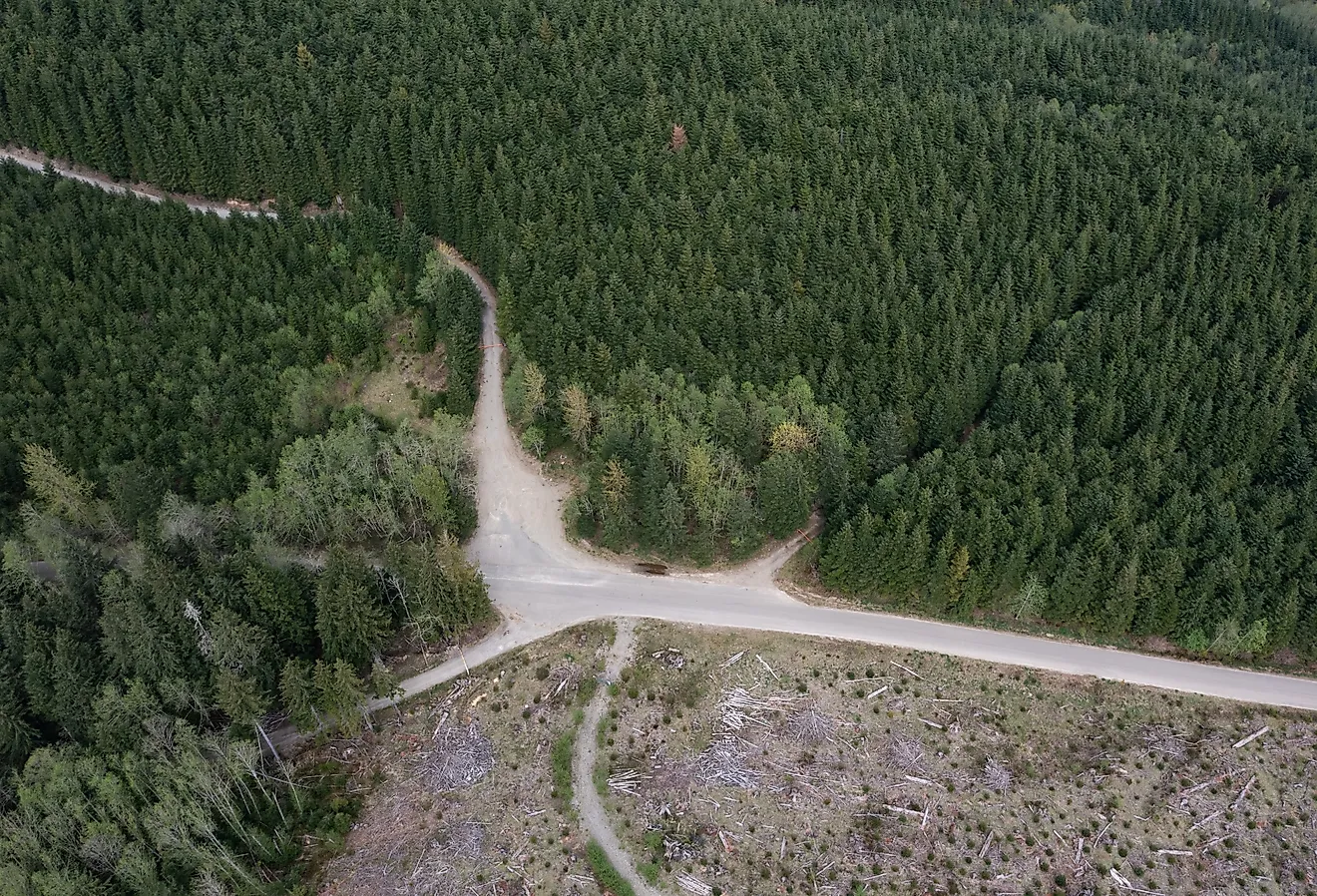
Francis Marion National Forest covers 252,368 acres within the counties of Charleston and Berkeley, between Lake Moultrie (to the west) and the Atlantic Coast. Visitors can access Francis Marion National Forest from the north through the historic city of Georgetown or the resort city of Myrtle Beach, or from Charleston, the state’s most populous city, situated just to the south.
In any case, visitors can explore the Intracoastal Waterway via Buck Hall Recreation Area and Boat Landing (located right about the midway point of Francis Marion's coastal segment), just off of Bulls Bay. Alternatively, terrestrial-destined travelers might prefer hiking or biking a bit of the forest-bisecting and state-spanning Palmetto Trail, whose Awendaw Trailhead sits right next to the boat launch.

No matter how you choose to enjoy the bounties of Francis Marion National Forest, be mindful that along with the 1,600 species of documented plants, 250 species of birds, 48 mammals, and 43 amphibians, there are also 58 known species of reptiles, including all six of South Carolina's native venomous snakes. In addition to the three we met in Congaree, this national forest also fosters populations of eastern diamondback rattlesnakes (Crotalus adamanteus) — the largest venomous snake on the continent, pygmy rattlesnakes (Sistrurus miliarius), which, as the name suggests, trend in the opposite direction, size wise, and finally, highly venomous eastern coral snakes (Micrurus fulvius).
What this last serpent lacks in terms of an auditory warning, it more than makes up for with its vibrant yellow, red, and black-striped banding. Yes, there are nonvenomous lookalikes, but regardless of the suspected species, it is best (and sometimes, legally necessary) to simply let all snakes be.
ACE Basin

Spreading 350,000 acres across South Carolina's southern coastal segment (1.6-million acres if you include the entire watershed), the ACE Basin is one of the largest remaining swaths of undeveloped wetlands/forested uplands on the Atlantic Coast. This vast natural area takes its name from the Ashepoo, Combahee, and Edisto Rivers (ACE) and includes a variety of protected sites, such as Lake Warren State Park, Hunting Island State Park, Edisto Beach State Park, Walterboro Wildlife Sanctuary, Pinckney Island National Wildlife Refuge, Botany Bay Plantation Heritage Preserve/Wildlife Management Area, Bear Island Wildlife Management Area, and, more broadly, parts of the Savannah National Wildlife Refuge.

Utilized for rice plantations in the early-18th through mid-19th centuries, the ACE Basin's organic habitats have since been recovered. Now, the mix of fresh, salt, and brackish waterways, in conjunction with the pine and hardwood trees that grow in their midst, support migratory birds and local waterfowl, dozens of natural plant communities, endangered/locally-threatened species such as the wood stork, bald eagle, shortnose sturgeon, and loggerhead turtle, and, as we've now come to expect, a slew of snakes.
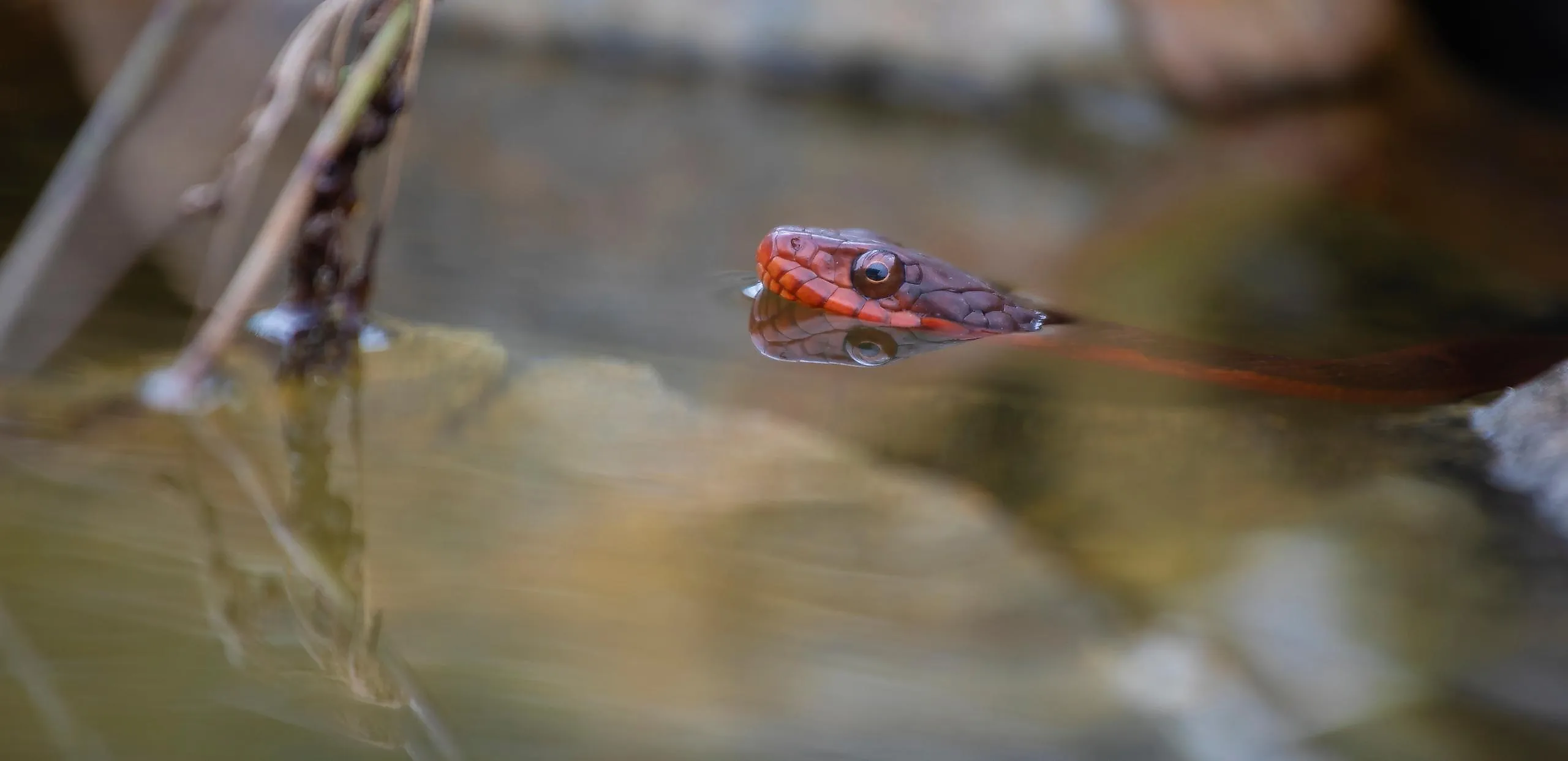
Strong swimmers such as the cottonmouth, red-bellied water snake (Nerodia erythrogaster), banded water snake (Nerodia fasciata), and brown water snake (Nerodia taxispilota) are some of the ACE Basin's A-squad. But other recently documented sightings include: the common garter snake (Thamnophis sirtalis), common ribbon snake (Thamnophis saurita), North American racer (Coluber constrictor), corn snake (Pantherophis guttatus), eastern rat snake (Pantherophis alleghaniensis), and a couple of the main danger noodles we've met in the other snake hotspots. Namely, the copperhead and timber rattlesnake.
If you are a snake enthusiast who didn't get to see any of these creatures in the wild, or, if you are trying to conquer your phobia in a controlled setting, Edisto Beach State Park is home to the Edisto Serpentarium. Here, you can observe many of the venomous and nonvenomous residents of ACE Basin (as well as alligators, turtles, lizards, and more) in a simulated natural setting.
Snake Safe Havens

From isolated swamps to populated parks, the snakes of South Carolina have successfully set up shop statewide. Even still, there are certain hotspots that surface an exceptional percentage of the 38 known native species (some even produce all six of the venomous ones). But whether it's a harmless water snake bobbing along in search of an amphibious snack, or a buzzing rattler disguised amidst the pines, these cold-blooded creatures have simply sought these three hotspots for shelter and subsistence. Therefore, when visiting this national park, national forest, or broad basin, we should grant snakes of all sorts the same respect given to the storks above and turtles below.