5 Snake-Filled Waters In The Northern United States
The northern United States hosts a surprising diversity of snake populations for such a cold environment. For much of the year, many snakes concentrate around lakes, rivers, and wetlands where prey is abundant and shelter is plentiful. The marsh-covered floodplains of the Mississippi River, the forested shorelines of Sebago Lake, and a variety of other lively waterways across many northern states provide critical habitat for species such as northern water snakes, eastern garter snakes, and brown snakes. Today, we will explore the most snake-filled of these waters in the northern half of the U.S., highlighting the species you might find, their behaviors, and the environments that sustain them.
Saranac Lakes, New York

Nestled in the Adirondack Mountains, the Saranac Lakes region supports a highly varied snake population along its interconnected waterways. The area provides prime habitat for northern water snakes, which patrol the waters in search of fish and amphibians.
On the area's forested shorelines and hiking trails, eastern garter snakes hunt frogs and invertebrates, while smooth green snakes, smaller and more secretive, tend to navigate the tall grasses near the lakes and play a big role in controlling insect populations.
Seasonal flooding and spring runoff are known to expand wetland zones in this region, creating temporary refuges that can attract juvenile snakes from surrounding areas. Canoe-accessible coves/public lakefronts allow safe observation of these reptiles without disturbing them.
Beyond snakes, these pristine lakes and mountains host notable populations of beavers, otters, and abundant birdlife, making the area quite ecologically rich and a hotspot for nature lovers.
Door County, Wisconsin

The peninsula between Green Bay and Lake Michigan is dotted with countless shallow bays, marshes, and forested inlets that create the right conditions for a surprisingly diverse snake population. Eastern garter snakes are commonly seen along public shoreline paths, while in marshier zones near the bays, northern water snakes glide through reeds and cattails, often mistaken for venomous species due to their defensive behavior when approached. Less conspicuous, brown snakes occupy the forest floor and grassy embankments, feeding on insects and small invertebrates.
Fluctuations in water levels throughout the year increase foraging areas for snakes that tend to stick near water bodies, further drawing snakes from surrounding woods and farmland. Door County’s network of trails, kayak-access points, and protected shoreline provides ample opportunities to observe these reptiles in their natural habitat.
The mix of aquatic, forest, and open meadow environments supports not only snakes but also amphibians, turtles, and migratory birds, making it a cool place to see the wild side of northern Wisconsin while not having to stray too far from civilization.
Mississippi River, Minnesota

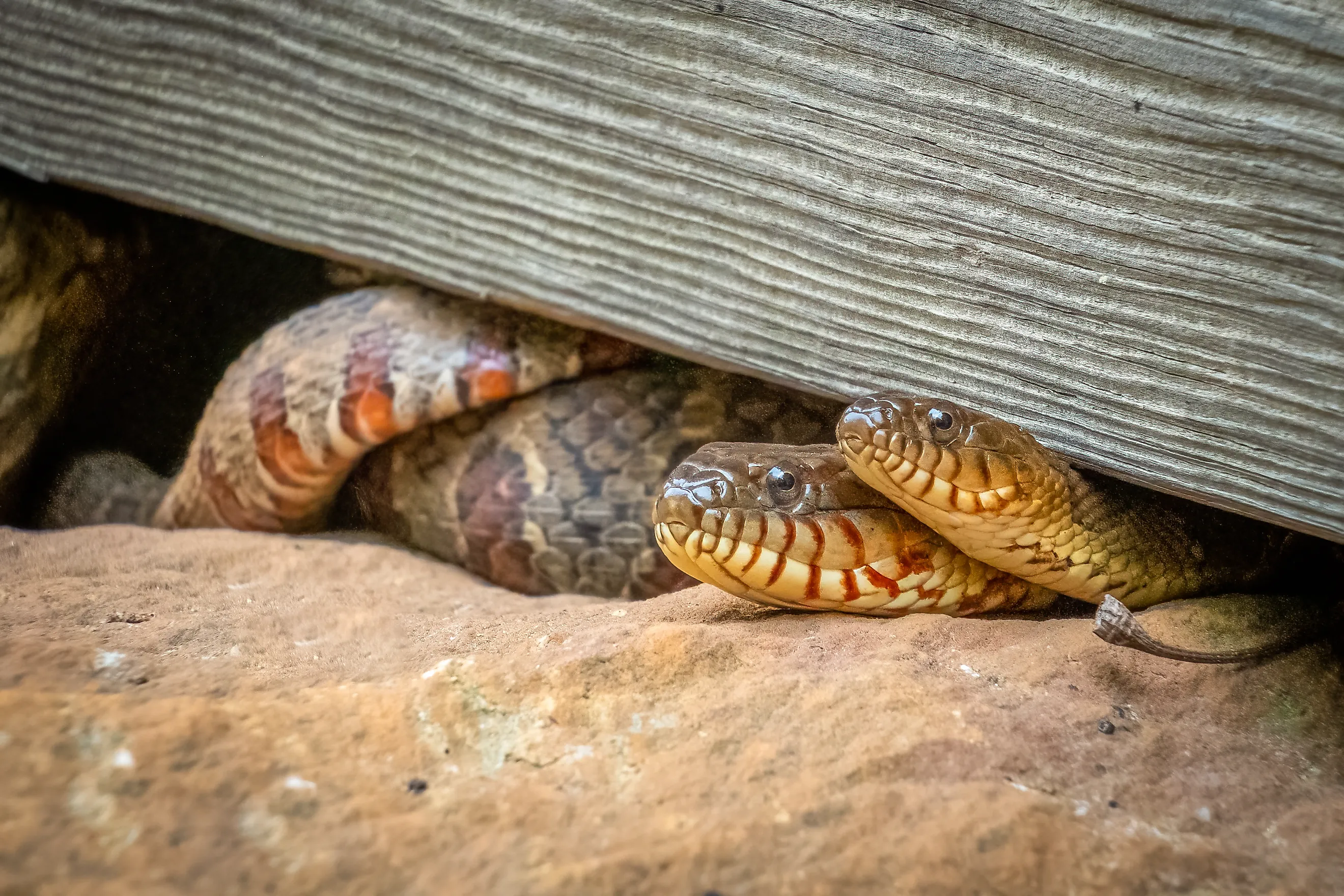
The vast floodplains along the Mississippi River, particularly in southeastern Minnesota, create ideal wetland habitats for a diverse, hardy snake community. Eastern garter snakes thrive here, recognized by their olive-green bodies with three yellow stripes running the length of their back. They are diurnal hunters, often seen actively foraging for amphibians and small fish along the water’s edge. During warmer months, brown snakes also often slither beneath leaf litter and riverbank debris, playing a critical role in controlling invertebrate populations, too. On the other hand, northern water snakes, darker with their distinct crossband patterns, are highly aquatic, hunting fish and frogs.
The mosaic of wetlands, oxbow lakes, and wooded riverbanks provides both shelter and hunting grounds for all of these species, making this stretch of the mighty Mississippi a snake haven.
Huron River, Michigan

Flowing through southern Michigan, the Huron River and its surrounding wetlands create an ideal habitat for multiple snake species. Just south of Detroit, it offers a chance for the residents of one of the busiest metro areas in the country to conveniently escape into the natural world, in this case, a northern landscape that not all are aware of holds the right conditions for a healthy snake population.
The slow-moving water and vegetated banks of this waterway attract northern water snakes, which hunt fish, frogs, and crayfish, often sunning themselves on rocks or fallen logs when not on the prowl. Moreover, eastern garter and brown snakes, like those on the Mississippi River further west, are abundant along river trails and floodplain meadows, actively foraging during the day.
The river corridor also intersects a number of small towns, parks, and canoe launches, allowing safe observation while minimizing disturbance. Aside from snakes, the Huron River also supports diverse aquatic life, including numerous turtles and amphibians.
Sebago Lake, Maine

Early spring brings a surge of activity along Sebago Lake’s northern shores, where seasonal flooding turns low-lying forest edges into temporary wetlands. Northern water snakes take advantage of these shallow, nutrient-rich pools, hunting fish and amphibians before the main lake warms, while on the sun-dappled banks, eastern garter snakes also weave through tall grasses, following the emergence of small prey.
Canoeists navigating the lake’s quiet coves often spot snakes basking on partially submerged logs, an unassuming reminder of the dense population thriving here. Of further note, the interplay of flooding, intact woodlands, and open water makes Sebago Lake a hotspot for a wide range of northern wildlife, including an interesting variety of snakes.
Diverse Life in Northern Environments

These northern waterways, from Minnesota to Maine and beyond, showcase how a subset of extremely hardy snakes thrive in diverse habitats, from floodplains to swamps to forested lakes that often see wintery conditions for much of the year. These bodies of water not only support dense snake populations but also sustain broader ecosystems, highlighting the vital interplay between reptiles and their environments.