5 Snake-Filled Waters In South Australia
It is no secret that Australia is home to some of the world's deadliest animals, and the snakes that occupy the waters of South Australia are no exception. The Murray River, Lake Alexandrina, and the other hot spots on this list support a wide range of species, including the highly venomous eastern brown snake, the eastern tiger snake, and the lowland copperhead. Despite their reputation, bites are uncommon, and with a bit of knowledge and a healthy dose of caution, it is certainly possible to enjoy these wild spaces without incident. Read on to learn more about South Australia's incredible snake species and the rivers, lakes, and lagoons they call home.
Murray River

The Murray River starts this list because its southern reaches create ideal conditions for wetlands and dense reed growth that provide abundant food and cover for wildlife. These habitats support many reptiles, including several snake species, and the river system also feeds a few of the other bodies of water on this list. Several venomous snakes found in South Australia occur in the Murray-Darling Basin, including the eastern brown snake, the red-bellied black snake, and the eastern tiger snake. All three species can inhabit areas near water and wetlands along the river and surrounding floodplains.

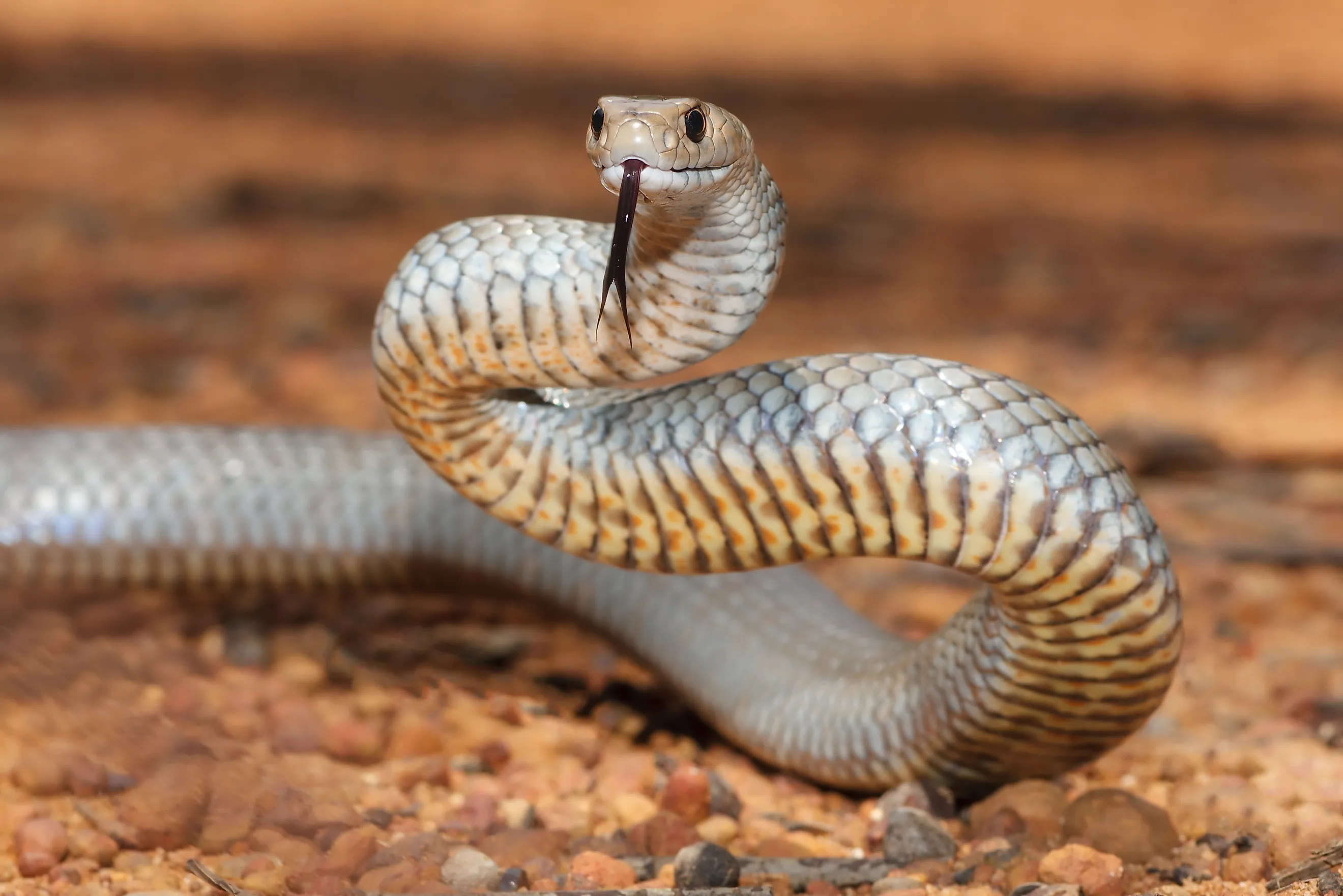
While these snakes are potentially dangerous to humans if threatened, they generally avoid people and will usually retreat when given the chance. The eastern brown snake is considered the most significant, as it is one of the world's most venomous snakes and is responsible for the largest share of serious snakebite incidents and fatalities in Australia. Snake activity increases during the warmer months in the Southern Hemisphere, roughly October through March, when reptiles are more active after winter. When walking along riverbanks or wetlands, it’s wise to follow basic safety practices, such as wearing long pants, watching where you step, and giving any wildlife plenty of space.
Lake Alexandrina

About 100 kilometers southeast of Adelaide, Lake Alexandrina stretches across traditional Ngarrindjeri land, forming one of Australia’s largest freshwater lakes. Around the edges of the lake, wetland thickets shelter several of Australia’s deadliest reptiles, including several species of snakes found in southern Australia. Reed-dense zones provide cover for species such as the eastern brown snake and the eastern tiger snake. Quick and slender, eastern browns are most easily identified by their entire upper half being dark brown, with adults reaching almost 2 meters (6.5 feet) in length. Tiger snakes are smaller, rarely more than 1.5 meters (5 feet), and patrol marshlands for frogs and smaller prey.

Again, snake activity increases during the warmer months. Starting in September, movement picks up dramatically as cold-season dormancy ends. Sailors, campers, and fishing groups may occasionally encounter these animals during the warmer seasons, so basic precautions, such as watching where you step and giving wildlife plenty of space, are advisable.
Mount Gambier, Blue Lake

The shores of Blue Lake provide an ideal environment for several reptiles. While many are harmless, some of the more notable venomous snakes in the Mount Gambier region include the eastern tiger snake, eastern brown snake, and lowland copperhead. The latter is a medium-sized snake with a sturdy body, usually olive-brown to dark brown in color with a slightly lighter underside, and a broad head that blends smoothly into the neck. Lowland copperheads typically grow to about 1-1.5 meters (3.5 to 5 feet) in length. Vegetated shoreline areas and nearby bushland can provide suitable habitat for all three of these species.

While snakes are present in the broader region, encounters are not common and can often be avoided with caution. The volcanic crater that forms Blue Lake is nearly 1,200 meters long and roughly two-thirds as wide, with a scenic walking trail that surrounds the perimeter. With a bit of awareness, especially during the warmer months when snakes are more active, most visitors can avoid close encounters here. Be mindful, however, that while many snakes enter brumation, or a period of inactivity, as temperatures drop, species such as lowland copperheads can remain active in cooler conditions longer than some other snakes.
Waters of Bool Lagoon Game Reserve

Bool Lagoon Game Reserve lies just about 24 kilometers (9 miles) south of Naracoorte, where extensive wetlands form one of southern Australia’s largest freshwater lagoon systems. Large numbers of birds also gather here, and the reserve is known to support well over 100 species. Among the most notable for birdwatchers are brolgas and other migratory waterbirds that visit the wetlands during suitable seasons. Periods of higher rainfall often trigger bursts of amphibian activity across the reserve’s wetlands, as well.

Of course, where frogs are abundant, predators that feed on them are often present. In this case, that means venomous species such as eastern brown snakes, eastern tiger snakes, and lowland copperheads, as well as smaller species, like the Mallee black-backed snake and little whip snakes. It is worth noting that young eastern brown snakes can deliver medically significant venom from birth, so anyone stepping through damp grass or moving off marked paths should remain aware of their surroundings.
Onkaparinga River

The drainage area of the Onkaparinga River covers more than 500 square kilometers (193 square miles). This catchment creates several types of ecosystems that support a wide range of South Australia’s wildlife across thick reeds, forests, and rocky flats, and the mix of environments can also shelter several venomous snake species found in southern South Australia. Near the river’s lower reaches, wet areas rich in frogs often provide suitable habitat for the eastern tiger snake, as mentioned above, while in drier grasslands and higher ground near the river, visitors may be more likely to encounter the eastern brown snake.

Pygmy copperheads also occur in the Mount Lofty Ranges and Fleurieu Peninsula, including in damp habitats near streams and marshy ground, and semi-aquatic red-bellied black snakes are less common but may be found in creeks, wetlands, and riverbanks. As always, when in these natural areas, staying on established paths and watching where you step can help visitors avoid unexpected encounters.
Appreciating Australia with Caution
Though vast areas such as nature reserves and national parks often host sizable populations of venomous snakes, bite cases do remain rare, averaging just 3 to 18 per 100,000 individuals annually. Bites severe enough to require a hospital are even less common, and fatalities are extremely rare, at only 2-3 a year, on average. The best defense, of course, is caution, consideration, and education. Treat wild animals as unpredictable, and respect their habitat and their space to avoid unwanted aggression.