The Lakes Fed By Glaciers In North America
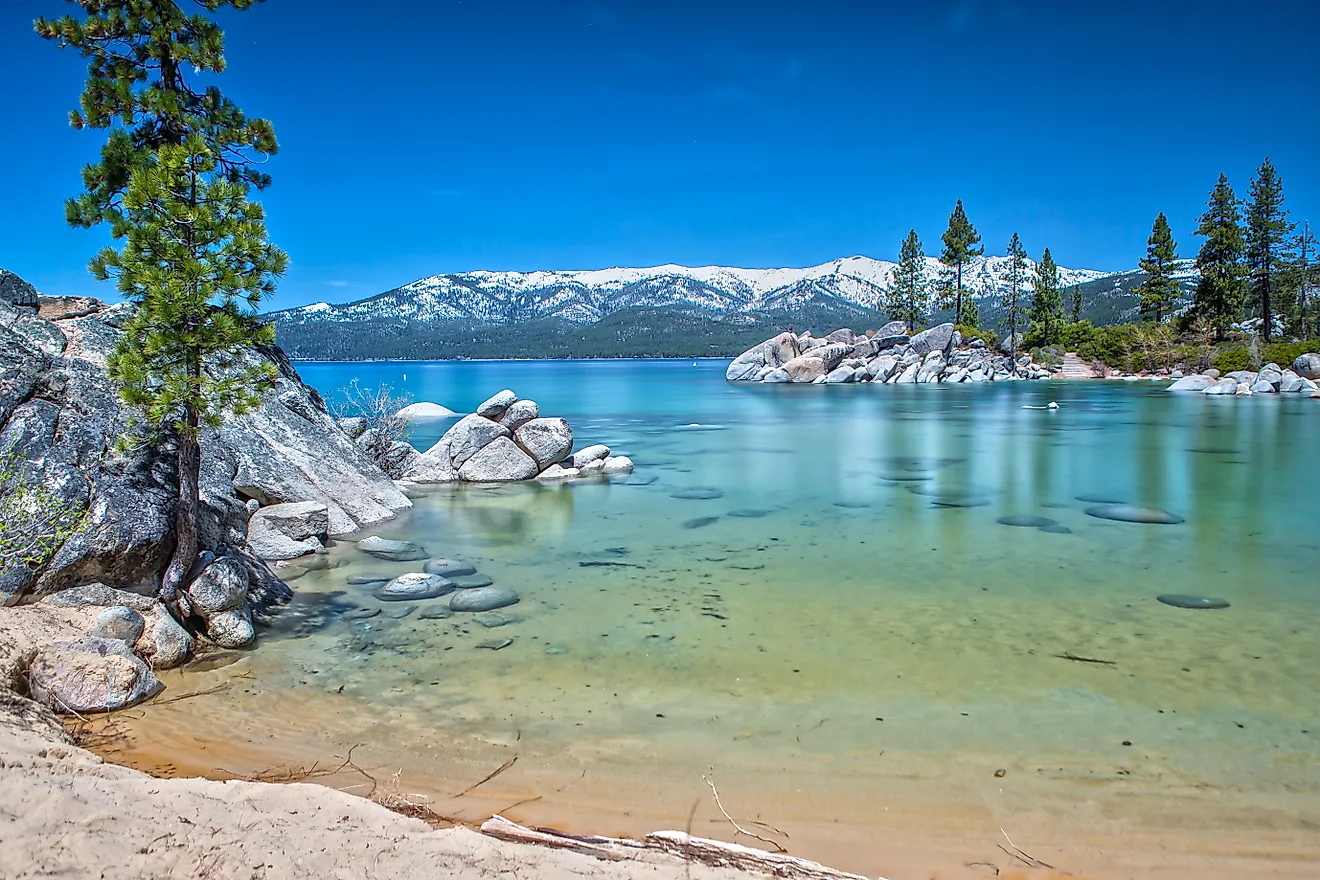
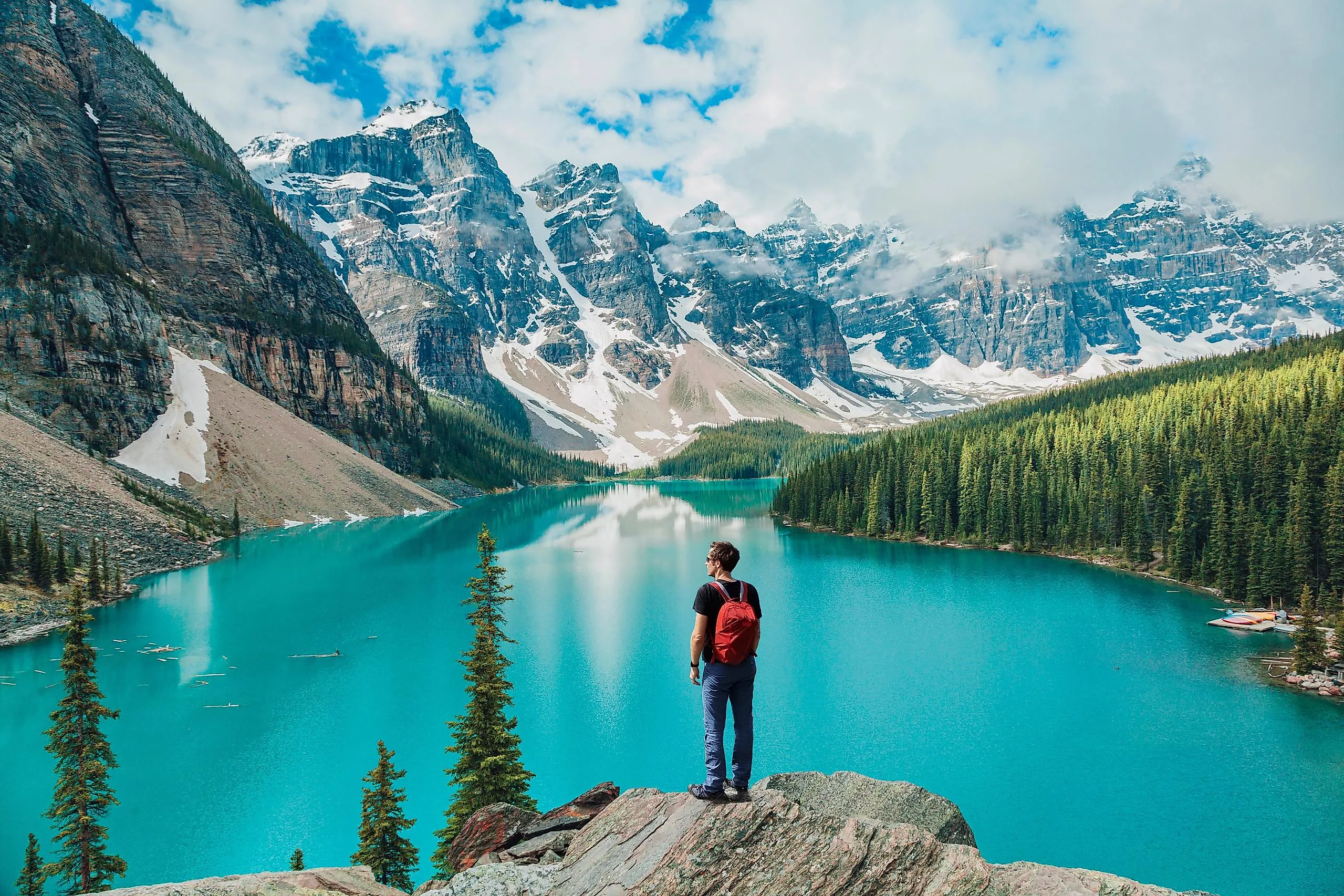
The striking blue-turquoise colored waters of glacier-fed lakes are entrancing to say the least, and pictures of these otherworldly, placid waters have graced the pages of countless publications and online posts. What gives these lakes their color is a suspended fine silt called rock flour, pulverized silicate rock ground down by glacier movement, which scatters light in ways that produce the vivid blues and blue-greens the water is known for. It also tends to be rich in trace minerals, such as zinc, copper, and boron.
While no official tabulation exists, it is estimated that there are hundreds of thousands of glacier-fed (and/or carved) lakes within North America. Canada alone has over 3 million lakes of clear glacial origin, while the United States tends to feature more of these in Alaska and in regions like the Pacific Northwest and Montana. Glacier National Park in Montana alone contains 762 lakes, of which only 131 are officially named.
Here are some of the more prominent glacier-fed lakes in North America, selected for their size, accessibility, recreational appeal, and features that set them apart.
Moraine Lake (Banff National Park, Alberta)

Moraine Lake is located outside of Lake Louise, Alberta, Canada. It lies in the Valley of the Ten Peaks and is also one of the most prominent glacially fed lakes in Banff National Park. Moraine is considered an "alpine lake" due to its elevation of 6,181 ft (1,884 m). Any lake above 5,000 feet (1,524 meters) is considered alpine. This lake also covers 50 hectares (120 acres), making it relatively small compared to many similar bodies worldwide. What makes Moraine Lake such an attraction, however, is the sheer intensity of its turquoise-blue waters and the stunning backdrop of the Valley of the Ten Peaks. In other words, it is perhaps one of the most picturesque examples of this type of geography.
Lake Louise (Banff National Park, Alberta)

Located on the same range as Moraine, and at 5,680 feet (1,731 meters) above sea level, sits Lake Louise, once again in Banff National Park. Lake Louise allows public road access for private vehicles and remains open year-round, whereas Moraine Lake is a bit harder to access or requires more stringent rules (such as taking a shuttle). Fairmont Chateau Lake Louise and several restaurants are also found here, making it much more accommodating than typical rugged outdoor-experience locales. This 0.31 sq mi (0.8 km²) lake is named after Princess Louise Caroline Alberta (1848-1939), the fourth daughter of Queen Victoria. In short, this is the glacially fed tourist lake most will likely want to spend a lot of time with while in the region.
Peyto Lake (Banff National Park, Alberta)
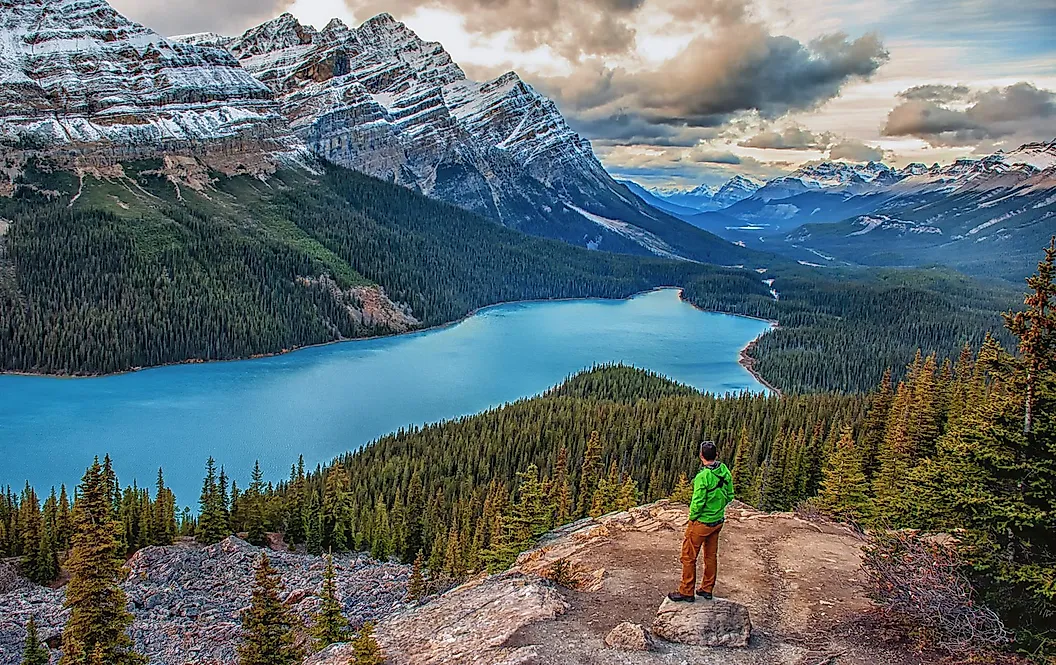
Rounding out the trio of Alberta lakes featured on this list, there's Peyto Lake, located in the valley of the Waputik Range, and resting at an elevation of 6,100 ft (1,860 m). While it is not particularly easy to reach, geographically speaking, it is still very accessible. To fully appreciate its stunning views (i.e., the best views are from atop Bow Summit), a 10 to 15-minute hike is required. This lake offers a wonderful chance to take in some world-class hiking while also providing access to a relatively isolated, moderately sized glacial lake, replete with stunning blue waters (1.7 miles (2.8 km) long and 0.5 miles (0.8 km) wide).
Emerald Lake (Yoho National Park, British Columbia)
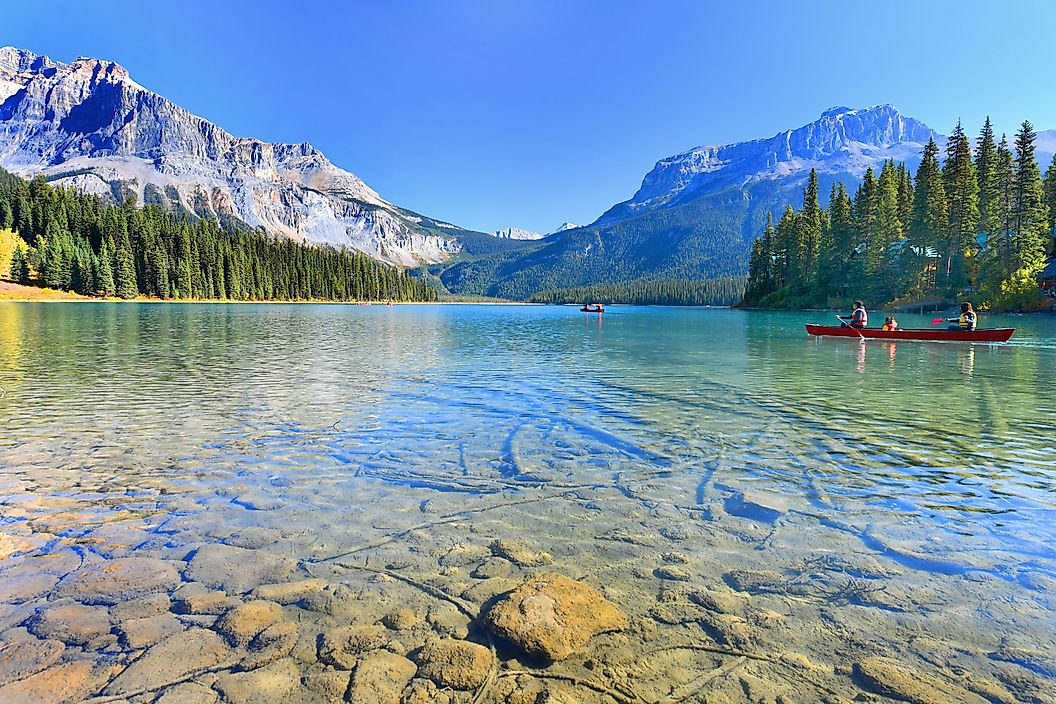
Visually speaking, Emerald Lake is one of those anomalies whose natural splendor has often been said to literally stop people in their tracks. The Emerald also has a surface area of 225 acres (91 hectares) and sits at an elevation of 4,268 feet (1,301 meters). Aside from its obvious signature turquoise waters, this lake sits in a basin surrounded by the towering peaks of the President Mountain Range. Moreover, there are trails that encircle its perimeter (3.2 miles, or 5.2 km), which are also said to be fairly easy. Many visitors have noted that the summer months in particular seem to be peak season for gawking at the tranquil, otherworldly blue waters of this British Columbian treasure.
Lake McDonald (Glacier National Park, Montana)

Traveling further south into Glacier National Park, Montana, we come to Lake McDonald, the largest lake there, 10 miles (16 km) long and over a mile (1.6 km) wide. There are a few things that make this lake special or different from many others of its type. For instance, there's the crystal-clear nature of its waters and/or the multi-colored pebbles that decorate its shorelines (often ranging from deep red and maroon to blue, purple, and green). It rests at an elevation of 3,153 feet (961 m), which, in turn, makes it a friendlier destination for outdoor lovers (climatologically speaking), with its earlier spring melting blooms and gorgeous fall leaf-turning.
Grinnell Lake (Glacier National Park, Montana)

Grinnell Lake (0.44 miles/710 m long and 0.33 miles/530 m wide) is yet another stunner located within Glacier National Park; however, it is set apart from the other glacially fed lakes on this list due to its overall remoteness. To access it, a 7.8-mile round-trip hike is required, and the path is well-marked and regularly well-traveled by many visitors. This is a genuine backcountry blue-water lake, and the rugged appeal of its surroundings (like the rocky Angel Wing outcropping) and its air of peaceful isolation continue to make it a very popular spot for outdoor enthusiasts.
Lake Clark (Lake Clark National Park, Alaska)

Rounding out the list is Lake Clark, located in Alaska, in the National Park bearing the same name. First thing to note: there are indeed world-class brown bear-viewing opportunities at this location, which further indicates what to expect from the environment itself. In short, this unspoiled area is far and away the most remote glacially fed lake listed here. It is located about 100 miles (160 km) southwest of Anchorage, and there are no roads, so visitors typically fly in via small wheeled aircraft (though some also access it by boat). For the more serious outdoorsman, this is a perfect example of a pristine natural attraction or wildlife habitat/playground, boasting an absolute wealth of activities to choose from. Lake Clark sits within the Kvichak watershed, part of the Bristol Bay system, considered the world's most productive sockeye salmon fishery. This is also the 6th-largest lake in Alaska, measuring 42 miles (68 km) in length, 1 to 5 miles (1.6 to 8 km) in width, and covering roughly 110 square miles.
Planning a Visit
These are not the only glacially fed lakes in North America to peruse, of course, just some of the more notable examples that many might find interesting. It also goes without saying that, when planning a trip to such locales, it is always a good idea to do thorough research on physical access, amenities, and the overall physical exertion required to reach the lakes themselves. Nevertheless, actually visiting and viewing one of these otherworldly blue turquoise lakes can be a life-changing experience, and being informed and prepared is paramount.