The Lakes Featured In Hollywood Films
Hollywood has always borrowed from real geography, and lakes have done some of the heavy lifting. A stretch of Tahoe shoreline turned into a Corleone compound. A small Virginia resort became Kellerman's. A patch of red-rock reservoir in the Southwest stood in for a ruined Earth. The ten lakes below have all played a memorable role on screen, sometimes as themselves, sometimes pretending to be somewhere else entirely. Each was selected for the distinctiveness of its on-screen role and the lasting association it created with a specific film or scene.
Lake Tahoe

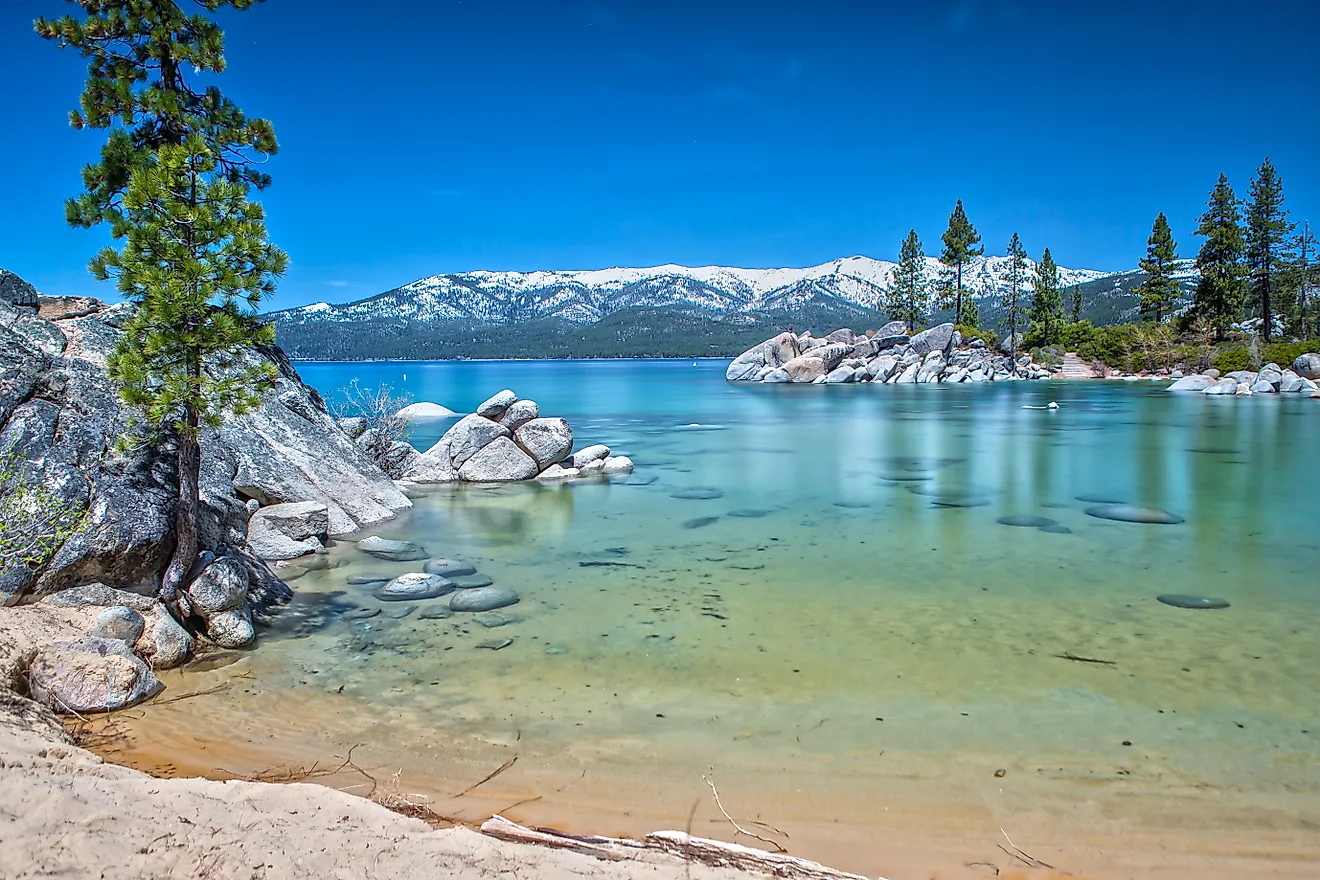
Few American lakes look as ready-made for film as Lake Tahoe, where deep blue water meets pine-covered slopes and the snowcapped Sierra Nevada. Straddling California and Nevada, the lake has long suggested wealth, retreat, and isolation, which made it ideal for The Godfather Part II. The film used Tahoe’s elegant shoreline to represent the Corleone family’s western estate, giving Michael Corleone’s world a colder, more controlled atmosphere than the New York scenes. Fleur du Lac, on the west shore, became the stand-in for the family compound and remains one of the saga’s most recognizable locations.
Mountain Lake

High in the mountains of southwest Virginia, Mountain Lake feels like the kind of tucked-away resort setting that could hold an entire summer’s worth of secrets. That quality helped make Mountain Lake Lodge such a memorable stand-in for Kellerman’s in Dirty Dancing. The lodge, cabins, dining areas, lawns, and wooded surroundings gave the film its nostalgic Catskills atmosphere, even though the production was far from New York. The lake itself is also unusual because its water level naturally rises and falls, adding another layer of fascination for visitors. For movie fans, though, the draw is emotional rather than geological. This is where Baby and Johnny’s romance, dance lessons, class tensions, and coming-of-age story feel rooted in a real place that still invites fans to step into the film’s world.
Lake Lure

Tucked below the Blue Ridge foothills, Lake Lure brings together calm water, wooded hillsides, and a vintage resort-town charm that photographs beautifully. Its Hollywood identity is closely tied to Dirty Dancing, which filmed several scenes in and around the North Carolina lake community. While Mountain Lake Lodge supplied the main Kellerman’s setting, Lake Lure helped build the broader illusion of a secluded 1960s summer escape. The landscape gave the film warmth and softness, matching its mix of romance, music, and youthful rebellion. Today, the town leans into that legacy through fan events, local tours, and long-running affection for the movie.
Smith Mountain Lake

At first glance, Smith Mountain Lake looks like the perfect place to disappear for a peaceful family vacation. The large southwest Virginia reservoir is known for wooded coves, rolling hills, marinas, and lakefront homes, all of which helped it play New Hampshire’s Lake Winnipesaukee in What About Bob? That substitution worked because the lake looked serene, comfortable, and convincingly vacation-ready. The comedy then turned that calm setting into a pressure cooker for Dr. Leo Marvin, whose quiet getaway is steadily invaded by Bill Murray’s relentlessly cheerful Bob Wiley. Much of the humor comes from the contrast between the setting and the chaos unfolding inside it. Smith Mountain Lake’s Hollywood significance rests on that contrast: a picturesque retreat transformed into one of the most memorable comic battlegrounds of the early 1990s.
Squam Lake

Long before many visitors know its name, Squam Lake often feels familiar because On Golden Pond made its quiet New Hampshire beauty part of American film memory. The island-dotted water, wooded shorelines, wooden docks, and loon calls gave the movie a setting that felt intimate rather than merely scenic. Starring Henry Fonda, Katharine Hepburn, and Jane Fonda, the film uses the lake as the emotional center of a story about aging, family distance, and reconciliation. Squam’s calm surface reflects the movie’s gentleness, while its changing light and weather echo the passage of time. Few film lakes feel so woven into a story’s mood.
Lake Powell

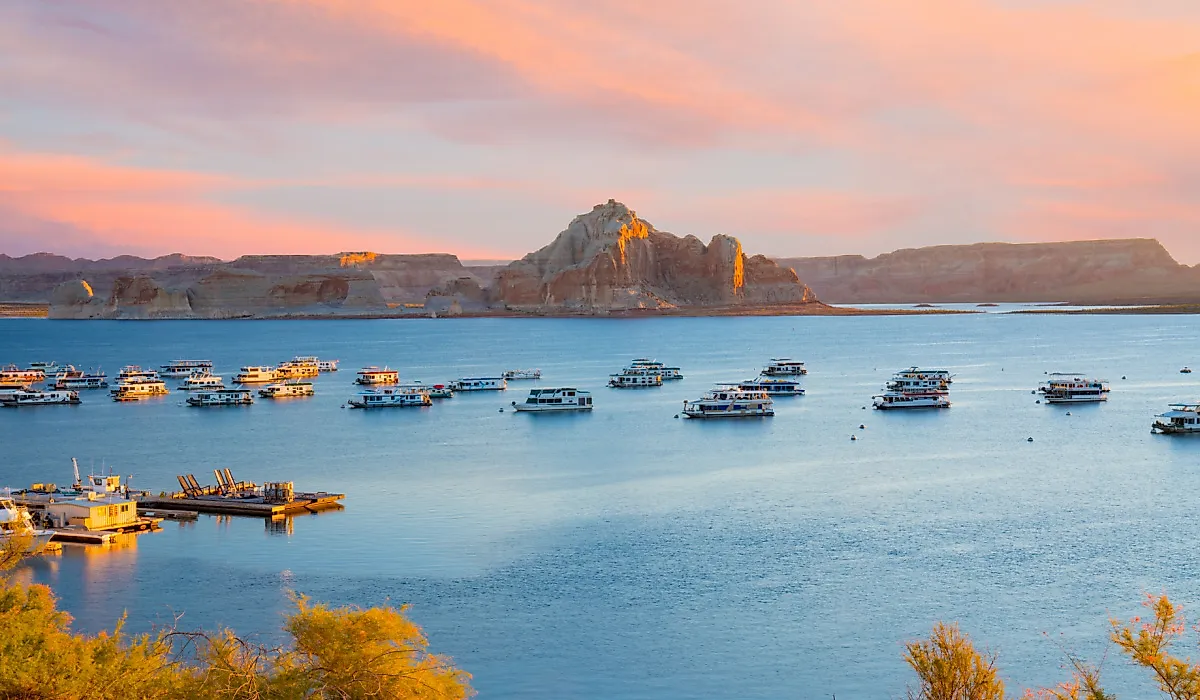
Blue water cutting through red-rock canyon country gives Lake Powell a look that seems almost made for the screen. Spanning parts of Arizona and Utah, the reservoir formed by Glen Canyon Dam offers cliffs, narrow inlets, desert light, and vast open space. Those qualities made it an effective location for Planet of the Apes, which used the surrounding Glen Canyon landscape to suggest a world that felt alien, abandoned, and unsettling. The film needed a place that looked recognizable enough to be Earth but strange enough to support its science-fiction mystery. Lake Powell delivered exactly that tension.
Mono Lake

There is nothing ordinary about Mono Lake, and that strangeness is exactly what has made it so useful to filmmakers. Set east of California’s Sierra Nevada, the alkaline lake is surrounded by high desert, volcanic forms, and pale limestone tufa towers that rise from the water like ruins. Clint Eastwood used that eerie atmosphere to powerful effect in High Plains Drifter, building the fictional town of Lago on the lakeshore. The location deepened the film’s ghostly, morally unstable tone, making the western landscape feel harsher and more surreal than familiar frontier scenery.
Lake Havasu

Sun, speedboats, crowded beaches, and desert heat define Lake Havasu’s public image, which made it a natural fit for a very different kind of Hollywood lake story. Located along the Colorado River on the Arizona-California border, the lake is famous for recreation, spring-break energy, and Lake Havasu City’s relocated London Bridge. Piranha 3D used that lively vacation atmosphere as the setup for a knowingly outrageous horror-comedy. The brighter and more carefree the location looks, the funnier and more chaotic the creature-feature violence becomes. Unlike lakes associated with romance, nostalgia, or solemn drama, Lake Havasu’s screen identity is loud, sunny, and deliberately excessive.
Lake James

In western North Carolina, Lake James sits where clear water, forested shoreline, and Blue Ridge Mountain views create a strong sense of natural drama. That landscape helped The Last of the Mohicans evoke the rugged frontier world of colonial-era North America, even though the story is set farther north. The film used the region’s mountains, forests, and waterways to create a setting that felt expansive, dangerous, and historically textured. Lake James and the surrounding terrain provided the production with the visual scale needed for a story built around war, pursuit, romance, and survival.
Malibou Lake

Hidden in the Santa Monica Mountains, Malibou Lake offered early Hollywood something extremely valuable: a natural-looking outdoor location within easy reach of Los Angeles studios. The small private lake could appear rural, quiet, or mysterious without requiring a distant location shoot, which made it useful during the classic studio era. Its best-known film association is Frankenstein (1931), which used the lake for one of the movie’s most haunting and controversial scenes. The calm water and rustic surroundings create a moment of deceptive innocence before the story turns tragic.
These lakes prove that Hollywood locations do more than fill the background. They help set the emotional temperature of a film. Tahoe gives The Godfather Part II its cold elegance, Squam Lake gives On Golden Pond its tenderness, and Mono Lake gives High Plains Drifter its haunted edge. Some of these places became famous because they played themselves; others became memorable by pretending to be somewhere else. Either way, their water, shorelines, mountains, cabins, cliffs, and strange natural features became part of the stories audiences remember. Visiting them now means seeing more than a scenic lake. It means standing in a real landscape that once helped build a fictional world.