5 Most Snake-Filled Bodies Of Water In Tennessee
Tennessee boasts a huge selection of rivers, reservoirs, and wetlands that create dense networks of aquatic habitat. These waters support an even wider range of snake species. Warm and meandering channels with nearby forests and floodplains make ideal conditions for watersnakes and the occasional cottonmouth. Major reservoirs and winding rivers concentrate both prey and cover. During the height of summer this year, snakes are frequently seen swimming or basking along the shorelines. That makes sightings a routine part of time spent on Tennessee's waterways.
Kentucky Lake

Spanning the Tennessee River across western Tennessee, Kentucky Lake is among this state's best-known waterways for encountering snakes. Its extensive shoreline, countless coves, marshy backwaters, and flooded woodlands are among some of the landscapes that create ideal habitat for several species.

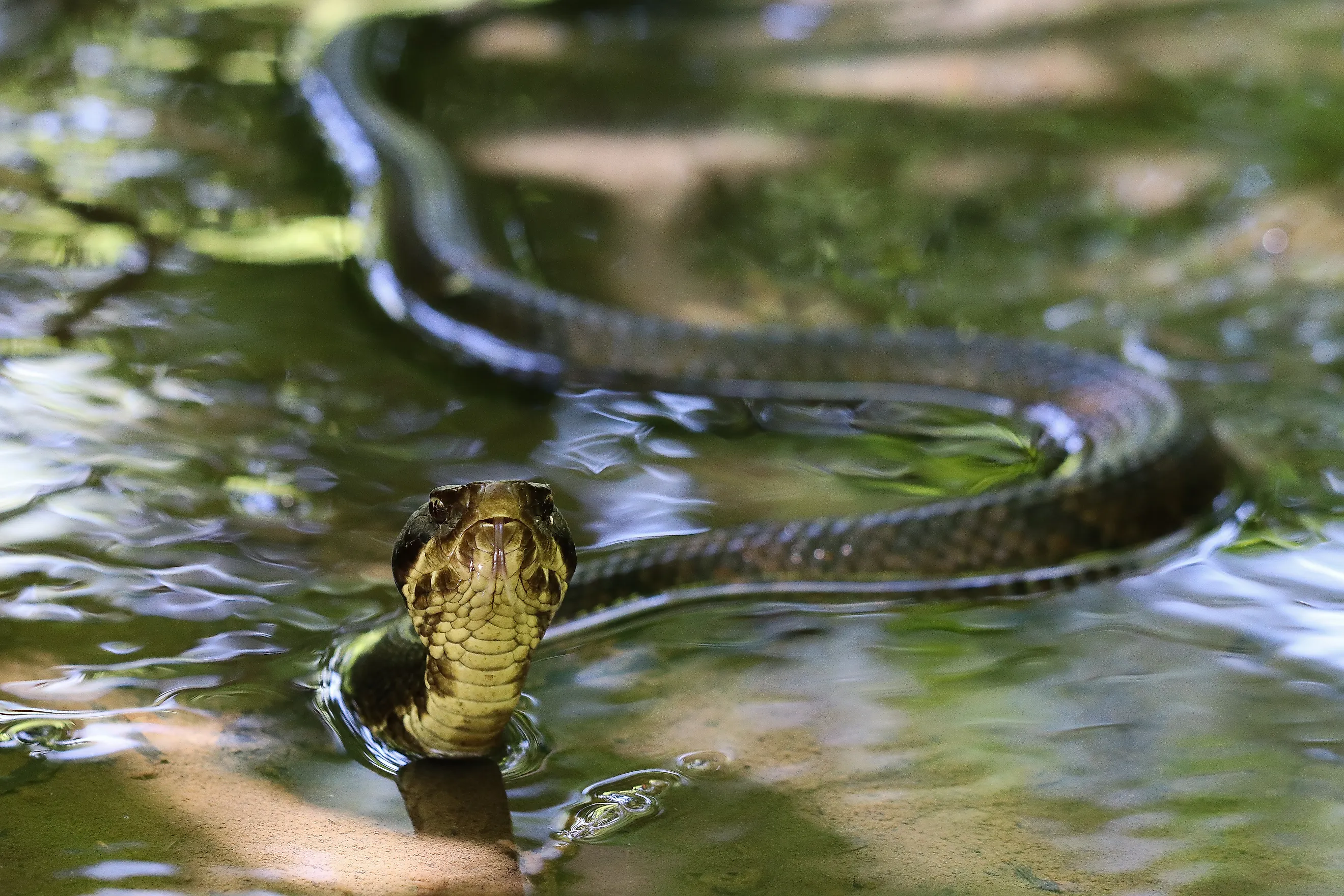
Northern watersnakes are especially common along rocky banks, docks, and fallen trees, where they hunt fish and amphibians. These nonvenomous snakes are excellent swimmers and are frequently mistaken for venomous cottonmouths because of their similar dark coloration and defensive behavior. That being said, cottonmouths also occur around quieter sections of the lake, particularly in wetlands and shallow coves with abundant vegetation.
The lake's enormous 160,309-acre size and wide variety of aquatic habitats support healthy populations of many kinds of flora and fauna, making wildlife encounters a routine part of spending time on the water, and during warmer months, boaters, anglers, and kayakers regularly spot local snakes swimming across open water or basking along the shoreline.
Reelfoot Lake

Formed by powerful earthquakes in the winter of 1811/12, Reelfoot Lake is unlike any other body of water in Tennessee. Its shallow depths, flooded cypress forests, buttonbush thickets, and vast wetlands provide an excellent variety of living space for aquatic and semi-aquatic snakes alike. In fact, about 30 species are said to inhabit the area.

Copper-bellied watersnakes are commonly found swimming through vegetated channels or basking on partially submerged logs. These nonvenomous snakes vary in color and can be brown or nearly black, and feed primarily on fish and amphibians. Again, cottonmouths inhabit this lake's swamps and marshes too, as well as gray ratsnakes, eastern milksnakes, and eastern hognoses, where they take advantage of dense cover and abundant food.
The lake's adjacent streams, rivers, and rich wetland also invite swaths of visitors each year looking to explore the lake by kayak, canoe, or boat. If you decide to visit, watch out for snakes resting in low branches, crossing narrow waterways, or swimming between stands of cypress trees during the spring, summer, and fall.
Chickamauga Lake

Created by the Chickamauga Dam on the Tennessee River, Chickamauga Lake stretches for nearly 60 miles through eastern Tennessee, allowing for a wide range of snake habitats along the way. Its quiet embayments, flooded vegetation, rock-strewn shorelines, and connected creeks attract several water-dwelling species.

With that, diamondback watersnakes are regularly found around shallow coves and weedy shorelines, where they hunt fish and frogs. These nonvenomous snakes visually stand out with strongly keeled scales and a chain-like pattern that provides excellent camouflage in murky water. Northern watersnakes also occur throughout the reservoir, often basking on riprap, logs, and boat docks.
In marshier backwaters and tributaries, cottonmouths represent the bulk of the area's venomous snakes, although they are generally less widespread than watersnakes in and around Chickamauga.
Duck River

Duck River runs for 284 miles across central Tennessee, cutting through limestone valleys and forested floodplains where meandering pools and shallow riffles support diverse aquatic snake populations. Northern watersnakes are highly common along rocky banks and submerged logs. Plain-bellied watersnakes also occur throughout calmer sections, while timber rattlesnakes inhabit more inland sections nearby. Cottonmouths also occupy adjacent wetlands and backwater sloughs, where their venomous bite and defensive displays make them a notable presence in slower sections. Furthermore, queen snakes often appear in clearer tributary streams.

This river system is renowned for its biodiversity and favors these species through its blend of moving water and seasonal flooding, which expands hunting areas and likewise increases encounters with paddlers and anglers across the various regions it connects to.
Norris Lake

Norris Lake extends across the Clinch River in eastern Tennessee, with hundreds of miles of irregular, rugged shoreline and countless tributary coves. Although its deeper, clearer water differs from some of the state's western wetlands, this reservoir still supports several aquatic snake species. The lake's immense shoreline and numerous creek mouths provide abundant ecological zones, actually, making snake sightings a regular occurrence for boaters, anglers, and shoreline visitors throughout much of the year.

The northern watersnake makes another appearance as the species most frequently spotted here, often warming their blood on exposed rocks, floating logs, and dock pilings before slipping into the water when disturbed or looking for a meal. Queen snakes also occur in tributary streams flowing into the reservoir. These slender, nonvenomous snakes specialize in eating freshly molted crayfish and are usually found along rocky waterways with particularly clean, flowing water.
Be Snake-Aware In These Tennessee Lakes And Rivers This Summer
These watery hotspots consistently showcase high densities of aquatic and semi-aquatic snakes due to their reliable food sources, warm seasonal temperatures, and often pristine shorelines. Rivers, lakes, and reservoirs alike across Tennessee create overlapping zones where multiple species can coexist. For visitors on boats or along banks, sightings of these cold-blooded predators are quite common in the busier summer months, reflecting how closely these snakes are tied to this state's freshwater systems.