How Alewife Populations Boom And Crash In The Great Lakes
The alewife is a small, silvery, oily herring about six inches long, and it is arguably the most consequential fish in the modern Great Lakes. That is not a compliment. For roughly 70 years, this uninvited little transplant from the Atlantic has run the world's largest freshwater system on a violent rollercoaster, exploding into unfathomable numbers, then dying off in heaps deep enough to bury a beach, and dragging the entire food web up and down with it. It is a genuinely wild story of what happens when you knock the pieces of an ecosystem out of balance. Here is how the boom and the crash actually work.
Meet the Alewife

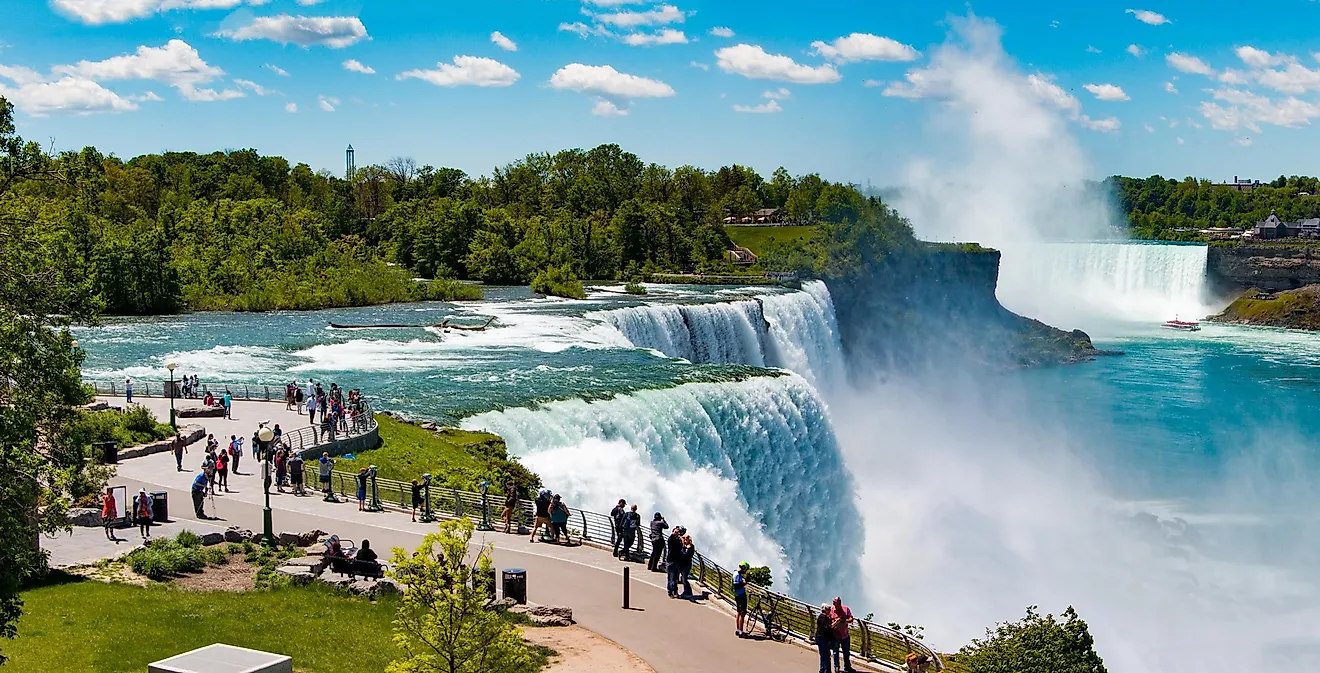
The alewife is a saltwater and coastal fish by birth, native to the Atlantic, and it simply is not built for life in the cold fresh water of the Great Lakes. It first turned up in Lake Ontario back in the 1800s and then did what so many Great Lakes invaders have done: it used the man-made Welland Canal to slip past Niagara Falls and spread into the upper lakes, reaching Lake Michigan by around 1950. On its own, a fish that is poorly suited to its environment should not amount to much. But the alewife arrived at exactly the right moment to take over, because the lakes' natural bouncer had just been knocked out cold.
The Boom: When the Predators Vanished

Enter the villain that set the whole thing off: the sea lamprey. This invasive parasite, combined with heavy overfishing, wiped out the native lake trout, the top predator that would normally have kept a fish like the alewife firmly in its place. With the lake trout gone from Lake Michigan and its neighbors, nothing was left to eat the alewives, and they did what small fish with no predators always do. They multiplied beyond all reason. By the late 1960s, biologists estimated that alewives made up around 90 percent of all the fish in Lake Michigan by weight. As author Dan Egan put it, for every 10 pounds of fish in the lake, 9 pounds were alewife. One estimate pegged Lake Michigan's alewife population at a staggering 15 billion.
The Crash: Death on the Beaches

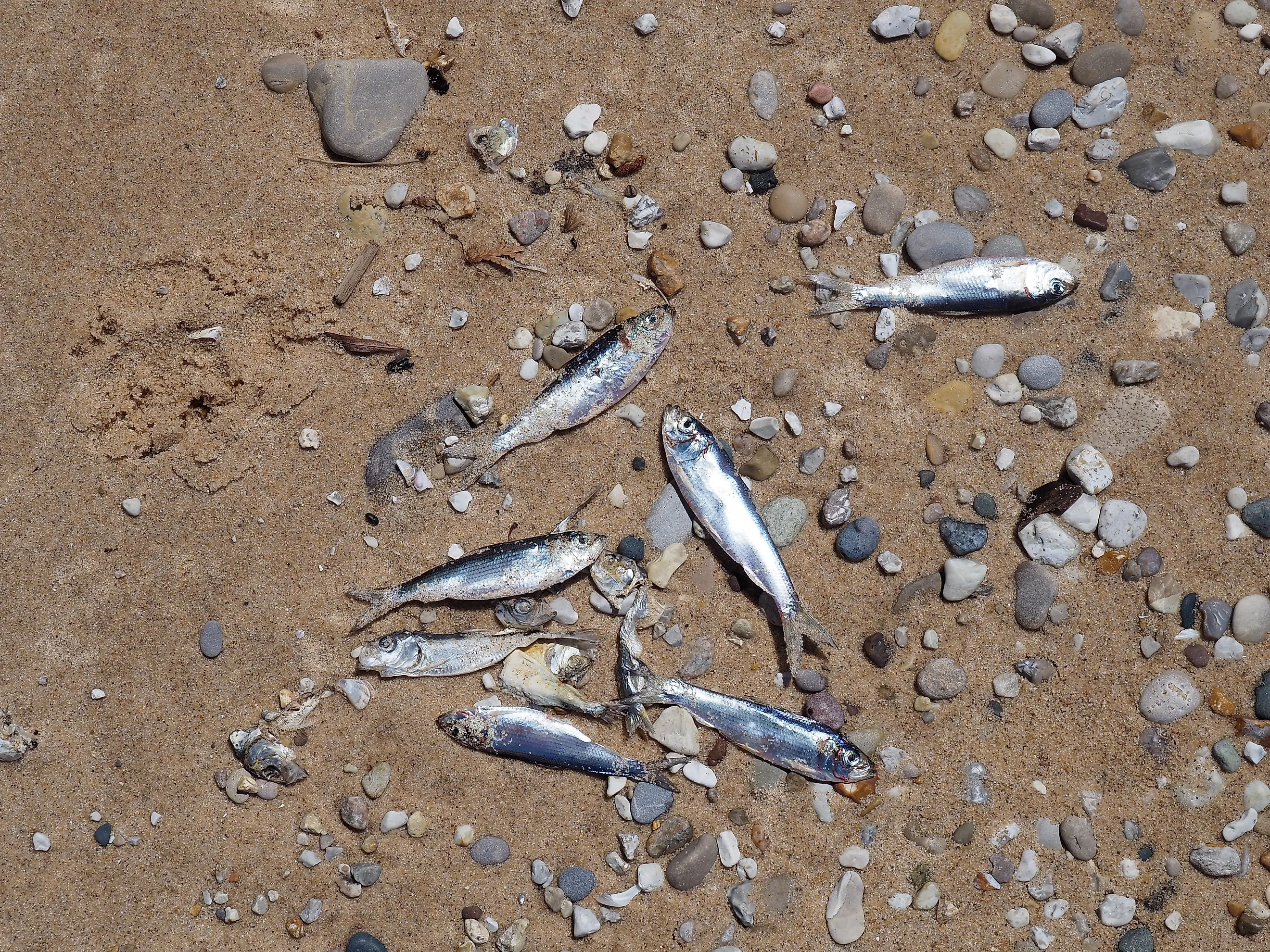
Here is the other half of the rollercoaster. An alewife is poorly adapted to freshwater, and when its population explodes past what the lake can support, it becomes extraordinarily vulnerable to stress from temperature swings, harsh winters, and the strain of spawning. The result is spectacular mass die-offs. Every spring and summer through the 1960s, alewives died by the millions and washed ashore in reeking, silvery drifts that buried Great Lakes beaches for miles. The most infamous episode, the great die-off of 1967, left billions of rotting fish along the shoreline, forcing cities to send out bulldozers to scrape the beaches clean. It was a public health headache, a tourism disaster, and an unforgettable stench.
Why the Rollercoaster?

Strip away the drama and the pattern is simple. Remove the predators and a fast-breeding fish booms until it hits the ceiling of what the lake can feed. Pack that many fragile, cold-sensitive fish into one system and a rough winter or a stressful spawning season triggers a crash, a massive synchronized die-off. Without predators to smooth things out, the alewife had nothing to check its rise and nothing to soften its fall, so it just kept slamming between the two extremes. Boom, crash, repeat. The lakes had traded a stable food web anchored by native predators for a wildly unstable one ruled by a single, twitchy, out-of-place herring.
The Hail Mary: Stock Salmon to Eat Them

By the mid-1960s, desperate for a fix, Michigan fishery managers led by biologist Howard Tanner tried an audacious gamble: they stocked the Great Lakes with Pacific salmon, coho starting in 1966 and Chinook soon after, fish that had never lived there but that happen to be voracious alewife-eaters. It was a remarkable success. The salmon feasted on the endless alewife buffet, grew huge, and brought the alewife population under control, so the beach-burying die-offs largely faded by the 1970s. Better still, it accidentally created one of the greatest sport fisheries on the continent, a multi-billion-dollar recreational salmon industry built entirely on the back of a trash fish nobody wanted. For once, an invasive-species story seemed to have a happy ending.
The Plot Twist: Now We Need Them

Then the next invaders showed up and rewrote the rules again. Zebra and quagga mussels blanketed the lake bottoms and began filter-feeding the plankton at the very base of the food web, starving out the alewives from below. Combined with all those hungry stocked salmon eating them from above, the alewife got squeezed from both directions. In Lake Huron, the alewife population essentially collapsed around 2004, and the Chinook salmon, unable to switch to other prey, collapsed right along with it, sending angler activity down by roughly 90 percent. In a bizarre reversal, managers now find themselves anxiously trying to protect alewives, even cutting back salmon stocking, because the fishery they built needs just enough of the fish they once wanted gone.
The Alewife's Revenge

The alewife saves its cruelest trick for last. Its flesh contains an enzyme called thiaminase, which destroys thiamine, or vitamin B1, in any predator that eats too many of them. For native lake trout desperately trying to recover, a diet of nothing but alewives caused a thiamine deficiency so severe that their eggs and fry died, quietly sabotaging the very comeback managers were fighting for. It is a fitting final twist: the invader that boomed because the lake trout vanished then helped keep the lake trout from returning. Tellingly, as alewives have declined and native trout have switched to eating invasive round gobies and smelt instead, those lake trout are finally rebounding, healthier on their new menu. The rollercoaster, it seems, is still running.