5 Most Snake-Filled Bodies Of Water In Louisiana
Louisiana's wetlands support one of the richest snake populations in the United States, spread across the cypress swamps of the Atchafalaya Basin, its large reservoirs, and its coastal marshes. While most of the snakes here are harmless water-based species, venomous western cottonmouths are also quite common in suitable habitats, often including wet, humid forests with plenty of low-lying foliage.
But regardless of where you look, the Southern bodies of water we will be covering here stand out for their lively wetland ecosystems that host a variety of wildlife of all kinds along their banks and shorelines, let alone snakes.
Lake Fausse Pointe State Park

Lake Fausse Pointe State Park in St. Martin Parish sits within the Atchafalaya Basin, a vast, almost million-acre wetland known for its maze of bayous, cypress swamps, and slow-moving waterways. The lake's shallow waters, dense aquatic vegetation, and abundant fish populations create ideal conditions for a number of reptiles, including American alligators and several snake species.
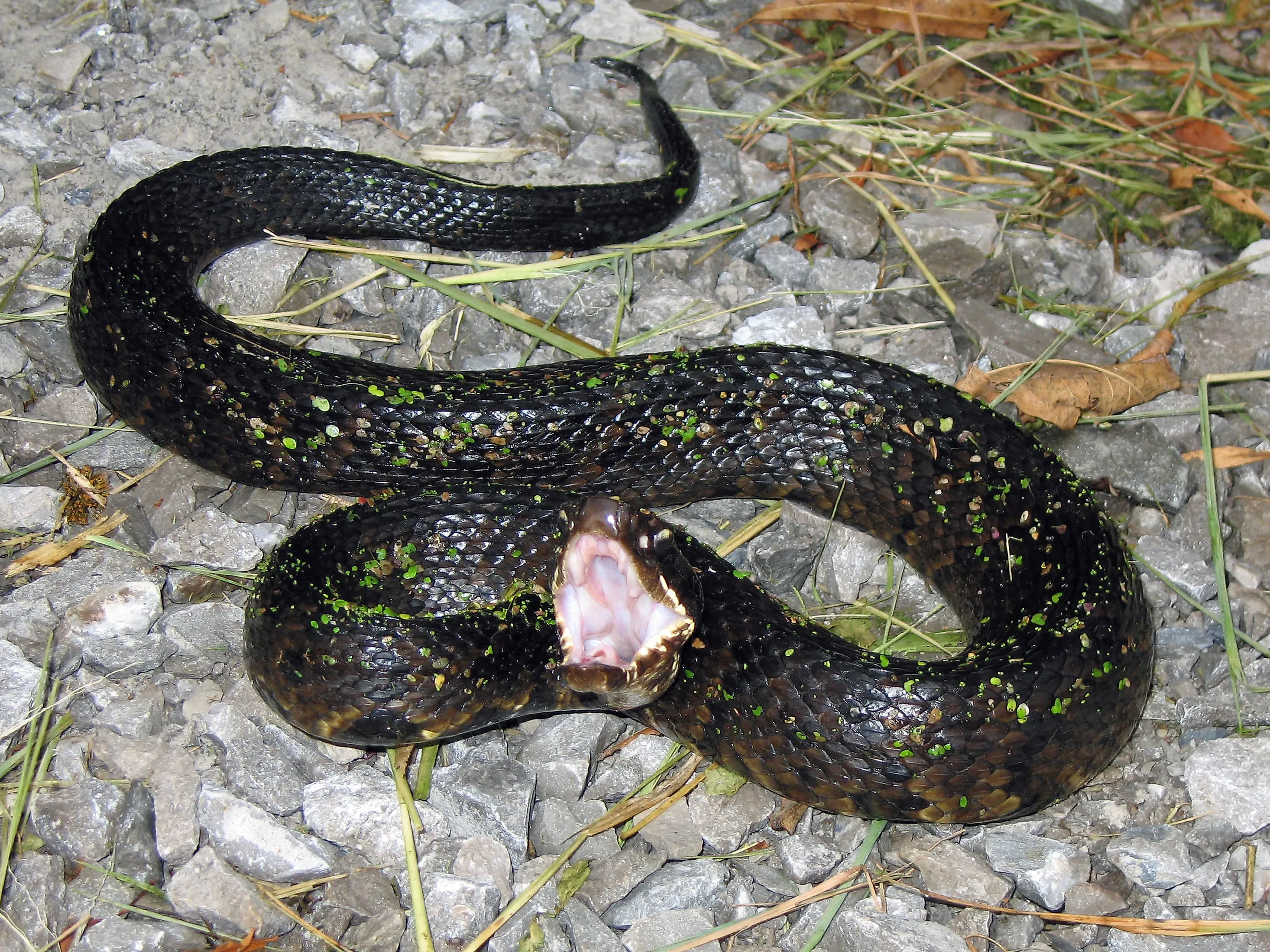
Broad-banded water snakes, diamondback water snakes, and western cottonmouths are frequently associated with the basin's wetlands. You should particularly look out for western cottonmouths, which are large, heavy-bodied venomous snakes with dark crossbands, a distinctively white mouth display when threatened, and a dangerous bite. But the surrounding flooded forests also provide habitat for Louisiana's more harmless species, including western ribbon snakes and rough green snakes.
Anglers, boaters, and paddlers exploring the lake's marshy edges are most likely to encounter these cold-blooded predators sunning themselves on logs, swimming across channels, or hunting along the shoreline.
Honey Island Swamp

Honey Island Swamp, east of Slidell, is among Louisiana's largest intact bottomland hardwood swamps, covering roughly 70,000 acres of flooded forest, bayous, and marshes. It houses an exceptional diversity of snakes within its pristine landscapes, including Mississippi green water snakes, rat snakes, speckled kingsnakes, rainbow snakes, and mud snakes.
In case you're wondering, rainbow snakes are large, nonvenomous snakes with glossy black backs and aptly named for the vivid red stripes along their sides, spending much of their lives in the water while feeding primarily on American eels.
Because much of Honey Island Swamp is accessible only by boat, resident flora and fauna experience relatively little disturbance and thrive in its relatively undisturbed domain. If you'd like to see it for yourself, you can book a swamp tour, which often has guides to help you spot snakes swimming across narrow bayous to coiled on cypress knees, along with other wildlife.
Caddo Lake

Caddo Lake, located along Louisiana's western border with Texas, is more of a sprawling maze of bayous, ponds, and cypress-filled channels that provides habitat for a wide variety of reptiles. Its murky, warm, slow-moving waters and thick vegetation help support several aquatic snake species in particular, including western cottonmouths, diamondback water snakes, and broad-banded water snakes. Diamondback water snakes, an especially common species across the Deep South, are nonvenomous, with dark diamond-shaped markings, and are often found near ponds, marshes, and wooded waterways where they hunt fish and amphibians.
Caddo Lake's flooded bald cypress forests create countless hiding spots, with snakes frequently found resting on low branches, fallen logs, and along muddy shorelines. The lake's abundant prey, also including small mammals, further sustains these populations throughout the year, with canoeists and kayakers commonly encountering snakes, gators, skinks, and turtles moving through the channels or basking near the water's edge.
Lake Pontchartrain

Lake Pontchartrain's importance as a snake habitat comes from the extensive coastal wetlands that surround its shoreline, particularly the marshes, canals, and swamp systems connected to the lake. However, the main body of Lake Pontchartrain is too open for many snakes, with its surrounding waterways ranking among the state's most productive reptile habitats instead.
These protected areas provide ideal conditions for fully or semi-aquatic reptiles that move through Louisiana's Gulf Coast-adjacent environments. The lake's northern and southern margins contain notably dense stands of marsh vegetation where a plethora of local snakes can hunt, hide, and bask away from strong currents and open water, while nearby wetlands such as the Maurepas Swamp contain flooded forests and lazy waterways that expand the available habitat, especially during times of flooding.
As mentioned before, western cottonmouths are commonly associated with these types of subtropical environments found mainly in the Deep South, using their powerful swimming ability to navigate shallow channels.
Toledo Bend Reservoir

Stretching for 65 mi. (105 km), this is another waterbody riding the Louisiana-Texas border. Set in a densely wooded part of the state, Toledo Bend Reservoir combines open waters with countless flooded coves, timber stands, creek mouths, and seemingly endless backwaters. Those sheltered areas support healthy populations of timber rattlesnakes (usually a bit further inland, though), western cottonmouths, broad-banded water snakes, plain-bellied water snakes, and Mississippi green water snakes.
Here, seasonal water-level changes can expose logs, stumps, and other shoreline brush, spots that often become popular basking sites, particularly during spring and early summer when temperatures are much warmer on average. The reservoir's extensive fisheries also provide a dependable food source for aquatic snakes as well as humans throughout the year.
Above all, keep an eye on the aforementioned protected inlets rather than the reservoir's wind-swept main channel, where these slithering critters are less likely to remain for extended periods, if at all.
Take a Look at Louisiana's Most Active Snake Habitats
Louisiana's massive web of water bodies provides ideal habitat for a remarkable variety of aquatic snakes, thanks in large part to year-round warmth and plentiful prey. Although highly venomous species can occur in many of these locations, most snakes encountered are nonvenomous and fairly skittish as well. However, giving all wildlife space and staying extra aware of where you step or place your hands along shorelines usually guarantees safety so you can enjoy these diverse waterways, too.