The African Kingdom Of Kush That Defeated Rome
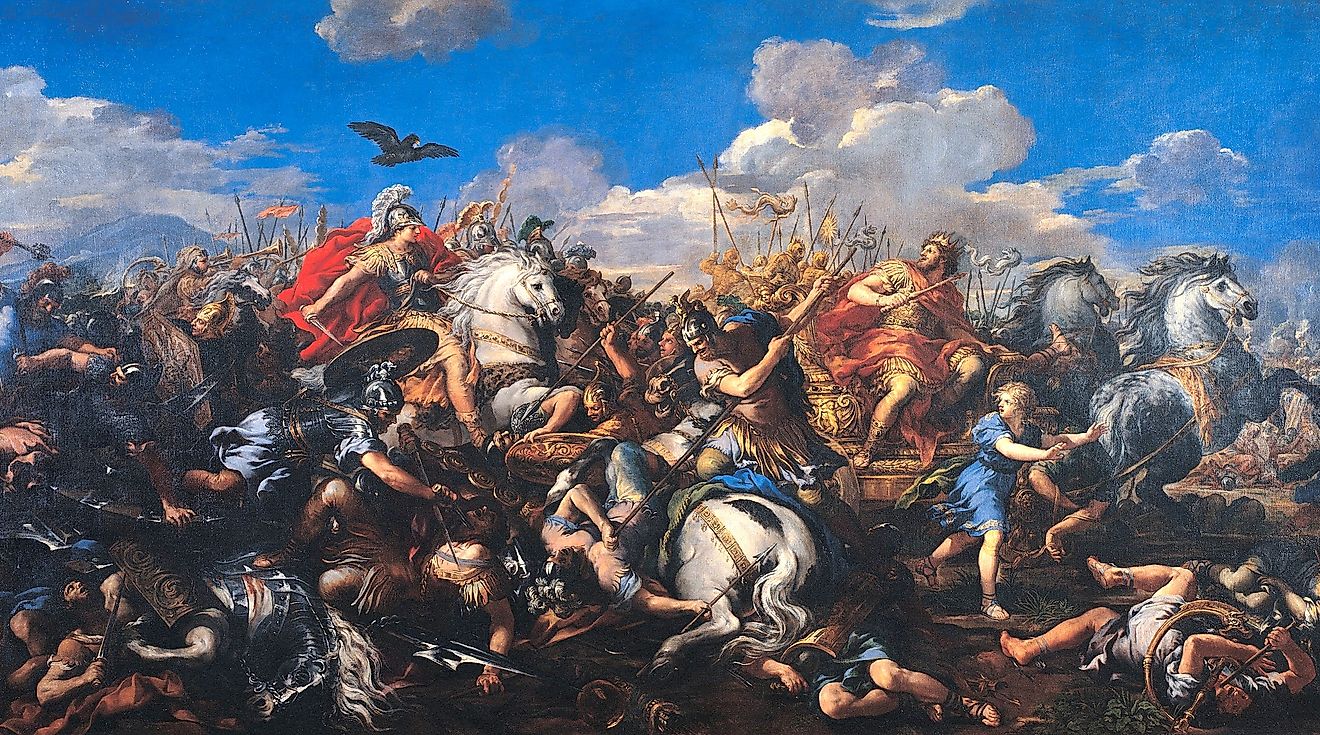
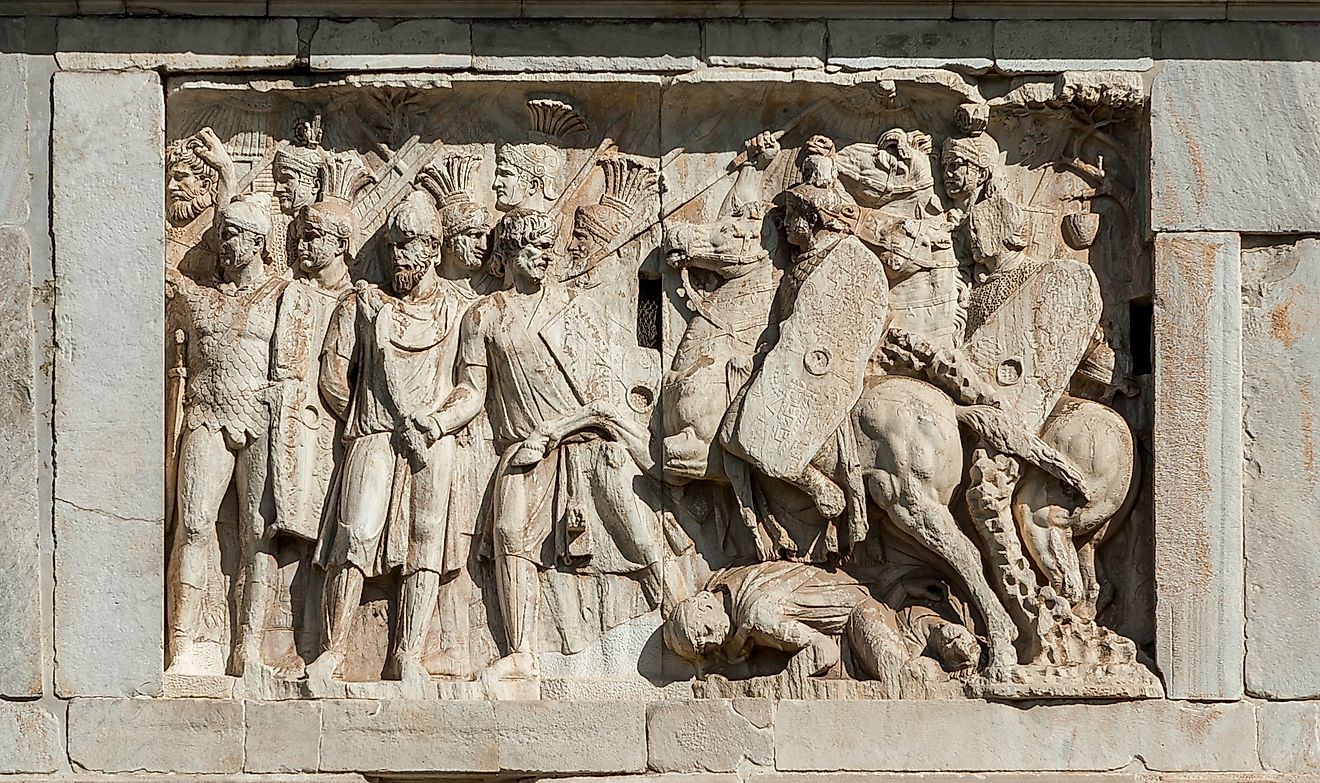
The borders of Rome were a place of near-constant conflict and war. Even at its height, Rome was plagued with endless incursions and raids at its northern frontier with the German tribes of Europe, and to the east, it faced an equally potent rival in the Parthian and Sassanid Empires. However, there was, in fact, a third frontier to the south. The Romans controlled the entirety of North Africa, stretching from modern-day Morocco all the way to Egypt in the east. While much of Roman Africa was sheltered from invasion by the vast expanse of the Sahara Desert, the same could not be said about Egypt. With the Nile River penetrating deep into the African continent, the subsequent lush area that formed along its banks gave the perfect natural pathway into Roman Egypt.
The southern border of Roman Egypt was inhabited by the mysterious Kingdom of Kush. Located in modern-day Sudan and Ethiopia, the Kingdom of Kush had a complex relationship with the Romans that waxed and waned over the centuries. While the Romans and the Kushites would eventually develop something of a mutual understanding, it did not start out that way. The Kingdom of Kush only earned the respect of the Romans after fending off a full-on invasion of their homeland.
Backdrop: The Kingdom Of Kush

The Kingdom of Kush's history does not start and end with Rome. Quite the contrary. The land that the Kingdom of Kush was built upon was inhabited by humans as far back as 8000 BC. The area that the Kushites would eventually rule was often referred to as Nubia by the Egyptians or Aethiopia by the Greeks and Romans. This area was controlled by a smattering of small but wealthy city-states that loosely shared a similar culture with one another. Various attempts were made to try and unify this land until it was achieved around 1069 BC as the Kingdom of Kush.
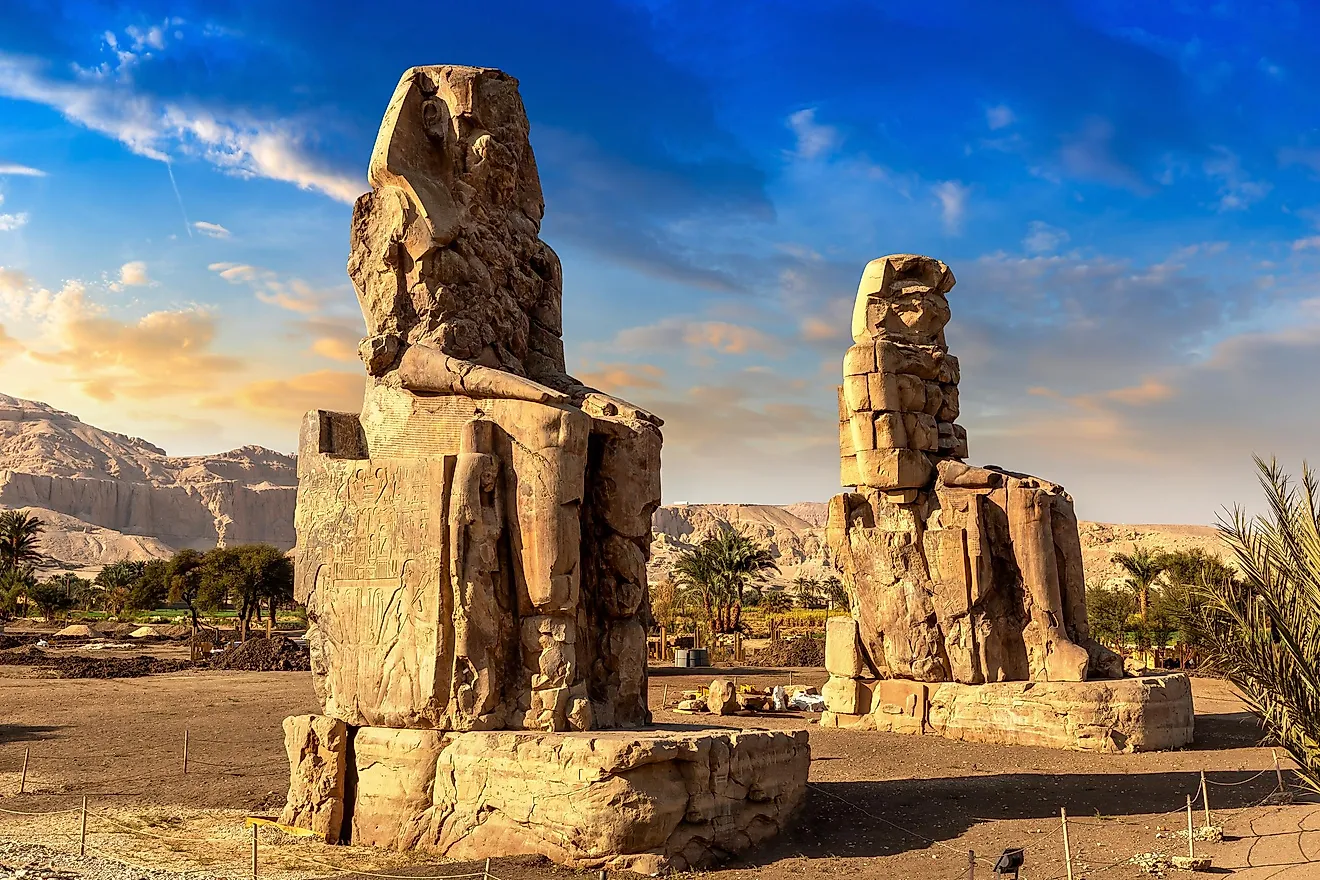
This land was heavily influenced by Egyptian culture through centuries of trade between the two peoples. Much of the artwork, clothes, and royal regalia worn by Kushite nobles and monarchs resembled that of Early Dynastic Egypt. Even the rulers of Kush were buried in tombs similar to that typical of Egyptian pharaohs. It is also believed that the Kushite priests played an equally powerful role in politics and decision-making, much like their cousins to the North.

The Kushites briefly ruled Egypt. As the Egyptian New Kingdom declined, Kushite leaders seized the opportunity to invade. They established their capital in Napata, a key trade city, and together they overthrew the Egyptian pharaohs, founding the 25th Dynasty. Kushite rule lasted from 727 BC to 666 BC until the Assyrians ousted them. In 590 BC, an Egyptian army sacked Napata and destroyed it, prompting the capital to move to Meroe. Meroe remained the center of Kush until the kingdom fell in 350 AD after an invasion by the neighboring kingdom of Askum.
Enter Amanirenas

Kushite society was rather unique amongst the others of the Ancient World. Whereas the role of women in almost every other culture was subservient to a man, the Kushites were much more egalitarian.
The daily life of the average Kushite woman is not entirely clear. However, based on the example of upper-class noble women, it is reasonable to assume that women in Kush enjoyed a better quality of life than their counterparts in Rome. For thousands of years, even before the formal founding of the Kushite Kingdom, multiple Kushite cities were governed by women. These female leaders, known as Kandakes, came from noble families and were anticipated to rule Kush as effectively as any male heir.
One of the most famous of these Kandakes was Amanirenas. Ruling at the same time as Cleopatra in Egypt and Augustus in Rome, it is a safe assumption that Amanirenas was keeping a watchful eye on her Northern border with her newly arrived neighbors, the Romans.
Conflict With Rome

Rome and Kush first came into contact in 30 BC after the Romans had disposed of Cleopatra as the last pharaoh of Egypt and annexed the land. Relations between the two nations were initially good, with both sides eager to trade with one another, but this would not last.
The Romans, initially uninterested in warfare, launched an invasion in 25 BC. They avoided direct conflict with any Kushite army at first, instead marching into Meroe and compelling the city to pay excessively high taxes. Although not officially at war, the Romans effectively extorted the city through the threat of violence if payment was refused.
When the Roman forces eventually left Meroe for a brief campaign in Arabia, Amanirenas quickly mustered an army of 30,000 soldiers and launched raids into Egypt. Amanirenas and her army were able to sack a few Roman settlements but were unable to recover much in the way of valuable materials aside from some enslaved people they were able to take from the local population.
The Might Of Rome

In response to these raids, the Roman governor of Egypt, Petronius, gathered a force of 10,000 men and marched south, meeting Amanirenas at El-Dakkeh and demanding the return of all stolen goods and enslaved people. Amanirenas refused the demands and would meet Petronius's army at Pselchis.
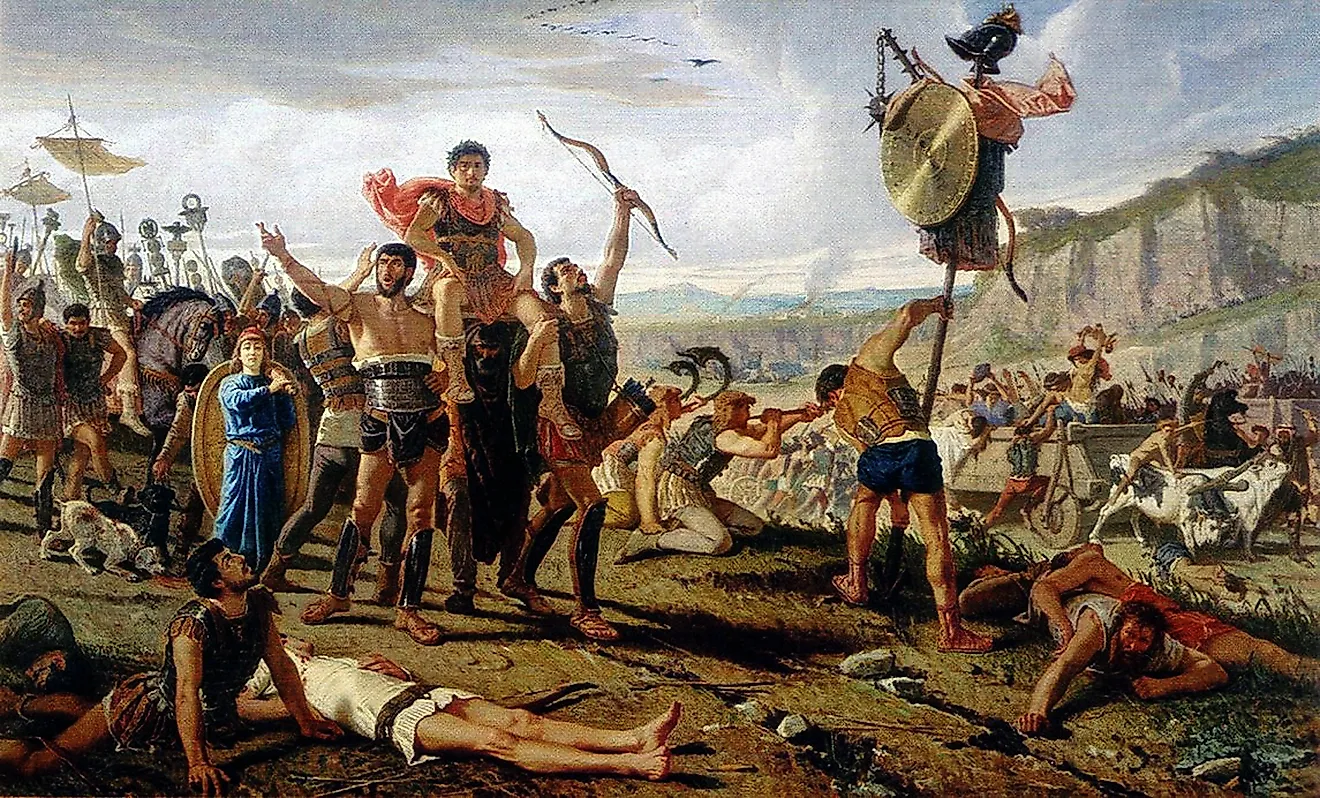
Even though the Romans were outnumbered nearly 3 to 1, the heavy infantry that comprised the bulk of the Roman force was no match for the lightly armored and poorly equipped Kushite warriors. Amanirenas, seeing she could not beat the Roman legions in open battle, ordered a full-on retreat and began a long journey south.
The Romans pursued Amanirenas further into enemy territory, capturing the small town of Primis along the way. They quickly established a garrison there to serve as a future base for further regional conquests. Petronius and his legionaries soon arrived at Napata, where Amanirenas offered peace. Petronius declined the offer and, seeking revenge for the raids by Amanirenas, sacked the city, taking all the loot and slaves they could seize. He returned to Egypt confident that he had broken the Kushite resistance, but he was completely mistaken.
Amanirenas Strikes Back

The heavy-handed actions of the Romans had done little to crush the fighting spirit of the Kushites. In fact, it only emboldened them further. Thousands of more soldiers flocked to Amanirenas's army, and she immediately began a new offensive. Amanirenas attacked the Roman garrison at Primis but were halted after the Romans received reinforcements from Petronius. Stuck in a stalemate, Amanirenas sent diplomats to bargain with the Romans. While diplomacy had failed in the past, this time, the Romans were much more receptive. The envoy sent by Amanirenas was not just seen by Petronius but sent all the way to Roman Emperor Augustus.
According to Roman records, Augustus made an honest and sincere attempt at ending the war and was more than willing to negotiate a true. After months of a standoff between the Romans and Kushites at the gates of Primis, peace was finally agreed upon, and both armies stood down.
Amanirenas: The One-eyed Queen

Almost all of the records we have at our disposal about Amanirenas and her war with the Romans come from the Greek historian Strabo. He described Amanirenas as a "masculine woman who is blind in one eye."
It is most likely that if Amanirenas was indeed missing an eye, then she probably lost it on the battlefield. Amanirenas, much like other Kushite leaders, were not shy when it came to warfare and violence. Launching raids not just into Egypt but also into other neighboring tribes and kingdoms was commonplace throughout Kushite history. The ability of a leader to display a competent understanding of the battlefield and war would have been highly prized by any leader of Kush. Man or woman.
Amanirenas is said to have led her army with the utmost confidence and bravery and, in some cases, joined the battle herself. Even though she could not score a decisive victory against the Romans in an open battle, there is no doubt that her soldiers and military advisors saw her as a worthy and courageous queen.
The Treaty And Aftermath

The treaty agreed upon by the Romans and the Kushites was favorable to both parties. The Romans agreed to withdraw from Kushite land and surrendered the town of Primis without a fight. They also agreed to end any forms of taxes or tribute from Kush as well.
In return, the Romans secured their southern border in Egypt, one of the empire's most prosperous and wealthy provinces. It is assumed by historians that Augustus was so accommodating to the Kush demands due to the fact Rome and Parthia were on uneasy ground in the Middle East. The Parthians were a much larger external threat, and it was crucial not to be bogged down in a fruitless border war that would not get the Romans much in exchange. Now, with Egypt firmly under control, the Roman legions could focus on military action against what would soon become one of their longest-lasting rivals.
Amanirenas continued to rule the Kingdom of Kush until her death. She was succeeded by a strong line of male and female rulers who, by all accounts, ruled Kush fairly and benevolently. Kush would thrive for another three centuries until it was eventually conquered by the Kingdom of Aksum in 350 AD.
The relationship between Rome and Kush would remain quite warm for the following centuries. Trade between the two powers was incredibly lucrative and made each nation rich. Years later, Emperor Nero would even send an expedition to seek out the source of the Nile River. When the Romans arrived in Kush, they were aided by the Kushite king and are thought to have traveled as far south as Ethiopia or even Uganda, thanks to Kushite assistance.
Concluding Reflections
The Kushites had proved to be one of the biggest military powers the world had ever known. They would not be easily subjugated and would fight tooth and nail for their independence. Not only would the war guarantee the freedom of the Kushite people, but it would also usher in an age of relative peace and prosperity.
While the famous Roman rivals of Persia, Carthage, and Barbaric Tribes all deserve their time in the sun, it is tragic that ancient nations like the Kingdom of Kush and other African states are so often glossed over and forgotten. Even a cursory glance at the rich history of Africa is enough to get even the most casual enjoyer of historical topics hooked for life.