How Babylon Used Double Walls and Moats to Deter Invaders
The ancient city of Babylon, in Mesopotamia (modern-day Iraq), is one of the most studied examples of early urban defensive planning. The First Babylonian Dynasty, beginning around 1894 BCE under the chieftain Sumu-abum, is credited with the city's earliest fortifications. Over the next thirteen centuries, Babylon was rebuilt, expanded, and refortified many times, reaching its peak under Nebuchadnezzar II (reigned 605 to 562 BCE), who completed the double wall, gate, and moat system the rest of this article describes.
These features were not symbolic showpieces. They were engineered to deter, delay, and repel attackers. Even when Babylon eventually fell to Cyrus the Great, the city's defences forced the Persian king to abandon a frontal assault and devise a different method of attack entirely.
The Double Walls

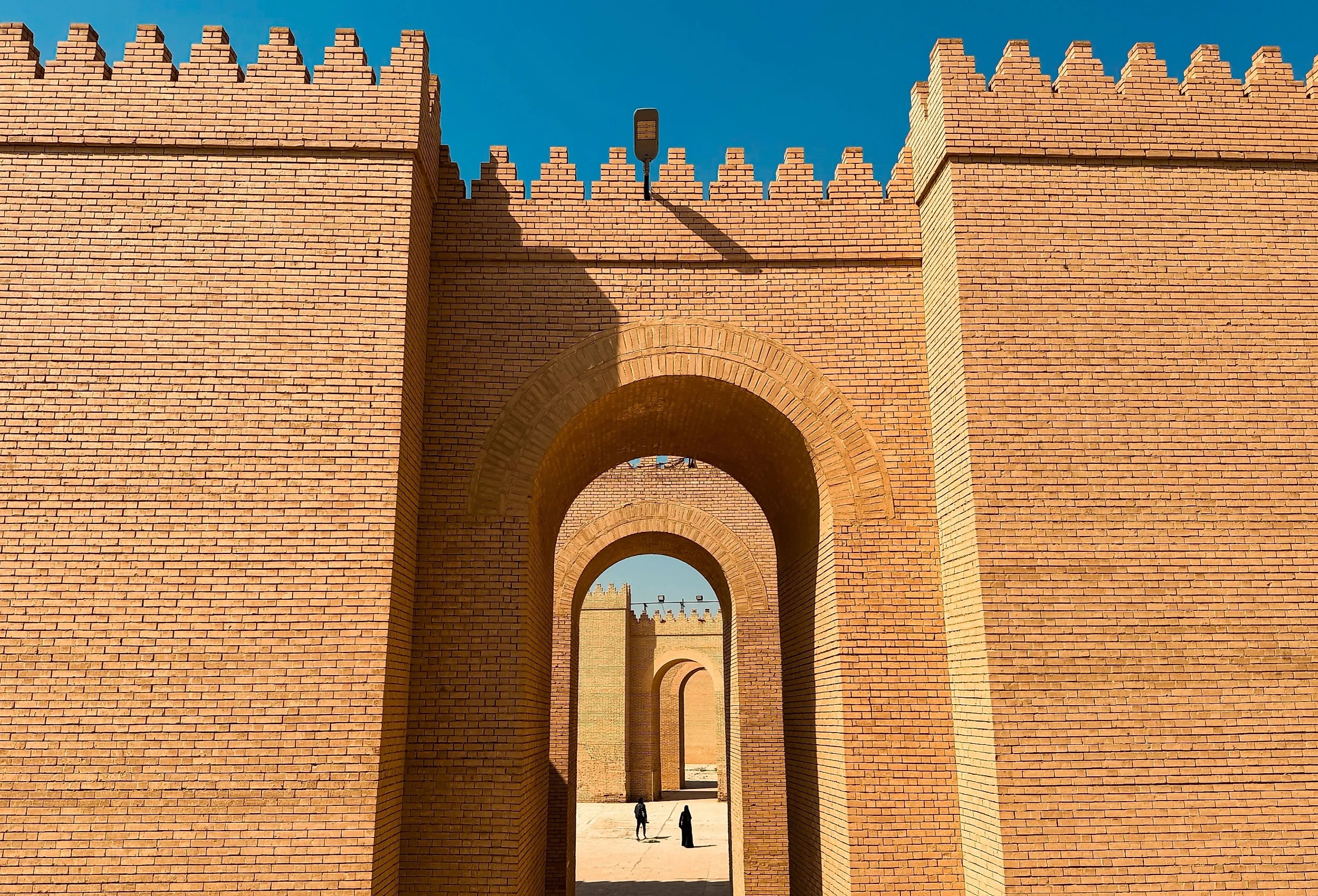
Babylon's two parallel walls turned the approach to the city into a controlled battlefield. The inner wall, Imgur-Enlil ("Enlil has been gracious"), was built of baked brick set in bitumen mortar. The outer wall, Nimitti-Enlil ("Bulwark of Enlil"), was a massive mudbrick rampart. Both materials were durable, fire-resistant, and difficult to undermine. Under Nebuchadnezzar II, the inner wall measured around 6.5 metres thick and the outer wall around 4 metres, with a roadway running between them roughly seven metres wide. The two walls together stretched more than 8 kilometres around the central city.

The layered design did more than provide a backup if the outer wall were breached. The space between the two walls, with a moat in front of the outer one, created a kill zone. An attacker who pierced the outer rampart found himself confined to a narrow corridor, exposed to fire from the inner wall above, with no quick way forward and no easy retreat. Defenders inside the inner wall had time to regroup, redirect troops, and concentrate fire on the trapped force. Multiple layers also discouraged prolonged sieges; an army that could see the second barrier rising behind the first knew that breaching one wall was only the beginning of the problem.
The Gates

Babylon's eight gates, named for major Babylonian deities, were the only routes through the walls. Each was a double gateway, meaning attackers who breached the outer entrance would find themselves trapped in a narrow corridor between the two walls before reaching a second gate. This created a fortified choke point where defenders concentrated fire from the flanking towers and the wall above.
The gates also served a psychological function. In an era when warfare often involved long sieges, the perceived strength of a city could decide whether an enemy chose to attack at all. The Ishtar Gate, the northern ceremonial entrance, was the most famous example. Faced with glazed blue bricks and reliefs of bulls, lions, and dragons (animals associated with the gods Adad, Ishtar, and Marduk), it projected divine protection alongside physical strength. The visual effect was deliberate. An invader approaching Babylon was meant to question whether the city could be taken at all.
The Moats

The moat surrounding Babylon was fed directly from the Euphrates River, an early example of hydraulic engineering put to military use. Unlike a dry ditch, a water-filled moat presented several specific tactical problems for besiegers.
Siege towers, battering rams, and other heavy equipment were difficult to deploy across a water-filled trench. Attackers would have to fill or bridge the moat under fire, slowing their advance to a crawl. A common ancient siege tactic was tunneling beneath walls to collapse them, but a water-filled moat made tunneling extremely difficult. The water also forced attackers to approach the city only at specific crossing points such as gates and narrow causeways, where defenders could concentrate their forces.
Not An Impenetrable City

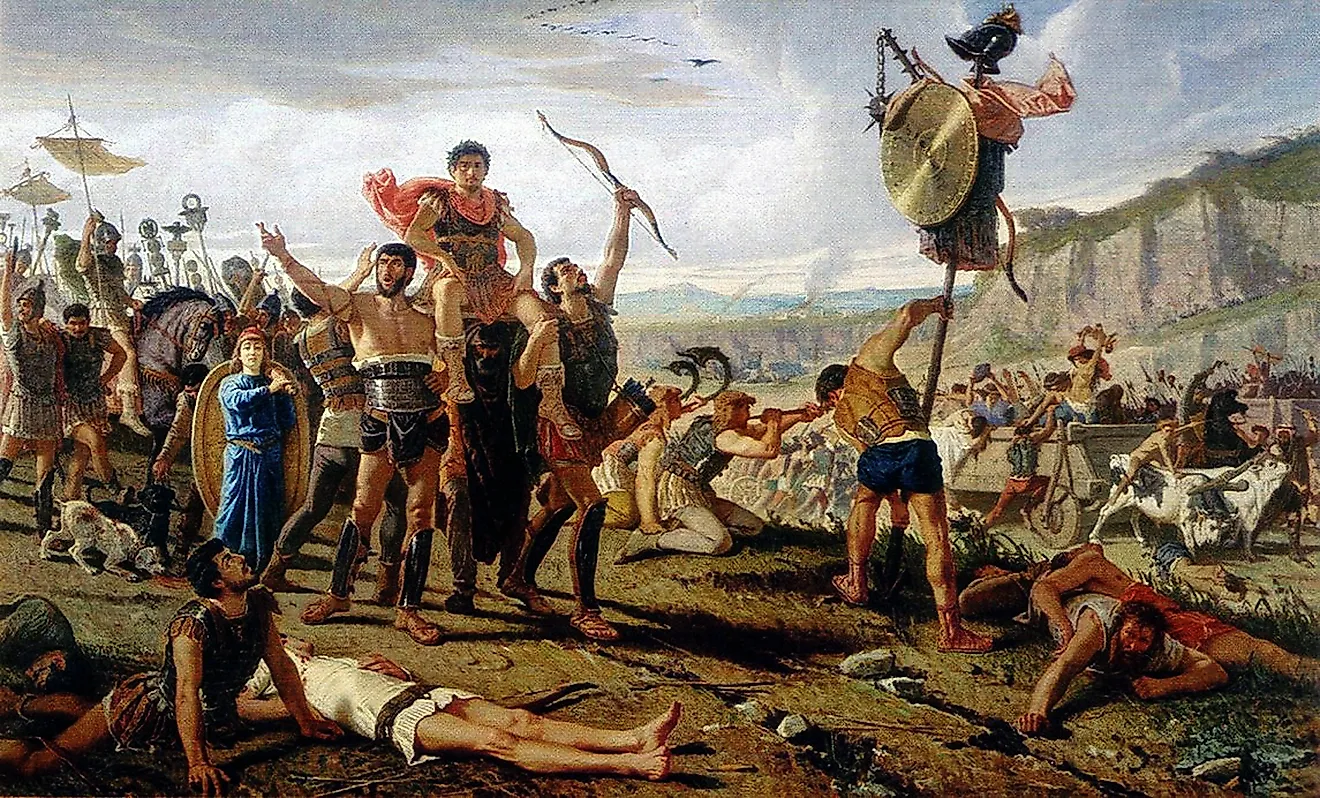
For all of this, Babylon did fall. In October 539 BCE, the Persian king Cyrus the Great captured the city. According to the Greek historian Herodotus, Cyrus diverted the Euphrates upstream into an artificial basin, lowering the water level inside Babylon to the point where his troops could wade along the riverbed and enter the city under the walls. Other ancient sources, including the Cyrus Cylinder and the Nabonidus Chronicle, suggest the conquest was less dramatic and more political: Babylon was already weakened by internal divisions under King Nabonidus, and the Persians may have entered with little resistance from the population. Modern historians continue to debate which account is closer to the truth.

What both accounts share is the absence of a successful frontal assault. No invading army stormed Babylon's walls or breached its gates. Whether by river-bed infiltration or by political collapse, the city fell because its defences were bypassed, not beaten. That is the relevant point. The walls, gates, and moats were never overcome on their own terms; they were sidestepped.
This is the standard most ancient defences are measured by. A successful fortification was not one that could never fall, but one that forced an attacker to spend so much time, money, and ingenuity on the problem that they were willing to abandon their original plan. Babylon's defences did exactly that. Even Cyrus, one of the most successful conquerors of the ancient world, judged a direct assault impractical and turned to engineering on a city-altering scale to find another way in.
The river that fed Babylon's moat was also, in the end, the route by which the city was taken. That is the limitation of any defensive system tied to a single resource. The Euphrates was both Babylon's water supply and its outermost barrier, and an enemy capable of manipulating the river could turn the city's greatest asset against it.
The Broader Context

Babylon's fortifications illustrate an important principle in the history of military architecture. Effective defences do more than block attacks. They constrain enemy options, raise the cost of invasion, and shape the strategy an attacker is forced to adopt. Babylon's double walls created layered resistance and tactical traps. Its moat redirected and slowed siege techniques. Its gates combined physical defence with psychological intimidation. Together, these features forced any attacker to fight on Babylon's terms.
Most of what we know about these defences comes from modern excavations and references in ancient texts and inscriptions. The site today is a UNESCO World Heritage protected ruin in central Iraq, with reconstruction and conservation work ongoing. The walls themselves no longer stand at their full ancient height, but the engineering principles they embodied (layered defence, controlled approach, integrated water systems, deliberate intimidation through architecture) reappear in fortifications across the ancient and medieval world. Babylon's legacy lies not in being unconquerable, which it was not, but in showing what a city could demand of its conquerors.