7 Strange Discoveries About the Acropolis of Athens
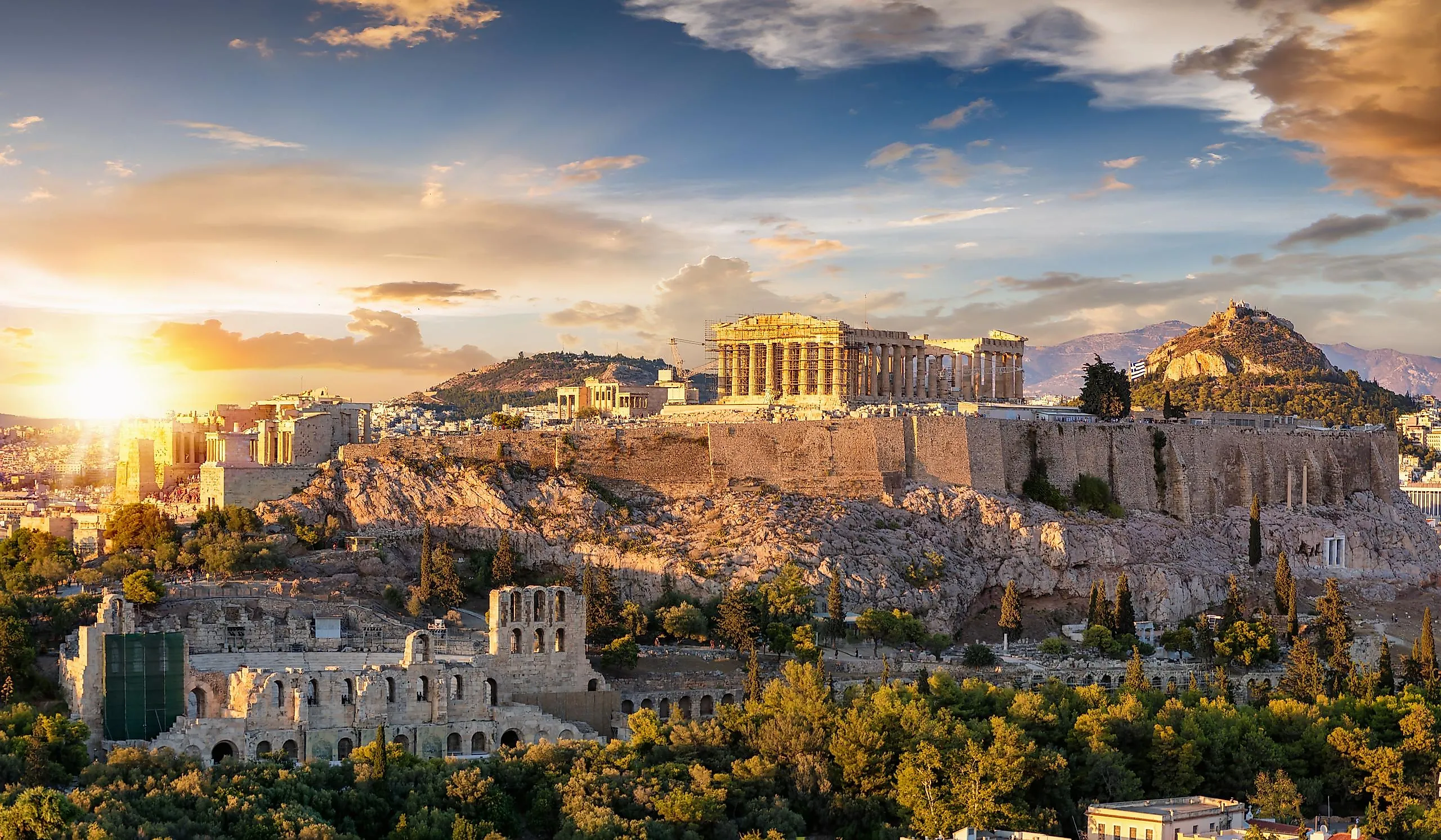
As far as historical landmarks go, the Acropolis of Athens is one of the most beloved. It's possible to spot the ancient citadel on an outcropped hillside covered in rocks. Travelers are welcome to track down its location above the brilliant city of Athens, Greece. Its historical significance and fabulous architecture have turned it into a blissful vacation destination for history buffs and curious individuals who want to learn more about ancient mythology and civilization. There’s something incredibly artistic about the way the Acropolis of Athens looks from an outsider's perspective. There’s much to uncover about the Acropolis of Athens beyond its general location, though. Here are a few discoveries about the Acropolis of Athens to become aware of before potentially taking a trip there yourself.
The Acropolis of Athens was a beacon of Greek resistance to Nazism

The German War Flag being raised on the Acropolis of Athens, April 1941. In Wikipedia. By Bundesarchiv, Bild 101I-164-0389-23A / Theodor Scheerer / CC-BY-SA 3.0, CC BY-SA 3.0 de, Wikipedia
Let’s rewind to April 1941 for a moment. When Greece came under Hitler’s rule, a swastika was placed at the top of the Acropolis. Many Greek citizens weren’t on board with Hitler’s regime and were willing to risk it all to stand up for their beliefs. Manolis Glezos and Apostolos Santas were two college students who put their lives on the line to defend the Acropolis of Athens. They snuck past guards to reach the top, where they removed the swastika flag. Their act of resistance was not only brave... it was heroic. Their courageous actions helped build confidence in the spirits of other people living in Greece at the time.
The Acropolis of Athens was constructed in the 5th century BC

If you’re interested in pinpointing when the Acropolis of Athens was built, the answer is that it dates back a very long time, mostly to the 5th century BC. Much of what visitors see today at the Acropolis was created during that period. The Parthenon stands out as the epicenter of the site, built using about 100,000 tons of marble. These marble blocks were carefully smoothed and carved to fit perfectly. Many travelers find it remarkable that the Acropolis has withstood the centuries, remaining majestic and impressive. The efforts to construct it so long ago are truly commendable.
The name translates to “City on the Air”

When translating what the Acropolis of Athens actually means, it translates to “City on the Air.” The name makes sense since the Acropolis was built on such a physically high hillside. Along with translating to “City on the Air," it also translates to “High City" or “City on the Extremity." An extremity is the furthest limit of something, which could easily refer to the height of an object. "Acropolis" is a word that comes from the Greek language, but it is now used to describe buildings and structures that are constructed in highly elevated areas around the globe. Functioning in places that are highly elevated means dealing with higher altitudes and reduced oxygen levels. This is something the original settlers dealt with in their daily lives.
The Acropolis of Athens was once hit by a cannonball

Learning that the Acropolis of Athens has endured severe damage in the past might be quite shocking. The truth is that the Acropolis of Athens has been through the wringer. Back in 1687, it was hit by a cannonball when the Venetians tried to lay siege to the area. The Acropolis of Athens had to be rebuilt in some places because of the damage. This was because the Parthenon was full of gunpowder at the time. Another destructive moment for the Acropolis of Athens occurred when the Turks destroyed the temple of Athena Nike to make room for a cannon battery. The difference is that the destruction of the temple of Athena Nike was intentional and productive.
The Parthenon was dedicated to the Greek goddess Athena

When it comes to Greek mythology, there’s a lot to explore and analyze. The Greek goddess Athena was known as a virgin and was worshiped by the Athenians. Since “Parthenon” means “House of the Virgin,” the Parthenon on the Acropolis of Athens was designed with her in mind. Athenians were determined to celebrate and praise Athena, a goddess recognized for wisdom and intelligent military strategies. Other Greek gods and goddesses were honored for their aesthetic beauty, ability to provide pleasure, or religious values. Athenians who aimed to stay prepared for wars against enemies leaned on their prayers to the goddess Athena for confidence and battlefield prowess.
The Propylaea was never completed

As shocking as this might sound, the Propylaea remains unfinished to this day. The Propylaea, also known as the gatehouse temple, is the breathtaking stairway that people must climb to reach the central monuments of the Acropolis. Building the Propylaea cost the people of the land millions of dollars at the time, which, when translated into today's money, is a staggering sum. Despite such a massive investment, the finishing touches were never completed. One reason for the delay likely revolves around the Peloponnesian War against Sparta. Even after the war concluded, the Propylaea didn’t receive the final touches it required for closure.
The Acropolis of Athens is NOT one of a kind

While some might think the Athens Acropolis is unique, that's incorrect. Numerous Acropoleis existed across Greece centuries ago. Built mainly for religious or military purposes, they were quite common. You could find Acropoleis in Corinth and Rhodes too. Almost every Greek city had one, including Mycenae and Tyrins, where finding their Acropoleis was easy. Despite the existence of many, the Athens Acropolis remains the most famous.
Over 1 million visitors make their way to the Acropolis of Athens every year. It's certainly one of the most beloved and appreciated destinations in Greece. A guided tour of the Acropolis of Athens will cost you about €51, which translates to $55.13. Taking in all that the Acropolis of Athens has to offer is an enticing dream for plenty of vacationers with a taste for history. The breathtaking sculptures, the Theater of Dionysus, the Temple of Athena Nike, and the gateway to the Propylaeum are just a few of the sites to explore. The Healing Temple of Asclepius is another vital stop when exploring more than 2,500 years of riveting history.