Which Countries Were Never Invaded By Britain?
The claim that only 22 countries in the world have never been invaded by Britain comes from historian Stuart Laycock's 2012 book All the Countries We've Ever Invaded: And the Few We Never Got Round To. Laycock spent roughly two years working alphabetically through every UN member state, plus Kosovo, examining whether British forces had at any point conducted what he counts as an invasion: military presence, force, threat of force, raid, or armed incursion sanctioned by the Crown. Out of the roughly 193 countries he examined, he found British military activity in 171. That leaves 22 countries the British have never reached in any military capacity.
The 22 Countries Britain Has Never Invaded

At its 1920 territorial peak, the British Empire covered roughly 35.5 million square kilometres, about 24% of Earth's land area, and held some 412 million subjects, about 23% of the world population at the time. It is the largest empire in recorded history by both measures. The 22 countries that escaped British military attention according to Laycock's count are listed alphabetically below.
- Andorra
- Belarus
- Bolivia
- Burundi
- Central African Republic
- Chad
- Republic of the Congo
- Guatemala
- Ivory Coast
- Kyrgyzstan
- Liechtenstein
- Luxembourg
- Mali
- Marshall Islands
- Monaco
- Mongolia
- Paraguay
- São Tomé and Príncipe
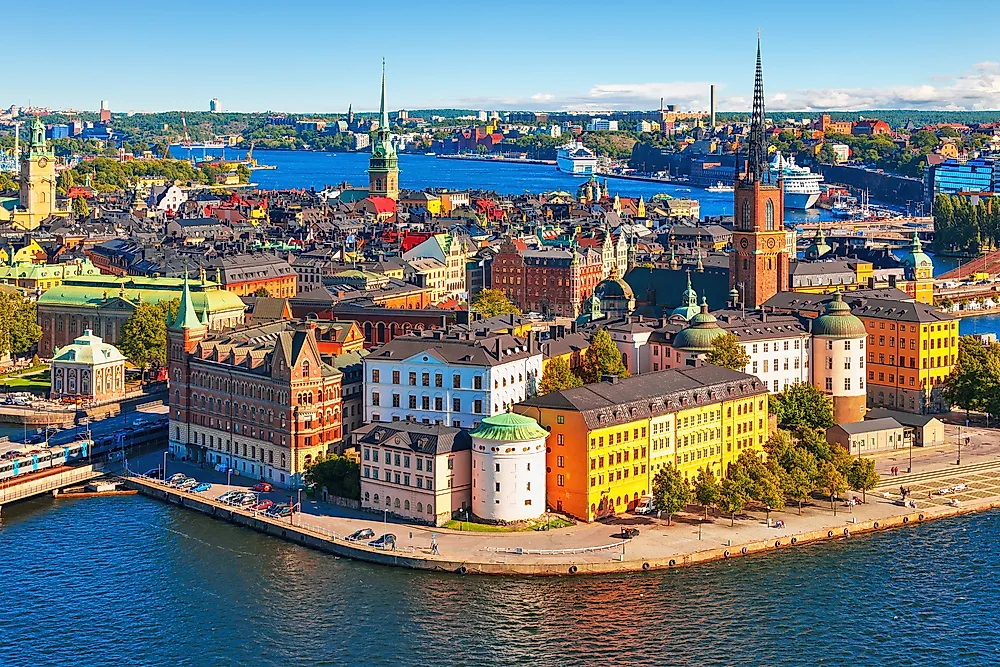
- Sweden
- Tajikistan
- Uzbekistan
- Vatican City
Several entries on this list have wiggle room and are noted as borderline cases in Laycock's own analysis. Mongolia, for example, may have seen British military presence during the international intervention in the Russian Civil War (1918-1922), but Laycock could find evidence of a British mission only within about 80 km of the Mongolian border, not inside Mongolia itself. Sweden is another borderline case: the Anglo-Swedish War of 1810-1812 was declared but produced no actual fighting, and Britain was even permitted to maintain ships off Hanö Island for trade purposes. Laycock counts that as non-invasion, though others have argued the formal state of war should disqualify Sweden from the list.
How The Empire Was Built

The British state itself only formally exists from the Acts of Union of 1707, which joined the kingdoms of England and Scotland into the Kingdom of Great Britain. The earlier military history captured in Laycock's count therefore includes English (and sometimes Scottish) forces before that date. English military expansion begins with the Norman Conquest of 1066, which brought a new ruling dynasty into a Kingdom of England that had already existed under Anglo-Saxon rule since Athelstan unified the country in 927. It continued through the Hundred Years' War (1337-1453), in which English kings held large parts of France for extended periods but ultimately lost almost everything except Calais by the war's end.
The empire reached its territorial maximum in the years after World War I, when Britain absorbed former German colonies and Ottoman territories under League of Nations mandates. The Victorian era (1837-1901) is often described as the high point culturally, with Queen Victoria proclaimed Empress of India in 1876, but the empire continued growing geographically into the 1920s.
Some Of The Countries Britain Did Invade

The 171 invaded countries fall into several categories: formal colonies, protectorates, mandate territories, raid targets, and countries Britain simply passed through during world wars. Below are a few representative examples from across that range.
Afghanistan
The First Anglo-Afghan War began in 1839 when Britain invaded Afghanistan to install a friendly ruler in Kabul and check Russian expansion in Central Asia. The campaign ended catastrophically in 1842 when the retreating British garrison and accompanying civilians were almost completely wiped out during their withdrawal toward Jalalabad, with reports that only one British survivor reached the safety of British India. Britain returned for the Second Anglo-Afghan War (1878-1880) and the Third Anglo-Afghan War (1919), the latter ending Britain's claim to control Afghan foreign affairs.
Burma (Myanmar)
Britain annexed Burma in three stages through the 19th century, beginning with the First Anglo-Burmese War (1824-1826) and ending with the Third Anglo-Burmese War in 1885, after which Burma was absorbed into British India in 1886. Burma was administered as a province of India until 1937, when it was separated as a distinct colony. The Burmese independence movement gained strength under figures including Aung San and the country achieved independence in January 1948.
Kenya
Britain established the East Africa Protectorate in 1895 over the territory that is now Kenya, formally declaring it the Colony of Kenya in 1920. British colonial rule was particularly contested in the central highlands, where settler land seizures fuelled the Mau Mau Uprising of 1952-1960. The British response was brutal, with mass detention in camps, executions, and acts of torture later documented in detailed British government records that were unsealed in the 2010s and led to a 2013 financial settlement with surviving victims. Kenya achieved independence on 12 December 1963.
Egypt
Britain invaded Egypt in 1882, ostensibly to protect European financial interests after Egyptian unrest threatened repayment of foreign debt. The invasion led to a 74-year British military presence. The 1919 Egyptian Revolution achieved nominal independence in 1922 but Britain retained control of the Suez Canal, the Sudan, and significant military rights. Final British withdrawal did not occur until the 1954 Anglo-Egyptian Agreement and the 1956 Suez Crisis, which finally ended British military presence on Egyptian soil.
How The Empire Ended

Decolonisation accelerated sharply after World War II, when Britain emerged victorious but financially exhausted and indebted to the United States. India and Pakistan gained independence in August 1947, followed by Ceylon (Sri Lanka) and Burma in 1948. The Suez Crisis of 1956 marked the political end of Britain's status as an independent imperial power; the failed Anglo-French-Israeli operation to retake the Suez Canal was halted under American financial pressure and demonstrated that London could no longer project force without Washington's consent. Most African colonies achieved independence between 1957 (Ghana) and 1968 (Mauritius and Eswatini). Hong Kong was returned to China in 1997, generally considered the end of the empire proper, though 14 British Overseas Territories remain under British sovereignty.
What Laycock's Count Actually Means
Laycock's threshold for what constitutes an invasion is intentionally broad. He counts state-sanctioned acts of piracy, transitory military presence during a wider war, and even single landings by armed explorers operating with royal approval. Under stricter definitions of invasion (sustained occupation, territorial annexation, formal colonisation), the count of never-invaded countries would be much larger. Under looser definitions, including British naval blockades and sanctions enforcement, it would shrink further. The 22-country figure has stuck partly because Laycock's book is well sourced and partly because the answer is satisfying: even a list this loose still misses most of the small principalities of Europe, the landlocked Central Asian republics, and a handful of West African and Latin American nations Britain simply had no reason to enter.