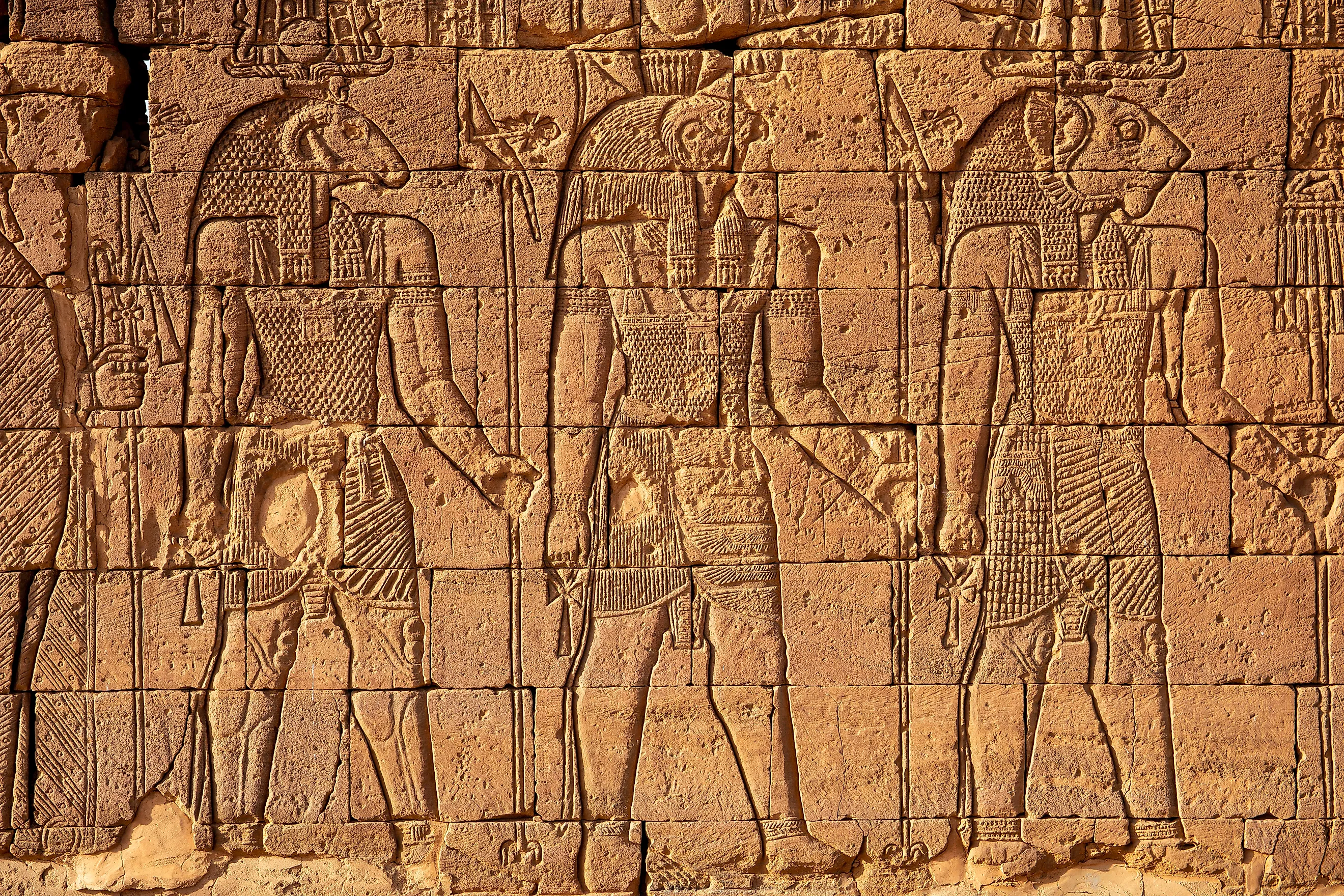
The One-Eyed African Queen Who Defeated the Great Roman Empire
In 25 BCE, the Kingdom of Kush went to war with Rome. The kingdom sat on the middle Nile in what is now Sudan, ruled from Meroë by Queen Amanirenas, a kandake (the Meroitic title for queen or queen mother). The trigger was a tax. Aelius Gallus, the second Roman prefect of newly annexed Egypt, had levied tribute on territory the Kushites considered their own. Four years of fighting ended in a peace treaty negotiated at Samos with Augustus himself. The treaty reset Rome's southern frontier in Africa for three centuries and is generally read by modern historians as a Kushite victory. The Greek geographer Strabo, who knew Gallus personally and visited Egypt around 25-24 BCE, is the principal contemporary source. Cassius Dio adds detail two centuries later.
The Kingdom of Kush Before The War

Kush was old by 25 BCE. The state had ruled the middle Nile for more than a thousand years, with its capital at Meroë from around the 6th century BCE onward. The older capital at Napata, 240 kilometres to the north, had lost political primacy but kept its religious importance. Kushite kings had previously conquered Egypt. Piye campaigned north around 727 BCE, and his successors ruled Egypt as the 25th Dynasty until the Assyrian invasions of 671-663 BCE under Esarhaddon and Ashurbanipal pushed them back south of the First Cataract. The Meroitic revival that followed produced the second great phase of Nubian civilization. Its economy ran on gold mining, iron smelting (Meroë's iron-working remains are among the most extensive in ancient Africa), and Red Sea trade. Its rulers used a distinct Meroitic script, the earliest indigenous writing system in sub-Saharan Africa, still only partially deciphered. Its monarchs built pyramids at Meroë, Nuri, and El-Kurru. Royal women held political and religious authority, and ruling queens and queen mothers (kandakes) appeared regularly in the dynastic record.
Rome's Annexation of Egypt

The Roman annexation came fast. Octavian (the future Augustus) destroyed the fleet of Mark Antony and Cleopatra VII at Actium in September 31 BCE. Both died by suicide in Alexandria the following August, ending the Ptolemaic dynasty after 275 years. Octavian made Egypt an imperial province under a prefect responsible directly to him rather than to the Senate, an unusual arrangement reflecting Egypt's role as Rome's grain supplier.
The first prefect, Gaius Cornelius Gallus, was a poet and former friend of the emperor. He suppressed a revolt in the Thebaid in 29 BCE and erected trilingual monuments at Philae claiming credit for the conquest. Augustus recalled him in 27 or 26 BCE on charges of impropriety. Gallus took his own life.
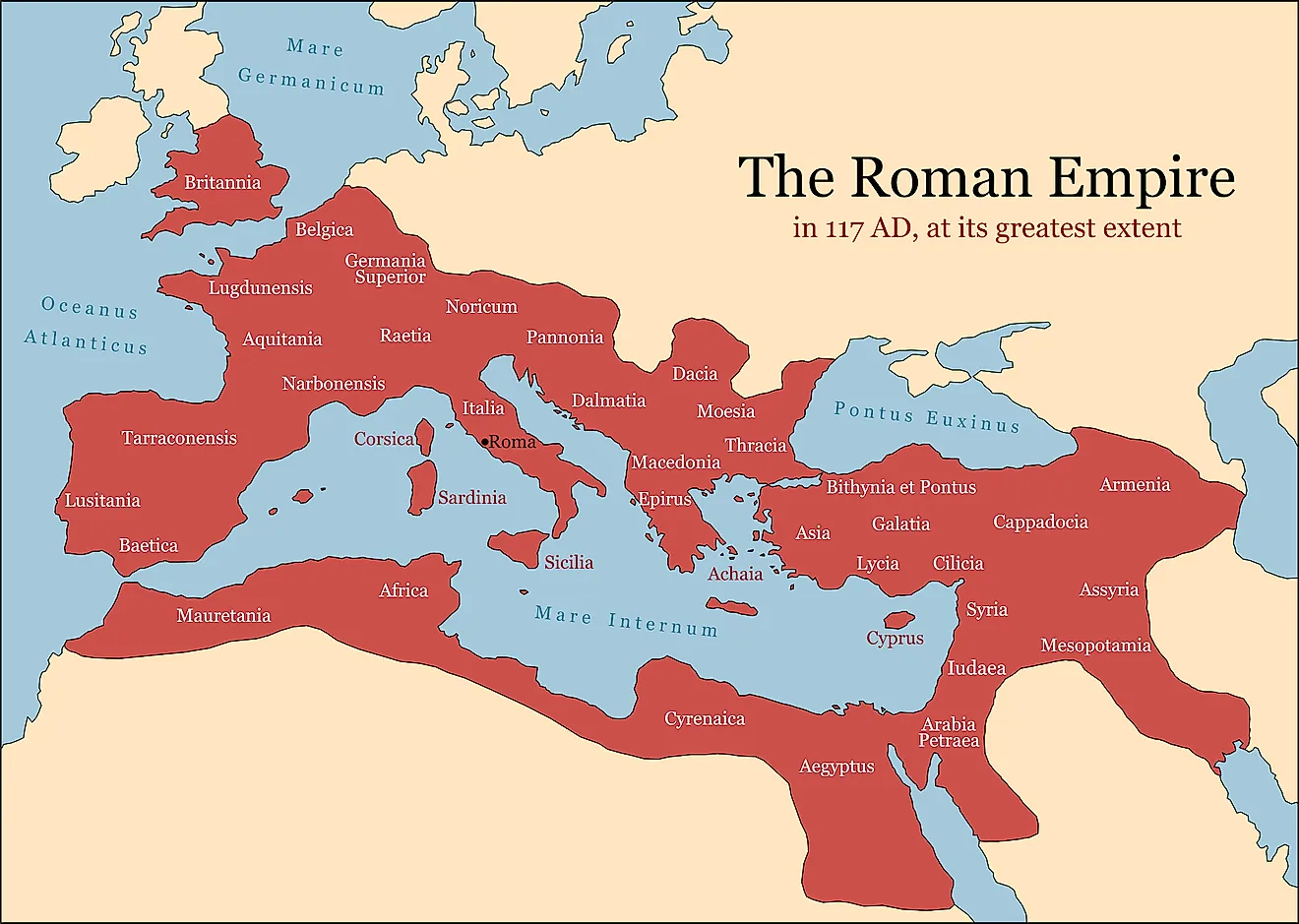
The second prefect, Aelius Gallus (no relation despite the shared name), led the disastrous Roman expedition into Arabia Felix (modern Yemen) in 26-25 BCE. Disease and desert wrecked the army. The withdrawal of Roman troops from southern Egypt for that campaign created the opening Kush would exploit. Before leaving, Aelius Gallus had imposed taxation on the Triakontaschoinos, the "Thirty-Mile Strip" between the First and Second Cataracts. The Kushites considered this territory their own.
The Kushite Invasion of Upper Egypt

In 25 or 24 BCE, the Kushites struck. Queen Amanirenas, her co-regent King Teriteqas, and their son Prince Akinidad led an army Strabo counted at 30,000 men into Roman Upper Egypt. They took Syene (modern Aswan), Elephantine, and the temple complex on Philae. Small Roman garrisons were expelled. Roman citizens were taken captive. Teriteqas appears to have died shortly after this campaign, leaving Amanirenas as sole ruler with Akinidad as her co-regent.
The Kushites also removed three bronze statues of Augustus from the captured cities and carried at least one south. In 1910, John Garstang's expedition at the temple of Amun in Meroë found the bronze head of one of those statues buried beneath the threshold of a stairway leading into the temple. The placement was deliberate: every worshipper entering would step on the emperor's face. The head, now in the British Museum (BM 1911,0901.1), dates to the 27-25 BCE period and is one of the finest surviving Roman bronzes.
Petronius's Counter-Invasion

Rome's response came under Gaius Petronius, the third prefect of Egypt. He marched south along the Nile in 24 or 23 BCE with roughly 10,000 troops and defeated a numerically superior Kushite force in the field. Strabo presents the Roman campaign as a decisive victory. Modern scholarship is more cautious. Strabo knew Petronius and may have had access to his dispatches, and the favourable terms of the eventual treaty suggest the outcome was less one-sided than his account implies.
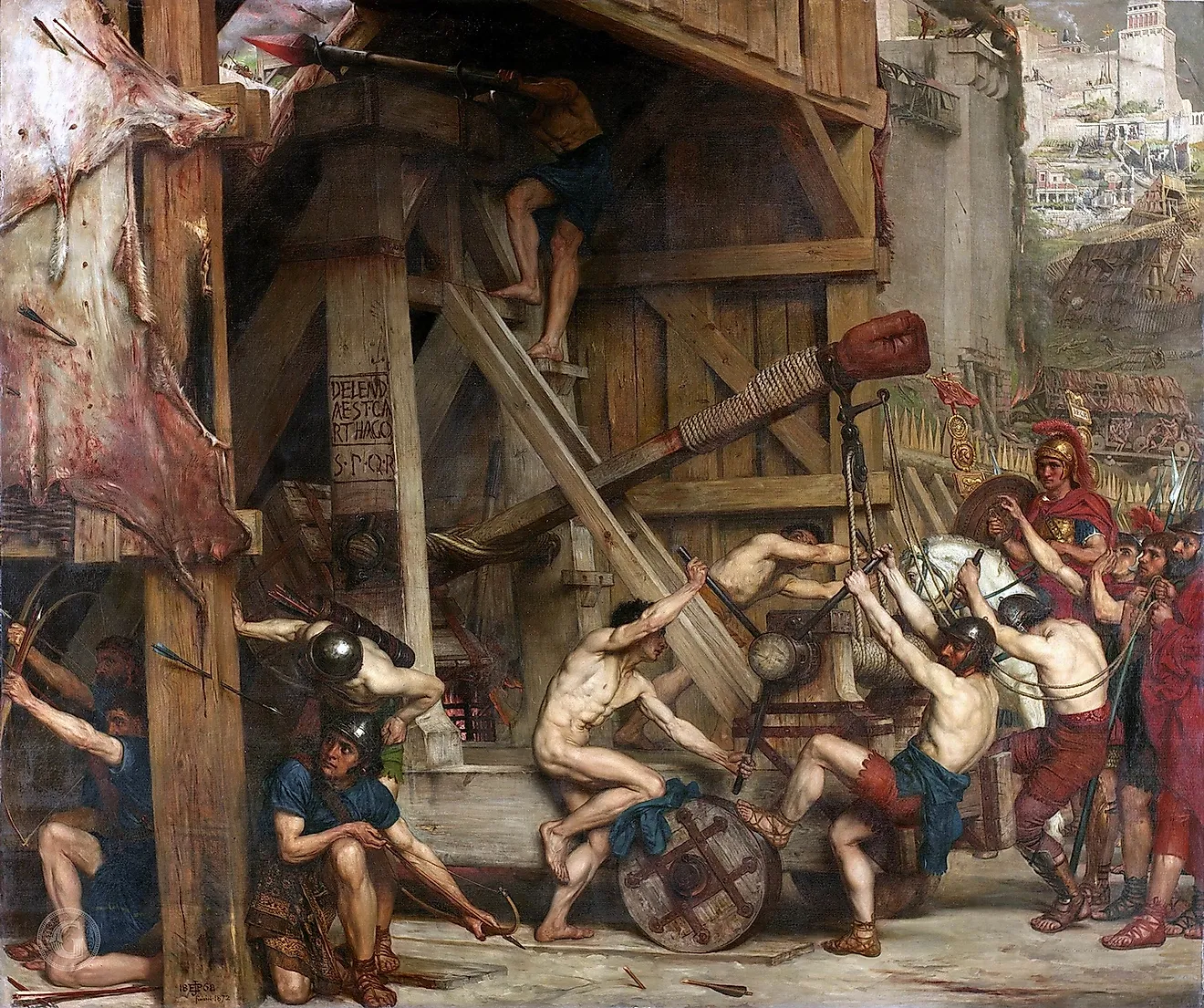
Captured Kushite officers told Petronius (apparently falsely) that the queen's son ruled from Napata, the old religious capital. Petronius marched on Napata and sacked it. He did not press south to Meroë. Another 530 kilometres of desert lay between him and the actual capital, well beyond his supply lines. He garrisoned a fort at Primis (modern Qasr Ibrim, on a bluff above the Nile in Lower Nubia) and pulled the bulk of his army back to Egypt.
Stalemate at Primis

Amanirenas regrouped and came back in 22 BCE, this time besieging the Roman garrison at Primis. Strabo's account in Book 17 of his Geography gives the only contemporary description of her: a "masculine sort of woman, and blind in one eye" (hagke andrike, tuphlē ton heteron ophthalmon). Most scholars associate the injury with the earlier campaigns. Petronius marched back south to relieve the garrison and reached Primis first. He refortified the position before her army arrived. The two armies confronted each other across the position. Neither could force a decisive outcome.
After the standoff, Amanirenas sent envoys. Petronius declined to settle the matter himself (Cornelius Gallus's fate may have been on his mind) and instructed the envoys to take their case directly to Augustus. The envoys reportedly replied that they did not know who Caesar was or where to find him. Petronius provided them with an escort.
The Treaty of Samos
The envoys reached Augustus at Samos. The emperor was wintering on the Greek island during his eastern tour of 22-19 BCE, the same tour during which he negotiated the return of the lost Roman standards from the Parthians in 20 BCE. The treaty with Kush dates to 21 or 20 BCE. Its terms were remarkably favourable to Kush. Augustus remitted the tribute Aelius Gallus had imposed on the Triakontaschoinos. He withdrew the Roman frontier from the Second Cataract back to Hiere Sycaminos (modern Maharraqa). He recognised Kush as a sovereign neighbouring state rather than a tributary. Rome retained the Dodekashoinos (the "Twelve-Mile Land" immediately south of Aswan) as a military buffer zone, but the war did not produce the conquest that Aelius Gallus's taxation policy had implicitly anticipated.
The folkloric tradition that Amanirenas sent Augustus a bundle of golden arrows with the message "weapons for a friend, or for an enemy" is not in Strabo or any other classical source. It appears to be a later legend, possibly mixed with the apocryphal "Candace" stories from the medieval Alexander Romance. What the contemporary sources do confirm is that Amanirenas sent envoys rather than going in person, an unusual diplomatic posture for a small power dealing with Rome.
Aftermath and Long-Term Significance
The Samos treaty held for three centuries. The Roman-Kushite frontier stayed largely peaceful through the first and second centuries CE, with active trade through the Dodekashoinos and significant Roman-period temple complexes developed at Philae, Kalabsha, and Dakka. Emperor Nero sent a reconnaissance expedition of two centurions south up the Nile around 61-62 CE, ostensibly to find the river's source but probably also to scout for a renewed campaign. The explorers reached the Sudd swamps in modern South Sudan and turned back. Nero's death in 68 CE during the Year of the Four Emperors ended any further Roman southward ambition. Kush itself declined gradually through the third century CE under combined pressure from the rising Aksumite kingdom in the Ethiopian highlands and from internal economic strain. The kingdom was finally extinguished around 350 CE, when an Aksumite force under King Ezana sacked Meroë. Amanirenas was succeeded by other ruling kandakes, including Amanishakheto and Amanitore, whose pyramid tombs at Meroë are among the best-preserved royal monuments of the Meroitic period. The bronze head of Augustus found beneath the temple steps remains the most tangible surviving trace of the war.