The Deadliest Ancient Battles Ever Fought
Cannae, August 2, 216 BCE: Hannibal's smaller Carthaginian army surrounded a Roman force of roughly 86,000 and killed somewhere between 55,000 and 70,000 of them in a single afternoon. Changping, 260 BCE: Qin commander Bai Qi reportedly executed 400,000 surrendered Zhao soldiers after a two-year campaign. Kalinga, c. 261 BCE: Ashoka's own Rock Edict XIII records 100,000 killed and 150,000 deported. Gaixia, January 202 BCE: 80,000 Chu killed in the final battle of the Chu-Han Contention. The four ancient battles ahead each combined tactical encirclement with the limited medical care and political stakes of their era to produce casualty figures that still stand among the deadliest in recorded history.
The Battle Of Cannae

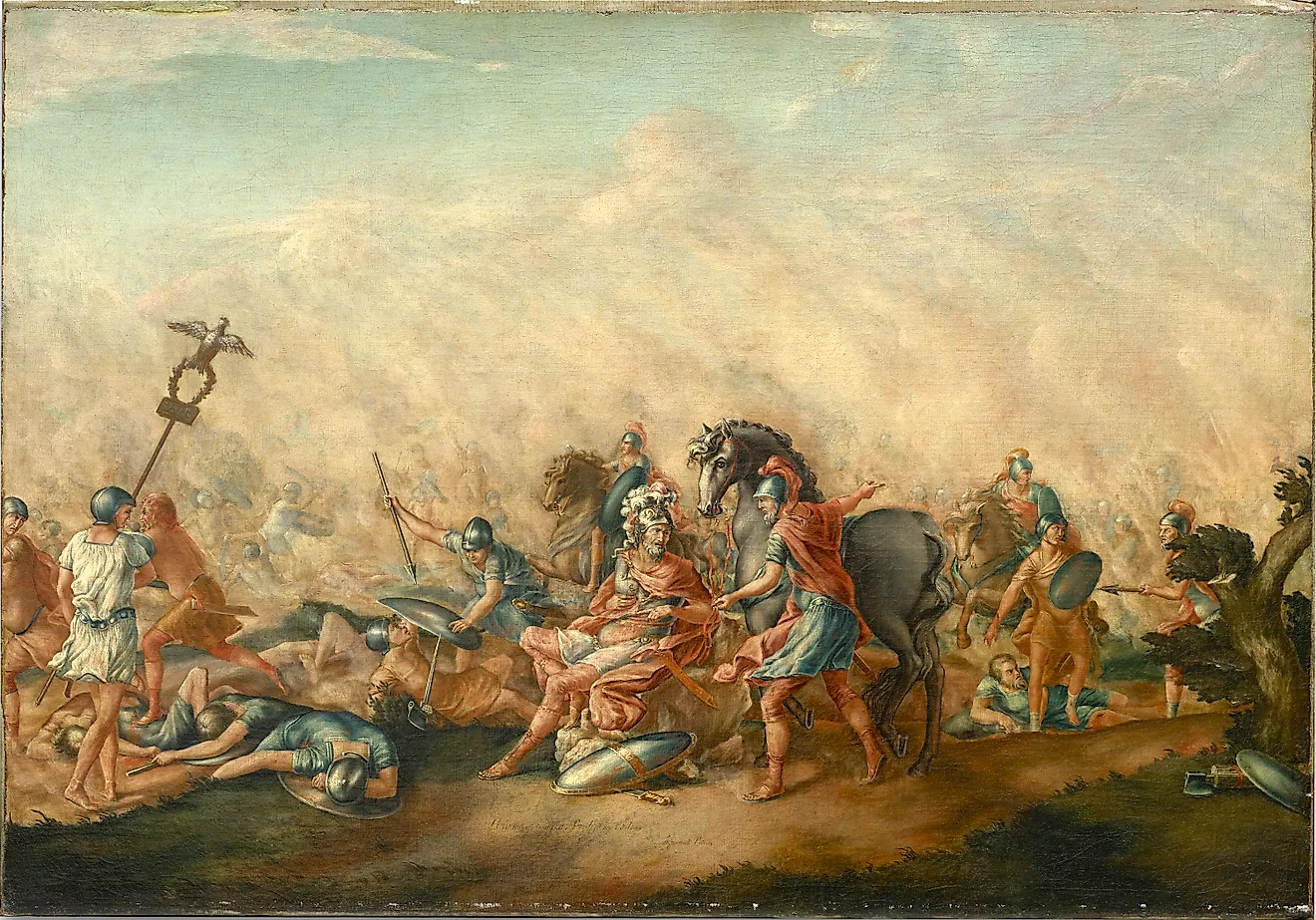
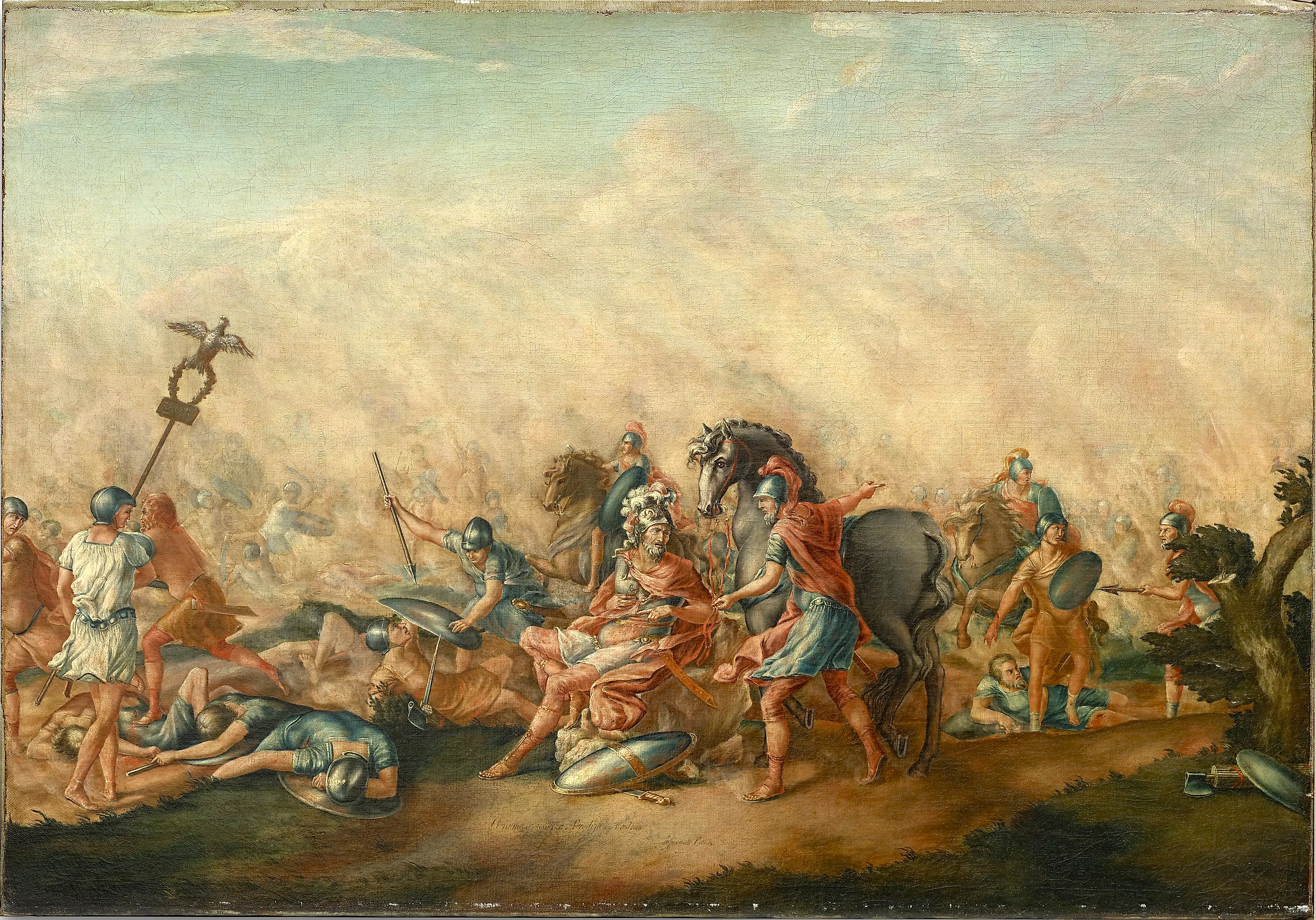
Fought on August 2, 216 BCE in Apulia, southern Italy, the Battle of Cannae remains the textbook example of double envelopment. Hannibal Barca, commanding roughly 50,000 Carthaginian, African, Gallic, and Iberian troops, faced a Roman army of around 86,000 under consuls Lucius Aemilius Paullus and Gaius Terentius Varro. Hannibal deliberately weakened his centre and arranged it in a forward-pushing crescent, intending for the Roman heavy infantry to push it back. As the Roman push compressed the Carthaginian centre into a concave pocket, Hannibal's stronger African infantry on the flanks closed in, and his cavalry under Hasdrubal and Maharbal routed the Roman cavalry and then attacked the Roman rear.
This double-envelopment locked much of the Roman army into a dense pocket with little room to manoeuvre. Ancient accounts describe Roman soldiers packed so tightly together that many could not swing a sword. The battle became a prolonged slaughter, with Livy estimating roughly 55,000 Romans killed and Polybius putting the figure closer to 70,000, against Carthaginian losses of 5,700 to 8,000.

The strategic impact was enormous. Cannae killed Roman citizens, allies, officers, and political elites in a single afternoon, yet Rome refused to surrender. Instead, Rome adopted the Fabian strategy of attrition, avoided direct confrontation with Hannibal for years, rebuilt its armies, and gradually shifted the war in its favour. The Cannae model became standard study at military academies for centuries, with Alfred von Schlieffen, Frederick the Great, and modern commanders all drawing from it.
The Battle Of Changping

The Battle of Changping (260 BCE) ended a three-year campaign during China's Warring States period, fought between the two strongest states of the age: Qin and Zhao. The fight began in 262 BCE over control of the Shangdang Commandery, with Zhao commander Lian Po holding fortified defensive positions across the Dan River against Qin commander Wang He. After a two-year stalemate exhausted both sides, Qin spread disinformation suggesting Lian Po was too cautious. Zhao replaced Lian Po with the inexperienced Zhao Kuo. Qin, in turn, secretly replaced Wang He with Bai Qi, one of the most feared generals of the age.

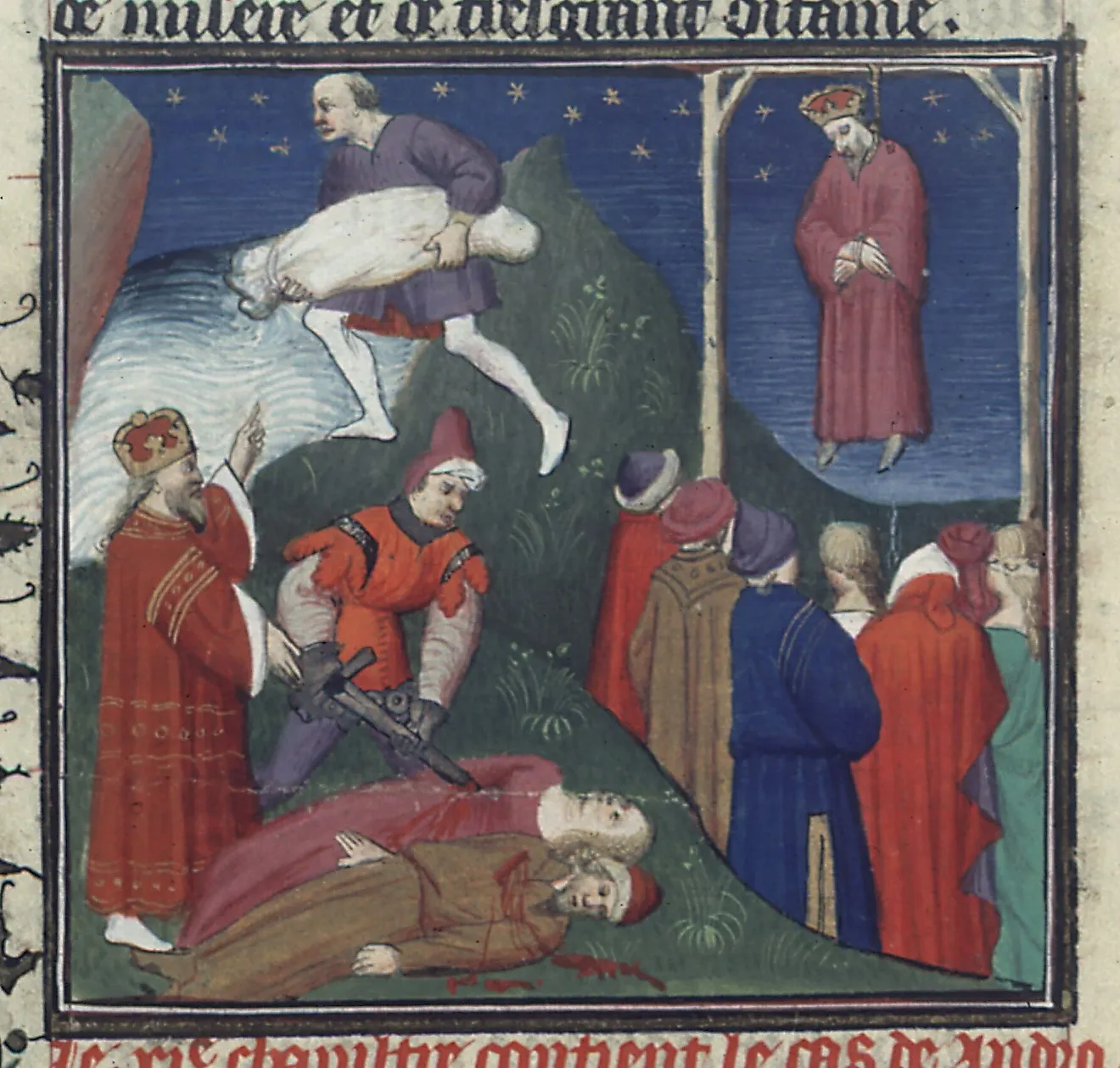
Bai Qi executed a Cannae-style envelopment decades before Hannibal would do the same. He deliberately weakened his left flank, drew the Zhao army across the river in pursuit, and used a 25,000-cavalry force on the north flank to cut Zhao supply lines while 5,000 light cavalry on the south flank severed communications. The trapped Zhao army held out on a hilltop for 46 days before Zhao Kuo died leading a breakout attempt and the remainder surrendered. According to Sima Qian's Records of the Grand Historian, Bai Qi ordered the execution of the surrendered prisoners (traditionally said to have been buried alive) with only 240 of the youngest soldiers spared and sent home to spread word. Sima Qian's traditional figure of 400,000 Zhao executed has been debated by modern historians, but the Battle of Changping remains a textbook case of how ancient warfare combined tactical encirclement with the deliberate destruction of enemy manpower as a strategic objective.
The Kalinga War

The Kalinga War, fought around 261 BCE in the eighth year of Ashoka's reign, was the only major war Emperor Ashoka waged after taking the Mauryan throne. Kalinga (modern Odisha and parts of northern Andhra Pradesh) was the last significant independent state on the Indian subcontinent's east coast, and its conquest brought the entire region under Mauryan control. The decisive battle is believed to have taken place near the Dhauli hills on the banks of the Daya River. According to the Greek ambassador Megasthenes, the Mauryan army numbered roughly 100,000 infantry, 1,700 cavalry, and thousands of war elephants. Kalinga fielded a defensive force of approximately 60,000 infantry, 1,000 cavalry, and 700 war elephants.

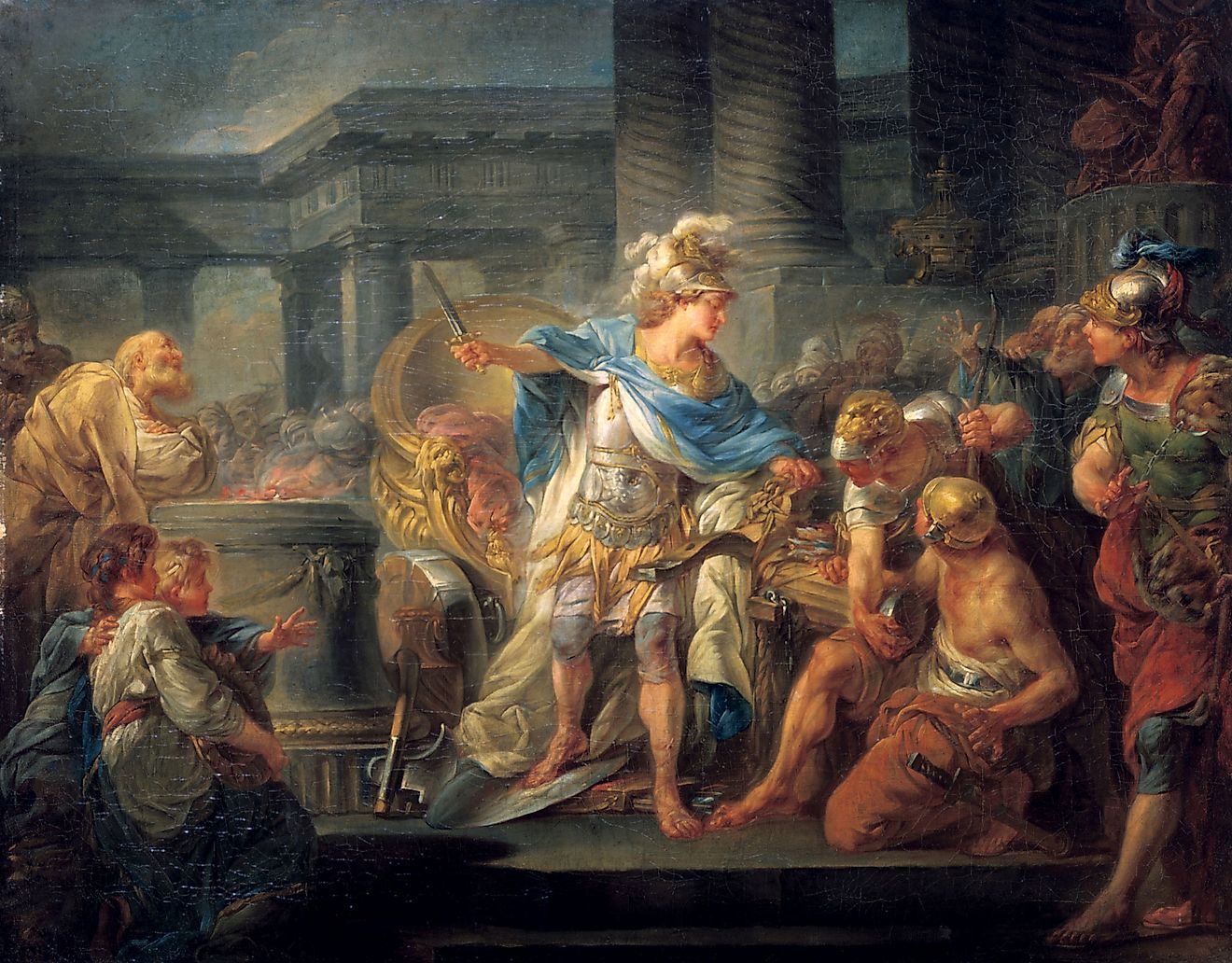
Ashoka's own Major Rock Edict XIII records the human cost in unusual detail: 100,000 killed, 150,000 deported, and many more dying afterward from injury, displacement, and disease. Limited medical care contributed significantly to that aftermath. Ancient armies lacked effective surgery, antibiotics, or advanced sanitation, and minor wounds frequently turned fatal through infection. The carnage is the documented reason Ashoka renounced military conquest, embraced Buddhism, and dedicated the rest of his reign to dhamma (moral law) and ahimsa (non-violence). His rock and pillar edicts, written in Prakrit using the Brahmi script, spread his new policy across the empire and remain one of the rare cases in which an ancient ruler publicly recorded both his casualty figures and his remorse.
The Battle Of Gaixia

Fought in late December 203 BCE through January 202 BCE, the Battle of Gaixia ended the Chu-Han Contention, the civil war that followed the collapse of the Qin dynasty. The two main rivals were Liu Bang, leader of Han, and Xiang Yu, ruler of Western Chu. Han commander Han Xin coordinated a five-pronged invasion of Chu, drawing Xiang Yu's army of roughly 100,000 into the canyon at Gaixia and surrounding it with a Han coalition force estimated at 300,000 to 500,000.

Han Xin then employed psychological warfare known to Chinese strategy as the "Chu Song from Four Sides" tactic. Han soldiers and captured Chu troops sang Chu folk songs through the night, leading Xiang Yu to believe that his homeland had already fallen and that Chu soldiers had joined the Han side in large numbers. Mass desertions followed. Xiang Yu eventually broke out with 800 cavalry, was pursued down to 28 men by the time he reached the Wu River, and committed suicide rather than be captured. Approximately 80,000 Chu were killed in the battle and 20,000 captured. Years of warfare before Gaixia had already devastated entire regions through famine, forced conscription, and rebellion. Liu Bang declared himself emperor a few months later, founding the Han dynasty (202 BCE - 220 CE).
The Meaning Of Lethality
Ancient battles were often all-or-nothing propositions. Defeats could collapse entire political systems because armies depended heavily on local food supplies and seasonal campaigning. Ancient kingdoms lacked the economic systems needed to sustain endless military mobilisation. This intensified the brutality of warfare on both sides. When armies believed surrender would lead to enslavement, massacre, or political destruction, they often fought to the end.
Modern historians debate the accuracy of ancient casualty figures, particularly the round numbers that recur across sources. Ancient casualty numbers are not precise statistics. They are evidence drawn from literary, political, and commemorative traditions. Polybius, Livy, Sima Qian, and Ashoka's edicts all carried different purposes, audiences, and assumptions. A careful reading compares these sources rather than accepting every figure uncritically. Even allowing for exaggeration, the casualties at Cannae, Changping, Kalinga, and Gaixia were outcomes of a different approach to warfare, shaped by the technology, medicine, and political stakes of their time.