Ancient Empires That Collapsed Overnight
Across the ancient world, empires rose quickly, expanded across vast territories, and collapsed thunderously. While no two realms are the same, common themes run through the downfall of each. The Akkadian Empire in Mesopotamia unified much of the region under Sargon of Akkad before breaking apart within a few generations. In Egypt, centralized power of the Old Kingdom weakened as regional governors gained influence and the authority of the pharaoh declined. Centuries later, the Neo-Assyrian Empire built a powerful military state in the ancient Near East, only to disintegrate after the fall of its capital, Nineveh. While these commanded strong centralized rule, each experienced a rapid unraveling driven by a combination of political instability, environmental pressure, and shifting regional power structures. Even the strongest foundations struggle to support empires. Here are some of history's most notable collapses.
The Collapse of the Akkadian Empire

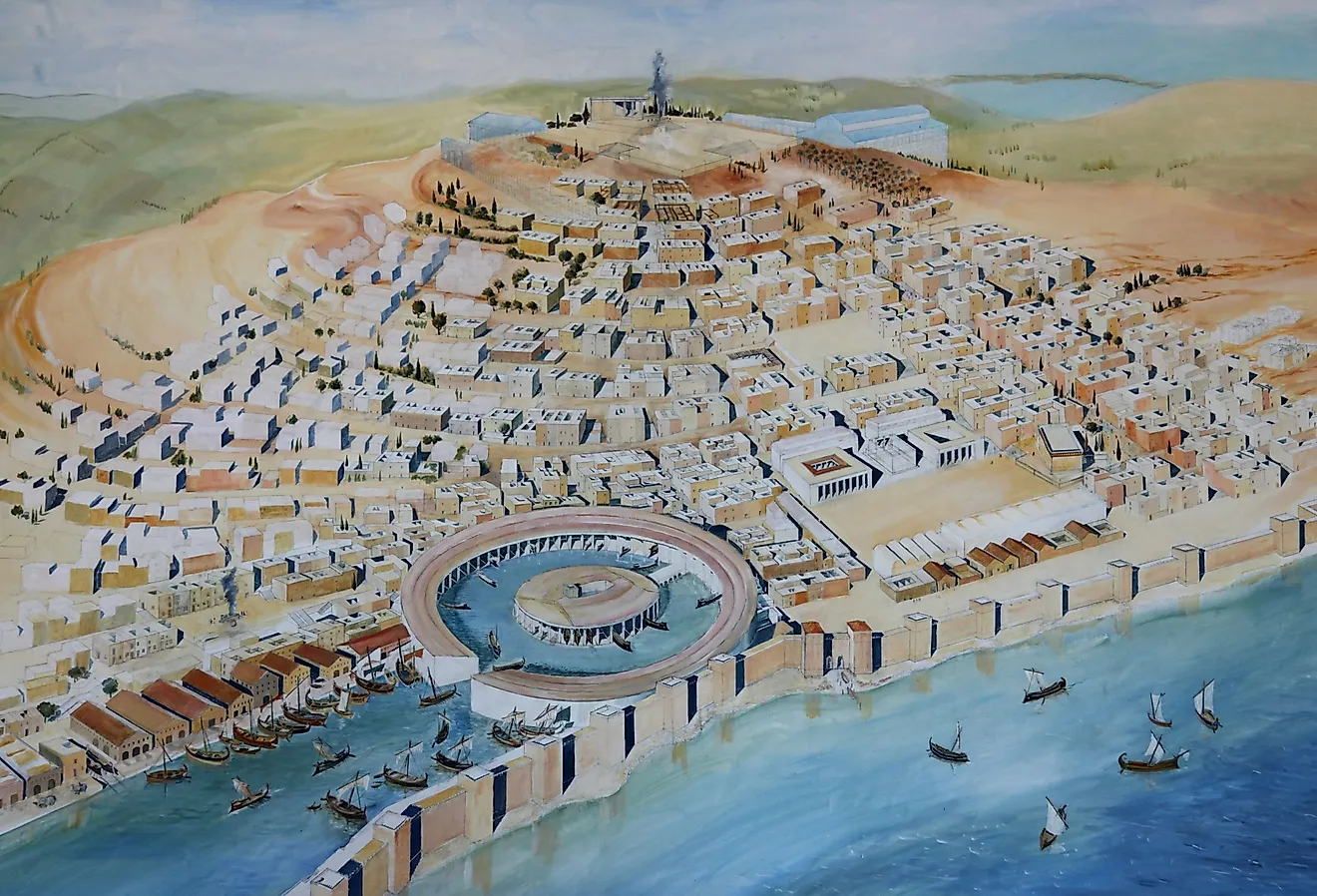
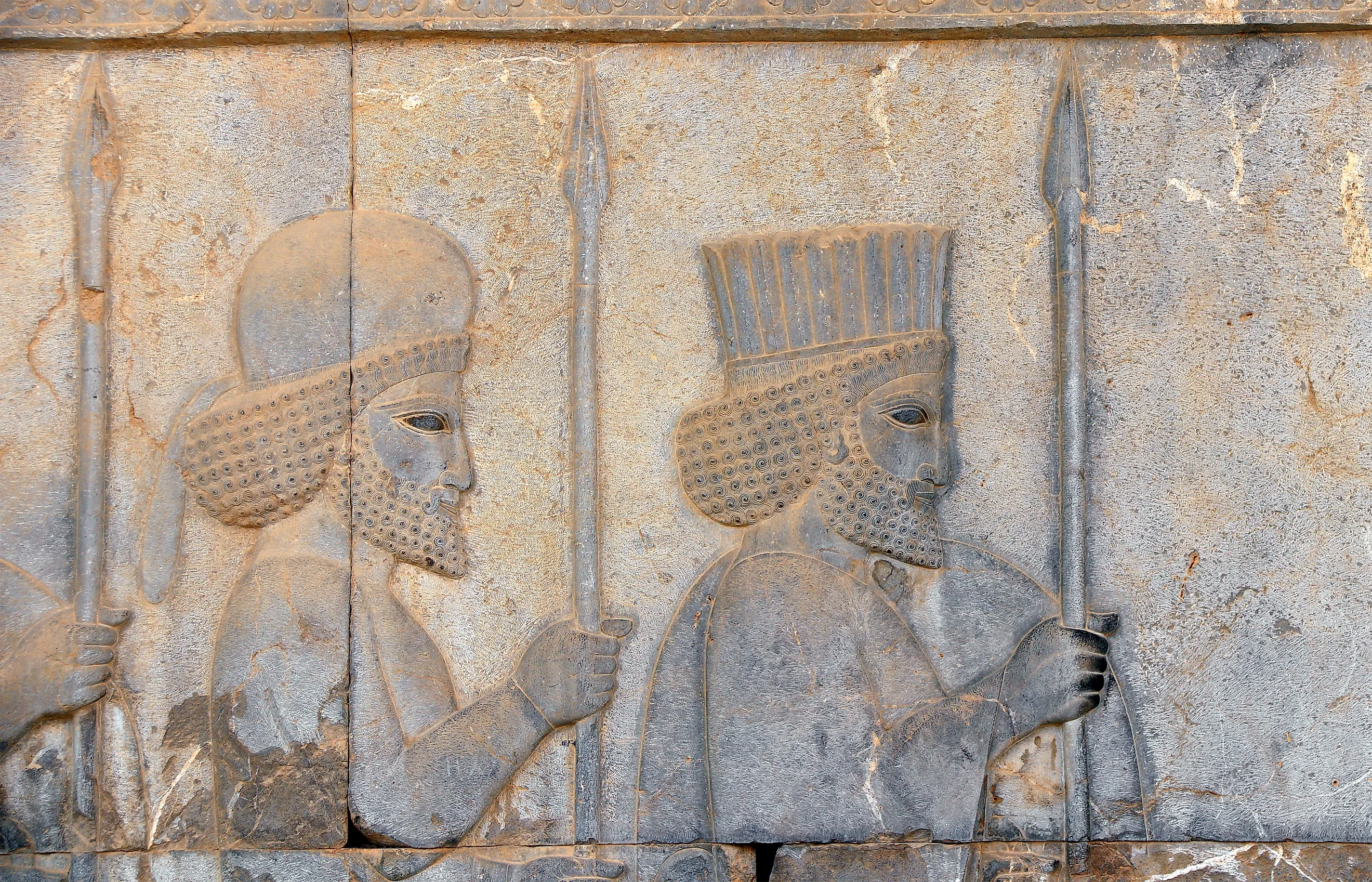
The Akkadian Empire became the first known empire to unite large parts of Mesopotamia under centralized rule. Around 2334 BCE, Sargon of Akkad conquered neighboring Sumerian city-states and built a kingdom that stretched across southern and northern Mesopotamia into parts of Syria. Akkadian rulers controlled this territory through military garrisons, provincial governors, taxation systems, and extensive administrative recordkeeping preserved on cuneiform tablets and cylinder seals. Inscriptions connected to rulers such as Naram-Sin and Shar-kali-sharri show how Akkadian kings promoted centralized authority across distant territories. Although archaeologists still have not identified the exact location of the imperial capital Akkad, excavations at Tell Brak, Tell Leilan, and Nippur demonstrate a large-scale political and economic network.
Evidence from northern Mesopotamia suggests this system weakened rapidly around 2200 BCE. Excavations at Tell Leilan uncovered abandoned buildings, reduced settlement activity, and dust deposits linked to long-term drought conditions during the empire's final decades. Archaeologist Harvey Weiss connected these findings to the 4.2 kiloyear event, a major period of climatic instability that affected much of the Near East around 2200 BCE. Other sites across northern Mesopotamia also show declining agricultural production and shrinking populations during this period. At several settlements, administrative tablets and official seal impressions become far less common, suggesting Akkadian taxation and bureaucratic systems were no longer operating at their earlier scale. Because many of these disruptions appeared within a relatively short timeframe, later accounts often framed Akkad's collapse as sudden and catastrophic.
Environmental stress likely worsened political and military problems that already existed within the empire. Akkadian rulers depended heavily on agricultural taxation and grain redistribution to support armies and provincial administrations across Mesopotamia. As drought conditions reduced crop yields, the imperial government may have struggled to maintain food supplies, military garrisons, and loyalty in distant regions. At the same time, later rulers faced growing instability after the reign of Naram-Sin, whose military campaigns expanded Akkadian control to its greatest extent. Royal inscriptions and later Mesopotamian traditions describe rebellions, regional unrest, and incursions by Gutian groups from the Zagros Mountains. Historians still debate the exact role of the Gutians in Akkad's collapse, but many agree that outside invasions added pressure to an empire already dealing with internal fragmentation.

Mesopotamian literary texts also show how people later understood the empire's fall. The Curse of Agade, a later Sumerian composition, presents Akkad's destruction as divine punishment after Naram-Sin offended the gods. The text describes famine, abandoned cities, social disorder, and the collapse of political authority across Mesopotamia. Although the composition reflects religious interpretation rather than direct historical reporting, it still provides insight into how Mesopotamians explained large-scale political collapse. Instead of describing only military defeat, the text portrays the fall of Akkad as a breakdown of social stability and divine order.
The fall of Akkadian authority reshaped Mesopotamian politics during the following century. Regional powers regained local control after centralized imperial administration weakened across much of Mesopotamia. Around 2112 BCE, the rulers of the Third Dynasty of Ur, commonly called Ur III, restored political unity across much of southern Mesopotamia through a reorganized bureaucratic system centered at the city of Ur. Ur III administrators adopted several Akkadian imperial practices, including centralized taxation, provincial governance, and large-scale recordkeeping preserved in thousands of surviving tablets. Although the Akkadian Empire did not disappear in a single moment, the rapid breakdown of its political authority, agricultural systems, and administrative networks created one of the ancient world's earliest examples of dramatic imperial collapse.
The Collapse of Egypt's Old Kingdom

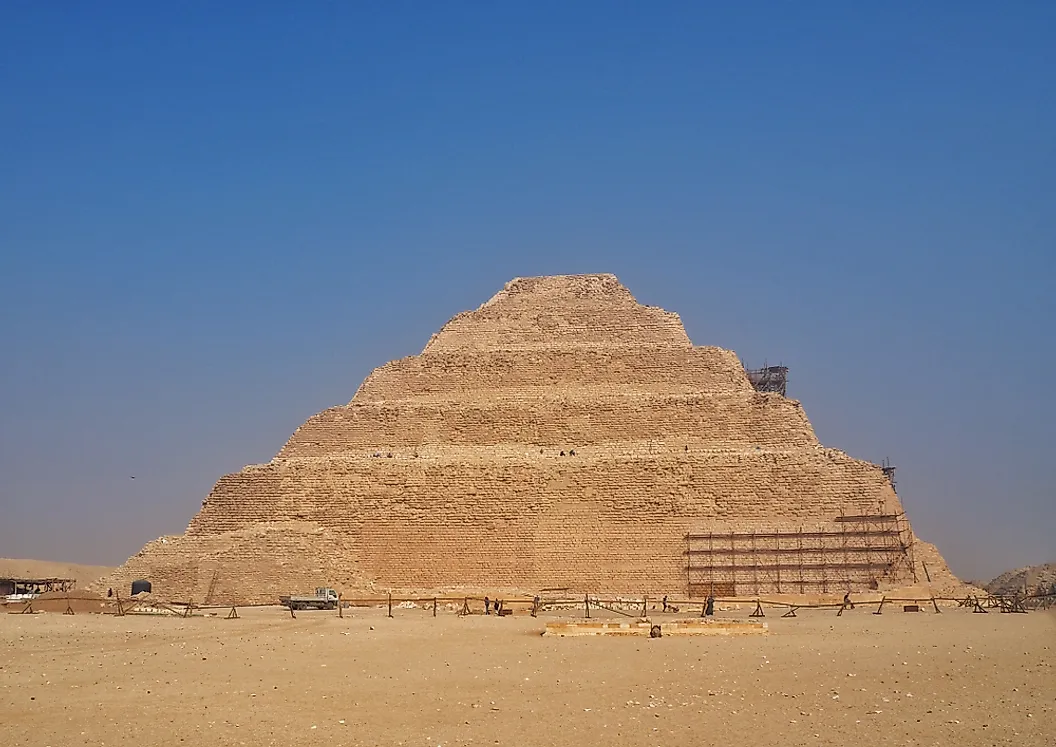
The Old Kingdom of Egypt lasted from around 2686 BCE to 2181 BCE and marked one of the most centralized periods in ancient Egyptian history. During this era, political power concentrated at Memphis, where the pharaoh ruled through a large bureaucracy that managed taxation, labor, and agricultural production along the Nile River. This period produced some of Egypt's most recognizable monuments, including the step pyramid of Djoser at Saqqara and the pyramids of the Giza Necropolis, built under rulers such as Khufu, Khafre, and Menkaure. These projects relied on organized labor systems, regional resource collection, and centralized planning overseen by the royal court.
By the late Sixth Dynasty, the Old Kingdom's political structure began to weaken. The long reign of Pepi II (traditionally said to have ruled for more than 90 years) is often associated with declining central authority and succession instability after his death. During this period, provincial governors known as nomarchs (especially in regions such as Asyut, Elephantine, and Thebes) began exercising greater autonomy. Tomb inscriptions from these officials show increasing control over local taxation, irrigation management, and labor organization, indicating that authority was shifting away from Memphis toward regional power centers. Over time, this decentralization reduced the pharaoh's ability to directly control resources across Upper and Lower Egypt.
Environmental pressures likely intensified these political changes. Egypt's agricultural system depended on the annual inundation of the Nile, which deposited nutrient-rich silt across farmland. Paleoclimate studies suggest a period of reduced Nile flooding toward the end of the Old Kingdom, which would have lowered agricultural yields and disrupted state taxation systems. Some climate reconstructions connect these changes to broader regional instability associated with the 4.2 kiloyear event around 2200 BCE, although the strength of this connection in Egypt specifically is debated. Lower agricultural output would have limited grain redistribution, weakened labor mobilization for state projects, and reduced the central government's ability to maintain authority over distant provinces.
The text The Admonitions of Ipuwer describes famine, social disorder, and the breakdown of centralized authority in Egypt. However, the dating and historical accuracy of the text are disputed, and many scholars interpret it as a literary composition rather than a direct eyewitness account of Old Kingdom collapse. Even so, it provides insight into how later Egyptians conceptualized periods of political fragmentation.
Following the collapse of the Old Kingdom around 2181 BCE, Egypt entered the First Intermediate Period, during which political authority was divided among regional centers rather than concentrated under a single ruler at Memphis. Competing dynasties emerged in areas such as Herakleopolis in Lower Egypt and Thebes in Upper Egypt, reflecting the fragmentation of centralized control. Eventually, rulers from Thebes reunified Egypt and established the Middle Kingdom, restoring centralized administration and reinforcing royal authority over provincial governors. Although the Old Kingdom did not collapse in a single sudden moment, the rapid weakening of royal power, combined with regional fragmentation and environmental stress, marked one of the most significant political transitions in ancient Egyptian history.
The Collapse of the Neo-Assyrian Empire
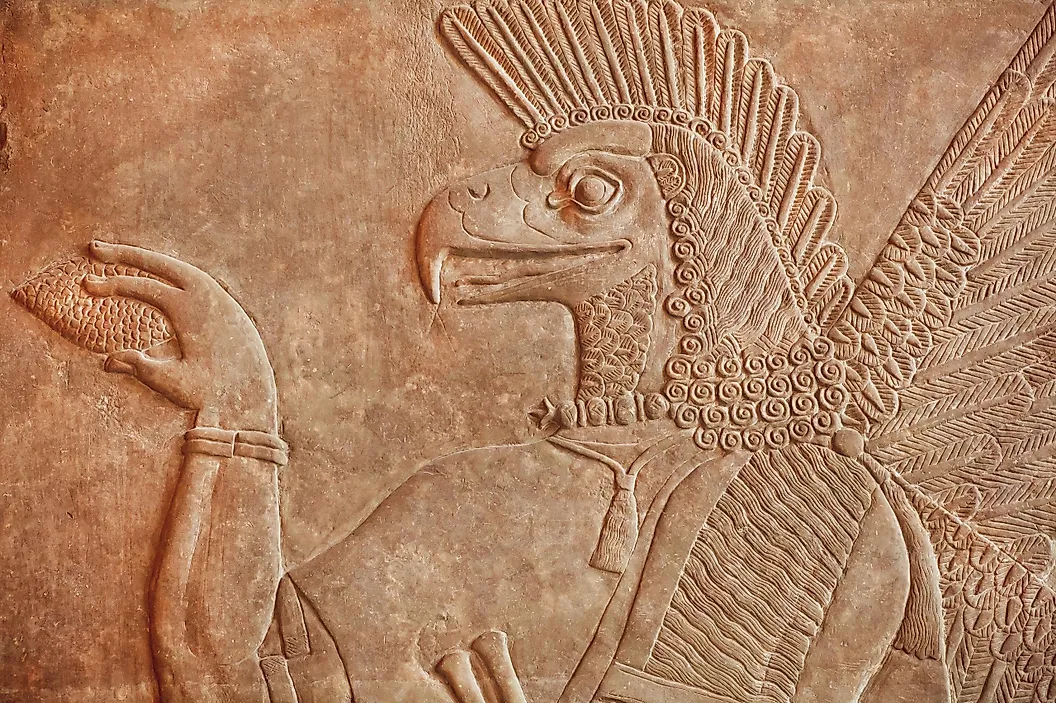
The Neo-Assyrian Empire (c. 911 BCE to 609 BCE) became one of the most powerful military states in the ancient Near East, controlling territories that stretched from modern-day Iraq and Syria to parts of Anatolia, the Levant, and Iran. Its capital shifted over time between major cities such as Ashur, Nineveh, Kalhu (Nimrud), and Dur-Sharrukin (Khorsabad). At its height under rulers such as Tiglath-Pileser III, Sargon II, Sennacherib, and Ashurbanipal, the empire developed a highly centralized administrative system supported by provincial governors, mass deportations of conquered populations, and an efficient military structure. Cities like Nineveh became major political and cultural centers, containing royal palaces, libraries, and large-scale infrastructure projects.
Despite its strength, the empire entered a rapid phase of collapse in the late seventh century BCE. After the death of Ashurbanipal (traditionally dated to 631 BCE, though exact chronology is debated), succession disputes weakened central authority. The empire's vast size, which had once been a source of strength, made coordination increasingly difficult. Provincial regions such as Babylonia began asserting independence, while loyalty among governors weakened under pressure from ongoing military demands and court rivalries.
At the same time, external forces accelerated the breakdown of Assyrian control. A coalition led by the Babylonians under Nabopolassar and the Medes under Cyaxares launched coordinated attacks against key Assyrian cities. The most decisive moment came in 612 BCE, when the capital Nineveh fell after a prolonged siege. Ancient accounts and later traditions describe widespread destruction of the city, including the burning of royal palaces and administrative centers. The fall of Nineveh effectively disrupted the empire's central command structure, making it difficult for remaining Assyrian forces to coordinate resistance from surviving centers such as Harran.

The collapse of Assyria did not occur in a single day, but the fall of its capital marked a rapid and irreversible breakdown of imperial authority. Within a few years of Nineveh's destruction, the remaining Assyrian strongholds also fell, and by 609 BCE, the empire had effectively ceased to exist as a political entity. The speed of this final phase has led historians to describe it as a "cascade collapse," where the loss of key administrative and military centers triggered the rapid disintegration of the entire system.
Assyrian records and later Babylonian chronicles help explain how contemporaries understood this transition. While Assyrian royal inscriptions often emphasized divine support and military dominance, later Mesopotamian sources portray the empire's fall as a reversal of earlier power structures. Archaeological evidence from sites such as Nineveh (modern Kuyunjik mound) and Kalhu (Nimrud) shows destruction layers consistent with violent conquest, including burned structures and disrupted administrative archives. The loss of these urban centers marked not only political collapse but also the end of one of the ancient world's most sophisticated bureaucratic systems.
Following its fall, former Assyrian territories were absorbed into the Neo-Babylonian Empire, while the Medes expanded their influence in the Iranian plateau. Although the Neo-Assyrian Empire did not disappear instantaneously, the rapid loss of its capital cities and administrative network created one of the clearest examples in ancient history of how a highly centralized empire could unravel in a short and decisive final phase.
The Ends of Eras
It's common knowledge that empires have lifespans. Inevitably, power structures succumb to entropy. In Mesopotamia, Akkad's political structure weakened as regional pressures and environmental stress disrupted its administrative network. In Egypt, reduced Nile flooding and the growing independence of provincial governors contributed to the gradual fragmentation of Old Kingdom authority. Centuries later, Assyria's vast territorial reach, combined with internal succession struggles and coordinated external attacks, led to the rapid loss of important cities, including Nineveh.
Although each collapse unfolded under different conditions, they all display a common pattern: centralized empires depended heavily on stable political leadership, reliable resources, and effective communication across regions. When those systems weakened, authority quickly shifted back to local powers, reshaping the political map of the ancient Near East and North Africa.