How the Romans Built Roads That Still Exist
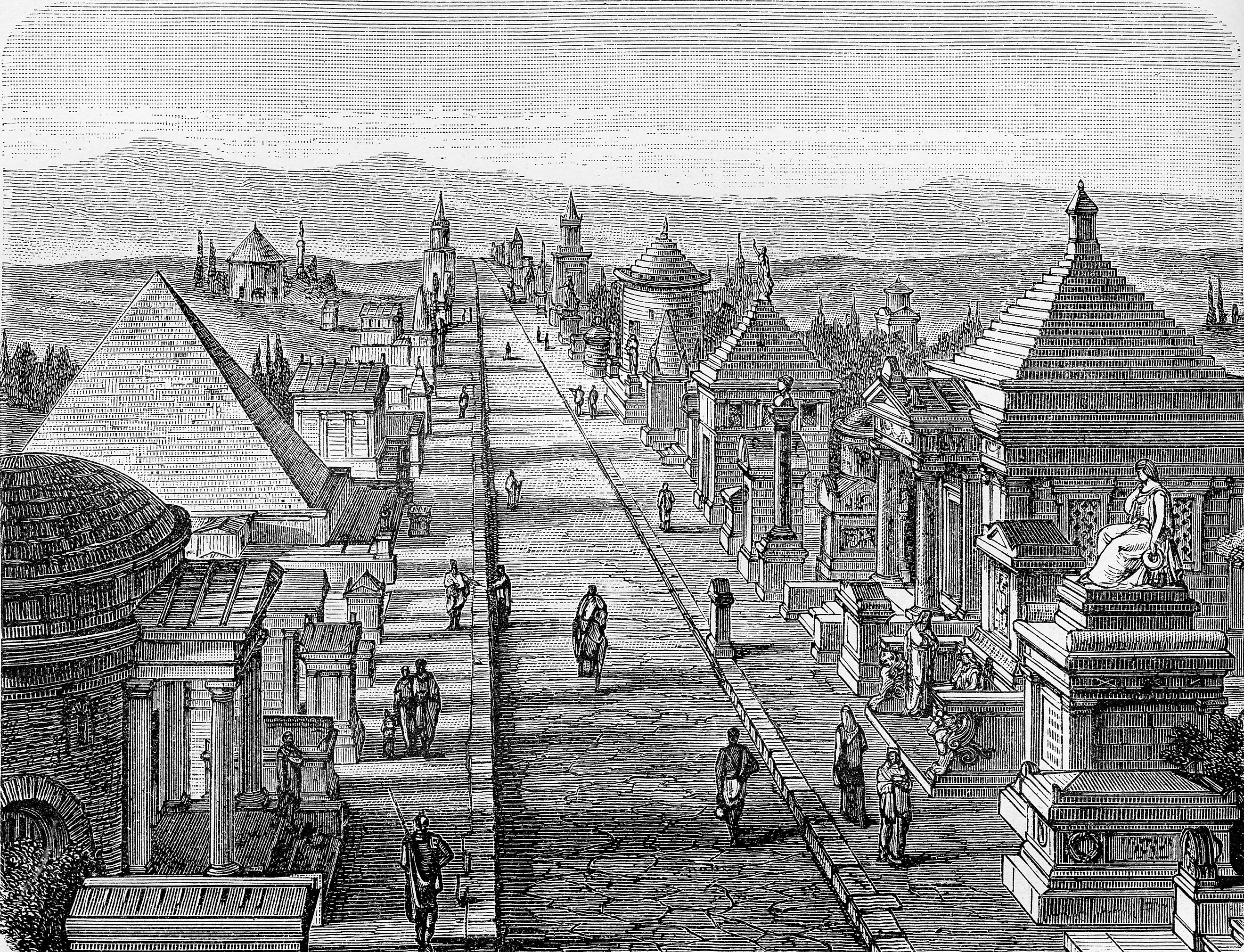
Roman statesman, Appius Claudius Caecus, commissioned the construction of the famous Via Appia (Appian Way) in Italy in 312 BC. Emperors and philosophers strolled along this road. Armies marched down the road, intent on conquest. Many centuries later, some of the Via Appia’s original stones remain, inviting modern visitors to admire the craftsmanship of Roman builders.
This road was the first of what would become a network of 50,000 miles of hard-surfaced highway and over 250,000 miles of secondary paths constructed by the Romans. Across Europe, Asia, and Africa, several roads within this network still exist today, including the Via Augusta in Spain, Stane Street in England, and Via Domitia in France. Building these Roman roads took ingenuity, innovation, and perseverance, and today, they offer a fascinating look at the details of Roman construction.
A Desire for Ultimate Power Resulted in Incredibly Strong Roads

Roman armies had one goal: to assert the Roman Empire’s power and dominance. To facilitate this, troops and messengers needed to move fast. This meant moving through existing hills, farms, and even forests rather than trying to improvise routes. As such, the Romans built roads that cut straight through these landscapes.
Over time, however, more people started using the new Roman roads. These people included citizens who wanted to travel and government officials who needed to reach different parts of their jurisdiction. The roads also allowed merchants to move their goods from one place to another. Without Roman genius, this would not have been possible. The Romans carefully planned each road long before construction began, ensuring that all aspects of each route were properly defined and that each would ultimately be solid and efficient.
The Different Types of Roman Roads

Aside from planning distances and straight routes, the Romans also insisted on building different types of roads. They used the best materials to build Viae Publicae, which were ultimately state-funded roads. Viae Publicae crisscrossed the Roman Empire and included rest ‘mansions’ and mile markers. These roads also had consistent patrols to protect travelers against bandits.
Viae Militares were built for the Roman armies, and some of them ran through remote and disputed areas. Viae Vicinales linked neighborhoods and were also used by locals to reach markets or move goods. Viae Privatæ were built to connect homes and holdings. The quality of these private roads depended strongly on how rich the particular landowners were in any given area.
The Layer Cake Construction Method
So, what did Roman roads look like under the visible surface? Apart from being very straight, the roads were broad and smooth, and covered in stones. Each road’s surface was gently curved to create a camber. The camber would allow rainwater to trickle down into ditches to prevent puddles from gathering on the road surface. Most Roman roads were also built according to the same building plan, with the materials varying according to the area. The builders used the layer cake construction method, which involved the following four steps:
1. Creating the Foundation
The inside of a Roman road looks like a multilayered cake consisting of stone and concrete. The Romans wanted their roads to be as good and strong on the inside as they looked on the outside, so engineers used Vitruvius’s guidelines to ensure the roads would not sink over time. Starting with the foundation, they would dig deep trenches until they hit solid ground or bedrock. If the ground was moist and swampy, they would drive wooden piles into the dirt to steady the base of the road. Then, they laid down a combination of stones, broken tiles, and pebbles known as Statumen. This process created a solid foundation capable of supporting heavy wagons and armies.
2. Pouring the Rudus
On top of the Statumen, they poured Rudus, which was a mix of broken rocks, pottery shards, and gravel. This building mix was held together with lime mortar, and this layer was meant to ‘absorb shock.’ Workers used heavy rams to pack the Rudus layer down until it formed a nine-inch-thick slab of concrete.
3. Shaping the Nucleus
Next came the 30-centimeter Nucleus layer, consisting of gravel, sand, and crushed brick. This layer shaped the road and provided a level surface for the top stones to sit on.
4. Laying the Paving
The last part of the construction revolved around laying the Summum Dorsum. These were heavy 15-centimeter blocks of volcanic rock or flint shaped into polygons. In some cases, they fitted together so tightly that a knife blade would not fit in the space between them. The tight fit and weight of these stones ensured that they would not shift like cobblestones or bricks.
Creating Straight Lines to Build Straight Roads

The Roman roads in Britain and Italy, in particular, look like they were drawn with a ruler, stretching for miles in remarkably straight lines over hills and through forests. The Romans achieved this feat without GPS or satellites by using a toolkit that relied on geometry.
- Beacons: Surveyors would light beacons along the route that the road would be built on. The beacons were placed within ‘seeing distance’ of one another, creating a line that would later be straightened with the help of a Groma.
- The Groma: The most important building tool was the Groma, which was essentially a wooden cross on a pole that had lead weights hanging from the ends (plumb lines). A surveyor would line up the strings holding the weights to plot a straight line across the landscape.
- The Chorobates: This was a 20-foot-long wooden bench with a groove in its top, filled with water. It allowed the engineers to see whether the ground was level or had the slope needed for water runoff. The bench also had plumb bobs on the sides that could determine if the bench was perfectly level.
Fighting Moisture Is the Secret to Roman Road Longevity

Ingenuity played a major role in building some of the world's longest-lasting roads. But the Romans also knew that they had to fight moisture to prevent cracks and potholes. Therefore, they used the above-mentioned camber to ensure run-off, keeping the foundation dry. They also did not build all of their roads into the ground, but built them on top of it. Some roads sat on a raised mount known as the agger, which was often three to five feet high. In the event of heavy rain and flooding, the road surface would remain relatively dry.
Roman Genius Resulted in the Famous Via Appia and Many More Just Like It

The Romans’ incredible building and engineering skills resulted in Rome’s first major state road project, with many more to follow. The Queen of Roads (Via Appia) was built at a time when the Romans were locked in battle with the Samnites. Unsurprisingly, the Roman armies were powerful, but their numbers slowed them down due to the collective weight. They struggled to get through the Pontine Marshes, a swamp where malaria thrived, as well as getting up mountain paths in winter.
Appius Claudius Caecus realized that the Samnites were moving lightly while Roman supply wagons got stuck. He soon came up with the solution, which involved building a paved and raised platform that would effectively ‘override’ the mud. The platform would eventually be the Via Appia, with the first stretch linking Rome to Capua and crossing the marshes. The Romans dug deep drainage canals, built a huge agger using timber and stone, and used the excavated dirt to create a dry foundation above water level.

This first section was such a huge success that the Empire kept extending it. By the second century BC, the road reached all the way to Brindisi, the port that sits on the ‘heel’ of Italy. This turned the Via Appia into the main gateway to Greece and the Eastern Mediterranean.
If you visit the Via Appia today, you will not be walking on cobblestones as such. These stones are actually Silex, which are volcanic basalt blocks. They were cut with exceptional precision to allow them to lock together like a jigsaw puzzle. They did not even need any mortar, since their weight and fit kept them stationary for 2,300 years. You will also see deep grooves in the rocks cut by centuries of heavy wagons carrying grain, goods, and soldiers.
Who Actually Built the Roman Roads?
So, who actually built these long-lasting roads? It is easy to use the term builder or engineer, but the fact is that the feared Roman army was made to build Roman roads. Roman generals knew very well that if soldiers could get bored, they could also become mutinous. As such, building roads served two purposes. It would keep the soldiers fit for whatever war came up next. It also kept them too tired to rebel against their leaders.
Around 107 BC, Gaius Marius made every soldier carry his own heavy tools, including axes, shovels, and saws. Inevitably, these extra loads made the soldiers look like pack animals, and they were soon given the nickname ‘Marius’s Mules.’ Still, not all soldiers were reduced to laborers. Some ‘specialists’ were exempt because they could design or survey. These specialists used the Groma and Chorobates to make sure newly built roads did not end up in swamps.
Forced Local Labor

At the same time, there were not always enough soldiers to do the work, especially in places like England and France. Instead of ‘recruiting’ more of their own, they forced the locals to join the road-building initiative. The Romans essentially used a corvée labor system, in which locals were forced to pay taxes in labor rather than money.
But this forced local labor system also meant that once a road was finished, a Roman tax collector could suddenly appear on a local’s doorstep. For the locals, their roads were the furthest thing from progress. To them, it meant constant surveillance and control. On the other side of the coin, however, new roads also meant farmers could get their grain to big cities. Locals were also seeing an influx of olive oil, Italian wine, and new technology.
The Worst Part of the Pretty Stones
Unfortunately, the pretty roads people marvel over today came at a terrible human cost for those who had no other choice but to comply with Roman Empire orders. Most of the heavy stone that fit together so perfectly was pulled from quarries by enslaved people. The soldiers may have done the engineering, but the back-breaking work of carving basalt blocks was done by people who had no other options. Working in a Roman stone quarry was also a death sentence for many. The weight of the stones, the suffocating heat, and the endless dust meant that Roman roads were built on the lives of those who remain nameless.
The Ongoing Legacy of the Roman Empire
Controversial as some of its construction may have been, the Roman road system is here to stay. These well-built roads are still visible and walkable today, and lasting proof of the Romans’ intent to rule the world forever. While these roads began as routes for armies and goods and were built through forced labor, they also connected different cultures and opened trade across three continents. Walking on the basalt stones of the Via Appia means that human grit and smart engineering can achieve unending results. After all, these roads not only survived an incredibly long history, but they also outlasted the empire that created them.