6 Amphitheaters of Ancient Rome
Across the Roman Empire, amphitheaters were more than venues for entertainment. They were permanent statements of imperial power, engineering skill, and civic identity, built to dominate cityscapes from Italy to North Africa. While the Colosseum in Rome remains the most famous example, dozens of large amphitheaters were constructed far beyond the capital, many of which still stand today.
The structures featured here represent some of the most complete and historically significant survivors. From monumental urban arenas to provincial centers adapted over centuries, these amphitheaters reveal how Roman architecture spread, evolved, and endured long after the empire itself declined.
Colosseum

Daytime view of the Colosseum in Rome, Italy. Image credits: Edyttka1388 via Pixabay
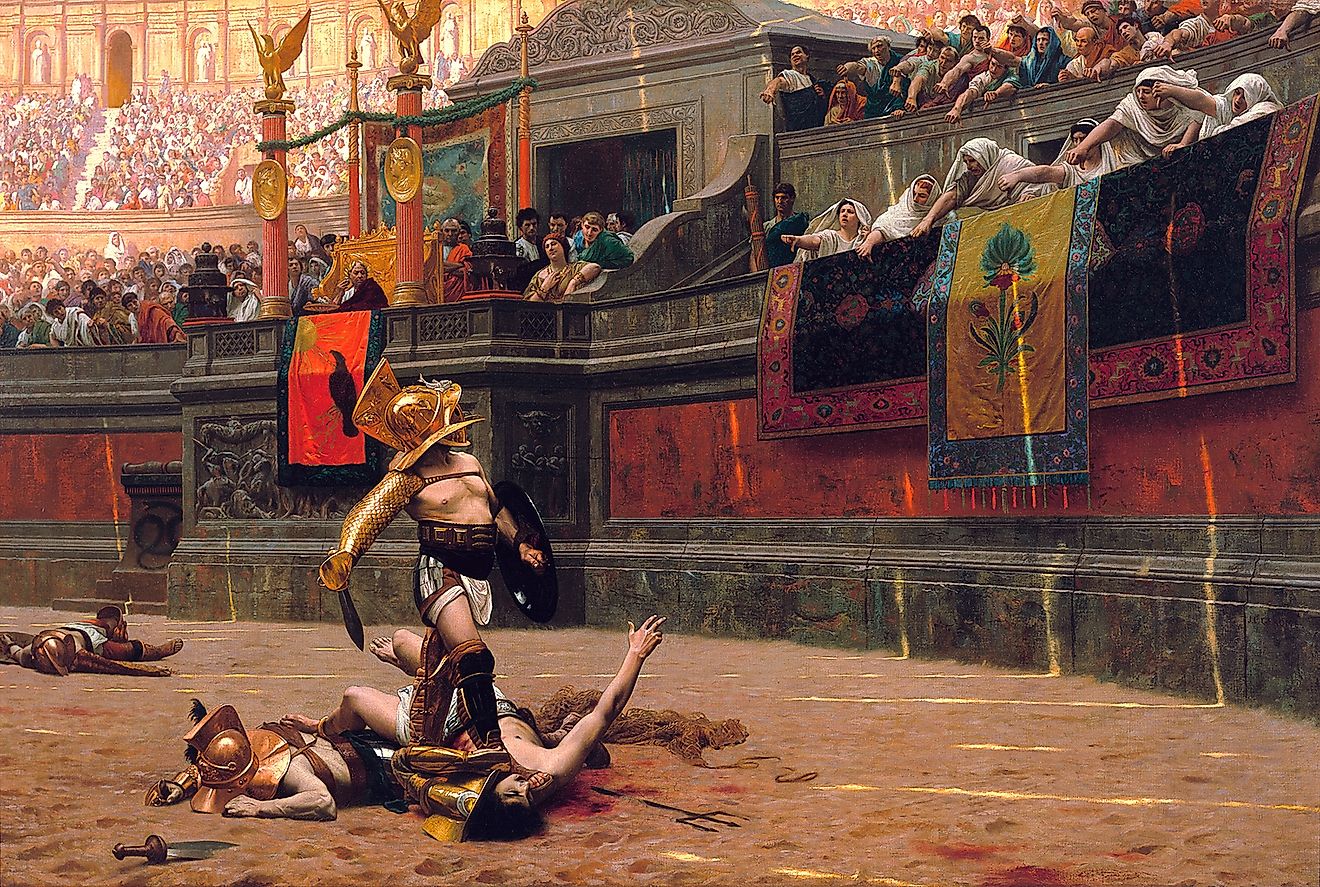
If you visit Rome, the Colosseum is unavoidable. Known in antiquity as the Flavian Amphitheater, it opened in 80 CE under Emperor Titus and remains the largest amphitheater ever built by the Romans. Designed to host public spectacles for tens of thousands of spectators, it became a central stage for gladiatorial contests, animal hunts, and state-sponsored events.
Its design set the standard for amphitheaters throughout the Roman world. The exterior combined travertine limestone, tuff, and brick-faced concrete, while a system of numbered entrances and internal corridors enabled large crowds to enter and exit efficiently. A high perimeter wall and podium separated spectators from the arena floor, reflecting both crowd-control needs and the dangers of the performances below.
Over nearly two millennia, earthquakes, stone removal, and prolonged neglect severely damaged the structure. Large sections collapsed during major earthquakes in the Middle Ages, and its stone was reused in palaces, churches, and fortifications throughout Rome. Systematic conservation efforts began in the 19th century and expanded significantly in the late 20th century. Ongoing restoration and stabilization work today focuses on preserving the monument while maintaining public access to one of the Roman Empire's most enduring symbols.
Pula Arena

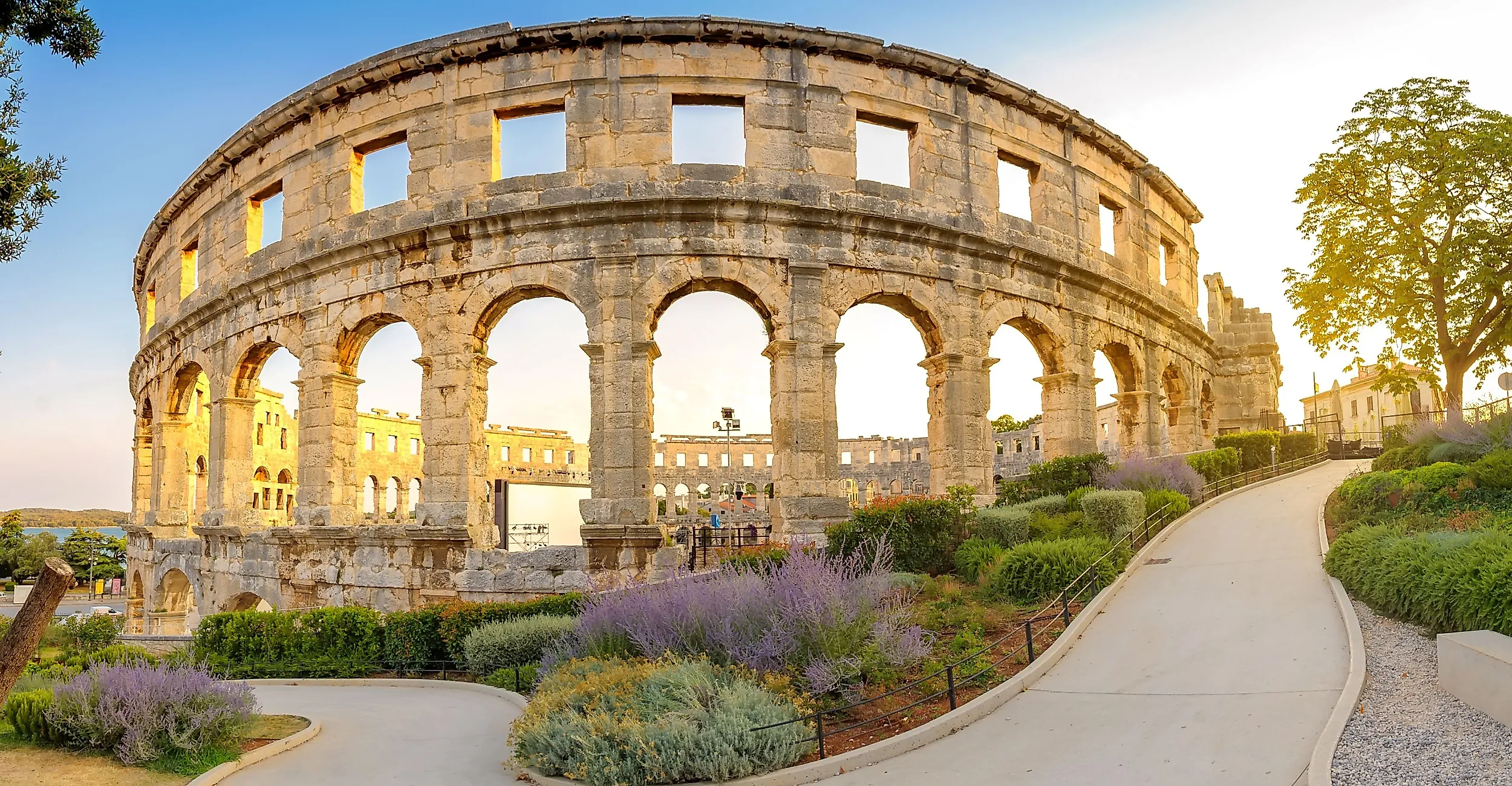
Located in Pula, Croatia, the Pula Arena is one of the best-preserved Roman amphitheaters still standing. An earlier wooden amphitheater existed on the site during the reign of Augustus in the late 1st century BCE, but the structure visible today was built in stone in the mid-1st century CE, likely under Emperor Vespasian. Its limestone construction is the primary reason it has survived largely intact.
The Pula Arena is unique among Roman amphitheaters. It is the only known example to retain all four side towers and to display all three classical Roman architectural orders. The exterior walls remain nearly complete, enclosing an elliptical arena that once accommodated approximately 20,000 spectators, a large capacity for a provincial city.
Unlike many Roman amphitheaters that were heavily quarried or absorbed into later urban development, the Pula Arena remained largely intact due to its location outside the medieval city center. Today, it stands as a rare example of Roman engineering preserved at near full height, offering insight into how imperial architecture was adapted beyond Rome itself.
Arles Amphitheater

Located in the southern French city of Arles, the Arles Amphitheater was built around 90 CE during the Roman period, when the region was part of Roman Gaul, not Rome itself. Modeled on the Colosseum, the stone structure measures roughly 450 feet in length and features two stacked tiers of arcades. At its peak, it could accommodate about 20,000 spectators, who gathered for gladiatorial contests and public spectacles.
After the collapse of Roman authority, the amphitheater took on a very different role. Beginning in the early Middle Ages, it was converted into a fortified settlement, complete with towers and housing, and remained occupied for centuries. Restoration efforts in the 19th century removed these later additions and returned the building to its Roman form.
Today, the Arles Amphitheater is still in use, hosting concerts, theatrical performances, and traditional Provençal events. It is a central component of Arles’ UNESCO-listed Roman and Romanesque monuments, which together illustrate the city’s long continuity from antiquity through the medieval period.
El Jem Amphitheater

Located in El Djem, Tunisia, the El Djem Amphitheater is one of the largest Roman amphitheaters ever built, with a capacity of approximately 35,000 spectators. Constructed in the early 3rd century CE in the Roman province of Africa Proconsularis, the structure was modeled on Rome’s Colosseum and built almost entirely from large limestone blocks, without the use of mortar.
Much of the amphitheater remains intact. The arena floor, tiered seating, outer walls, and an extensive system of underground corridors used to house animals and equipment are still accessible today. Despite damage from earthquakes and later stone removal, El Djem preserves one of the clearest examples of large-scale Roman entertainment architecture outside Italy.
Recognized as a UNESCO World Heritage Site, the amphitheater reflects the wealth and importance of Roman North Africa, where cities like El Djem once served as major centers of agriculture and trade within the empire.
Verona Arena

Located in Verona, northern Italy, the Verona Arena is one of the best-preserved Roman amphitheaters still in use. Built in the 1st century CE, likely completed around 30 CE, the limestone structure once held up to 30,000 spectators and hosted gladiatorial contests and public spectacles during the Roman period.
In 1117, a powerful earthquake destroyed most of the arena’s outer ring, leaving only a small portion of the third level standing today. Despite this damage, the interior seating, arena floor, and much of the structural core remain remarkably intact. The arena’s durability is due in part to its construction from locally sourced limestone and concrete.
Today, the Verona Arena is internationally known for its summer opera season, drawing performers and audiences from around the world. Its continued use as a performance venue makes it one of the few ancient amphitheaters where large-scale events still take place nearly two thousand years after its construction.
Nimes Arena

Located in Nîmes, southern France, the Nîmes Arena is one of the best-preserved Roman amphitheaters in the world. Built around 70 CE, the structure is more than 1,900 years old and remains in active use today. During the Roman period, it hosted gladiatorial contests and public spectacles for a crowd of up to 24,000 spectators.
After the fall of the Roman Empire, the arena was converted into a fortified settlement and remained inhabited through the Middle Ages, a transformation that helped preserve much of its structure. Modern restoration efforts have returned the amphitheater to its Roman form while allowing continued use for concerts, cultural events, and traditional bullfighting, which remains part of local tradition.
The arena sits within a city known for its concentration of Roman monuments, including the Maison Carrée, one of the best-preserved Roman temples anywhere, the Tour Magne, and the remains of the Temple of Diana. Together, these sites reflect Nîmes’ importance as a provincial Roman center and its continuity from antiquity to the present.
Amphitheaters of Ancient Rome
From Rome to North Africa and across southern Europe, these amphitheaters illustrate how Roman engineering, urban planning, and public life were exported and adapted across an empire that spanned continents. Each structure reflects local materials, regional importance, and later historical layers, whether medieval fortifications in France or continued performance traditions in Italy.
Together, they show why amphitheaters remain some of the most enduring monuments of the ancient world. Built for spectacle, crowd control, and civic identity, many have survived earthquakes, reuse, and centuries of neglect. Their continued preservation and, in some cases, active use offer a rare opportunity to experience Roman architecture not as ruins alone, but as living spaces shaped by nearly two thousand years of history.