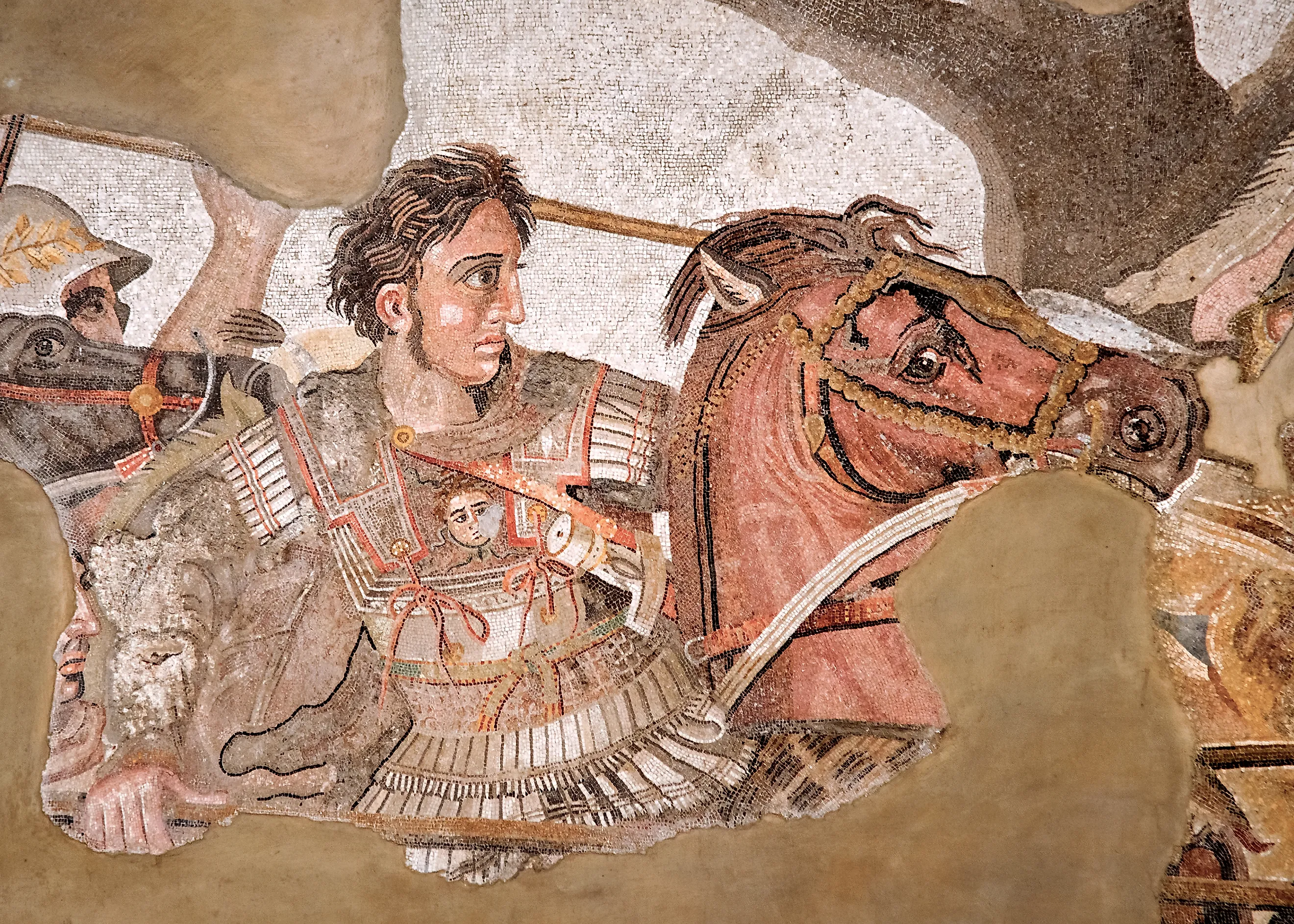
How Alexander The Great Changed The Ancient World Forever
Alexander the Great's military campaigns are perhaps the most discussed aspect of his tenure as leader of Macedonia. However, they had implications beyond mere conquest. Indeed, by creating a multicontinent empire, Alexander enabled the spread of goods, languages, and ideas. He therefore ushered in a period of globalization. Moreover, even once Alexander died, the influence of Greek culture in Europe and Asia signified the beginning of the Hellenistic Period. Finally, the connective tissue he established between people and civilizations facilitated the spread of Christianity around the world. For all these reasons, and more, Alexander the Great changed the ancient world forever.
A Multi-Continent Empire

Before Alexander the Great, the ancient world was divided. In Europe, the Peloponessian War (431 to 404 BCE) had left Greece fractured. In the Middle East and Central Asia, the Persia-based Achaemenid Empire was the dominant power. Alexander's father, Phillip II, began to change this balance of power. Through military reforms and diplomatic endeavors, he united most cities in the Greek world under Macedonian rule. This set the stage for Alexander to turn his attention to the east.

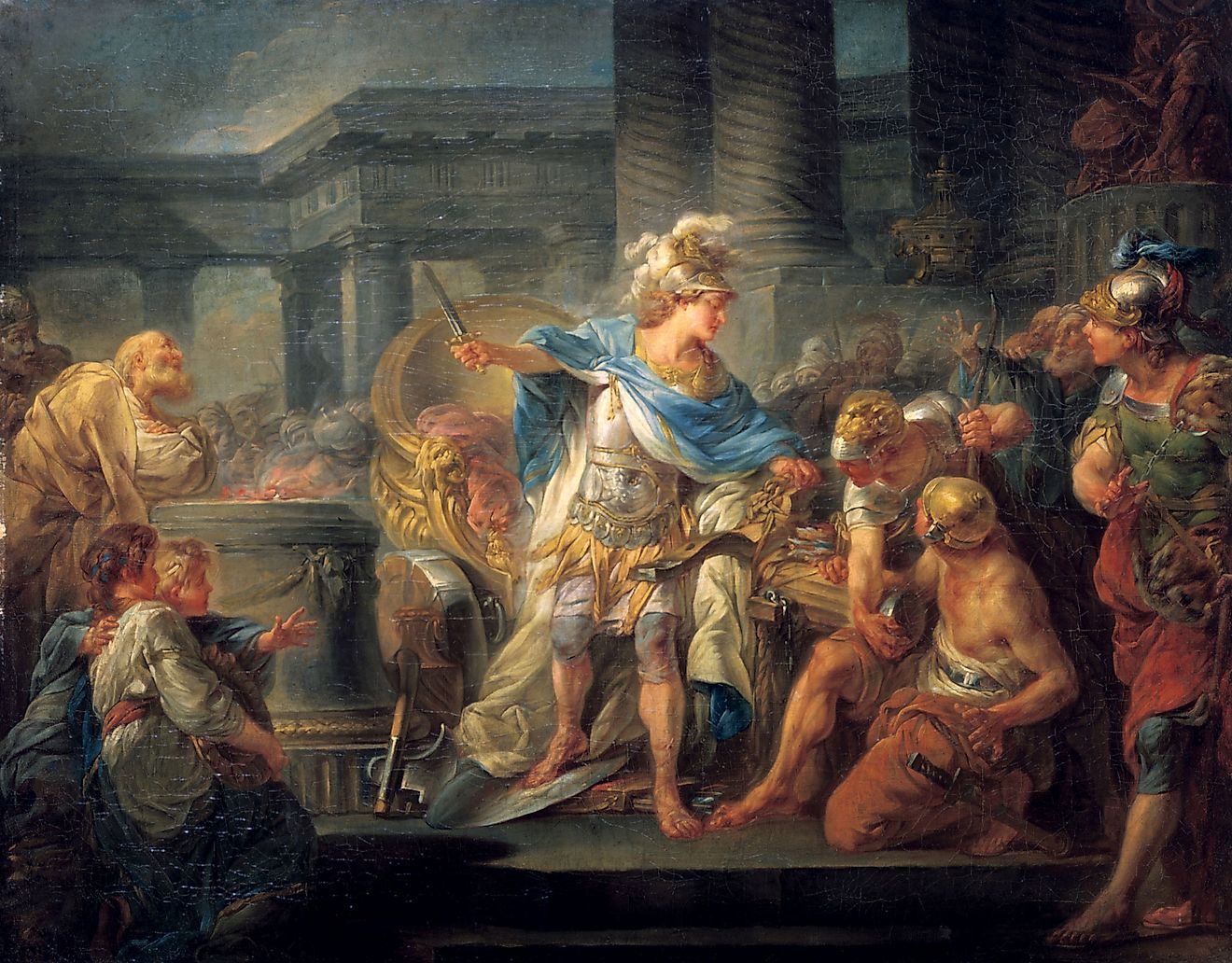
In 334, Alexander began his invasion of Persia. He took Anatolia in 333 BCE, conquered Egypt in 332 BCE, and finally captured the Persian capital of Persepolis in 330 BCE. Thereafter, he began a prolonged campaign in Central Asia. Lasting from 330 BCE to 327 BCE, he faced difficulties due to guerrilla warfare tactics by the Central Asian tribes. Nevertheless, he managed to secure control of the region and then invaded India in 327 BCE. After making incursions into the northwestern section of the Indian subcontinent, Alexander finally turned back in 326 BCE due to his army's exhaustion. In fewer than ten years, he had managed to unite Greece, the Middle East, Central Asia, and Northwestern India under one empire.
Globalization

By creating a multicontinental empire, Alexander ushered in a period of globalization. Indeed, trade between the East and West became much easier and safer under Macedonian rule. This allowed for the movement of goods like silk from China, cotton from India, and textiles from Persia. Spices from India and the Arabian Peninsula also became more widely available, as did Persian precious metals like gold and silver.

However, beyond materialistic exchange, Alexander encouraged cultural fusion, particularly between Greece and Persia. For instance, he arranged weddings between thousands of Greek soldiers and Persian women to cement the union between the two cultures. Alexander himself also married three Persian women. He incorporated elements of Persian fashion as well, wearing a modified version of the Persian tunic called the Saris and adopting a Persian-style throne and scepter to demonstrate his status as the new "King of Asia". Finally, Alexander maintained the existing bureaucracy in the places that he conquered, thereby incorporating Persian-style administration and bureaucrats into the inner workings of his empire. In short, through trade and cultural fusion, Alexander created a globalized ancient world.
The Beginning Of The Hellenistic Period

Despite this cultural fusion, the death of Alexander in 323 BCE marked the beginning of the Hellenistic period, a roughly three-century period of dominant Greek influence across the Mediterranean and the Middle East. This was partly made possible due to Alexander's willingness to adopt other cultures. Paradoxically, since the Persians did not feel like Alexander was trying to eliminate their culture, this made them more willing to adopt elements of Greek culture, which then contributed to its dominance.

One core element of the Hellenistic period was a shared language. Indeed, to facilitate cultural exchange, Greek, particularly a supra-regional version called Koine Greek, became the dominant language in Alexander's empire. This then continued after he died. Alexander also founded many cities, the most famous of which was Alexandria in Egypt. These cities became cultural, intellectual, and trade hubs in which people across the Greek world exchanged ideas with the locals. Said ideas persisted after Alexander's death, ensuring that even though his empire did not stay intact, the Greek influence across the Mediterranean and the Middle East remained
The Spread Of Christianity

Many of these same factors also enabled the spread of Christianity. The New Testament was originally written in Koine Greek. Since this language was widely spoken due to Alexander, the core Christian text could be immediately understood by millions of people. The safer trade routes established by Alexander also enabled Christian missionaries to travel more easily to spread their ideas. Finally, the cities Alexander founded served as places where these missionaries, like Paul the Apostle, could communicate the message of Christianity to diverse people. In short, even though Alexander the Great died three centuries before the founding of Christianity, he nonetheless facilitated its rapid spread across the Greek world.
Impact And Legacy
Alexander the Great left an indelible mark on the ancient world. By creating an empire that stretched from Greece to India, he ushered in an era of cultural interchange and globalization. Furthermore, his death marked the beginning of the Hellenistic Period, which saw Greek culture and political practices dominate the Mediterranean and Middle Eastern world for centuries. Finally, a more interconnected world created by Alexander facilitated the spread of Christianity.