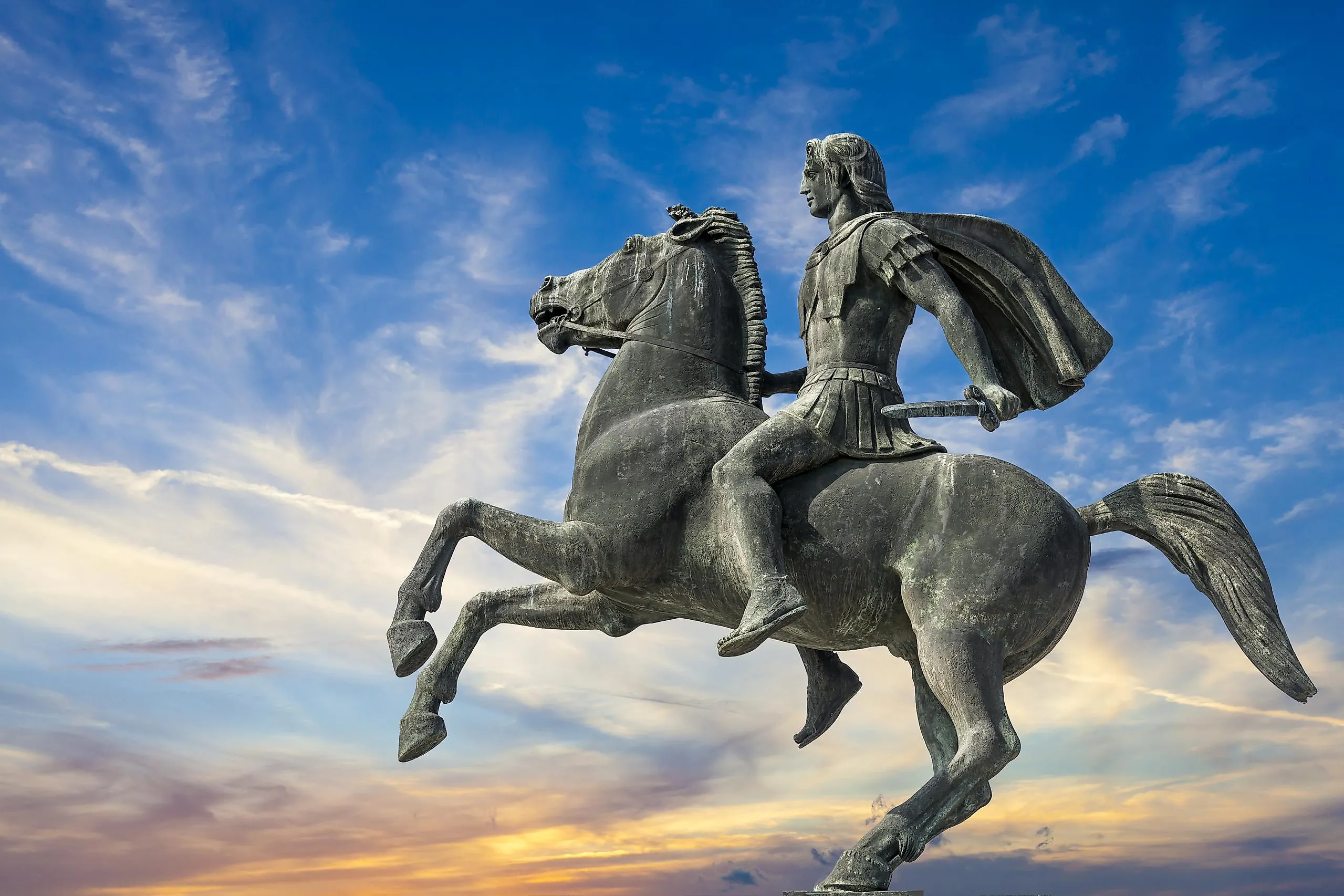
Was Alexander The Great A Good Ruler Or A Tyrant?
The nature of Alexander the Great's reign is heavily contested. Historians debate whether he was a good ruler who oversaw a cosmopolitan empire or a mass-murdering tyrant. While impossible to definitively answer this question, particularly in a short article, it is useful to take a nuanced approach to better understand it. Alexander was, in many ways, an enlightened leader who took a genuine interest in the culture and customs of the places he conquered. At the same time, he was still a conqueror responsible for countless deaths and massacres.
Cultural Integration

Alexander's interest in cultures other than his own was perhaps his most admirable trait. Indeed, once he conquered the Achaemenid Empire, he blended Persian and Greek cultures. Alexander took several Persian wives and encouraged Macedonian soldiers to do the same. He also adopted elements of Persian style by wearing a robe. Finally, Alexander incorporated proskynesis, a court ritual in which visitors either bowed or kissed his hand to show respect. This was typically reserved for deity figures in Greece and therefore provoked significant outrage among the Macedonian troops. Nonetheless, Alexander's willingness to incorporate elements of Persian culture, even at the expense of his own troops' anger, demonstrated that he was not merely interested in conquest and destruction.

Alexander also adopted the existing Persian government structure and bureaucracy. For instance, he maintained the satrapy system, in which local officials called satraps governed the provinces across Persia. Alexander also let most Persian bureaucrats keep their positions. These measures were practical, since he avoided having to build his own administrative state, but also indicative of Alexander's general tolerance towards other customs and peoples.
The Destruction of Thebes

Despite these cultural integrations and allowances, Alexander also oversaw numerous atrocities. In 336 BCE, Phillip II of Macedonia died, making his son, Alexander, king. Alexander then quickly consolidated Macedonia's influence in the region, first attacking the Balkan tribes in the north and then turning south. Many Greek city-states under Macedonian rule rebelled after the death of Philip II. However, fearing the wrath of the Macedonian army, most surrendered upon learning that Alexander was marching south. Nevertheless, Thebes continued to rebel. Therefore, Alexander annihilated the city, leaving only the temples and the house of the poet Pindar standing. About 6,000 people were killed, and over 30,000 were sold into slavery. Afterward, no Greek city-states dared step out of line, fearing the same fate as Thebes. Thus, this affair showed that Alexander was willing to use extreme violence to achieve his goals.
The Sieges of Tyre and Gaza

While Alexander's rule over Persia was relatively tolerant, his campaign against the Achaemenid Empire resulted in numerous atrocities, one of the most notorious of which was the Siege of Tyre in 332 BCE. Since the city was on an island, the Macedonian army had to build a causeway to reach it, which took time. Nonetheless, after resisting Alexander for seven months, Tyre fell and in the process, 8,000 people were killed, 30,000 were enslaved, and 2,000 were crucified during the sacking. Brutality was the point. Indeed, much like Thebes, Alexander wanted to make an example of Tyre to discourage future lengthy sieges.
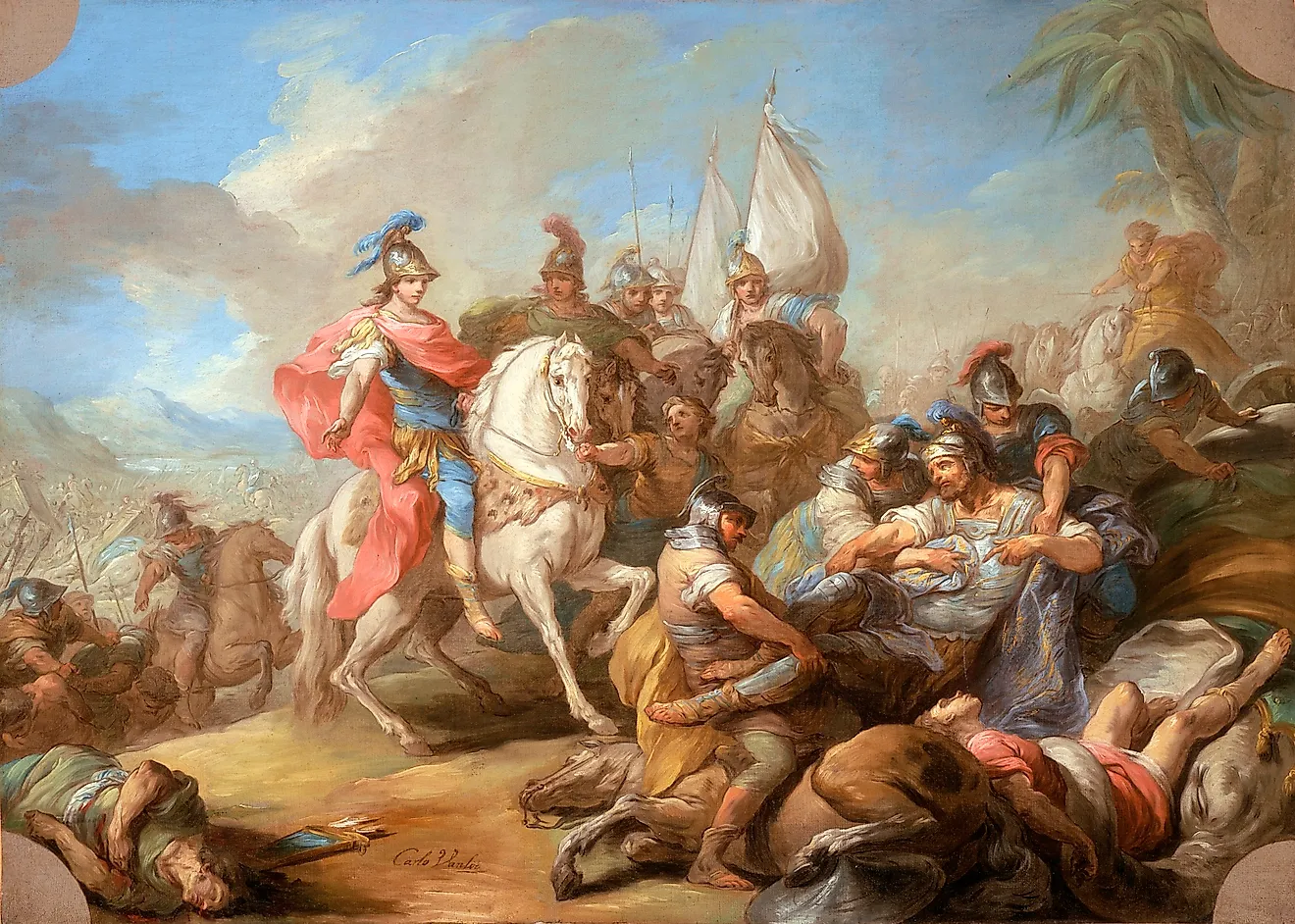
Another such siege occurred that same year in Gaza. Located at the crossroads of Egypt and the rest of the Achaemenid Empire, Gaza was strategically crucial. Nevertheless, the city was on a steep hill, which made it difficult for the Macedonian siege equipment to reach it. Therefore, Gaza held out for two months, shorter than Tyre but still long by Alexander's standards. He was also seriously wounded in the assault to take the city. After Gaza fell, most of its men were killed, and its women and children were sold into slavery. In arguably the most memorable act of brutality, Gaza's leader, Batis, was dragged behind a chariot until he died. Often interpreted as echoing a scene from the Iliad in which Achilles similarly dragged Hector's body, this again demonstrated that Alexander was willing to use violence to discourage future resistance.
The Sack of Persepolis

Alexander's brutality did not always have a clear goal, as is perhaps most clearly exemplified by the sack of Persepolis in 330 BCE. As it was the ceremonial capital of the Achaemenid Empire, taking it signified more or less the complete conquest of Persia. While capturing the city, Alexander allowed his troops to plunder its treasuries. This was practical, since it funded future campaigns. However, Alexander also burned down the royal palace complex, the home of famed Persian kings like Xerxes. Historians debate why he did this. Some suggest it was an act of revenge for the destruction of Greek cities during the Greco-Persian Wars, while others argue that Alexander did so after getting drunk at a celebration. Regardless of the reason, the burning of the Persian royal palace showed that Alexander's brutality was not always rooted in strategy.
Impact and Legacy
Alexander the Great's legacy needs to be understood with nuance. In many ways, he promoted cultural integration and tolerance in the places that he conquered. However, as demonstrated by the destruction of Thebes and the sieges of Tyra and Gaza, Alexander also employed extreme violence to further his goals. Furthermore, the burning of Persepolis' royal palace indicates that the violence was not always used thoughtfully. For all these reasons, it is difficult to say if Alexander was a good or tyrannical ruler.