When A State Park Is Better Than The National Park Next Door
Picking a park for the weekend usually starts with the biggest name on the map, and few names carry more weight than a national park. The better pick is sometimes a short drive away, behind a plainer sign. On the southern shore of Lake Michigan, the tallest dune for miles stands in Indiana Dunes State Park, a smaller preserve the national park wraps around, and similar pairings turn up in Missouri, South Carolina, Arkansas, Ohio, and Alaska. Seven state parks beat the national park next door at its own game.
Indiana Dunes State Park: closest to the Indiana Dunes National Park

The Indiana Dunes State Park sits directly beside Indiana Dunes National Park. It was the first park established to protect Indiana's dunes on the shore of Lake Michigan, dating back to 1925. What makes it better than the national park is the size of its dunes and its special dune challenge.
The state park has the tallest dune in the area, with the 192-foot-tall Mount Tom offering the best view of Lake Michigan. By comparison, the tallest dune in Indiana Dunes National Park is the 120-foot-tall Mount Baldy. These dunes formed over several thousand years as wind blew tiny sediments left behind by melting glaciers into dunes.
Hikers regularly ascend the tallest dunes in Indiana Dunes State Park via the 3 Dune Hiking Challenge, a 1.5-mile journey with a 552 vertical ascent. Winners can get a 3-Dune Conqueror sticker from Indiana Dunes Tourism. Swimmers can access 3 miles of beach shoreline to swim or relax in the water.
Route 66 State Park: closest to Gateway Arch National Park
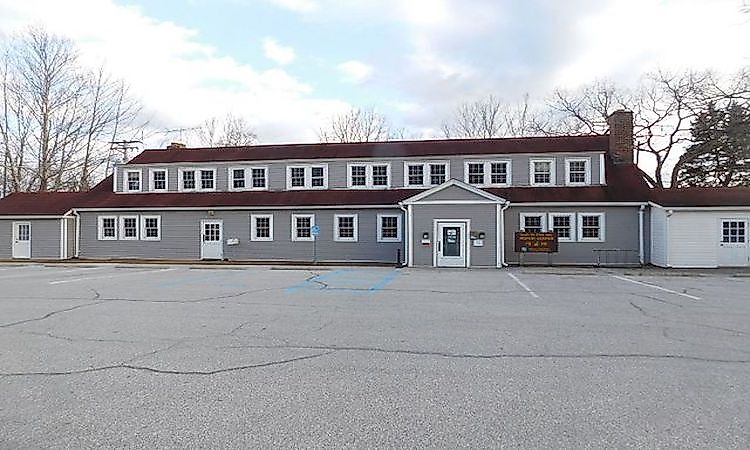
This is one of two state parks that outshine Missouri's Gateway Arch National Park. The Gateway Arch National Park is the smallest of the national parks, only covering 91 acres, and it has no natural landmarks, as it is defined by the Gateway Arch monument itself, along with a museum and green space. Route 66 State Park, meanwhile, offers a combination of Americana with hiking trails and bird watching.
Located just outside of St. Louis in the town of Eureka, Missouri, Route 66 State Park is named after the now-defunct Route 66, a road that ran from Chicago to the Pacific Coast of Southern California. Today, the state park has a visitor center providing Route 66 memorabilia, pictures, and artwork within the former Bridgehead Inn, which welcomed guests on the road back in 1935. The park has several loop trails for hiking and bird watching the more than 125 birds found in the park. Boaters can take their boats out on a boat ramp onto the Meramec River.
Washington State Park: closest to Gateway Arch National Park

Washington State Park is an hour away from Gateway Arch National Park by car, and it's more than worth the journey with its millennia-old cultural artifacts, mountain views, and big fishing opportunities.
A diverse group of people has lived and worked here, such as Native Americans who left behind rock carvings known as petroglyphs dating back to the 11th century AD. The current infrastructure of the park was built by the lesser-known African American group of the Civilian Conservation Corps in the 1930s. Today, both those buildings and the petroglyphs are on the National Register of Historic Places.
In addition, hikers can go up to Ozark Mountain overlooks via the 1,000 Steps Trail, while fishers can go out to the Big River. The water here is clear and clean enough for swimming. Those who don't enjoy swimming out in the open can also go to the park's public swimming pool.
Poinsett State Park: Closest to Congaree National Park

Congaree National Park is known for its rare old-growth bottomland hardwood forest, making it ecologically important to South Carolina. Poinsett State Park, located in Sumter County, South Carolina, can compete with Congaree in terms of unusual and rare environments due to its combination of coastal, mountainous, and midland flora. With its position in the middle of the state, it has been referred to as the Mountains of the Midlands.
On the 1.4-mile Coquina Trail, hikers can see an example of this mixture of environments with mountain laurels covered with Spanish Moss, which comes from the Blue Ridge Mountains, and a cypress swamp that would be more common on the coast. Hikers can also go up through bluffs via the 500-mile Palmetto Trail, which crosses through the state park. The park's mixture of mountain foothills, swamps, and ponds provides environments for many types of animals, such as American alligators, river frogs, yellow-bellied slider turtles, and red-tailed hawks.
Lake Ouachita State Park: Closest to Hot Springs National Park

Hot Springs National Park in Arkansas has long been a popular tourist destination for its hot springs and historic bathhouses. Close to the national park is a state park on the shoreline of the largest lake in Arkansas: Lake Ouachita State Park. This 40,000-acre lake sits within the larger Ouachita National Forest and is regularly ranked as one of the cleanest lakes in the nation, offering 15 feet of water clarity according to Lake Quality, but in some places it can go as far down as 40 feet.
Thanks to this visibility, scuba divers often come here to explore under its surface and swim by the more than 200 islands dotting the lake. Fishers can also more easily spot catfish, striped bass, and largemouth bass. The visitors center takes out guests on kayak tours or guided hikes on the surrounding Caddo Bend Trail.
Cleveland Lakefront State Park: Closest to Cuyahoga Valley National Park

The Cleveland Lakefront State Park provides access to the warmest of the Great Lakes right within the city limits of Cleveland, Ohio. While the Cuyahoga Valley National Park offers access through the Ohio & Erie Canal along the Cuyahoga River, Cleveland Lakefront State Park is a premier summertime state park with its Lake Erie beachfront.
Lake Erie is the shallowest of the Great Lakes, at 62 feet deep on average. Due to this feature, it has the highest summertime temperatures of any Great Lake, eclipsing 70 degrees Fahrenheit. Cleveland Lakefront State Park has a swimming beach, along with concession stands for snacks and drinks, and several fishing piers. Lake Erie itself is one of the most biologically diverse of the Great Lakes and has a huge population of walleye fish.
The park is also popular in the wintertime, with ice boating, fishing, sledding, and skiing trails available.
Chugach State Park: Closest to Kenai Fjords National Park

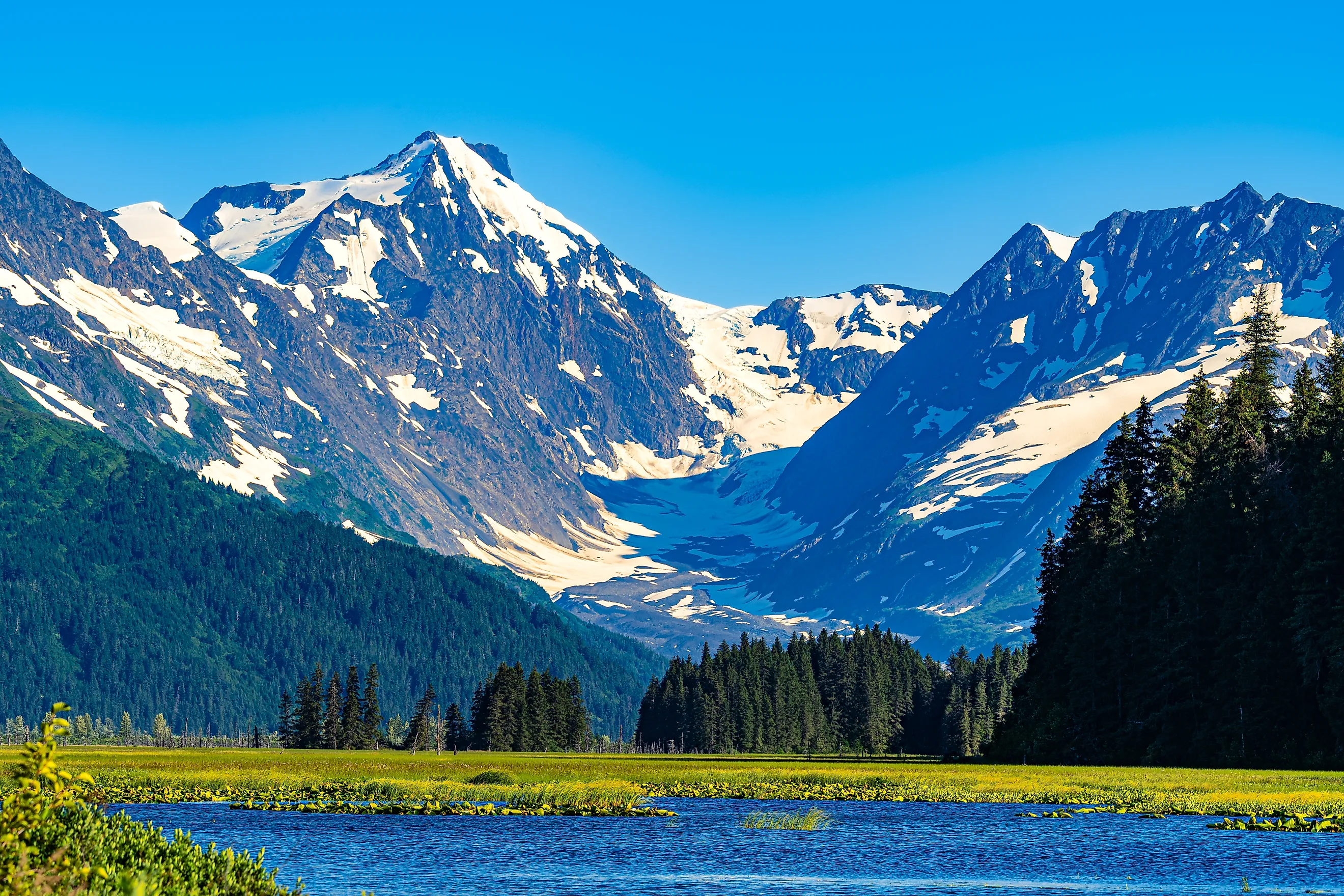
At close to 495,000 acres in Alaska, Chugach State Park is one of the largest state parks in the U.S., and is far more accessible than Kenai Fjords National Park, due to its location right outside of the metro area of Anchorage. The park encompasses a wide range of landscapes, from lakes, glaciers, ice fields, the Chugach Mountain Range, and the city of Anchorage just outside its border within the larger Chugach National Forest.
It's one of the most accessible parks in Alaska due to its close proximity to Anchorage, offering 280 miles of trails via 16 trailheads. Across these trails, one can see the Turnagain Arm, a very narrow waterway that is known for its bore tide that can move down the waterway at 6 feet tall with speeds up to 20 miles per hour. Another scenic spot is the 7-mile Eklutna Lake, left behind by a retreating glacier, and Flattop Trail, which takes one up through the front range of the Chugach Mountains.
State parks are just as special as national parks
The primary difference between state parks and national parks is which groups manage them, as state parks are managed by state authorities while national parks are managed by the National Park Service. While National Parks are meant to protect areas with multiple natural resources, that isn't always the case, as the Gateway Arch National Park contains no natural spaces. All of these state parks also offer a mixture of natural resources, such as the Indiana Dunes State Park's Lake Michigan beaches and massive dunes, and the Poinsett State Park's mixture of coastal and mountain foothill environments. By skipping out on these state parks, one can easily mix some of the best natural sites in a state, which are even better than the national parks right next door.