The Difference Between A National Park And A National Forest
Over a third of the United States is public land, funded by taxpayers and managed by an array of federal, state, and local government agencies. Two of the most well-known federal land management agencies are the National Park Service and the USDA Forest Service. The NPS and Forest Service manage about 278 million acres, roughly 12% of the total US land area. While at first glance, National Parks and National Forests may seem to differ in name only, there are several important distinctions between the two. With separate managing agencies, differing missions, and often vast discrepancies in size and regulations, it is important to understand how National Parks and National Forests differ to protect both yourself and your surroundings when recreating in the great outdoors.
Management

The most surface-level difference between a National Park and a National Forest is that they are managed by two separate government departments. The National Park Service, a bureau of the Department of the Interior, manages all congressionally designated national parks and many national monuments, preserves, and historic sites, although some national monuments are managed by other federal agencies.
The Department of the Interior oversees the protection and management of the country's natural resources and heritage, as well as the gathering of scientific data and historical information from the areas it protects. National forests and national grasslands are managed by the US Forest Service, an agency of the Department of Agriculture. While the Forest Service's mission also includes preservation, the lands that they manage are maintained for multiple uses, including recreation, timber, mining, fishing, and wildlife management.
Mission

The National Park Service and the US Forest Service have different mission statements. The Park Service is focused, first and foremost, on preservation, maintaining the natural and cultural resources of NPS sites unimpaired and unchanged for generations to come. The NPS seeks to conserve natural and cultural resources while allowing public enjoyment and leaving those resources unimpaired, a mission that can require active restoration and resource management. The Forest Service has a multiple-use mandate, and the lands under its protection are maintained for several different reasons, besides recreation. Primarily, the Forest Service strives to maintain the health, diversity, and productivity of the country's forests and grasslands to meet the natural resources needs of present and future generations. They are responsible for overseeing timber harvest in federally managed forests, conducting forestry research, and combating the spread of wildfires. The Forest Service manages wildlife habitat, and the surface effects of mining on its lands, while states generally regulate wildlife, and the BLM administers federal subsurface minerals and mining claims; the Forest Service also protects archaeological resources throughout the National Forest System.
Size
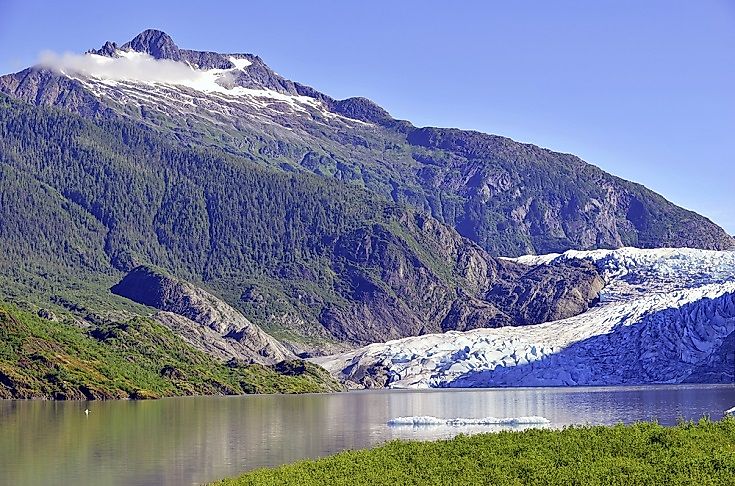
Since the National Park Service was established in 1916, it has grown to encompass 433 individual sites across all 50 states, Washington, DC, and the U.S. territories. There are 63 congressionally designated National Parks, which cover a combined 52 million acres across 30 states and 2 U.S. territories, comprising only a tenth of the total land managed by the Department of the Interior. The National Forest System manages 154 national forests, 20 national grasslands, and other lands totaling about 193 million acres, more than twice the acreage managed by the National Park Service. Tongass National Forest's nearly 17 million acres exceed the combined park-designated portions of Wrangell-St. Elias and Gates of the Arctic, although the two complete park-and-preserve units together are larger than Tongass.
Rules and Regulations

Given their differing missions, National Parks and National Forests often have separate rules and regulations governing the land they oversee. Given that National Forests often abut National Parks, it is important for hikers and other outdoor enthusiasts to be aware of the different rules in each, as something that may be perfectly legal for the first few miles of a hike in a National Forest may be a federal crime once you cross the border into a National Park. While each individual unit will likely have its own rules and regulations, particularly around the campfires in the backcountry, by and large, National Parks tend to be more restrictive. Removing or disturbing most natural and cultural resources is generally prohibited in NPS areas, but gathering, hunting, and off-trail travel are governed by federal law and unit-specific rules; off-trail hiking is not banned throughout the system, and hunting is authorized in certain units. In contrast, the multiple-use mandate of National Forests usually allows for these activities. National forests generally allow hunting and fishing under state and local rules, and many allow limited personal collection of common rocks and minerals; artifacts, meteorites, fossils, wilderness areas, and other protected resources are subject to stricter restrictions. Because different parks and forests all have slightly different rules, it is vital to research the area you will be visiting in advance or speak to a ranger to make sure you are not running afoul of park regulations.
Amenities

Since National Parks are much more focused on visitor experience, they often have far more amenities than you will find in a National Forest. Visitor centers, picnic areas, and even food and lodging are prevalent in National Parks, making it easier for visitors to enjoy the outdoors without having to return to the nearest city for dinner or a night's stay. Accessibility varies widely across both systems, so visitors should consult each unit's accessibility information before traveling. Full paved trails or boardwalks cater to a wider range of potential visitors, ensuring that everyone can enjoy the spectacular landscapes. National Forests tend to be less visitor-focused. While some National Forests, especially larger and more popular ones near National Parks, will likely have a visitor center or a ranger station for orientation and issuing permits, they will likely be smaller and farther apart than in a park like Yellowstone or the Grand Canyon. National Forest trails range from highly maintained, accessible routes to remote paths that may be difficult to navigate. You are also less likely to find things like camping supply stores, gift shops, and lodging in National Forests, so recreating here often demands more advanced preparation.
Entrance Fees

Entrance fees are likely the difference you will notice first. Most National Parks charge an entrance fee to access park grounds. Entrance fees vary by park, and in 2026, non-US residents aged 16 or older must pay an additional $100 at 11 high-traffic parks unless covered by a nonresident annual pass. Some National Parks do not charge entrance fees at all, and in 2026, fee-free days waive entrance charges only for U.S. citizens and permanent residents, and other fees may still apply. National Forests, on the other hand, rarely charge you to enter. You can drive in, park, and explore without paying. In these areas, however, you will still likely need to pay for certain developed services like front-country campgrounds, boat launches, and day-use areas. In some regions, such as the Pacific Northwest, parking at certain trailheads requires a special pass or permit, but parking at trailheads is usually free in National Forests as well. This makes National Forests, by and large, the cheaper option for outdoor recreation.
Visitation and Crowds

If there is one frequently cited drawback to visiting a National Park, it's the crowds. Some of the most beautiful natural areas in the country are bound to attract millions of visitors, eager to see what all the fuss is about. In 2025, the National Park Service reported 323 million recreation visits across all its sites, with 29% of these going to National Parks. This means you will often face large crowds, particularly during the summer months. Large numbers of visitors can make it difficult to secure campsites or backcountry permits and can make navigating congested park roadways particularly frustrating. National Forests can provide an escape from the crowds, often near popular NPS sites. While it is difficult to directly compare National Park and National Forest visitation statistics, since National Forests rarely have entrance stations, a 2024 report estimated that National Forests receive around 164 million visits each year. If the primary goal of your outdoor recreation is finding solitude in nature, National Forests are worth checking out. National forests can sometimes offer less crowded trails than nearby NPS sites, but crowd levels vary greatly by location and season. Some national parks have nearby national forest campgrounds, but availability and proximity should be confirmed in advance.
Protect Your Public Lands by Knowing the Rules!
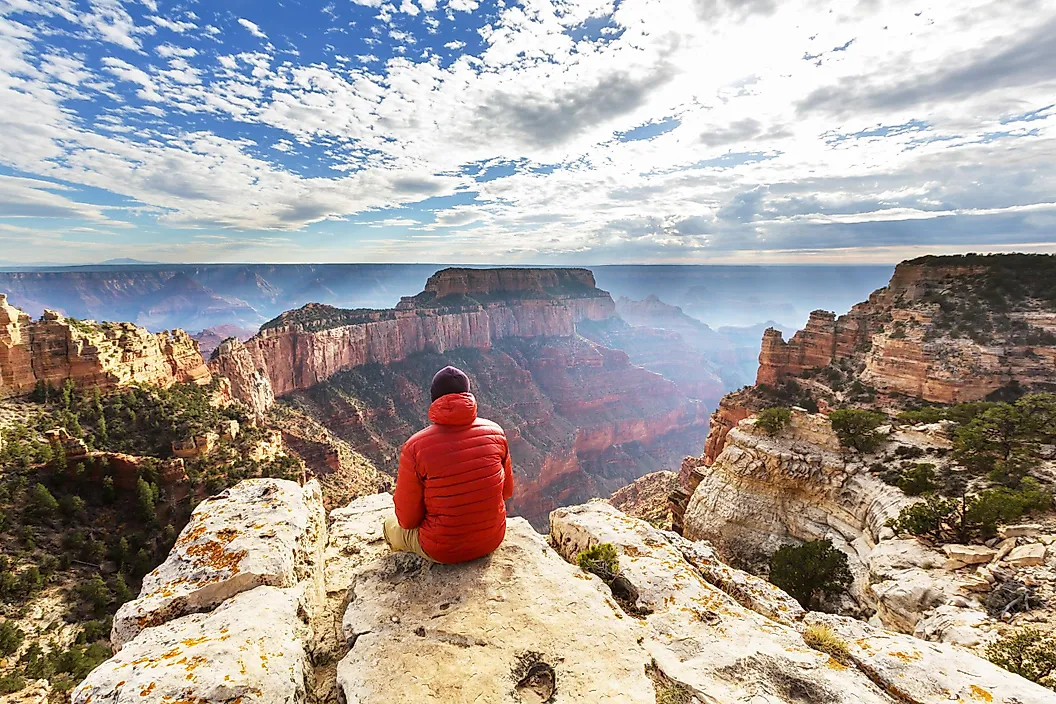
National Parks and National Forests are often mistaken for one another, given their proximity and shared use as public lands, but their distinct missions and administrations lead to different rules and regulations governing each. Hunting and rockhounding are usually more broadly available on National Forest System lands, but both systems contain important exceptions: hunting is authorized in certain NPS units, while Forest Service closures and resource-protection rules can restrict hunting or collecting. Both can provide great outdoor recreation opportunities, but to make the most of your adventure, it is important to research the rules governing both before you hit the trail.