The State Parks Where You Might Meet A Black Bear
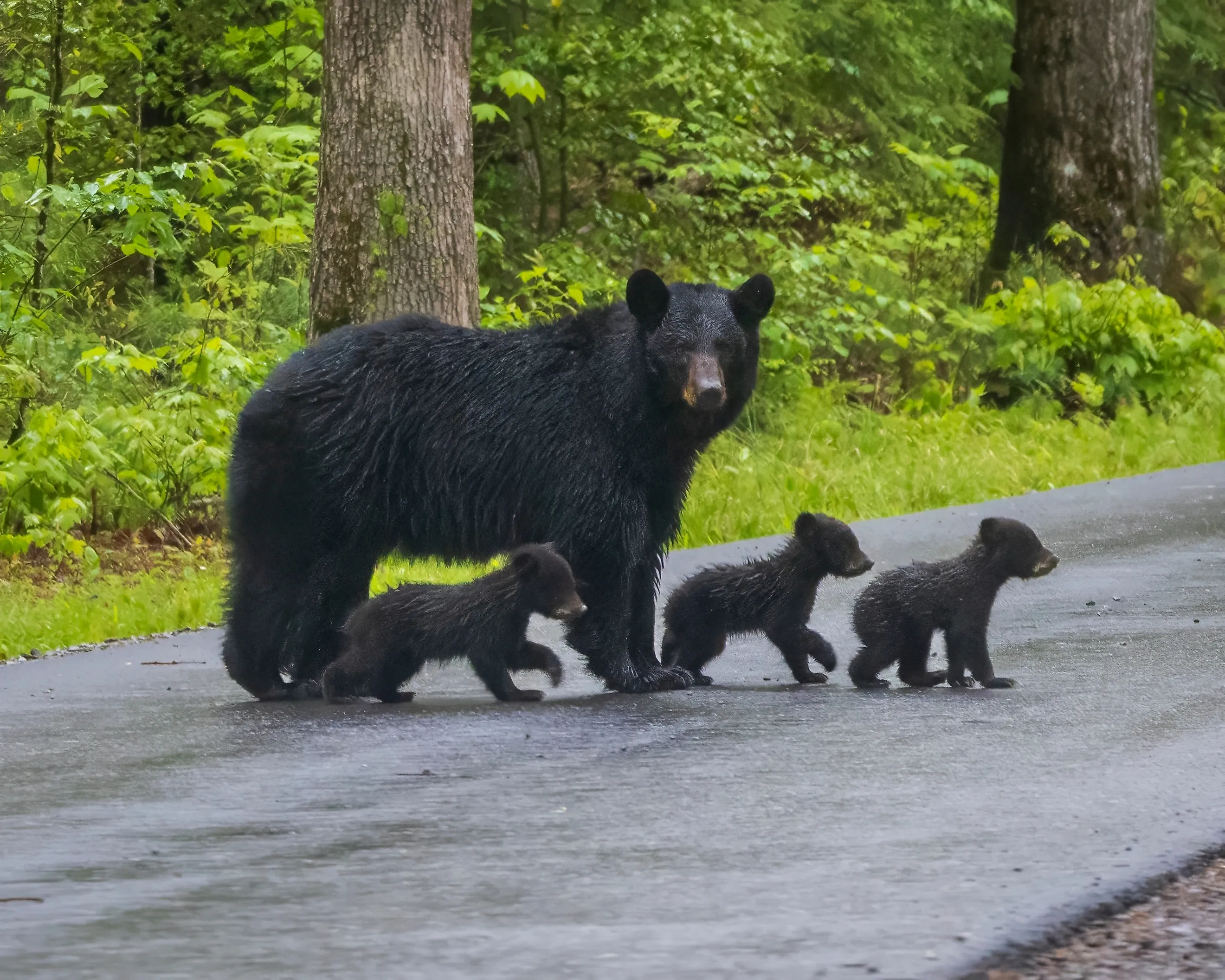
There's a particular thrill in hiking through the woods when you know you're not entirely alone. A snapped branch, fresh tracks in the mud, or signs of recent wildlife activity can make an ordinary walk much more interesting. Black bears live in forests, swamps, and mountains across much of the country, including many state parks. At Fakahatchee Strand Preserve in Florida, they are commonly seen, and Pennsylvania's Promised Land and Worlds End state parks also report regular sightings. In fact, all of these eight state parks have documented black bear activity, along with plenty of reasons to keep exploring even if you never see one.
Fakahatchee Strand Preserve State Park

Fakahatchee Strand Preserve State Park reveals a very different side of Florida. Instead of beaches, visitors find a vast landscape of swamps, cypress strands, and prairies in southwest Florida. It is also home to wildlife some visitors may not expect to encounter in the Sunshine State, including black bears. Florida State Parks lists black bears among the animals commonly seen at Fakahatchee. The park has even documented a memorable encounter involving a wildlife photographer whose trail camera captured a mother bear and her cub. When the bears returned several days later, the mother destroyed the camera.
You may never actually see a bear while you're here, but tracks, scat, and other signs can reveal that one has passed through. Visitors can explore trails and former logging tram roads while watching for wildlife throughout the preserve. If you do spot a bear, enjoy the encounter from a safe distance. Florida State Parks advises visitors never to feed bears and to keep food and other attractants secured.
Denali State Park

In Alaska, Denali State Park covers 325,240 acres, almost half the size of Rhode Island. The landscape ranges from lowland streams and spruce forests to alpine tundra and mountain terrain. About 50 miles of trails begin along the Parks Highway. Both black bears and grizzlies are common throughout the park, according to Alaska State Parks. Salmon streams and berry patches provide important food sources. Most of the park's salmon streams are in its southern end, which park planning documents say probably explains the higher concentrations of bears observed there.
Black bears have also been documented denning on well-drained hillsides near the Chulitna River. Historical accounts from park staff describe bear encounters elsewhere, including a former ranger's encounter with a black bear sow and cubs near Troublesome Creek. Alaska State Parks does not publish an annual bear-sighting total for Denali on its public park pages and sightings are never guaranteed, but both black and grizzly bears are established residents of this extensive wilderness.
Prairie Creek Redwoods State Park

The giant redwoods tend to steal the show at Prairie Creek Redwoods State Park, but they are not the only attraction. Prairie Creek is one of three California state parks managed cooperatively with Redwood National Park as Redwood National and State Parks. Black bears occur throughout this larger protected landscape, along with Roosevelt elk, mountain lions, and numerous other mammals. The National Park Service says northwestern California has some of the state's highest black bear densities. Across the four parks that make up Redwood National and State Parks, visitors and staff reported between 76 and 164 individual bears each year from 2000 through 2012, with an average of 115 reported annually. Those reports do not represent a complete population count, and the NPS says the total number of bears in the parks is unknown.
Black bears may occur in forests, prairies, and areas near beaches throughout the Redwood National and State Parks complex. They have been observed during every month of the year, although sightings decrease sharply during winter. Prairie Creek itself protects old-growth redwood forest, coastal habitat, and open prairie within this larger bear range. If you encounter a black bear, the NPS advises against running. Visitors should face the bear, make noise, appear as large as possible, and keep food and scented items secured in bear-resistant storage where required.
Black Rock Mountain State Park

At 3,640 feet, Black Rock Mountain State Park occupies the highest land in Georgia's state park system, with sweeping views across the Blue Ridge Mountains. It is also established black bear habitat. Georgia State Parks says bears are sighted in the park on a regular basis. The park covers 1,743 acres and has 11 miles of trails through mountain forests and steep terrain. Bear boxes are provided at all 12 walk-in campsites and four backcountry campsites, helping visitors keep food safely away from wildlife.
Black bears remain an important part of the park's wildlife education. In 2025, Black Rock Mountain hosted a ranger-led "Coexisting with Black Bears" program in May and a Teddy Bear Picnic in July that included information about the animals. Seeing a black bear isn't a given, but Black Rock Mountain's documented regular sightings make it a place where hikers should remain alert and follow the park's wildlife safety guidance.
Promised Land State Park

Promised Land State Park leaves little doubt that bears live nearby. Pennsylvania's Department of Conservation and Natural Resources says black bears are common in the park. Promised Land covers about 3,000 acres on the Pocono Plateau and is surrounded by more than 12,000 acres of Delaware State Forest. Beech, oak, maple, and hemlock are among the park's primary forest trees. Visitors can also hike Bear Wallow Trail, which continues beyond the park into the surrounding state forest. July can be an interesting time for wildlife watching because lowbush and highbush blueberries fruit from mid- to late July, providing food for bears and other animals. Pennsylvania DCNR also notes that black bears in Pike County can weigh more than 800 pounds.
Worlds End State Park

Despite its dramatic name, Worlds End State Park is a 780-acre park in the Loyalsock Creek valley of Pennsylvania's Endless Mountains. It is surrounded by the much larger Loyalsock State Forest, giving wildlife access to an extensive forested landscape. Pennsylvania's DCNR says black bears are regularly sighted here, along with white-tailed deer and wild turkeys. The park's forests and mountain terrain provide habitat for wildlife associated with Pennsylvania's large woodland areas. Even when a bear remains out of sight, tracks, scat, claw marks, or other signs may reveal its presence. Visitors should stay aware of their surroundings and avoid approaching wildlife for photographs. If you see a bear, give it plenty of room.
Vogel State Park

Vogel State Park covers 242 acres at the base of Blood Mountain in North Georgia. The park lies within the Chattahoochee National Forest, placing it within a broad expanse of mountain habitat used by black bears. Georgia State Parks has referred to Vogel's resident black bears in its programming and has offered ranger-led "Be Bear Aware" events to teach visitors how to behave safely around them. Its wooded trails and mountain setting provide several ways to explore the area. Georgia currently estimates its statewide black bear population at about 4,100 animals divided among three major populations. Vogel lies within the range of the north Georgia mountain population.
Mount Mitchell State Park

At 6,684 feet, Mount Mitchell State Park contains the highest point east of the Mississippi River. Black bears are active in and around the park, particularly during warmer months, and visitors are expected to follow bear-safety precautions while camping and hiking. North Carolina State Parks currently warns that foraging bears have been active and sometimes aggressive at the nearby Commissary Ridge backcountry camping area. Within Mount Mitchell State Park, campers must secure food, trash, toiletries, and other scented items. Bear-resistant food storage containers are provided at each of the park's nine campsites.
Bear activity has affected the surrounding region before. In September 2022, officials temporarily closed dispersed camping at Commissary Ridge in Pisgah National Forest because of increased black bear activity. Mount Mitchell State Park has about 40 miles of hiking trails, including connections with the Mountains-to-Sea State Trail through the Black Mountains. NC State Parks does not publish an annual bear-sighting count for Mount Mitchell on its public park pages, so visitors should not expect a sighting on any particular hike.
Wild Bears Don't Follow a Schedule
A black bear encounter can be brief and unpredictable. You might spot one crossing an open area, see it disappear between the trees, or find only tracks along a trail. Whatever the case may be, keep a safe distance, secure anything that could attract wildlife, and never approach or feed a bear. Even without a sighting, these state parks offer forests, mountains, wetlands, and trails worth exploring on their own.

.jpg)