The Largest Speedways In The United States
Indianapolis Motor Speedway has more permanent seats than any other sports venue on earth, a claim that also sets it at the top of lists of America's largest speedways. And there are plenty of worthy runners-up. This list ranks speedways in strict order of permanent grandstand seating based on the most recent figures each has made available on its website or annual report. Infield and temporary spaces are excluded along with general admission, and the year of each figure is given. We've included track length and property size for comparison purposes but these figures don't affect the order. The companies that own these tracks stopped filing public reports between 2019 and 2021, so the numbers here are the latest available.
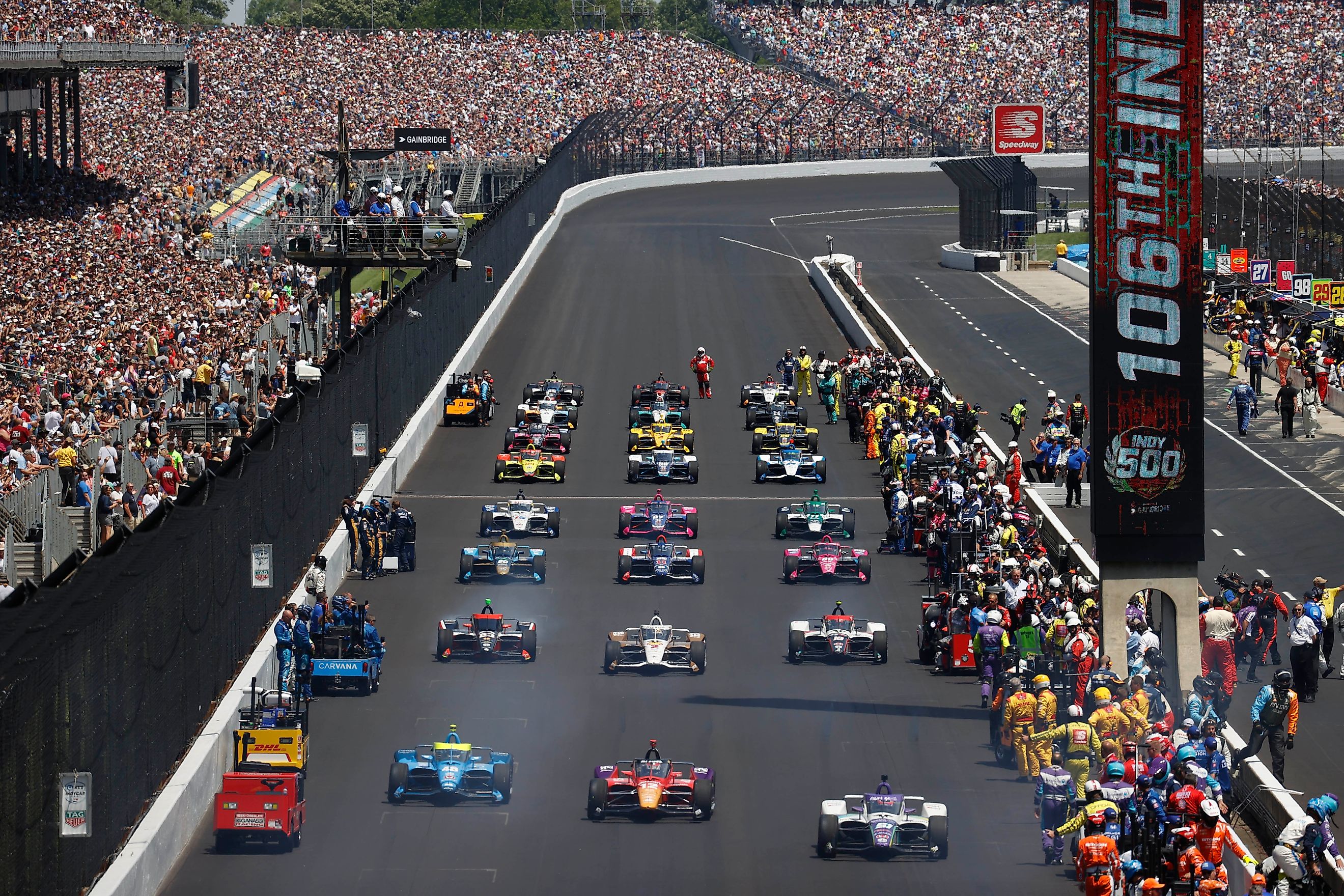
1. Indianapolis Motor Speedway, Speedway, Indiana

Permanent seats number more than 250,000, per the track website in 2026. Track length is 2.5 miles. Property size is not published.
Indianapolis Motor Speedway describes itself as the world's largest sports seating facility, and Guinness World Records lists a seated capacity of 235,000 following a 2013 reduction from 257,325. Either way, no other venue comes close. Built in 1909 on the west side of Indianapolis, the 2.5-mile rectangular oval was paved with 3.2 million bricks, which is how it became The Brickyard.
Penske Corporation bought the track in 2020, and the IMS Museum reopened in 2025 after a $60.5 million rebuild, with 29 winning cars in its Indianapolis 500 Winners Gallery and track tours available daily. The 110th Indianapolis 500 in May 2026 sold out its reserved seating for a second straight year, with 350,000 expected on race day.
2. Bristol Motor Speedway, Bristol, Tennessee

Permanent seats total 146,000, per the owner's 2018 annual report. Track length is 0.533 miles. The property covers 670 acres, per a 2018 filing.
Bristol Motor Speedway is a 0.533-mile concrete bowl with corners banked between 24 and 28 degrees, which is why its owner, Speedway Motorsports, calls it "The Last Great Colosseum." The gates first opened in July 1961, and when it sold in 1996, it seated 71,000 race fans. By the early 2000s, its seating had reached 160,000, and the current count is the result of later removals.
Two non-racing events provide an even clearer idea of just how big a crowd the place can take. The Battle at Bristol football game in September 2016 set the college football attendance record at 156,990, and the MLB Speedway Classic between the Atlanta Braves and Cincinnati Reds in August 2025 set a regular-season baseball record of 91,032. Colossus TV, the four-sided screen hung above the infield, is the largest outdoor center-hung video display in the world.
3. Daytona International Speedway, Daytona Beach, Florida

Permanent seats total 101,500, per the track website in 2026. Track length is 2.5 miles. The property covers 440 acres, per a 2018 filing.
Daytona International Speedway had 147,000 seats until International Speedway Corporation's $400 million DAYTONA Rising project. Completed in January 2016, it removed 46,000 backstretch seats and replaced the entire frontstretch with wider seats, 40 escalators, and 60 trackside suites. The 2.5-mile tri-oval with its 31-degree banking opened in 1959 with the first Daytona 500.
NASCAR has owned the track outright since 2019. Visitors to Daytona Beach can take a daily track tour and see the previous year's winning Daytona 500 car in the on-site Motorsports Hall of Fame of America. The 2025 Daytona 500 sold out all grandstand seating for the tenth consecutive year.
4. Charlotte Motor Speedway, Concord, North Carolina

Permanent seats total 79,000, per the owner's 2018 annual report. The track's own facts page gives a facility capacity of 95,000. Track length is 1.5 miles. The property covers 1,310 acres, per a 2018 filing. The track's website says nearly 2,000.
Charlotte Motor Speedway's 1.5-mile oval was built in 1959, and the first World 600 took place here in June 1960. The track peaked at 134,000 permanent seats in 2010 before Speedway Motorsports took out 41,000 seats in Turn 2. It was the first modern superspeedway to race under lights, installed in 1992, and in 2011 it earned a Guinness World Record for the largest HDTV at a sports venue, 200 feet wide and 80 feet tall.
The Feel the Thrill Speedway Tour takes visitors on the track's 24-degree banking in a van. The Coca-Cola 600 sold out for a fifth straight year in May 2026, and the fall race weekend in October 2026 returns to the oval for the first time since 2017.
5. Talladega Superspeedway, Lincoln, Alabama

Permanent seats total 78,000, per the owner's 2018 annual report. Track length is 2.66 miles. The property covers 1,435 acres, per a 2018 filing. The track's website says 3,000.
Talladega Superspeedway is the longest oval in NASCAR at 2.66 miles, with 33-degree turns and a 4,000-foot backstretch. Built in 1969 on a former Air Force base east of Birmingham, it once had 143,000 grandstand seats, a figure reported in 2005, before backstretch removals in 2013.
Bill Elliott set the fastest qualifying lap in NASCAR history here, 212.809 mph, in April 1987. The $50 million Talladega Transformation, completed in October 2019, opened the infield to fans through the Talladega Garage Experience and 45-minute track tours run on weekends. NASCAR said in February 2026 that it is planning a further renovation, though no details have been released.
6. Texas Motor Speedway, Fort Worth, Texas (tie)

Permanent seats total 75,000, per track management in 2021. Track length is 1.5 miles. The property covers 1,500 acres, per the track website.
The Texas Motor Speedway reported 133,000 permanent seats at the end of 2018, then removed more than 40,000 in 2021 to widen the remaining seats from 18 to 22 inches and add the Turn 1 Terrace hospitality deck. It was during this time that the track's assistant general manager told the Fort Worth Star-Telegram that the new seating figure was 75,000.
The 1.5-mile oval opened north of Fort Worth in April 1997, when its inaugural NASCAR weekend was reported at more than 200,000 people. Its 2003 filing listed 158,000 seats, and Turns 1 and 2 were rebanked from 24 to 20 degrees in 2017. The WÜRTH 400 in May 2026 sold out its reserved grandstand.
7. Las Vegas Motor Speedway, Las Vegas, Nevada (tie)

Permanent seats total 75,000, per the owner's 2018 annual report. Track length is 1.5 miles. The property covers 1,030 acres, per a 2018 filing.
Las Vegas Motor Speedway's own website still lists 123,000 seats, the count from 2014, but Speedway Motorsports filed 75,000 at the end of 2018 and removed 8,000 more seats in 2019 for drink rails and food counters. So, the true figure is lower than either. The track peaked at 131,000 in 2010. It opened in September 1996 with an Indy Racing League race.
This 1.5-mile tri-oval track is located 15 miles north of the Las Vegas Strip and has 20-degree turns. The Neon Garage puts fans in the middle of the NASCAR garage area, and weekday tours include a lap of the track at more than 70 mph. It hosts two NASCAR Cup Series weekends a year, plus the Electric Daisy Carnival music festival.
8. EchoPark Speedway, Hampton, Georgia

Permanent seats total 66,000, per the owner's 2018 annual report. Track length is 1.54 miles. The property covers 850 acres, per the track website.
Known as Atlanta Motor Speedway from 1990 until a naming deal with the EchoPark car dealer chain in 2025, the track opened as Atlanta International Raceway in July 1960 when Fireball Roberts won the Dixie 300. The track was rebuilt in 1997 into the 1.54-mile quad-oval used today, and its capacity was reported at 124,000 before seats were removed in 2014.
After the July 2021 race, the turns were rebanked from 24 to 28 degrees and narrowed from 55 to 40 feet, which turned the track into a pack-racing superspeedway when the new configuration debuted in 2022. The track is 25 miles south of Atlanta and hosts two NASCAR Cup Series dates a year, in February and July.
Contenders That Didn't Make The Cut
- Michigan International Speedway in Brooklyn, Michigan, is a two-mile D-shaped oval with 18-degree banking that reported 56,000 seats in 2018.
- Dover Motor Speedway in Delaware, the one-mile concrete Monster Mile that opened in 1969, reported 54,000 seats in 2020 after four rounds of removals from a peak of 140,000.
- Pocono Raceway in Long Pond, Pennsylvania, the 2.5-mile, three-turn track known as the Tricky Triangle, is privately owned and has never published a capacity. Its president said its July 2023 sellout meant 50,000 grandstand tickets.
- Richmond Raceway in Virginia reported 51,000 seats in 2018, and Kansas Speedway and Homestead-Miami Speedway reported 48,000 each.
- New Hampshire Motor Speedway in Loudon dropped to just over 40,000 seats in 2021.
Bigger Is No Longer Better
Apart from Indianapolis, the tracks on our list of the largest speedways in America saw their seating capacities peak between 2001 and 2010. Since then, they've torn out seats, in some cases more than half of them. In their place are the wider seats, drink rails, hospitality terraces, and open infields that today's speedway fans want.