6 Of The Most Adorable Small Towns In Louisiana
These memorable Louisiana towns boast scenery with enough character to fill the frame. St. Francisville sets Rosedown Plantation State Historic Site against rare rolling hills near the Mississippi River. Natchitoches lines Cane River Lake with brick streets and historic storefronts. Breaux Bridge follows Bayou Teche toward the cypress swamps of Lake Martin. Grand Isle opens onto the Gulf beaches at Grand Isle State Park. Abita Springs puts the eccentric Abita Mystery House beside the Tammany Trace. Madisonville looks across the Tchefuncte River toward its historic lighthouse. Each town delivers a different view of Louisiana at a slower pace.
St. Francisville

Established in 1809 on a narrow ridge above the Mississippi River, St. Francisville has been called the town that is two miles long and two yards wide. About 1,500 people live here, in West Feliciana Parish, among rolling hills and bluffs that give the area a landscape unlike much of southern Louisiana. Historic homes, enormous live oaks, Spanish moss, and quiet streets define the downtown district, where Grace Episcopal Church sits along a walkable stretch of boutiques and locally owned restaurants.
There is plenty to do beyond simply admiring the scenery. Rosedown Plantation State Historic Site preserves a Greek Revival house completed in 1835, along with 13 outbuildings and 371 acres of grounds and formal gardens. The gardens at Afton Villa open seasonally on the site of a 1849 mansion that burned in the 1960s. Audubon State Historic Site protects Oakley House, where John James Audubon spent the summer of 1821 tutoring the owner's daughter and studying the birds that later filled his portfolios. Hikers head instead for Tunica Hills Wildlife Management Area, where trails wind through hills, bluffs, ravines, and waterways, and the surrounding parish is strong territory for birdwatching and wildlife viewing.
Natchitoches

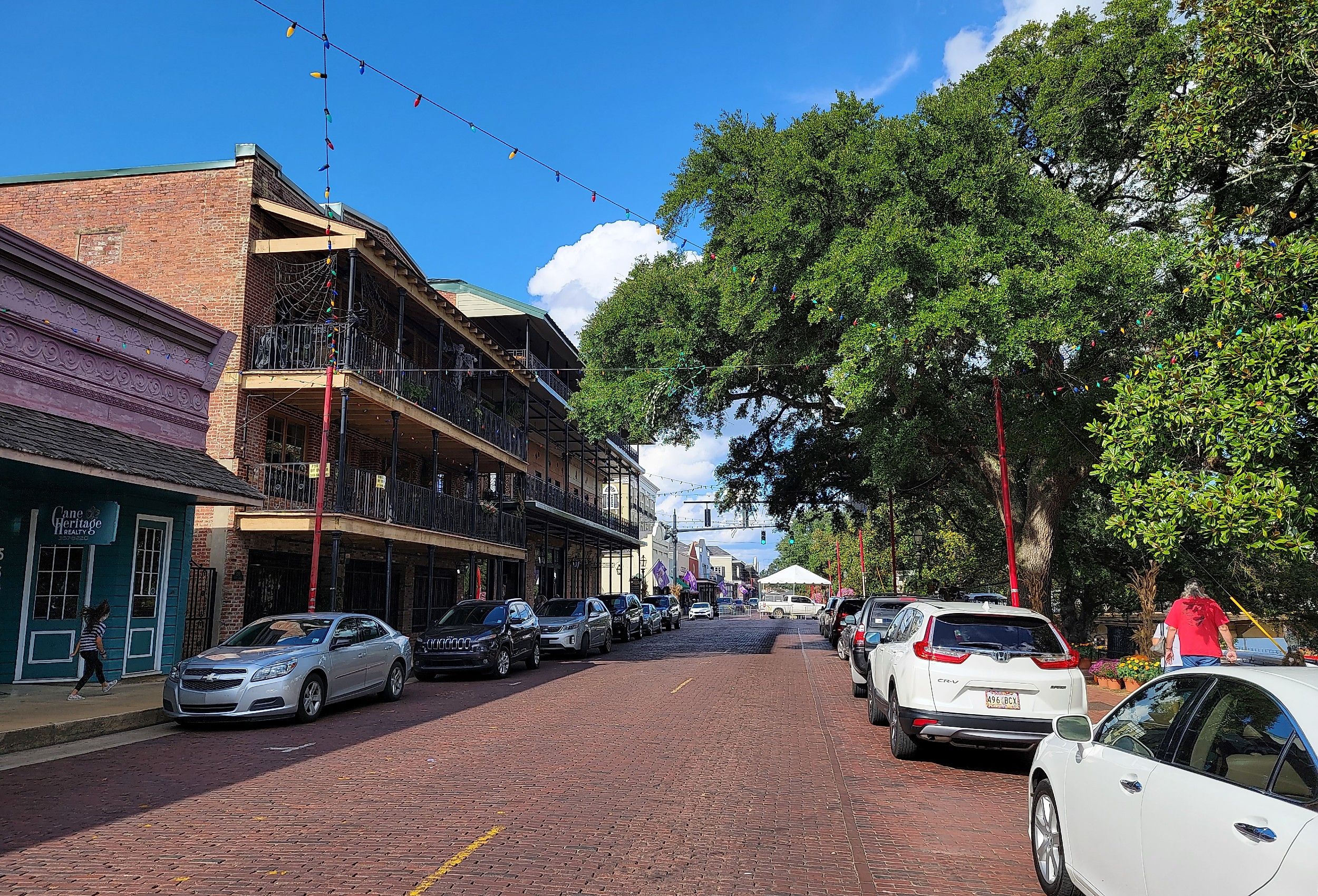
Founded in 1714, Natchitoches is the oldest permanent settlement in the Louisiana Purchase territory, four years older than New Orleans. It is the largest town on this list, with roughly 17,000 residents, and its historic downtown sits directly beside Cane River Lake. Brick streets, wrought-iron balconies, and historic storefronts run along the water, and the town's connection to Steel Magnolias, filmed here in the late 1980s, gives it an extra bit of movie-history appeal.
A visit can easily include a walk through the 33-block National Historic Landmark District, a stop at Kaffie-Frederick General Mercantile, which has operated since 1863 and bills itself as the oldest general store in Louisiana, and a tour of the reconstructed Fort St. Jean Baptiste State Historic Site. Cane River Creole National Historical Park protects Oakland and Magnolia plantations, a short drive downriver, and Lasyone's has been serving the local meat pie downtown for decades. The Christmas season, celebrated here since 1927, runs six weeks from the Saturday before Thanksgiving through January 6, with more than 300,000 lights, over 100 riverbank set pieces, fireworks, and parades.
Grand Isle

Grand Isle is the only inhabited barrier island in Louisiana, with the Gulf of Mexico on one side and Barataria Bay on the other. Sandy beaches, fishing boats, stilt houses, and marsh define the landscape, and the coastal scenery here feels far removed from the state's inland towns. Its small population and its position at the end of LA 1 give the island a laid-back atmosphere that appeals to anyone looking for a quiet seaside stop.
Grand Isle State Park is the natural starting point, with beach access, surf fishing and crabbing, campsites, and an observation tower over the marsh. The park reopened in 2023 after nearly two years of repairs following Hurricane Ida, though its long Gulf fishing pier remains closed, so check current conditions before planning a trip around it. Birders work the island's woodlots and the Grand Isle Birding Trail, and spring migration brings warblers and other songbirds ashore in numbers. The island's fishing culture peaks in late July with the International Grand Isle Tarpon Rodeo, held since 1928.
Breaux Bridge

The Louisiana Legislature named Breaux Bridge the "Crawfish Capital of the World" in 1959, and the town has built an identity around the title ever since. Home to roughly 7,500 residents, it sits along Bayou Teche and combines historic buildings, antique shops, Cajun restaurants, and live music. The bridge that frames downtown carries a red crawfish on its top beam, and the wetlands just outside town produce some of the most recognizable scenery in south-central Louisiana.
Mornings suit the shops around historic downtown, afternoons the Cajun kitchens and zydeco bands. A swamp tour or kayaking trip on nearby Lake Martin, part of the Nature Conservancy's Cypress Island Preserve, reaches one of the largest wading bird rookeries in the state, where egrets, herons, ibis, and alligators gather among the cypress trees. The Atchafalaya Basin spreads east of town. Anyone visiting in early May can catch the Breaux Bridge Crawfish Festival, which has run since 1960 and fills Parc Hardy with crawfish races, an etouffee cook-off, and dozens of Cajun, zydeco, and swamp pop bands.
Abita Springs

Abita Springs sits north of Lake Pontchartrain and counts about 2,600 residents, a small number for a town with this much personality. The community grew up around its artesian springs and spent decades as a resort destination before turning into the artsy place visitors see today. Tree-lined streets, a steady calendar of local events, and a trailhead on the Tammany Trace give it more to do than its size suggests, and the Abita Brewing Company started in a downtown building in 1986, on a site that is now the Abita Brew Pub.
The Abita Mystery House is the town's most memorable attraction, a cluster of weathered buildings filled with folk art, miniature displays, and the handmade oddities of artist John Preble, including a half-alligator, half-bass creature named Buford the Bassigator. The Tammany Trace runs 31 miles on a converted rail bed connecting Covington, Abita Springs, Mandeville, and Slidell, and the old depot now houses the Trailhead Museum. Carnival season brings the Push Mow Parade, in which krewes push decorated lawnmowers through the streets, and each spring the Busker Festival fills the park by the trailhead with roots musicians from New Orleans and the surrounding parishes.
Madisonville

A light has guided boats into the mouth of the Tchefuncte River at Madisonville since 1837. The present brick tower, which went up on the original foundation in 1867 after Civil War damage, was first lit in 1868, and still works as a private aid to navigation, now maintained for the town by the Lake Pontchartrain Basin Maritime Museum. The site itself is closed to visitors, but the tower is easy to see from the water or the public boat launch, and the last keeper's cottage sits beside the museum on Main Street.
Only about 850 people live in Madisonville, and the riverfront, historic buildings, moss-draped oaks, and boat traffic set the pace. Fairview-Riverside State Park spreads along the river with camping, fishing, and short trails under the oaks, and public piers downtown are open for fishing and crabbing. Restaurant decks sit directly over the water on Water Street. The Wooden Boat Festival brings handbuilt craft to the riverfront each October, and the Krewe of Tchefuncte stages its Mardi Gras boat parade during Carnival season.
Which Town To Visit First
From the rolling hills and Mississippi River views of St. Francisville to the Gulf beaches of Grand Isle, Louisiana's small towns offer far more variety than their size might suggest. Natchitoches combines historic architecture with a beautiful riverfront; Breaux Bridge brings Cajun food and zydeco music to the banks of Bayou Teche; Abita Springs embraces its wonderfully eccentric personality; and Madisonville offers peaceful river scenery and maritime traditions.