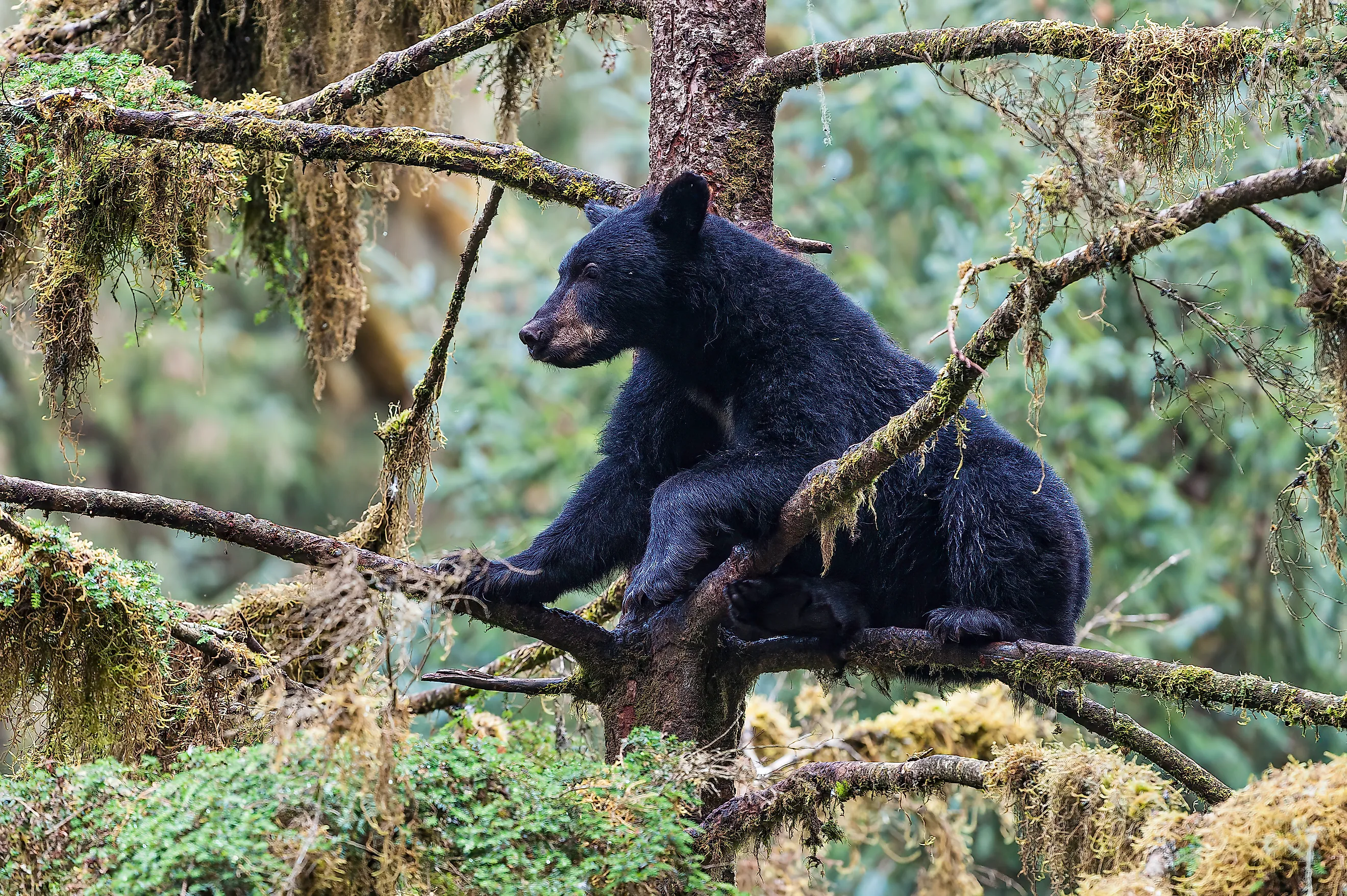
The National Forests With The Most Black Bears
Black bears are remarkably adaptable animals, but they remain closely tied to forests above all else. Thick cover gives them places to rest and raise cubs, while berries, nuts, insects, and wildlife found throughout the wooded landscape keep them fed. Across the United States, black bears occupy everything from wet coastal forests and rugged mountain slopes to northern woodlands and broadleaf plains. Many of these habitats fall within the national forest system. Their mix of landscapes and active wildlife management creates remarkably productive lands for black bears to flourish in. The result is a collection of national forests where black bears are more than an occasional sighting.
Tongass National Forest, Alaska

The Tongass National Forest covers 17 million acres in Southeast Alaska, where black bears have access to an unusually productive combination of coastal rainforest, salmon streams, berry vegetation, and extensive forest cover. The forest encompasses islands, fjords, glaciers, and the Coast Mountains, giving the population varied habitats and environments. The USDA Forest Service identifies the Tongass as one of the national forests with some of the highest recorded bear densities in North America.
The Alaska Department of Fish and Game estimates that the northern Tongass Kuiu Island supports 1,019 black bears at a density of 3.9 bears per square mile. This is one of the highest recorded densities in North America. Alaska as a whole has over 100,000 black bears in the state, with an estimated 10,000 of these being within the Tongass Forest.
Shasta-Trinity National Forest, California

At more than 2.1 million acres, Shasta-Trinity is the largest national forest in California, stretching across a landscape of mountain ranges, mixed-conifer forests, lakes, and thousands of miles of streams and rivers. Those varied habitats are perfect for productive black bear populations. These environments also host ample opportunities for bears to forage on grasses, berries, and carrion. The forest sits primarily within the Cascade and North Coast Mountain Ranges, where the state's most abundant black bear populations occur.
The USDA Forest Service's review of American black bear populations estimates a density of 1 black bear per 0.5 square mile within the Shasta-Trinity National Forest. The California Department of Fish and Wildlife reports 49,000 to 71,000 black bears in California, with roughly half occurring in the North Coast and Cascade regions. Because of the forest's position within these ranges, it sits within one of the state's principal black bear strongholds.
Flathead National Forest, Montana

Flathead National Forest covers a large portion of northwestern Montana, with the Whitefish, Swan, and Great Bear wilderness landscapes creating extensive forest habitat for black bears. The forest also contains a mix of lower-elevation forests, mountain valleys, and riparian areas that give bears access to food sources throughout the year. The Montana Field Guide notes that black bears often move from dense forests into open slopes during spring, making Flathead National Forest a perfect combination of environments.
Research within the Whitefish Range of Flathead National Forest reports an estimated density of 1 bear per 0.8 square miles. This estimate gives Flathead Forest a value of roughly 765 total black bears within the forest bounds. The forest's border areas help increase the number of bears traveling in and out of the forest as well. The nearby Glacier National Park gives bears room to move between landscapes during seasonal feeding and breeding.
Chattahoochee-Oconee National Forest, Georgia

Black bears are incredibly common throughout the Chattahoochee-Oconee National Forest, which covers about 750,000 acres across 18 counties in north Georgia. The forest's Appalachian oak forests contain many of the foods black bears depend on, while wildlife and seasonal foods provide optimal diets. The Forest Service reports that the black bear population on the Chattahoochee has increased significantly over the last 20 years and describes the species as 'widespread.'
The Department of Natural Resources has monitored black bear populations using bait station surveys since 1983. The survey route extends across 11 counties and 10 wildlife management areas, covering a significant portion of the Chattahoochee-Oconee National Forest. These surveys have recorded a density of roughly 1 bear per 1.5 square miles. This data has solidified the forest as one of the state's primary black bear habitats.
Superior National Forest, Minnesota

Superior National Forest sits along the southern edge of Minnesota's boreal forest, where extensive woodlands, wetlands, lakes, and rocky terrain create varied habitats black bears can use year-round. At roughly 3.9 million acres, it is the largest national forest east of the Mississippi River, and the Forest Service identifies black bears among the forest's major wildlife species. The Minnesota Department of Natural Resources estimates 13,000 to 18,000 black bears in the state, with conservation and research among top priorities for the species.
A USDA Forest Service review estimates a density of 2 bears per square mile, showcasing Superior National Forest as a primary core habitat for black bears. In the Great Lakes region, black bears take advantage of the riparian areas for hunting, with large numbers of bears often traveling from surrounding areas in the late summer.
Cherokee National Forest, Tennessee

Black bears have had a major comeback in Tennessee, and the Cherokee National Forest has been central to that recovery. The Forest Service says the creation of the forest and the Great Smoky Mountains National Park in the 1930s was a major factor in preventing the state's bears from disappearing. Today, the Cherokee spans more than 660,000 acres across the Southern Appalachian Mountains, with extensive forest habitat on both sides of the Great Smoky Mountains Park.
The Forest Service designates 94,948 acres of the Cherokee National Park as black bear habitat management areas, with the goal of maintaining secluded, diverse habitat and adequate den sites for the species. That acreage overlaps six Tennessee Black Bear Reserves. The Tennessee Wildlife Resources Agency estimates 6,000 bears statewide, with the majority of those bears residing in Cherokee National Park. The density fluctuates due to the park's closeness to the Great Smokey Mountains National Park, but recent reviews estimate a density of 1.2 bears per square mile.
America's Bear Country
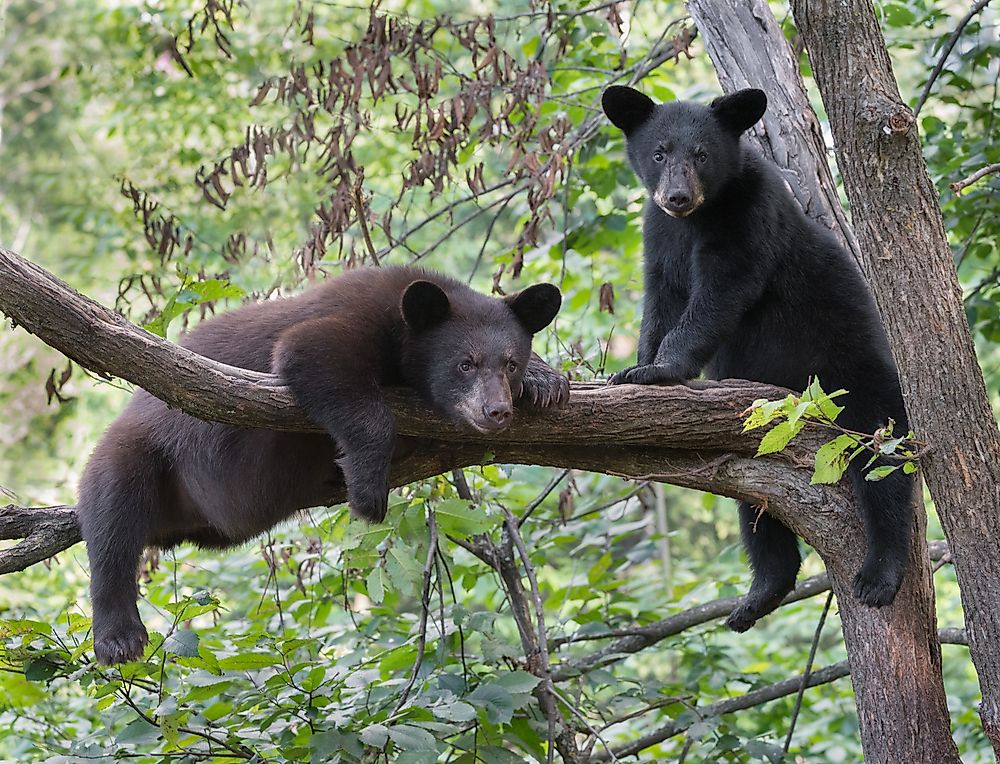
For black bears, the value of these national forests goes beyond their sheer size. Large stretches of connected forest, reliable seasonal food, and areas with limited development give bears the space they need to move between feeding, denning, and breeding habitat. This is particularly important as black bear populations continue to recover from widespread habitat loss. National forests create new sources of food and denning coverage while also secluding the populations away from potential interference from poaching or hunting. These national forests show how black bear populations can remain strong in our modern world.