The State Parks Built On Old Battlefields
There is no denying that the National Park Service does a great job of interpreting many of the battlefields that have defined armed conflict throughout the United States' past. It cannot bring them all into its system, so the most historically significant become national parks or national military parks. For the battlefields outside its jurisdiction the state park system fills an important gap. On a practical level these state parks offer cheaper and more accessible alternatives to their better-known federal cousins. They can also give a more localized perspective on the events at a given place, one that appeals to the residents of that area. Below you will find nine such battlefields turned into state parks, technically eleven in all.
Prairie Grove Battlefield State Park, Arkansas

There were not many battles fought west of the Mississippi during the American Civil War, waged between 1861 and 1865, but Prairie Grove was one of them, which is part of what makes it significant. What else makes it special is that it still looks much like it did on December 7, 1862 when Federal and Rebel armies met on its ridges and fields. This is a rarity for visitors to other such sites around the country. It does have some of the amenities of other similar places, like the Hindman Hall Museum where artifacts are displayed, as well as a driving tour. However, these are built into a largely untouched landscape, whereas the others have been marred over time.
Fort Ridgely State Park, Minnesota

In thinking about how these sites are managed, never underestimate the efforts of a state historical society. Such is the case for Minnesota's Fort Ridgely State Park, which is overseen by the Minnesota Historical Society. Their efforts preserve not just the place where Dakota peoples were stopped in 1862 as part of an ongoing war between them and the United States. They also do well to contextualize that moment with the broader conflicts between the government and native peoples. Along with the history, you can also camp and pursue other recreational activities, which is always the sign of a well thought out park.
Fort McAllister State Park, Georgia

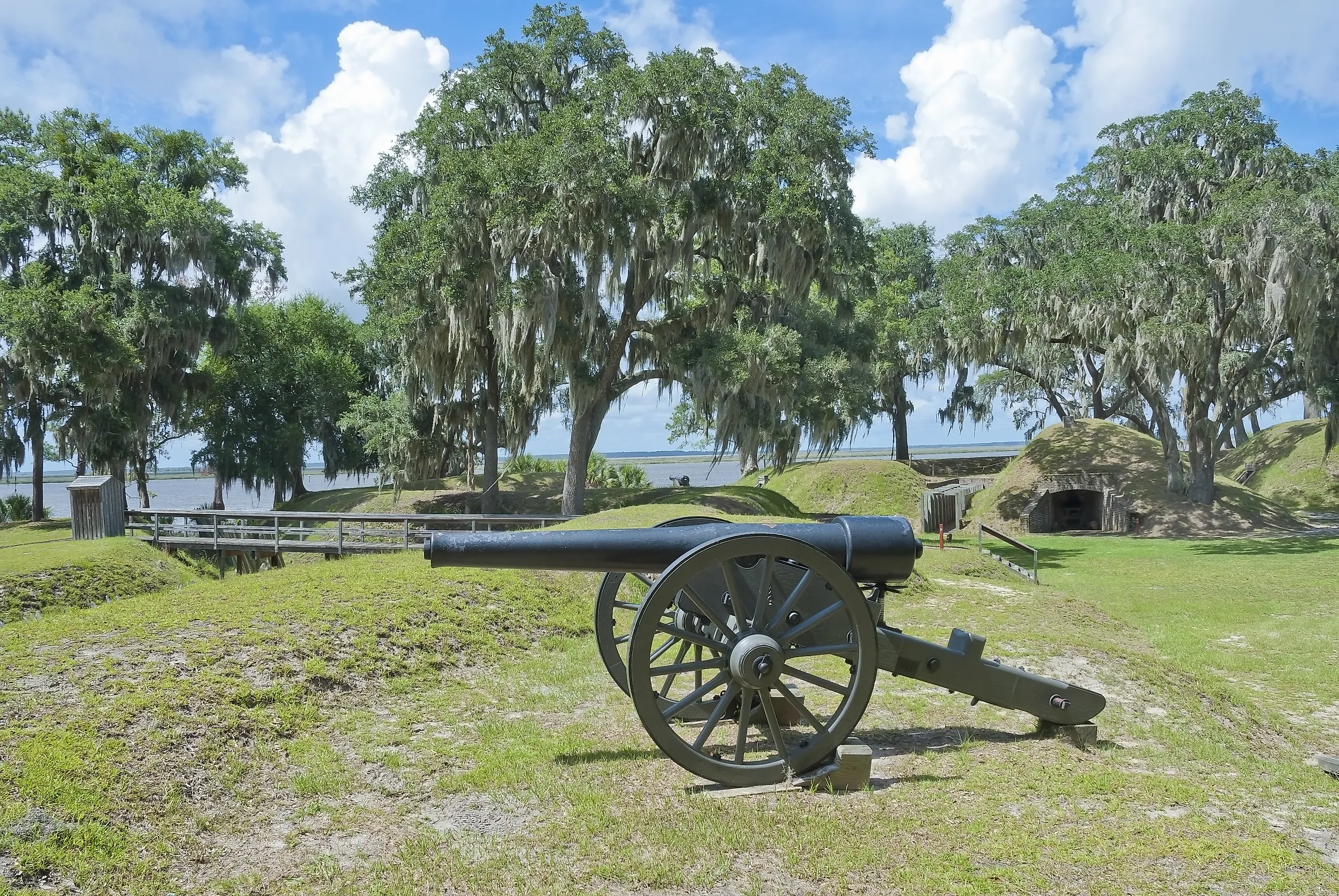
Fort McAllister State Park in Georgia has some of those outdoor amenities, but being on the water, it also has opportunities for boating. The nautical theme is key to its story as it was attacked by Union forces in December of 1864 towards the end of General William Tecumseh Sherman's infamous "March to the Sea" through the state. As such, in terms of the historical interpretation, much of its past is contained within its ramparts. In this regard, it does a good job of preserving that moment in time, with many intact earthworks and a Civil War museum all along its riverfront setting. It makes for a great weekend in which you can learn a little about the past while also getting to experience this unique natural setting.
Rosebud Battlefield State Park, Montana

It is fitting that Rosebud Battlefield State Park in Montana does not have as extensive of a campground and other outdoor activities since it is part of some of the more painful moments in American history. However, in this case the Battle of the Rosebud on June 17, 1876, was a prelude to the more famous defeat of General George Armstrong Custer a week later nearby at Little Bighorn. Both sites are relatively untouched, and Rosebud concentrates providing a historical interpretation of the fighting that took place between Cheyenne-Lakota force led by Crazy Horse, and Federal troops commanded by General George Crook. The majority of the field is on park grounds, and it is managed by Montana Fish, Wildlife, & Parks, which places a premium on the natural setting.
Fort Pillow State Historic Park, Tennessee

As might be apparent to this point, and there will be other like entries, many of these sites are from the Civil War era. However, Fort Pillow State Historic Park in Tennessee stands out among them, and not entirely for any kind of military glory. Though originally built by the Confederacy, on April 12, 1864, when it was attacked by the Rebels, it was occupied by African American troops fighting for the Union. The South managed to retake the fort, and in the aftermath, massacred surrendering soldiers. These events are preserved in the park's museum and at other interpretive sites. It also sprawls over nearly 2,000 acres, with camping and hiking trails. Still, the main aspect here is the terrible slaughter that took place over 150 years ago.
Battle of Musgrove Mill State Historic Site, South Carolina

The one entry on this list from the American Revolution is the Battle of Musgrove Mill State Historic Site in South Carolina. Indeed, it is remarkable that this one has remained at the state level because it is one of the more pivotal conflicts of that war. Being late in the North American phase of the War of Independence, the Patriots, mostly backwoods partisans, defeated the larger British, who would be forced to surrender the following year at Yorktown. It is also one of the more manageable sites, ideal for a day trip, with hiking trails around and through the compact battleground. You can also get more background in that same day at its visitor center.
Carnifex Ferry and Droop Mountain Battlefield State Parks, West Virginia

These two state parks, Carnifex Ferry Battlefield State Park and Droop Mountain Battlefield State Park, are different from the other Civil War sites in being set in West Virginia. Unlike the rolling fields of the other sites, these are places where topography mattered to a greater degree. Also, because they were fought atop ridgelines, these parks are of the smaller variety. Each witnessed Union victories, in 1861 and 1863 respectively, and the last one being considered the final major engagement of the conflict in the state. Being in such locations, their attraction goes beyond the historic, making for great picnic spots to enjoy the surrounding scenery.
Dade Battlefield Historic State Park, Florida

The Dade Battlefield Historic State Park in Florida is one of the more unique entries on this list if only because it speaks to a little discussed phase in American history, the Seminole Wars. These were a series of conflicts fought by the United States government against the Seminole peoples of Florida. During the second of these, on December 28, 1835, Major Francis Dade led his 108 troops, including himself, into a near total massacre. It is part of why the Seminole remain one of the few unconquered native peoples east of the Mississippi River. Importantly, though, the site is not maintained by the Seminole nation, but rather by Florida's state park system, which oversees the landscape and the historical interpretation.
Olustee and Natural Bridge Battlefield Historic State Parks

Florida is often overlooked when it comes to Civil War history. Unsurprisingly, its two major battlefields have not become a part of the NPS system. Yet, that should not speak to their quality. They are also on the smaller side, which makes sense given the lesser importance of the state to the Confederate cause. As such, it is unsurprising that Tallahassee remained the only Confederate state capital east of the Mississippi River not taken by the Union during the war, and these two battles are part of the reason why this was the case. The state government and its citizens interpret these events, having annual reenactments of the battles on these sites. If you can plan your visit for these times, you might get a unique experience.
Conclusion
What you get from these state parks as opposed to the national ones is a more intimate experience. At the national level, with the number of visitors they get annually, one can get lost in the enormity that armed conflict can mean for a given site. With these state parks, you can get up close with the past in a more personal way, and enjoy some natural settings while you are at it.