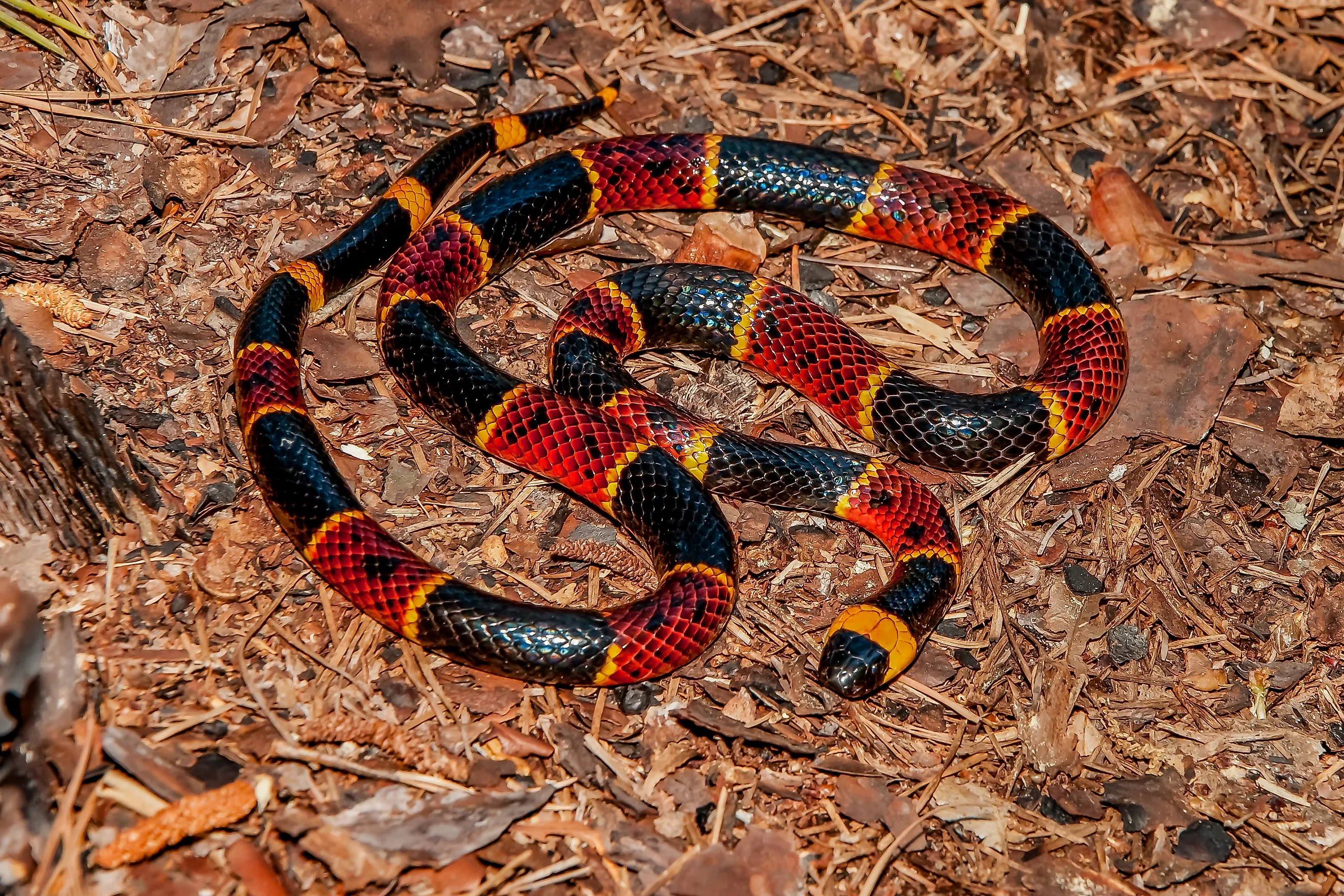
Where Cottonmouths And Coral Snakes Overlap
Georgia's wildlife agency settles this one in nine words: coral snakes do not tolerate low-lying areas or wet soils. The cottonmouth is the only semiaquatic viper on Earth and spends its life in exactly those places. So two venomous snakes share the entire southeastern coastal plain on a range map and are separated by something as simple as how wet the ground is. They meet in one narrow band, and it is the strip where the sand runs out.
The Map Says They Overlap Completely

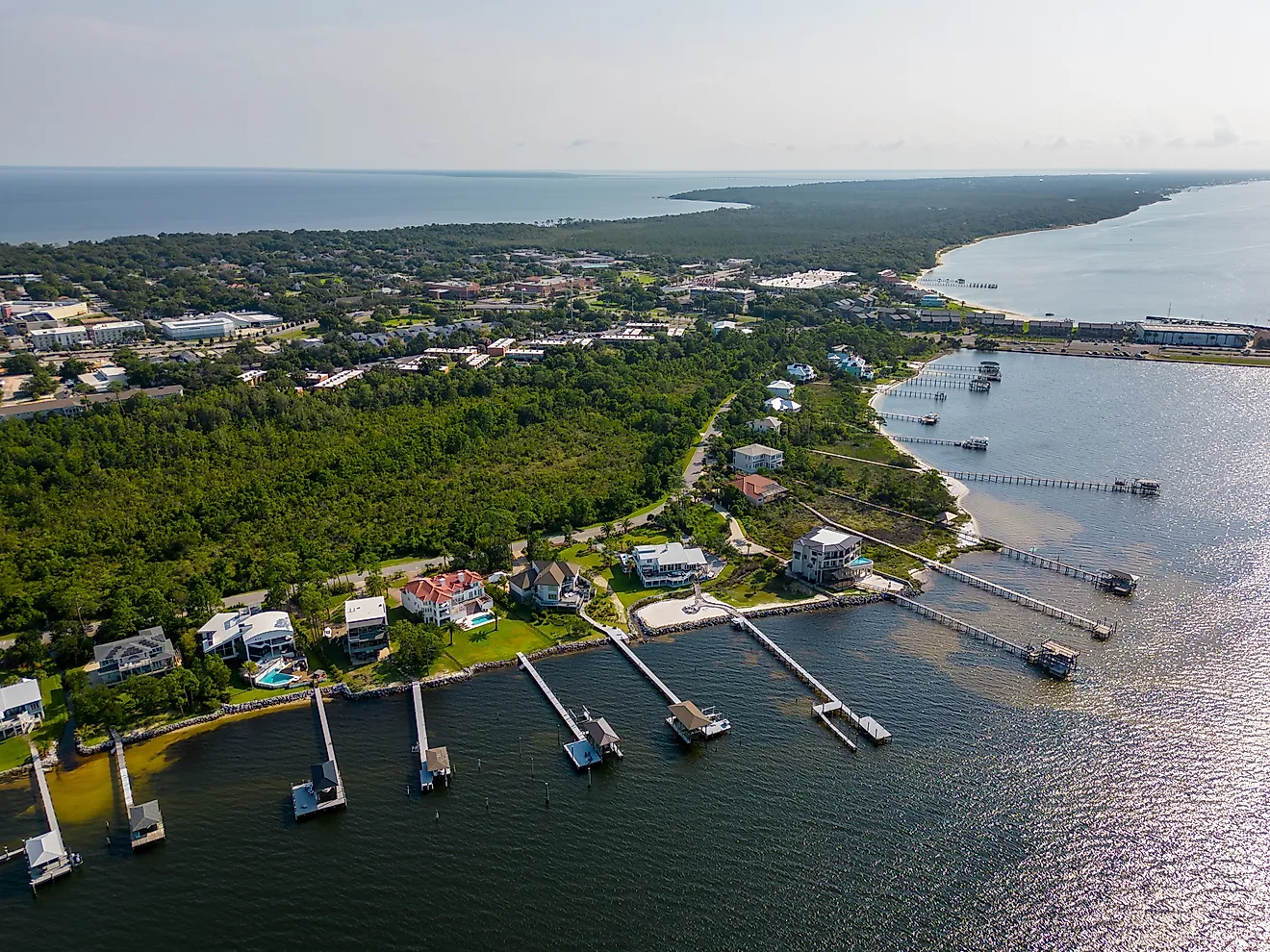
On paper these two cover almost identical territory across the Southeast. The eastern coral snake runs from southeastern North Carolina through South Carolina, Georgia, peninsular Florida, Alabama and Mississippi into southeastern Louisiana, with the Texas coral snake covering Texas, Louisiana and parts of Arkansas. Cottonmouths occupy the same coastal plain from southeastern Virginia to south Florida and west to central Texas.
In Florida the coral snake occurs in every county and on Key Largo. The cottonmouth is similarly statewide. Any Florida wetland is inside both ranges.
One Lives Underground

The separation that keeps them apart is vertical as much as horizontal. Coral snakes are fossorial, spending much of their time digging through loose soil and leaf litter or completely underground. They need deep, well-drained sand to do it, and they are found in pine and scrub sandhills, pine flatwoods and dry oak woodlands.
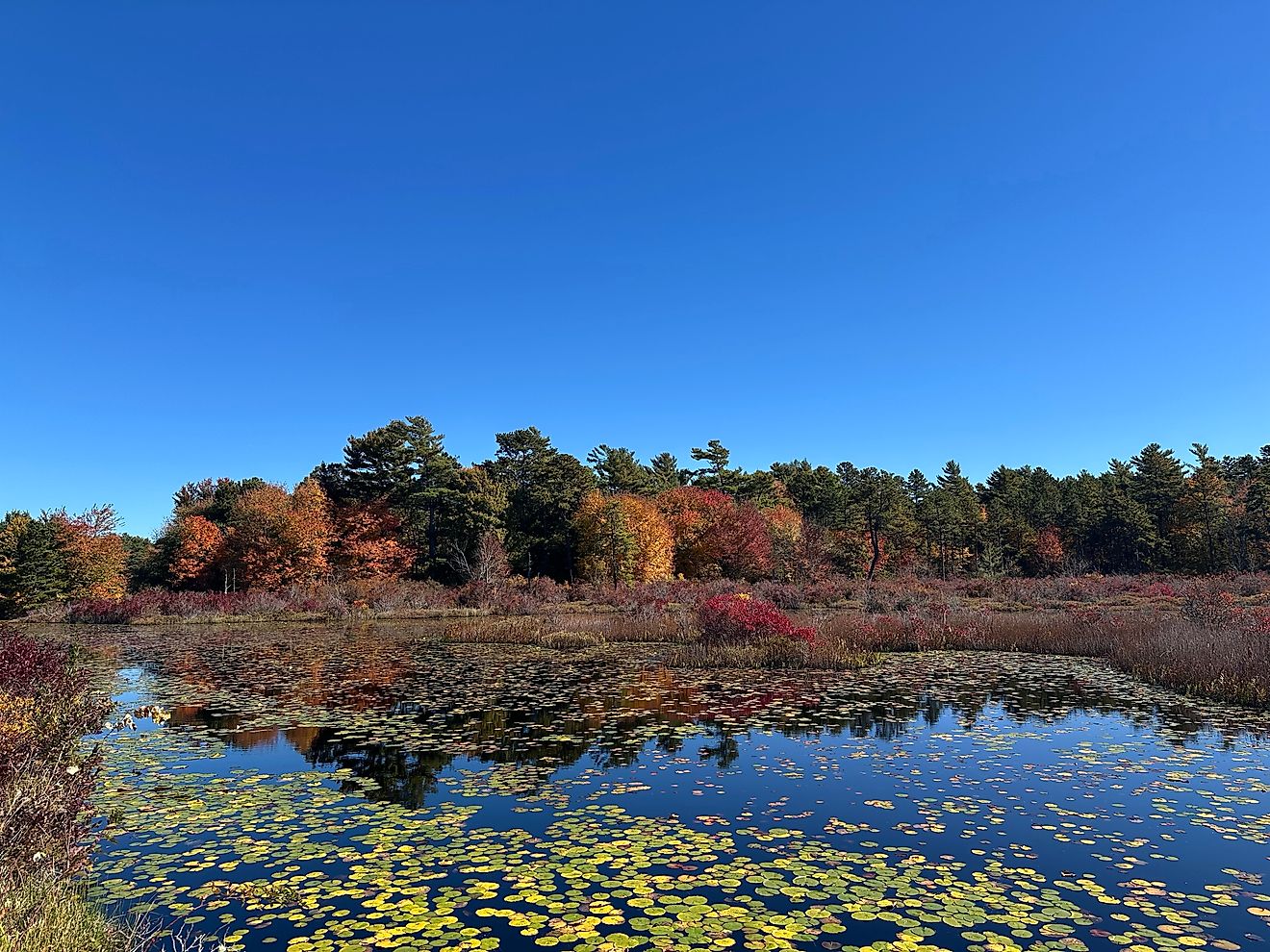
Cottonmouths work the waterline. Log jams, cypress knees, undercut banks, floating vegetation and the margins of lakes and slow rivers. The two species are using opposite ends of the same landscape.
Wet Soil Is The Hard Boundary

This is not a preference so much as a physical limit. Georgia's fact sheet states plainly that coral snakes do not tolerate low-lying areas or wet soils, and that their preferred habitat has well-drained sandy soil with areas of open ground. A snake that burrows cannot burrow in saturated ground.
Which means the cottonmouth's core habitat is uninhabitable for the coral snake, and most of the coral snake's core habitat is too dry to interest a cottonmouth.
They Meet At The Swamp Border

There is a genuine interface, and the Florida Museum describes it precisely.
Coral snake habitat is listed as dry, well-drained flatwoods and scrub areas, low wet hammocks, and the borders of swamps. That last phrase is the overlap zone, a band perhaps a few meters wide where sandy upland drops to wetland.
A cottonmouth basking at the waterline and a coral snake under leaf litter on the rise above it can be within sight of each other and still be in different worlds.
The Coral Snake Eats Snakes

The relationship is complicated by what the coral snake eats, which is mostly other snakes.
Coral snakes are ophiophagous, specializing in small snakes alongside skinks and legless lizards. Their preferred prey are slender fossorial species, worm snakes, crowned snakes and earth snakes, hunted in the same soil the coral snake lives in.
They are also cannibalistic. A coral snake is not above eating another coral snake, which is a detail that says a good deal about the niche.
So Does The Cottonmouth

Running the diet comparison the other way produces a standoff that almost never actually happens.
Cottonmouths are generalists taking fish, frogs, crayfish, small mammals, birds, lizards and other snakes, including smaller cottonmouths. Both species therefore eat snakes and both are physically capable of eating a juvenile of the other.
Habitat keeps it theoretical. They would need to be in the same place at the same time, and the soil moisture makes that rare.
Peninsular Florida Is The Pure Case
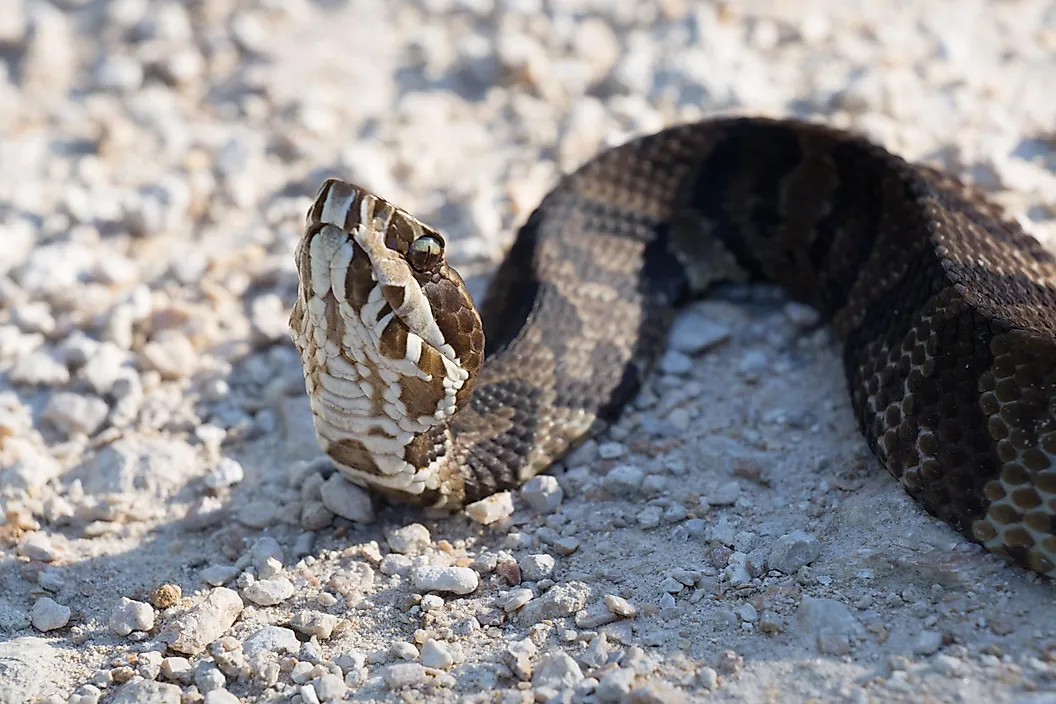
One region holds this pair without the complication the rest of the Southeast carries.
Copperheads do not extend beyond the Florida panhandle, so across central and southern Florida the coral snake and the cottonmouth are the only two of this trio present. A banded snake there is a coral snake or a mimic, and a thick-bodied one at the water is a cottonmouth.
Coral snakes are described as more common in Florida than in any other state, which makes the peninsula the best place to find both.
One Is Everywhere And Rarely Seen

Range size and encounter rate are not the same thing, and this pair demonstrates it sharply.
The coral snake occupies every county in Florida and is still almost never encountered, because it is underground. Georgia's agency notes wide gaps in the documented range, with animals not found in places where the habitat looks ideal.
The cottonmouth is conspicuous by comparison, basking on logs and swimming across open water in daylight. One species advertises and the other disappears.
The Venom Works Differently

The two belong to different families and the bites behave accordingly.
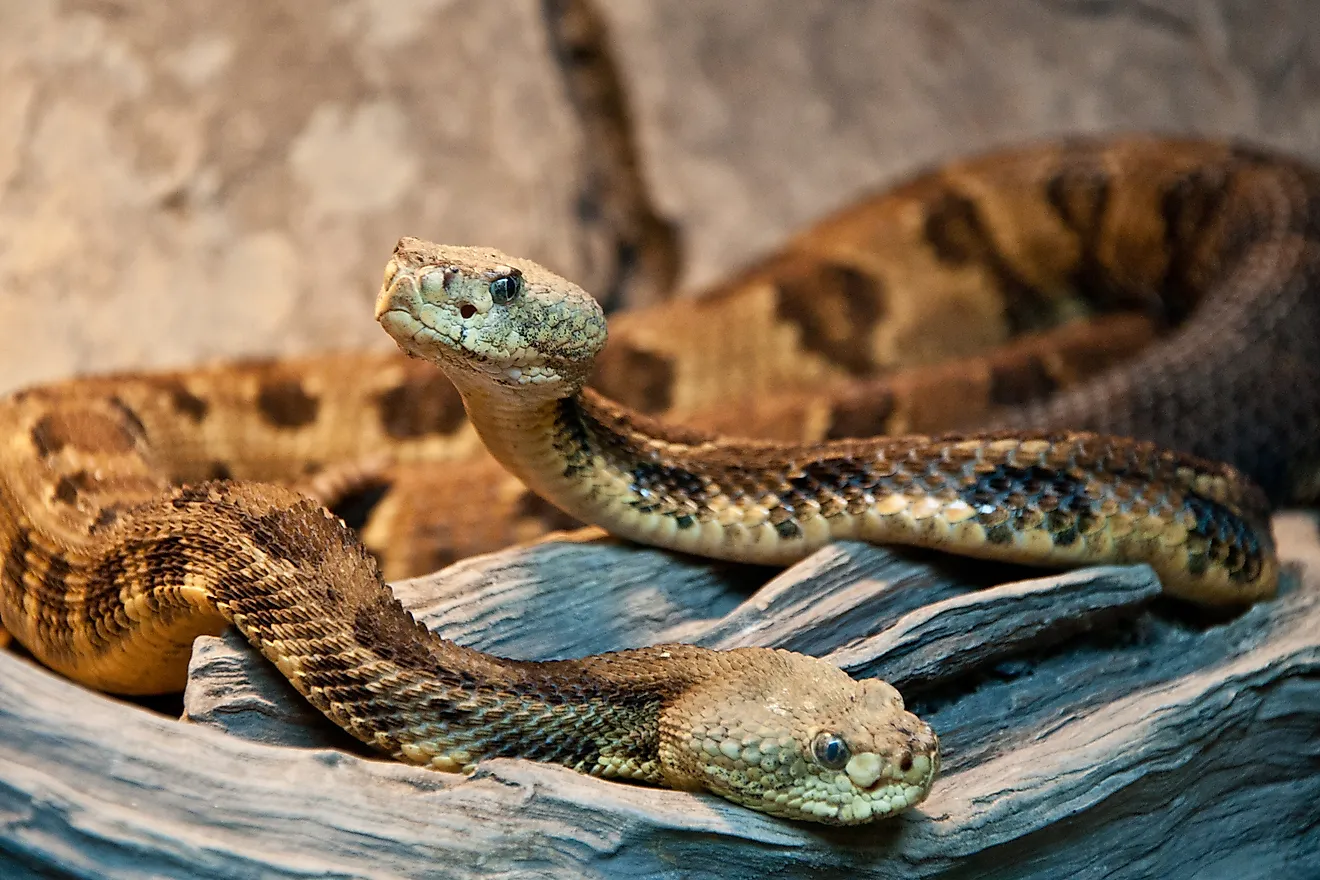
The cottonmouth is a pit viper with hinged fangs and primarily tissue-destroying venom that announces itself immediately through pain and swelling. The coral snake is an elapid, related to cobras, with short fixed fangs and neurotoxic venom whose symptoms can be delayed for hours.
The coral snake is also reluctant to bite even when handled, which combined with its burrowing habits keeps bite numbers under 100 a year nationally.
The Short Answer

Cottonmouths and coral snakes overlap across the whole southeastern coastal plain from the Carolinas through Florida and west into Texas, and across most of that shared ground they never meet. The coral snake needs deep dry sand to burrow in. The cottonmouth needs water.
Their actual contact zone is the border of a swamp, where sandy upland drops into wetland, which is a strip you could walk across in a few seconds. Both species eat other snakes and both could eat a juvenile of the other. The soil is what stops them.