The Oldest Distilleries Still Operating In America
A number of America's oldest operating distilleries trace their histories through family businesses, changing ownership, and the disruptions of Prohibition. Some still make products where distilling began more than 200 years ago, using historic buildings alongside a mix of modern and old-timey equipment. A site may predate its current brand by generations, and operating today does not necessarily mean production never stopped at one point or another, but regardless, this list will cover locales that continued pumping out whiskey, vodka, gin, and other spirits as long as the law permitted. With that, Kentucky accounts for many of these surviving facilities, but Tennessee, Indiana, and a few other regions also preserve longstanding operations whose influence extends from familiar bottles to liquor produced for other companies' labels.
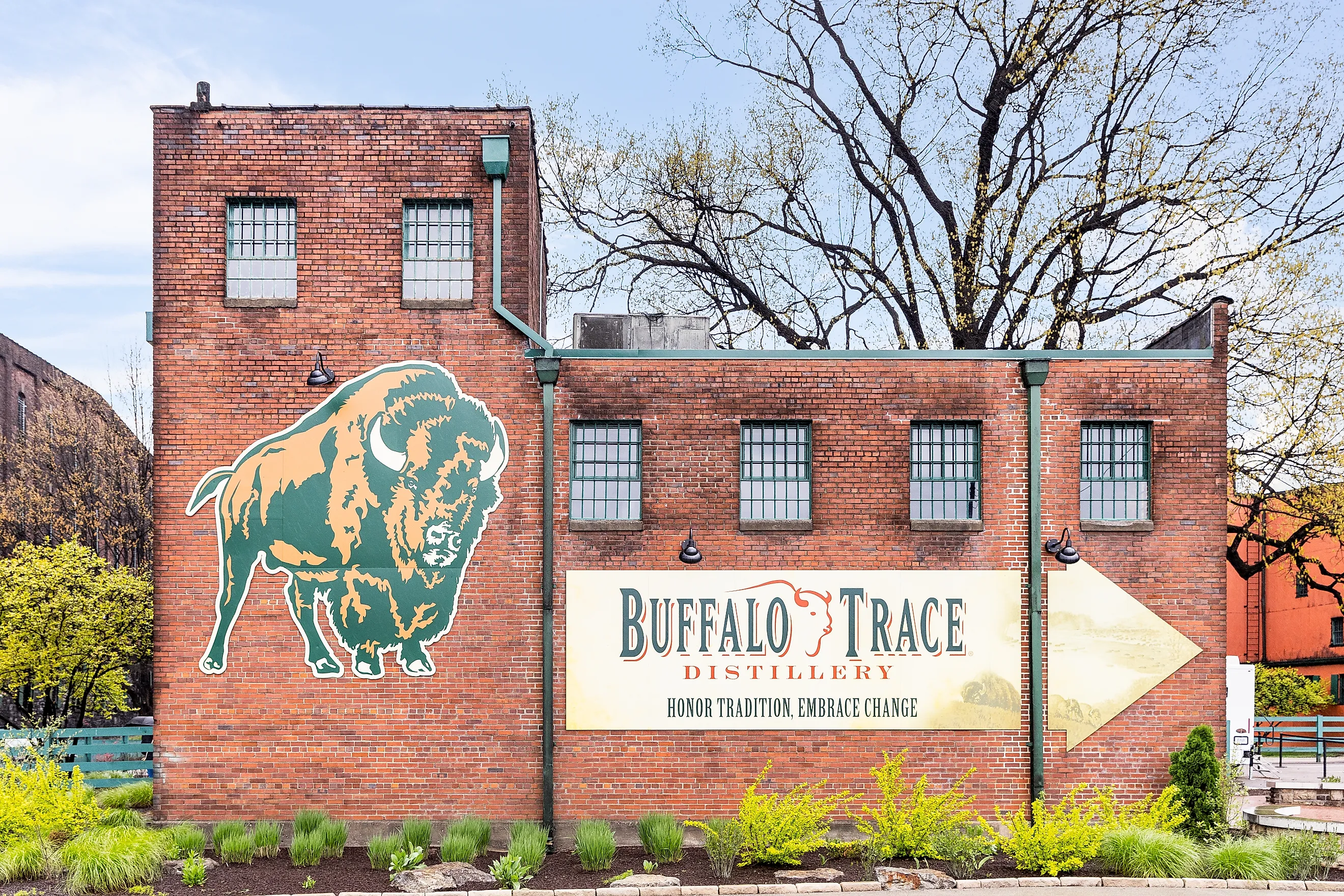
Buffalo Trace Distillery - Frankfort, Kentucky - 1775

Buffalo Trace Distillery in Frankfort, Kentucky, has been distilling on its grounds since 1775 and is broadly considered America's oldest continuously operating distillery. Its position beside the Kentucky River helped early producers transport whiskey, while later owners expanded the property into a major bourbon operation.
Edmund Haynes Taylor Jr. purchased the distillery in 1870 and introduced improvements that shaped its development. It later became known as the George T. Stagg Distillery before adopting the "Buffalo Trace" name in 1999. Unlike many competitors, the business also remained active during Prohibition under authorization to produce whiskey for "medicinal purposes."
The property became a National Historic Landmark in 2013, recognizing its significance in American whiskey production. Its brick warehouses still store barrels through Kentucky's seasonal temperature changes, which influence maturation, and Buffalo Trace, Eagle Rare, and George T. Stagg are among the bourbons associated with the distillery these days.
Maker's Mark Distillery - Loretto, Kentucky - 1805

Maker's Mark occupies the former Burks' Distillery property, whose milling history dates to 1805. Whiskey production followed, although its precise starting date is uncertain. Bill Samuels Sr. purchased the distillery in 1953 and began producing Maker's Mark in 1954, with the first bottles released in 1958. His recipe used soft red winter wheat instead of rye, giving the bourbon a gentler flavor. On the other hand, Margie Samuels is to thank for developing its now iconic name, label, and distinctive red wax seal, which remains applied by hand.
The grounds retain historic buildings beside Hardin Creek, with dark siding and red shutters that reflect the brand's packaging. Guided tours explain fermentation, distillation, and barrel maturation before a tasting, and at the gift shop, you can purchase a bottle and dip it in red wax yourself, connecting the visit to a finishing technique that has identified Maker's Mark for nearly seventy years.
Woodford Reserve Distillery - Versailles, Kentucky - 1812

Limestone buildings beside Glenn's Creek preserve the history of this distilling site established by Elijah Pepper in 1812. His son, Oscar Pepper, built the main distillery building in 1838, and the property later became known as Labrot & Graham. Production did stop during parts of its history before Brown-Forman restored the facility in the 1990s and introduced Woodford Reserve in 1996.
However, this now National Historic Landmark combines those early stone structures with working whiskey production. Copper pot stills distinguish the distilling process here, with spirit passing through three successive stills before entering barrels. Explore this for yourself with Woodford Reserve's Path to Flavor Tour, which introduces the property and its legendary bourbon making process, followed by a guided tasting.
Beyond the production buildings, the Gristmill House hosts cocktail experiences exploring drinks such as the Old Fashioned, while the surrounding horse farms place the location within Kentucky's Bluegrass region near Versailles.
MGP Distillery - Lawrenceburg, Indiana - 1847
Founded by George Ross as Rossville Distillery in 1847, this Lawrenceburg operation became a major supplier of whiskey sold under other companies' labels. A position alongside Tanner's Creek conveniently placed it near the Ohio River, while an underground aquifer supplies limestone-filtered water for distilling.
Seagram purchased the facility in 1933, and MGP acquired it in 2011 after further ownership changes. The distinction matters because MGP itself began in Kansas in 1941, while this Indiana locale's history stretches back almost a hundred years further.
Rye whiskey became a specialty, including a widely used recipe containing 95% rye and 5% malted barley. Customers can buy said whiskey straight from this producer, then blend, finish, or bottle it for their own brands. The facility also produces Remus bourbon and Rossville Union rye, giving its longstanding manufacturing operation some recognizable labels of its own alongside the spirits it supplies to other companies.
Jack Daniel Distillery - Lynchburg, Tennessee - 1866

Jack Daniel Distillery was officially registered in 1866, making the basis for its claim as "America's oldest registered distillery." Like many on this list, production was interrupted by Prohibition, so the registered date does not exactly represent uninterrupted operation. Its unique history also includes Nathan "Nearest" Green, an enslaved distiller who taught Jack Daniel to make whiskey and later became the operation's first master distiller.
Cave Spring Hollow remains central to whiskey making here, supplying iron-free water from beneath a limestone bluff. Before barrel aging, newly distilled whiskey drips through 10 feet (3 meters) of sugar maple charcoal as well, a treatment known as the "Lincoln County Process" and something that further distinguishes it from true bourbon made in nearby Kentucky.
Guided visits show off the spring, distilling equipment, and charcoal mellowing, with tasting experiences available, too. The rickyard displays another step, where stacks of sugar maple wood are burned to create the charcoal used in the whiskey's production before it enters new oak barrels.
Barton 1792 Distillery - Bardstown, Kentucky - 1879

The Barton name dates back to 1792, commemorating the year Kentucky gained statehood, although the distillery itself traces its beginnings to 1879. Its story connects to distiller Tom Moore, whose name survives in the property's Tom Moore Spring. Sazerac acquired the operation in 2009, and it continues making "1792 bourbon" and "Very Old Barton."
Its sizable 196-acre grounds include a still house and numerous warehouses where whiskey matures in charred oak barrels. Its flagship 1792 Small Batch still uses a recipe with a high proportion of rye, contributing spicy notes alongside the sweetness typically associated with barrel aging.
Keep in mind that public tours ended in June 2022, so the operating distillery should not be treated as a regular sightseeing stop. In Bardstown, however, the Oscar Getz Museum of Bourbon History offers a related attraction, displaying a large array of antique bottles, early distilling equipment, and Prohibition artifacts from a collection assembled by a former owner of the Barton business.
Four Roses Distillery - Lawrenceburg, Kentucky - 1910

Built in 1910 as the "Old Prentice Distillery," Four Roses stands out for its Spanish Mission architecture, an unusual choice for a Kentucky whiskey producer. The building is listed on the National Register of Historic Places, while the Four Roses brand actually has its origins as far back as 1888.
Inside, production centers on ten bourbon recipes created by combining two grain mixtures, called mash bills, with five yeast strains. These combinations produce different spicy, fruity, floral, and herbal characteristics, giving the distiller a number of distinct components for their bottlings. Furthermore, water comes from the Salt River, and the whiskey undergoes two stages of distillation before leaving Lawrenceburg. Barrel filling, aging, and bottling take place at the separate Warehouse & Bottling Facility in Cox's Creek.
These days, you can tour the historic distillery and sample its bourbons, while the Cox's Creek property offers a separate look at warehouse operations.
Notable Mention: Laird & Company - Scobeyville, New Jersey

Laird & Company traces its commercial history to 1780, when Robert Laird recorded the family business's first sale, making it the actual oldest licensed distiller in America. Its roots actually extend further back to 1698, when William Laird arrived from Scotland and began making apple spirits in New Jersey. Based in Scobeyville, the company remains associated with "applejack," a spirit that became common in colonial taverns and households.
However, its distilling operations eventually moved to Virginia in the mid 1970s, so the company's age should not be confused with continuous production at its original New Jersey site. Prohibition also interrupted its history, although the business received permission to produce apple brandy for medicinal purposes before repeal.
Today, it still offers a blended applejack, which combines apple brandy with neutral spirits, differentiating it from traditional straight apple brandies. Laird's Bottled in Bond Straight Apple Brandy offers a 100-proof example aged at least four years in oak.
Have a Sip of American History at These Long-Standing Distilleries
A distillery's age tells only part of its story. The grain recipes, water sources, warehouses, and people behind each operation explain how every specific whiskey is developed. Visiting will often bring those details into view, though you should note that some historic producers concentrate on manufacturing rather than public tours and can, at times, be quite secretive. Knowing that, always check visitor accommodations before traveling, and always drink responsibly.