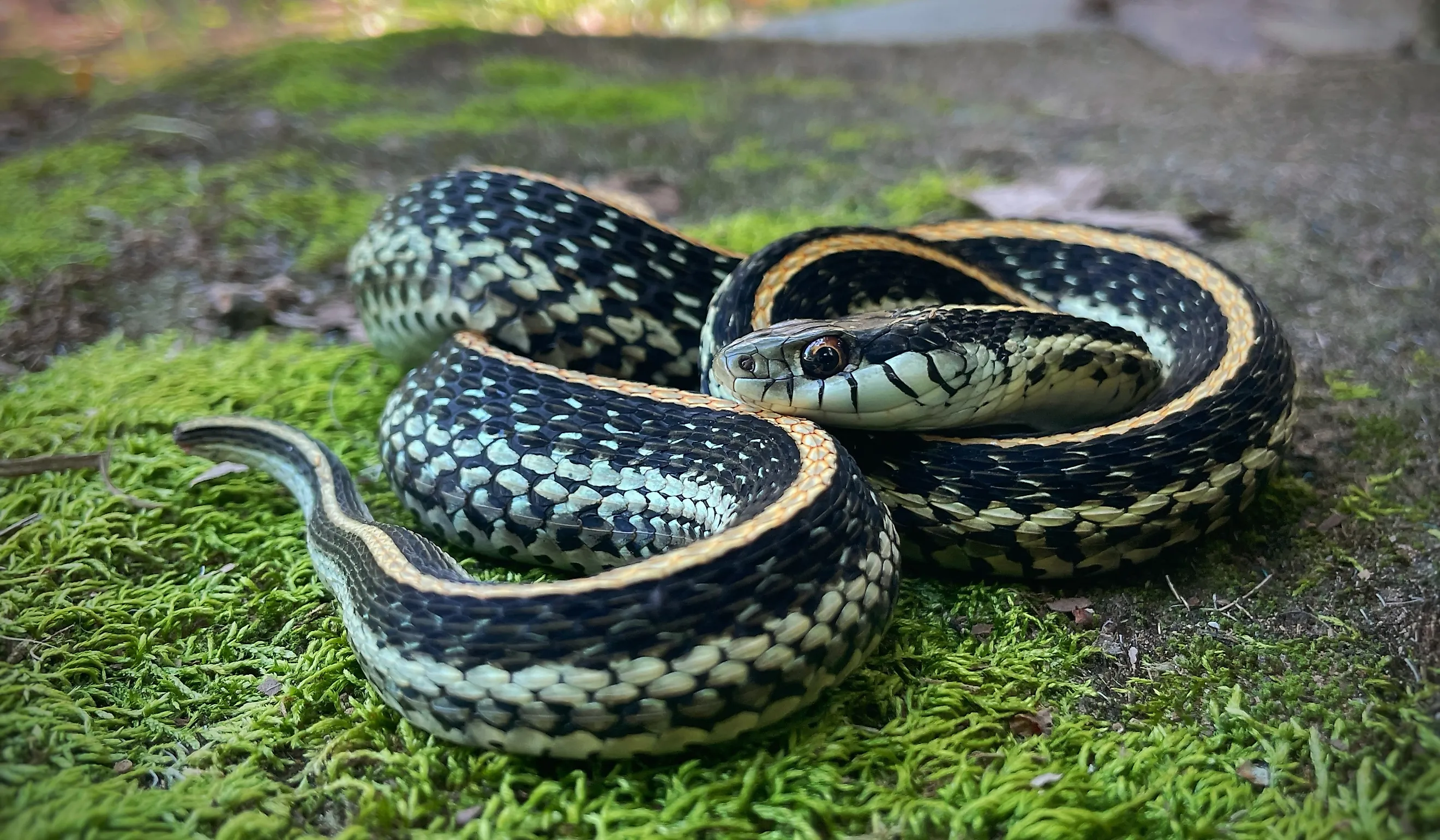
8 California Rivers With The Most Snakes
On Colusa National Wildlife Refuge, in the Sacramento Valley, biologists estimated as many as 103 giant garter snakes per kilometer. In Yosemite National Park, two people who went barefoot by the river were bitten by rattlesnakes.
California's rivers carry snakes in the water and on the banks, and the kind depends on where the river is running. Slow valley canals and marshes belong to a threatened garter snake found nowhere outside the Central Valley, which spends the winter underground, from around October 1 to April 1. In the mountain canyons, Sierra garter snakes hunt fish and frogs in the current, and rattlesnakes live among the rocks where people wade and the river bars where trips camp.
Trinity River

On the bank of the South Fork of the Trinity River, near Wild Mad Road in California's far northwest, North Coast Journal columnist Barry Evans spotted an unusually large western rattlesnake in June 2011. The Forest Service's guide for boaters on the Trinity Wild and Scenic River says rattlesnakes are common in the river and creek canyons, and it asks boaters not to kill them, since they help keep rodent populations in balance. On the main river, the guide's put-in is the Forest Service campground at Pigeon Point, and its suggested takeout is Cedar Flat.
Sacramento River

Most of the giant garter snake populations still left live in the rice-growing country of the Sacramento Valley, after the loss of more than 90 percent of the species' natural habitat. Colusa National Wildlife Refuge lies in the Colusa Basin, cut in two by the Colusa Basin Drain, which carries the basin's water southeast to the Sacramento River. Biologists trapping on the refuge caught 81 giant garter snakes in 2000, 102 in 2001, and 128 in 2002 Their 2002 report put the density at 60 to 103 snakes per kilometer, or about 97 to 166 per mile, depending on where on the refuge the traps were set. The snakes they followed by radio stayed in or on the edge of ditches and wetlands and almost always kept to vegetation.
The canals that supply Gray Lodge Wildlife Area, also in the Sacramento Valley, carry water from a district holding Feather River water rights, and a Ducks Unlimited project to improve that canal system had counted 30 giant garter snakes in its work area by December 2020, moving 13 of them out of the way without a single snake death. Wildlife biologist Jeff Mitchell, the project's lead consultant, described it as an area with a high density of snakes, and most of the work had to be done in winter, when the canals held no water. In the Natomas Basin, part of the valley's American Basin, which reaches south to where the American River meets the Sacramento, 131 giant garter snakes turned up in USGS traps and hand searches at 44 sites in 2024.
Cosumnes River

The Cosumnes is the last free-flowing river to run out of the Sierra Nevada into the Central Valley, and near Galt, on the Arno Unit of the Cosumnes River Ecological Reserve, a wetland called Snake Marsh holds a giant garter snake population that the California Department of Fish and Wildlife calls genetically important. The U.S. Fish and Wildlife Service describes the site, at Badger Creek, as the best representative of the undisturbed wetlands that were once common throughout the Central Valley. A 1997 estimate put 118 giant garter snakes there, about 8 per hectare, or more than 3 per acre, the highest density among four valley sites estimated between 1996 and 1999, the others being Gilsizer Slough, the Natomas Basin, and Colusa.
Keeping that marsh wet has taken work. In 2014, after two straight drought years left a significant chance of the ponds drying up, the state pumped well water into the marsh and the ponds where the snakes live, finishing the job in about a month. By 2025, the snakes had gone into a precipitous decline that the state ties to the marsh's water conditions, drought, and invasive Uruguayan water primrose, and the Department of Fish and Wildlife filed plans to restore and enhance 343 acres of aquatic habitat at the site.
Tuolumne River

Trips into the middle Tuolumne watershed by a herpetology field group from UC Davis's Center for Watershed Sciences education program, one in late April and two in late June, camped at the Clavey River, a Tuolumne tributary, and at Indian Bar. The group found Sierra garter snakes in abundance on the lower Clavey, with at least six different individuals in the lower half-mile of the creek in a single day. The Sierra garter snake is more likely than most garter snakes to be found in the water, and it hunts fish, amphibians, and their larvae in daylight. Upstream in Yosemite, garter snakes are the most common snakes and are usually seen basking on the banks of rivers and streams.
Out of the water, the trips turned up a kingsnake, a ring-necked snake, and a gopher snake, the only one of the trips, which a participant found on the floating raft she had slept on at the Clavey. Inside the park, a man fishing barefoot in the Grand Canyon of the Tuolumne was bitten by a rattlesnake in August 2020, during a summer when the park saw a noticeable uptick in rattlesnake bites around Yosemite, and a California Highway Patrol helicopter crew came in by hoist to reach him. Downstream, at Indian Bar, the group's best find was a young northern Pacific rattlesnake.
Merced River

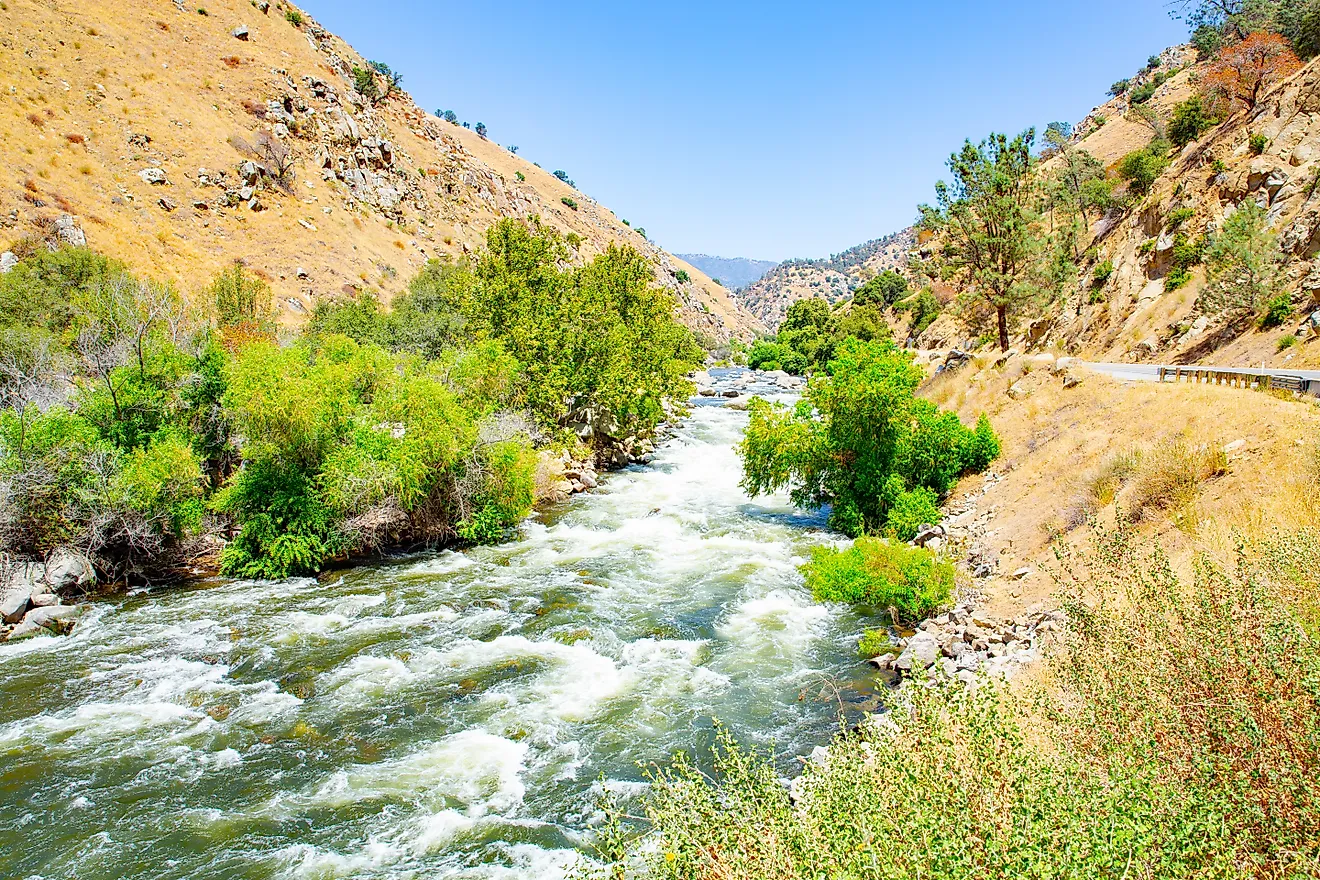
A 2004 survey team saw a western rattlesnake on the trail through Little Yosemite Valley, where the Merced River, Yosemite's other big river, runs toward the top of Nevada Fall. At the top of the fall, on June 29, 2015, a family took off their shoes to cool their feet at a safe spot in the river. Heading back barefoot to the granite shoreline, a man stepped down into a shallow recess between several rocks and was bitten by a rattlesnake. About an hour later, a helicopter airlifted him from the top of Nevada Fall, and clinic staff gave him antivenom.
Below the falls, in Yosemite Valley, the same 2004 survey recorded nine Sierra garter snakes at Cascade Creek. Downstream of the park, the Bureau of Land Management's Merced River recreation area runs from the Briceburg Visitor Center past the McCabe Flat, Willow Placer, and Railroad Flat campgrounds, and rattlesnakes turn up throughout that stretch of river.
Kern River

At the southern end of the Sierra Nevada, the South Fork of the Kern River flows through Audubon's Kern River Preserve near Weldon on its way to Lake Isabella, and the preserve's snakes keep to different kinds of ground. Valley gartersnakes stay around the ponds and marshes, active by day and at dusk. Sierra gartersnakes turn up along Fay Creek and in the drier parts of the preserve, and ring-necked snakes have been found along the same creek. Gopher snakes are common, and the desert rosy boa has been reported on the uplands. The northern Pacific rattlesnake is the only venomous reptile on the preserve, and Audubon's advice to anyone who meets one is to leave the area so the snake can escape unharmed.
Above the lake, Sequoia National Forest tells hikers on Upper Kern Canyon trails between 3,000 and 6,000 feet to watch for snakes in spring and summer, and rattlesnakes are on the list of riverside hazards for boaters on both the Upper and Lower Kern.
Santa Clara River

Southern California's coastal rivers have a water snake of their own, the two-striped garter snake, and a 2006 assessment of the Santa Clara River, which flows west through Los Angeles and Ventura counties to the Pacific, described it as somewhat common along the reach at the Castaic Creek confluence. On March 31, 2004, biologists there found one near an exposed root mass where Castaic Creek meets the river in braided channels. A November 2004 survey of the same stretch found that complex hiding places like that root mass were very limited along the river.
In May 1995, two rounds of trapping ran for 127 trap days between the Castaic Creek confluence and the Bouquet Canyon Road bridge and caught no snakes at all. The researchers wrote that snakes certainly occurred in the lower reach, between the confluence and the Old Road bridge, based on previous experience, and that their absence farther upstream was probably real.
The species is primarily aquatic and active by day, and it forages in and under water for fish, fish eggs, tadpoles, newt larvae, small frogs and toads, leeches, and earthworms. It has been found from January to November. Up the Piru River, a Santa Clara tributary in Ventura County, it comes in both a dark green and a reddish color morph, and along the main river it has been observed from Interstate 5 down to where the surface flow ends.
Santa Margarita River

The game warden office at Marine Corps Base Camp Pendleton, where the Santa Margarita River's lower 10 miles spread into a wide floodplain near the coast, was capturing about 140 southern Pacific and 30 red diamond rattlesnakes a year across the base before it began a rattlesnake study in March 2016. During that study, which ran into 2020, a wildlife technician in the office implanted PIT tags, small identification chips, in 450 southern Pacific rattlesnakes. The red diamond, the other species in those counts, is a California species of special concern.
Upstream of the base, one of the Wildlands Conservancy's photographers recorded a red diamond on the conservancy's Santa Margarita River Trail Preserve. The conservancy names the San Diego gopher snake and the southern Pacific rattlesnake as the most common snakes on its South Coast preserves, which include this one, and its less common list includes the red racer, the California kingsnake, the San Diego ring-necked snake, and the same two-striped garter snake found on the Santa Clara.
Cover keeps coming up wherever California's river snakes are found. At Colusa, the giant garter snakes stayed in or along the edges of ditches and almost always under vegetation, and on the Santa Clara, the one two-striped garter snake biologists found in 2004 was beside an exposed root mass on a river where that kind of hiding place was scarce. The rattlesnake at Nevada Fall was in cover too, in a shallow recess between rocks at the edge of the river, where a man coming back barefoot from the water stepped down. In the Grand Canyon of the Tuolumne, the angler bitten in 2020 was also fishing barefoot. Between about October 1 and April 1, the Sacramento Valley's giant garter snakes are underground in mammal burrows and crevices, and that is the season when most of the work on the canals that supply Gray Lodge had to be done, while the canals held no water.