How Long It Takes To Load A Great Lakes Freighter
A Great Lakes thousand-footer can swallow roughly 70,000 tons of iron ore, the weight of a fully loaded aircraft carrier's worth of cargo, in well under a day, often in six to twelve hours at the dock. An ocean bulk carrier hauling similar tonnage might spend days loading and days more waiting at anchor for its berth. The lakers cannot afford that kind of patience: their shipping season has a hard stop, their business model runs on round trips, and the docks they visit were engineered more than a century ago around one beautiful shortcut. On the Great Lakes, gravity does the longshoreman's job.
Gravity Does The Heavy Lifting

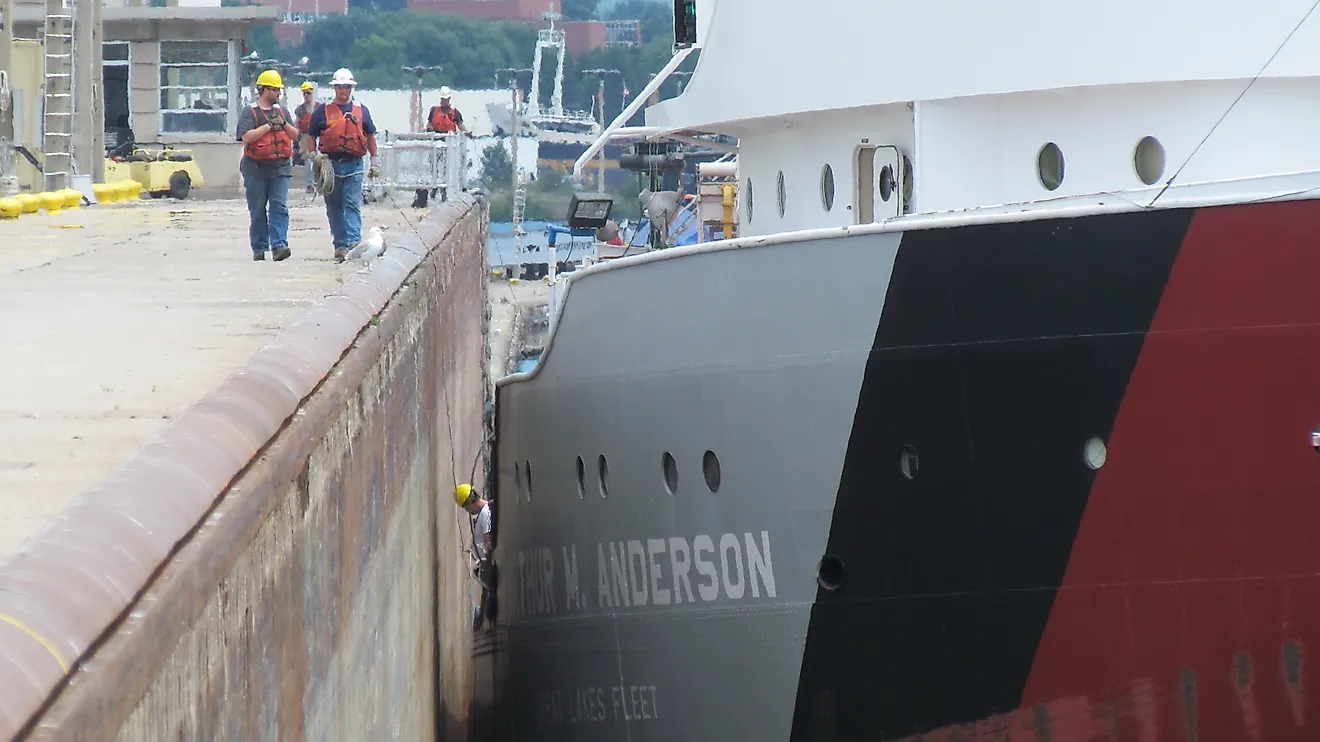
The great ore docks of Lake Superior, at Duluth, Two Harbors, and Marquette, are essentially mountains with plumbing. Trains from the Iron Range run out onto the towering structures and dump taconite pellets into hundreds of storage pockets built into the dock's spine. When a freighter slides alongside, steel chutes fold down from the pockets into the ship's open hatches, gates open, and tens of thousands of tons simply fall into the holds. No cranes, no buckets, no waiting: the dock was loaded before the ship ever arrived.

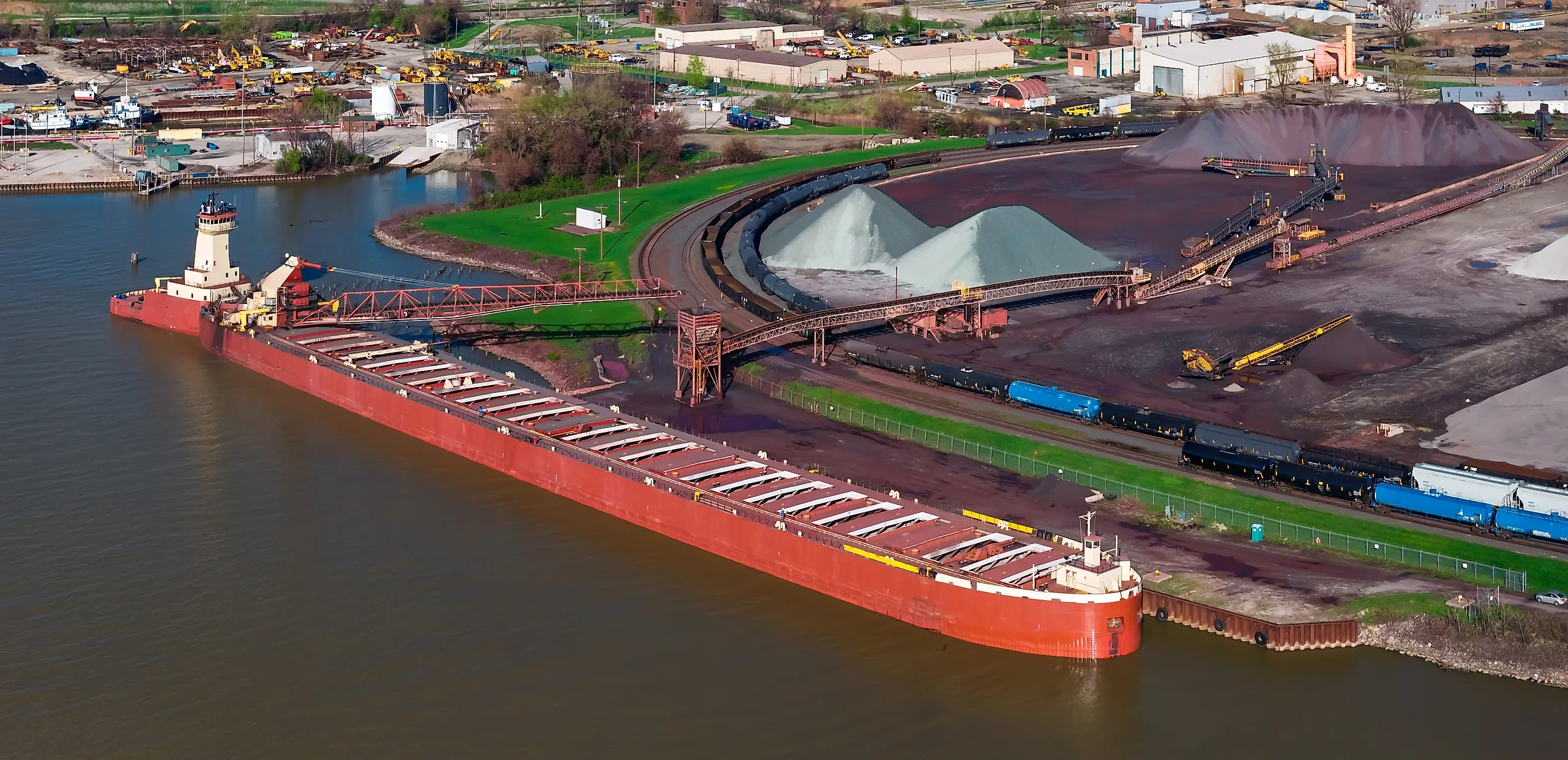
The design dates to the 1800s and has never been improved upon, only enlarged; Marquette's Upper Harbor dock still loads freighters by gravity today, while retired giants like the Lower Harbor dock stand as monuments. Modern conveyor shiploaders at coal and stone ports move cargo at rates measured in thousands of tons per hour, but the principle is the same everywhere on the lakes: the cargo comes to the ship fast, because the ship is not staying.
Loading Is A Balancing Act

Dropping 70,000 tons into a 1,000-foot hull is not a matter of opening every chute and standing back. A laker is a long, comparatively narrow steel beam, and loading it unevenly can sag the middle or strain the ends, so every load follows a mate's carefully sequenced plan, filling holds in alternating passes so the stress stays distributed along the hull while the ship settles evenly into the water.
The other half of the ballet runs in reverse. A freighter arrives "in ballast," riding high with its tanks full of lake water for stability, and as the ore pours in, the pumps push that ballast back out, thousands of tons of water leaving as thousands of tons of rock arrive. Done right, the exchange is continuous and the ship never sits wrong in the water. The loading clock and the pumping clock finish together.
Unloading Is Even Faster

The lakes' greatest cargo trick happens at the other end of the trip. Nearly every modern laker is a self-unloader, carrying its own discharge system: conveyors beneath the holds feed a massive boom that swings out over the dock and pours the cargo ashore in a controlled avalanche, no shore cranes, no port equipment, no stevedores required. A thousand-footer can put its entire 70,000-ton load on the ground in roughly half a day and sail for the next dock.
The idea is a Great Lakes invention, pioneered here in the early 1900s and perfected over a century, and it is why a laker can deliver to a bare gravel dock that no ocean ship could use. The ship is the port.
Why The Hurry

The speed is not showmanship; it is arithmetic. The Great Lakes shipping season has a legal winter: the Soo Locks at Sault Ste. Marie, the gateway between Superior and the lower lakes, close each year from mid-January to late March for maintenance and ice, and every ton of ore the steel mills need must move in the months between. A laker's year is measured in round trips, dozens of them, and every hour saved at a dock is another hour of sailing in a season that always ends too soon.
That is why the whole visit, arrival, loading, and departure, often fits inside a single day, and why crews famously go weeks without setting foot ashore: the ship ties up, the chutes come down, and the next departure is already on the board. Ocean shipping waits on tides, berths, and paperwork. Lake shipping waits on nothing it can help.
A Day At The Dock
So the answer runs like this: a Great Lakes freighter loads 70,000 tons in roughly six to twelve hours, unloads itself nearly as fast at the other end, and does both with machinery a century in the refining, gravity docks on one shore and a self-unloading boom on the other. The turnaround that ocean ports measure in days, the lakes measure in a shift. It is the least glamorous superlative in American shipping and one of the most impressive: nobody on the water moves mountains faster.