The Place In The Lower 48 Farthest From The Ocean
Americans are deeply, patriotically obsessed with the coast, which makes it all the funnier that there is one spot in the Lower 48 where the ocean is almost comically far away. From here, getting your toes in saltwater means a road trip of more than a thousand miles in whichever direction you choose. It sits in a quiet, grassy corner of South Dakota that plenty of actual South Dakotans could not point to on a map. Geographers, who dearly love a bit of drama, call it the continental pole of inaccessibility. Here is the most landlocked spot in the Lower 48, and what it is actually like to stand on it.
The Answer: A Field in South Dakota

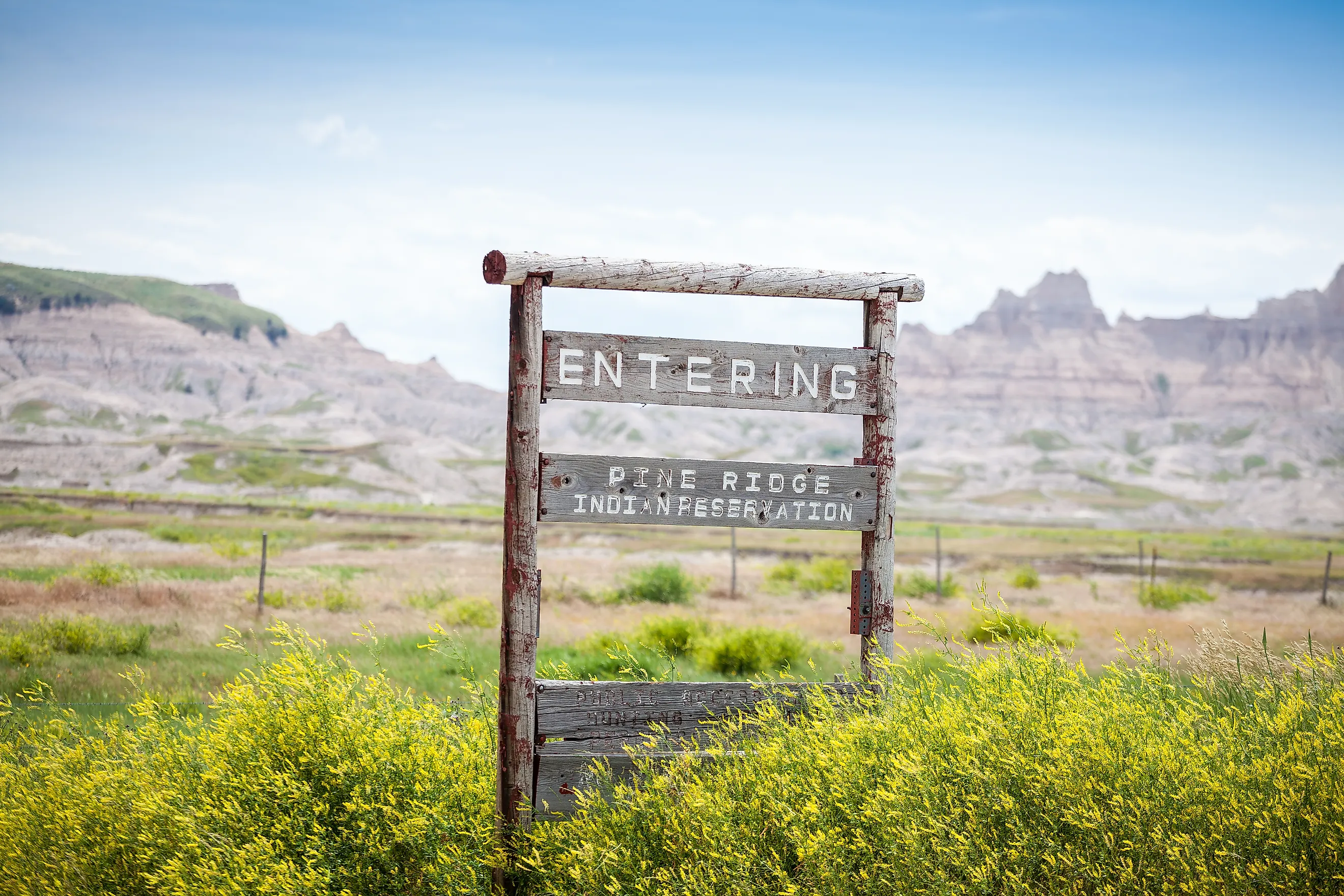
The farthest point from the ocean in the Lower 48 is not a mountain, a canyon, or anything else you would cross the country to see. It is an unremarkable patch of prairie in southwestern South Dakota, roughly six miles north of the tiny town of Allen, sitting between Allen and the town of Kyle on the Pine Ridge Indian Reservation. Officially, it is the North American continental pole of inaccessibility, which is a wonderfully grand title for a stretch of grass where, realistically, a few cattle are the only ones remotely impressed. There is no monument and no gift shop here, just big sky and the quiet satisfaction of being as far from a beach as the continent will physically allow.
How Far From the Beach? About 1,000 Miles

So just how marooned is this place? The nearest saltwater is the Pacific Ocean, a solid 1,025 miles away, which works out to something like a 15-hour drive before you reach the very first wave. The Atlantic is even less helpful, sitting roughly 1,450 miles off to the east. For good measure, the Gulf of Mexico and Canada's Hudson Bay are both far too distant to be of any use either. The nearby town of Allen even holds its own quiet record as the most landlocked inhabited place in all of North America, which is either a fun fact or a cry for help, depending entirely on how much you like the beach.
Why South Dakota Drew the Short Straw

The reason this honor landed in South Dakota comes down to plain geography. The point sits deep in the vast interior of the continent, almost perfectly stranded in the no-man's-land between four separate bodies of saltwater: the Pacific to the west, the Atlantic to the east, the Gulf of Mexico to the south, and Hudson Bay up to the north. Not one of them is anywhere close. Picture the largest possible circle you could draw on a map that just touches the nearest coast without ever crossing it; the dead center of that circle lands right here in the South Dakota grass. It is, quite literally, the middle of the continent's nowhere.
What's Actually Out There

If you were hoping the most landlocked place in America came with fireworks, prepare to be gently let down. The surrounding country is rolling short-grass prairie on the Pine Ridge Reservation, not far from the stark, beautiful moonscape of the Badlands and the Black Hills. It is wide-open ranchland where the main residents are cattle, the occasional bison, and an enormous amount of wind. The point itself sits on Oglala Lakota tribal land and takes some genuinely rugged dirt-road driving to reach, so anyone determined to visit should ask permission first and expect, at the end of the journey, a very nice field.
The Fine Print

Here is where the geographers start politely arguing. Thanks to something called the coastline paradox, the "farthest from the ocean" point actually wobbles a little depending on what you decide to count as coast in the first place. Do you include Hudson Bay? Every tiny bay and inlet along the Gulf? Measure the shoreline more precisely and the winning spot shifts by a few miles, which is why there are a couple of slightly different documented locations, with the town of Sioux Falls and the rest of eastern South Dakota far too close to the coast to ever compete. That wobble is exactly why the careful term is "pole of inaccessibility" rather than one fixed, undisputed dot. Either way, the answer stays the same unglamorous stretch of South Dakota, roughly a thousand miles from the nearest tide, waiting patiently for absolutely no one.