The First State Park In America
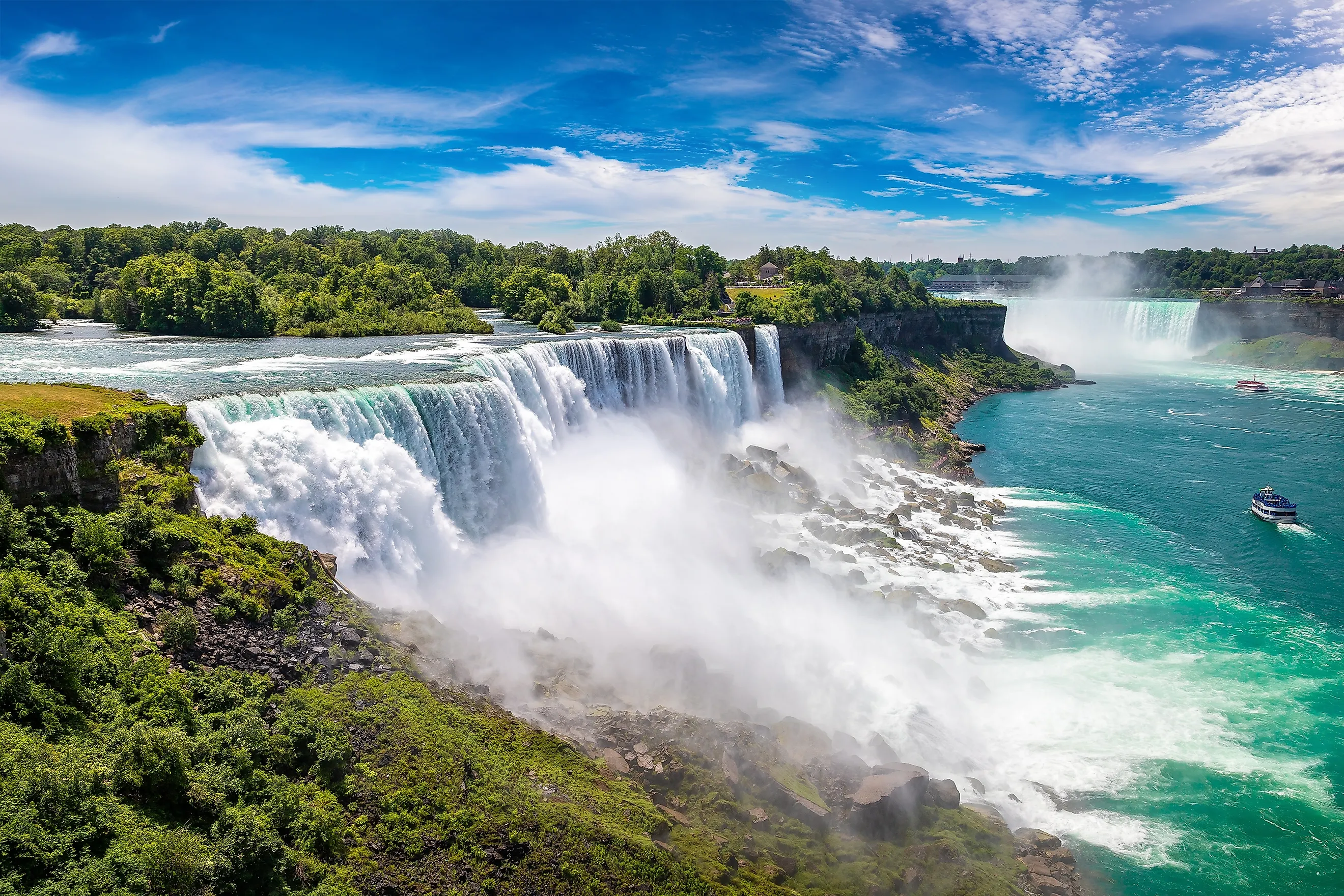
The same person who designed New York's Central Park was instrumental in creating America's first state park. Niagara Falls State Park is the result of the unrelenting vision of Frederick Law Olmsted. The park was first established as the Niagara Reservation, after Olmsted became frustrated with the commercial exploitation of Niagara Falls. Today, the park is home to the renowned waterfall, which includes a portion of the Horseshoe Falls, the American Falls, and the Bridal Veil Falls.
Claiming The Coveted Title Of First State Park

Niagara Falls State Park belongs to New York. It is both the first and oldest still-operating state park in the country. The park was dedicated on July 15, 1885, after the state bought land from private industrial owners to protect the land surrounding the waterfalls.
The establishment of the park resulted in nearly 10,000 more state parks being created over the next century across the nation. Two of the most famous national parks today started out as state parks. These include a portion of the Everglades National Park and part of Yosemite National Park.
Yosemite Valley, in particular, was under state management starting in 1864, until California ceded the land back to the federal government in 1906. This means Yosemite was the first state-managed park, but it was merged, along with Mariposa Grove, into Yosemite National Park. Mackinac Island State Park, on the other hand, became a state park in 1895, but started as a federal national park in 1875. It was America's second national park, created three years after Yellowstone.
The Fight To Protect The American Side Of The Niagara Falls

In the mid-1800s, people were far more concerned with making money than looking at the Niagara Falls. This was evident from the factories and mills built around the falls, making it nearly disappear from view. The worst part was that these businesses polluted the river water below. Frederick Olmsted saw what was happening and, together with his colleague Calvert Vaux, created a group of environmental activists who campaigned for change.
In what would become known as the Free Niagara movement, a group of activists gathered at the falls in 1869. The aim was to get the state of New York to remove businesses from the American side of the falls and create a public park accessible to locals and tourists. The 1870s saw more of this kind of pressure, with people appealing to celebrities and writing letters to the local government.
Olmsted had already helped shape Yosemite’s protection in the 1860s. They protested on the West Coast, also against the industry that threatened the valley. Their hard work paid off, with the Niagara region being designated a reservation in 1885 after the Niagara Appropriations Bill was passed. The bill gave the state the authority to purchase 412 acres of land around Niagara Falls. The state reservation also opened to the public in 1885. Over time, the name evolved into Niagara Falls State Park, and it is managed by the New York State Office of Parks, Recreation and Historic Preservation.
Experiencing The Wonder That Is Niagara Falls State Park

Today, those 412 acres draw at least 9 million visitors every year. The main attraction is the Niagara Falls, but there is also a lot more to see and experience throughout the park. Niagara Falls State Park is open every day of the year, and there are no entry fees to pay. Those who cannot or do not want to walk too far can take a ride on the Niagara Falls Scenic Trolley. The first experience for most visitors is the Cave of the Winds Tour. The tour gives people the chance to get out on the Hurricane Deck and get soaked by the mist from the falls.
The Maid of the Mist is a bucket-list activity for millions, with the boat tour starting at the Observation Tower. The attraction has been in place for more than 150 years and even features in a couple of movies. Passengers are ferried past the American Falls to the basin of the Horseshoe Falls. The souvenir rain poncho handed out to each visitor helps keep them dry as they take in the rock formations and waterfall mist.
Visitors can also head up the Observation Tower to see all three falls up close. Along with the falls, birdwatchers flock to the tower's Crow's Nest to see bald eagles and peregrine falcons. And, a couple of blocks away, the Aquarium of Niagara reveals an underwater wonderland of marine creatures.
Rivals With Their Own Claims To Fame

Out of the nearly 10,000 state parks in the US, some have their own claims and titles, without truly encroaching on those of the Niagara Falls State Park. Georgia, for instance, purchased the land surrounding Indian Springs in Butts County in 1825. The state retained ownership of the natural mineral springs as a public reservation. It is the oldest property owned and maintained by a state for public health and recreation. However, it was a public resort before it was designated as the Indian Springs State Park in 1927.
Itasca State Park is Minnesota's oldest state park and the second-oldest continuously operated state park in the country. It was established in 1891 and spearheaded by Jacob V. Brower to protect 32,000 acres of pine forests and the headwaters of the Mississippi River. The park was the first state park established for the purpose of protecting the natural, scenic beauty of the falls.

The country's first multi-state park system was formed at the start of the 20th century, with the goal of protecting the Hudson River cliffs from stone quarry mining. Theodore Roosevelt and Foster M. Voorhees created the Palisades Interstate Park Commission in 1900, and the Palisades Interstate Park was the first multi-state cooperative public land reservation in the country after it opened in 1909.
California created Big Basin Redwoods State Park in the Santa Cruz Mountains in 1902. The idea was to preserve ancient Coast Redwoods. The park was realized after lobbying by the Sempervirens Club and acquired through state legislative appropriations. It is the oldest continuous state park in California and the first belonging to the organized statewide park system in the Western US.
The Idea That Helped Save Natural Wonders All Over America

The Niagara Reservation gave people back their view of the Niagara Falls. But it also kickstarted the creation of natural places all over the country for everyone to enjoy. Before 1885, preserving nature for the public was still a new idea.
After 1885, the pattern was set. Within two decades of the opening of Niagara Falls State Park, Minnesota created Itasca State Park, New York and New Jersey created Palisades Interstate Park, and California founded Big Basin Redwoods State Park. This was followed by thousands more, all dedicated to preserving the country's natural treasures.