2026's 8 Best Small Towns To Visit In Croatia
A medieval pirate stronghold, a fishing town that preserves its traditional wooden boats, and a village where waterfalls once powered mills beneath people's homes are all sights to see in Croatia's smaller towns. If those aren't enough to draw you in, Korčula has a centre devoted to Marco Polo that recounts the naval battle fought near the town in 1298. Skradin serves as a principal entrance to Krka National Park, with park boats carrying visitors upstream toward the travertine cascades of Skradinski Buk. Above Makarska, a glass-floored viewing platform on the slopes of Biokovo stands at 1,228 metres. And on Krk Island, vineyards outside Vrbnik's old walls produce Žlahtina, the region's signature white wine. These eight towns are among the best in Croatia to visit in 2026, each with experiences rooted in its particular history, landscape, and local traditions.
Omiš

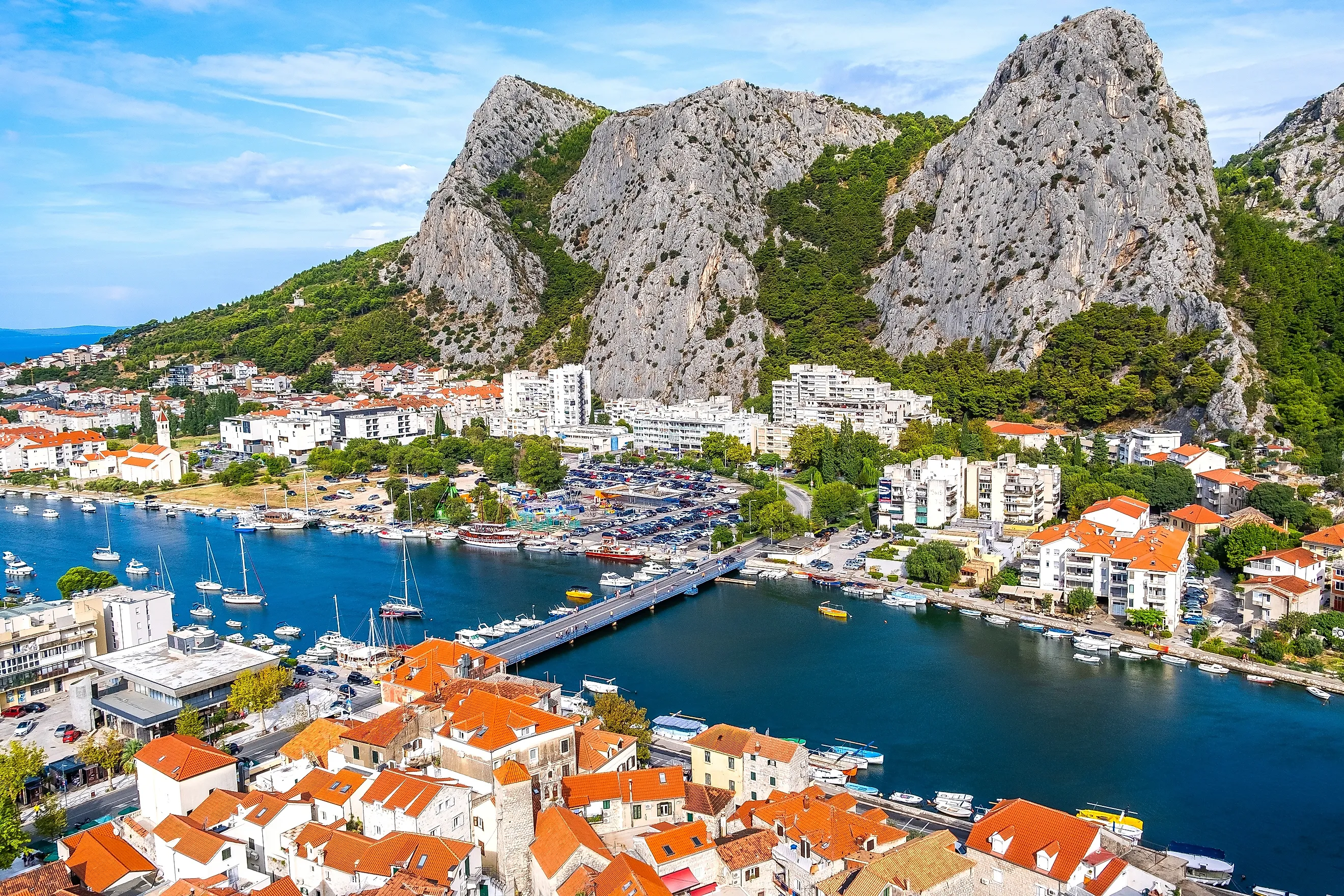
At the mouth of the Cetina River, Omiš occupies a narrow opening between steep limestone mountains and the Adriatic. During the 12th and 13th centuries, its pirates used this position to control shipping along the Dalmatian coast. Remains of the Mostina underwater defensive wall near the river mouth recall how the town protected its harbour and restricted access to the canyon.
The old pirate lookout at Mirabela Fortress rises directly above the historic centre, while the more demanding climb to Starigrad-Fortica follows the heights overlooking the Cetina and the Channel of Brač. Visitors can trace much of this defensive landscape along the roughly three-kilometre Pirate Trail, which links the river mouth with the upper fortress. The Cetina also offers rafting excursions through the canyon, with routes passing limestone cliffs and wooded riverbanks. In July, Omiš becomes a centre of Dalmatian vocal music during the Festival of Dalmatian Klapa, an annual gathering of traditional a cappella singing groups established in 1967.
Rovinj

Rovinj's old town was once an island, separated from the mainland until the channel was filled in during the 18th century. Its tightly packed houses rise above the fishing harbour toward the Church of St. Euphemia, whose Venetian-style bell tower dominates the peninsula. From the waterfront, the stepped lanes climb past Balbi's Arch and along Grisia Street toward the church and its views over the Rovinj archipelago.
The town's fishing heritage is preserved at the Batana Eco-museum, dedicated to the flat-bottomed wooden boats traditionally used by local fishermen. Its exhibits and community activities explain the construction, use, and preservation of these distinctive vessels, while the museum's waterfront route passes the places where boats are maintained and repaired. South of the centre, Golden Cape Forest Park, or Zlatni Rt, offers paths through pine and cypress woodland to rocky swimming coves. Rovinj's traditional maritime culture is also recognised through the Batana Eco-museum's inclusion in UNESCO's Register of Good Safeguarding Practices.
Motovun

Motovun stands above the Mirna River valley, enclosed by medieval fortifications that overlook vineyards, cultivated fields, and the broad forest below. Walking along the town walls reveals why this hilltop position was valuable for defence, with views extending across inland Istria toward Mount Učka in clear weather. Within the fortified centre, stone lanes lead to the main square and the historic buildings associated with Motovun's centuries of Venetian rule.
The forest along the Mirna is particularly important to the town's identity. Its old pedunculate oaks grow on alluvial ground that supports the prized white truffle, an ingredient featured in local restaurants and seasonal culinary traditions. The forest also has an industrial past: under Austro-Hungarian rule, its timber was reserved for shipbuilding. At the foot of Motovun, the former Parenzana railway provides another route through the countryside. Opened in 1902, the line once connected Trieste with Poreč; sections of its former route are now used by cyclists and walkers exploring Istria's valleys, tunnels, and viaducts.
Korčula

Korčula's fortified old town projects into the channel separating the island from the Pelješac Peninsula. Defensive towers and stone walls surround a compact network of streets leading toward St. Mark's Cathedral, whose Gothic-Renaissance architecture reflects the skills of the island's stonemasons. The nearby Korčula Town Museum explores local history through collections documenting the settlement's cultural and maritime development.
The town is especially known for Moreška, a traditional sword dance in which two opposing armies fight over a captured woman. Performers carry two swords each, and the choreographed battle remains an important part of Korčula's cultural calendar. Performances take place during the warmer months, including celebrations associated with St. Theodore, the town's patron saint. Another attraction is the Marco Polo Interpretation Centre, which explores the explorer's connection with Korčula and the naval battle fought near the town in 1298, when he was captured by the Genoese. His birthplace remains disputed, but the battle and his imprisonment form part of the documented history connecting his travels with the Adriatic.
Skradin

Skradin stands beside the lower Krka River, where its sheltered waterfront has served successive settlements since antiquity. The Roman town of Scardona was an important port and trading centre, while medieval Skradin later became associated with the powerful Šubić family. Above the town, the remains of Turina Fortress occupy a hilltop with views over the river and surrounding countryside.
Within the protected historic centre, Mala Gospa Square contains the Church of the Nativity of the Blessed Virgin Mary. Its bell tower, completed in 1872, stands separately on a nearby rocky rise rather than beside the church, an unusual arrangement attributed to the tower's weight. Skradin is also a principal entrance to Krka National Park. From April through October, park boats carry visitors upstream toward Skradinski Buk, while a 3.4-kilometre walking and cycling route provides an alternative. At the falls, a circular trail passes travertine cascades and historic watermills that once used the river's flow for milling.
Makarska

Makarska lies between the Adriatic and the steep southern slopes of Biokovo, with the mountain massif rising sharply behind the town's harbour and beaches. One of the area's most unusual attractions is Skywalk Biokovo, a glass-floored viewing platform at an elevation of 1,228 metres. Reached by a narrow mountain road within Biokovo Nature Park, it offers views over the Makarska Riviera and offshore islands. The park normally admits visitors from April through October, with vehicle access controlled along the mountain road.
Makarska also has attractions that reveal its maritime and cultural history. The Malacological Museum, housed in the Franciscan monastery, displays more than 3,000 shells from the Adriatic and other seas, a collection established by Franciscan scholar Jure Radić in 1963. From Kačić Square, a heritage walk passes Kalalarga Street and continues toward St. Peter's peninsula, where a lighthouse, small church, and coastal paths overlook the harbour. The peninsula also contains traces of older fortifications and wartime military structures, providing a different perspective on the headland that shelters Makarska's waterfront.
Slunj

Water from the Slunjčica River spreads into a network of cascades at Rastoke before joining the Korana, flowing around islands occupied by houses and historic watermills. The mills developed where the river's natural drop provided power for grinding grain, and their surviving buildings remain central to the settlement's appearance. Visitors can follow the public circular promenade and viewpoints around Rastoke, although many houses and mill properties remain privately owned.
Slunj's history extends beyond the waterfalls. The ruins of the medieval Slovin fortress stand above the Slunjčica canyon, while the town also preserves reminders of the brief period of French administration in the early 19th century. Under Napoleon's Marshal Auguste Marmont, roads, bridges, and military facilities were developed in the area. A former military warehouse overlooking Rastoke and the old bridge across the Korana recall this chapter of local history. The contrast between the medieval stronghold, Napoleonic infrastructure, and water-powered milling settlement can be explored within a relatively small area.
Vrbnik

Vrbnik occupies a limestone cliff above the eastern coast of Krk Island, with medieval houses pressed closely together behind the old town's defensive walls. Its lanes pass beneath stone arches and between buildings separated by passages barely wide enough for a person to walk through. The best-known example is Klančić, a passage that narrows to approximately 43 centimetres and is frequently described as one of the narrowest streets in the world.
The historic centre also preserves traces of the Frankopan family's influence and the Glagolitic writing tradition, which played an important role in the cultural and religious history of Krk. Outside the old walls, vineyards surrounding Vrbnik produce Žlahtina, a white wine closely associated with the town. Local cellars offer tastings of the wine, often accompanied by Krk cheeses and other island specialties. Below the cliff, the small beach at Zgribnica provides a swimming spot reached from the old town, with the limestone buildings of Vrbnik rising above the coast.
Eight Towns With Stories Of Their Own
What distinguishes these towns is not simply their scenery, but the local history still visible within it. Omiš has a defensive wall beneath the Cetina's waters, Rovinj maintains the traditions of its batana fishermen, and Motovun's former railway traces a route through truffle-producing countryside. Korčula's sword dance, Skradin's detached bell tower, Makarska's shell collection, Slunj's watermills, and Vrbnik's narrow passage each offer something visitors would be unlikely to encounter in quite the same form elsewhere in Croatia.