The Difference Between A State Park And A National Park
State parks and national parks differ due to the level of government that establishes and administers them. State parks are designated and managed under state authority, usually by a department of natural resources or a dedicated parks agency. National parks are established under federal law and administered by the National Park Service, a bureau of the US Department of the Interior.
The United States has about 2,474 places officially titled “state park,” although broader state park systems encompass roughly 10,000 units. The National Park System contains 63 units specifically designated as national parks, along with hundreds of national monuments, historic sites, recreation areas, and other federally protected places. Both types of parks may offer hiking and other outdoor activities, but they often differ in funding, conservation requirements, and visitor amenities.
A Little History
State Parks

In 1864, President Abraham Lincoln signed the Yosemite Grant Act, giving California control of Yosemite Valley and the Mariposa Big Tree Grove. It was the first federal action protecting a major scenic landscape as a park, and it required California to hold the land for public use, resort, and recreation. Congress had already set aside the Hot Springs Reservation in Arkansas in 1832, but the Yosemite Grant is the one usually credited with launching the state park idea. New York opened the State Reservation at Niagara in 1885, and Niagara Falls State Park is recognized as the oldest continuously operating state park in the country. That same year, New York created the Adirondack and Catskill Forest Preserve, and Adirondack Park followed in 1892. Progress elsewhere was slower than those founding dates suggest. When the National Park Service convened the first National Conference on State Parks in Des Moines in 1921, 29 of the 48 states still had no state park system. The 1930s changed that. Civilian Conservation Corps crews worked under Park Service direction between 1933 and 1942, building the lodges, trails, campgrounds, and bathhouses that made new parks usable, and 105 CCC camps went to state park projects in 26 states during the program's first enrollment period alone. By 1935, 41 states had active state park programs. Today, all 50 do.
National Parks

Yellowstone National Park became the country's first national park in 1872, when President Ulysses S. Grant signed the bill establishing it. The park sits primarily in Wyoming and extends into Montana and Idaho. More parks and monuments followed, but management was scattered across the Department of the Interior, the Forest Service of the Department of Agriculture, and the War Department. On August 25, 1916, President Woodrow Wilson signed the National Park Service Organic Act, creating a single bureau inside the Department of the Interior. The new agency took charge of the 14 national parks and 21 national monuments Interior already administered, plus the Hot Springs Reservation and the Casa Grande Ruin, for 37 areas in all. Other federal parklands stayed with other departments until 1933, when President Franklin D. Roosevelt's Executive Order 6166 moved 56 national monuments and military sites out of the Forest Service and the War Department. The General Authorities Act of 1970 finished the consolidation, gathering every area the Park Service administered into one National Park System and applying the Organic Act's management principles across all of it.
Ownership And Management
State Parks

State parks are designated and administered under state authority, although a park's boundaries can take in land held under other ownership arrangements. Most systems sit inside a larger state agency, such as a department of natural resources or a dedicated state park division, and that agency handles management and stewardship. Paid staff do most of the maintenance and conservation work, with local volunteer groups often assisting at high-traffic sites. The work is divided into natural resource management, infrastructure and facility upkeep, visitor services and education, and public safety. Scale varies enormously between states. California runs the most units, roughly 280 of them across about 1.5 million acres, while Alaska's division oversees the most land at more than 3.4 million acres.
National Parks

National parks are federal units administered by the National Park Service, a bureau of the US Department of the Interior, although their boundaries may also include nonfederal land. The Service manages 433 units covering more than 85 million acres, and only 63 of those carry the national park designation. Paid employees and volunteers share the work of running them. The Organic Act sets the standard that the agency works to, which is to provide for public enjoyment while conserving park resources unimpaired for future generations. Demands differ by park depending on its resources, visitation, and infrastructure. The recurring obligations include roadways, trail systems, visitor facilities, historic structures and grounds, waste management, wildlife conservation, ecosystem health, fire management, and public safety.
Grants And Funding
State Parks

State park systems draw on legislative appropriations, park-generated revenue, dedicated taxes and lottery proceeds, federal grants, bonds, and private support. The balance among those sources differs sharply by state, and several states have written their arrangements into law to make the money predictable. Colorado voters amended the state constitution in 1992 to split net lottery proceeds three ways: 10 percent to Colorado Parks and Wildlife for state parks, 40 percent to the Conservation Trust Fund for local governments, and up to 50 percent to Great Outdoors Colorado for grants, subject to an inflation-adjusted cap. Texas took a similar route in 2019, when voters approved Proposition 5. That amendment constitutionally dedicated the existing sales tax on sporting goods, worth roughly $168 million a year, to the Texas Parks and Wildlife Department and the Texas Historical Commission. The legislature had earmarked the same tax for parks back in 1993, but only about 40 percent of the revenue actually reached them over the following two decades. Georgia built a comparable stream with its 2018 Outdoor Stewardship Act, sending a share of the sales tax on outdoor recreation equipment to a trust fund for parks, wildlife management areas, and land conservation.
National Parks

Since they are federally owned and maintained, national parks receive the bulk of their funding through annual congressional appropriations. These allocations cover the daily expenses of a park, including safety measures and employee salaries. Congress has also legislated separate infrastructure money. The Great American Outdoors Act of 2020 permanently funded the Land and Water Conservation Fund at $900 million a year, and it created the National Parks and Public Land Legacy Restoration Fund, which drew on federal energy revenue for deferred maintenance across five agencies. That fund was authorized at up to $1.9 billion a year, with the Park Service's share running as high as $1.3 billion, and it covered fiscal years 2021 through 2025 before lapsing. The combined maintenance backlog across those agencies is still estimated above $35 billion, and reauthorization bills had cleared committee in both chambers of Congress but had not passed as of mid-2026. Fee revenue and donations cover the remainder of the budget. All entrance-fee revenue stays within the Park Service, and at least 80 percent normally remains at the park that collected it, with the rest available elsewhere in the system. Gifts routed through the National Park Foundation, the congressionally chartered nonprofit partner of the Park Service, generally go toward conservation and education work across the system.
Size And Amenities
State Parks

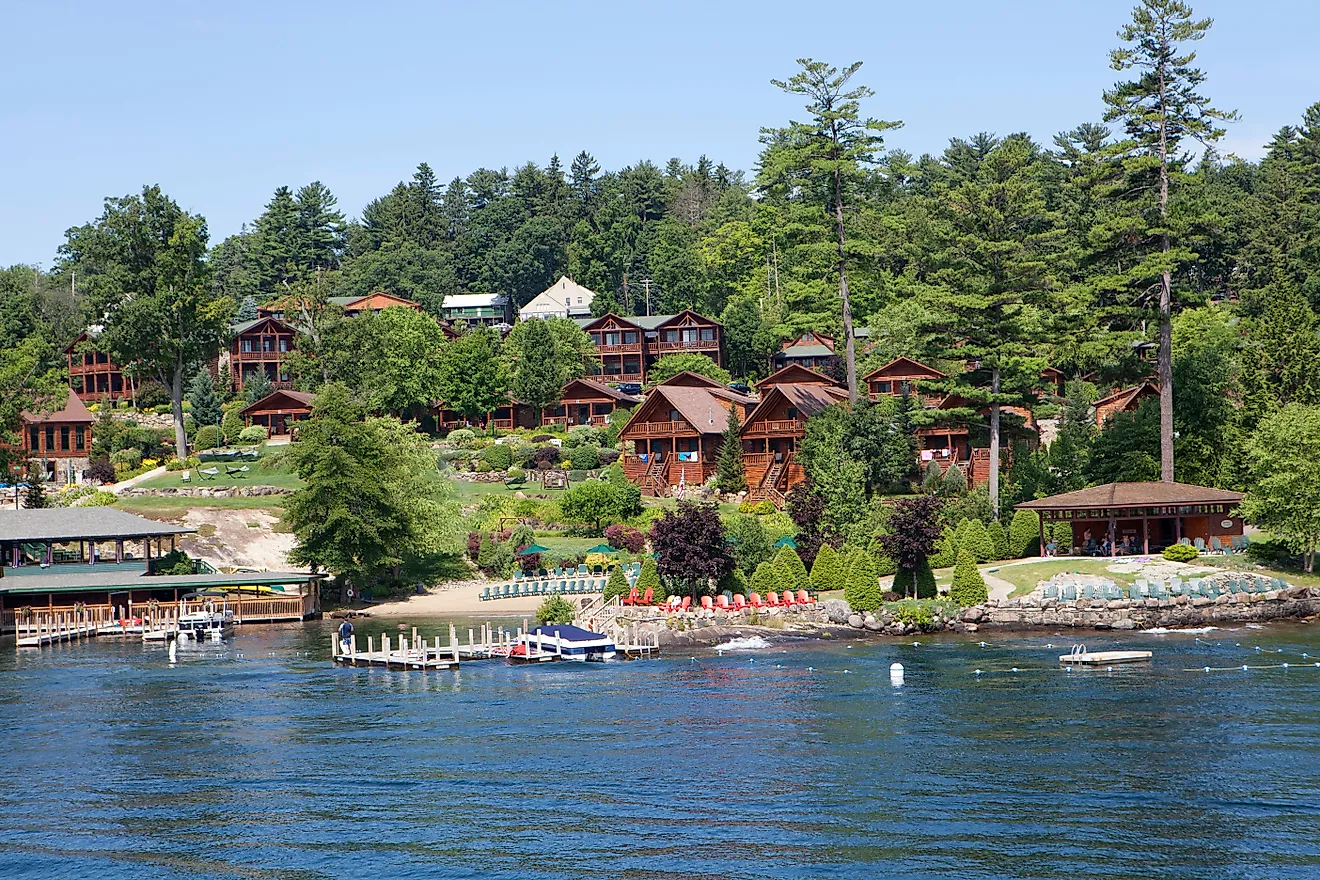
Broadly, state parks tend to cover less acreage than national parks, but there are exceptions. Adirondack Park is larger than Yellowstone, but its six million acres hold roughly equal amounts of public and private land. Alaska's Wood-Tikchik State Park is the largest conventional state park in the country. Smaller footprints often put state parks closer to urban centers than their federal counterparts. Regardless of location or size, state parks still have plenty to offer in terms of recreation, with campsites, waterways, and miles of hiking and biking trails for visitors to enjoy. Many also offer amenities that remote federal parks cannot match, including cabin rentals, bike and water sports rentals, boat ramps, RV hookups, hot showers, and even Wi-Fi in some cases.
National Parks

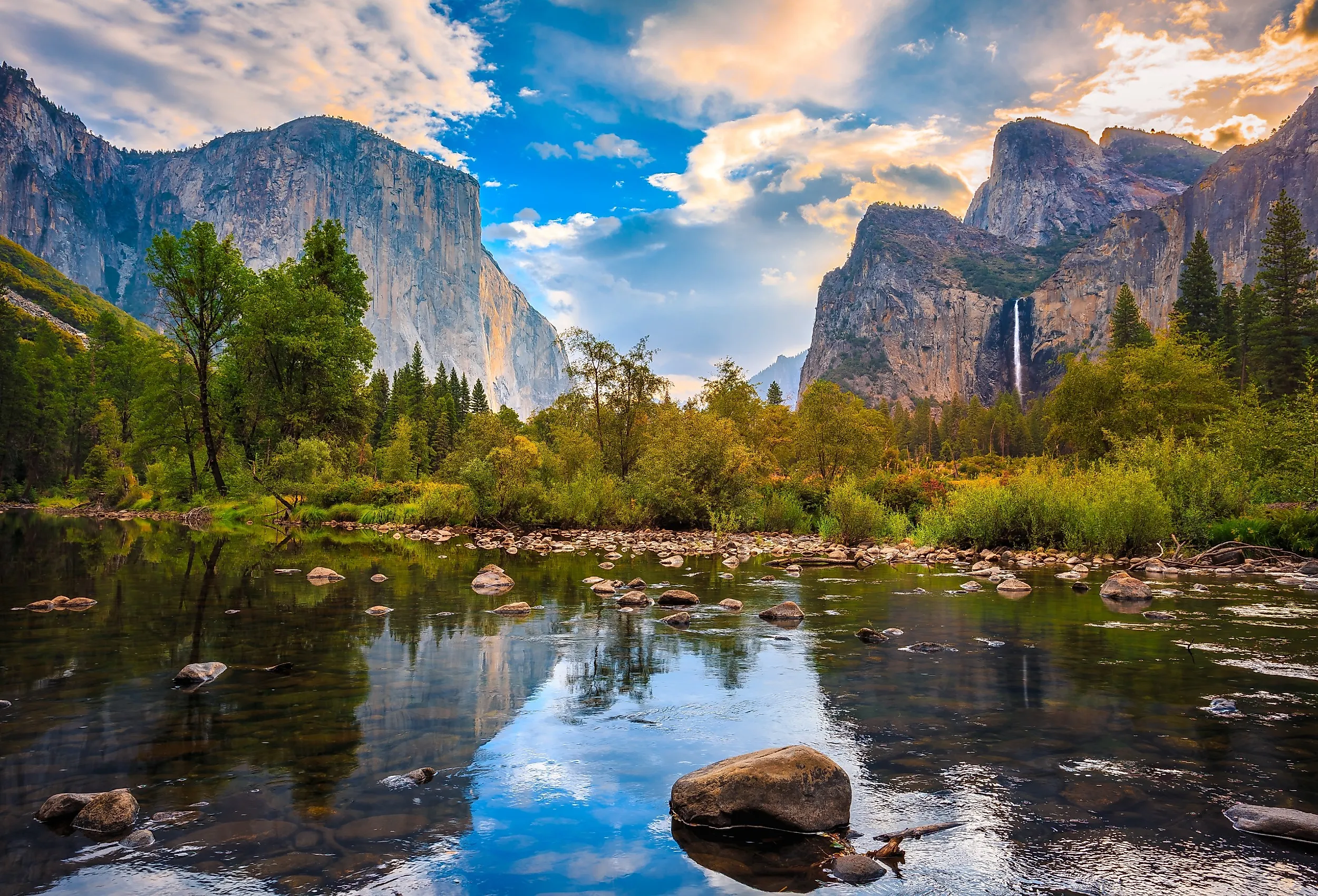
Individual national parks are generally larger, though both systems include urban sites, rural ones, and remote wilderness. Yosemite National Park in California provides visitor centers, lodging, restaurants, and shops. Isle Royale National Park in Michigan has no vehicle roads at all, is reachable only by seasonal ferry or seaplane, and shuts down for the winter before reopening in mid-April. The contrast shows up in the numbers: Isle Royale recorded about 29,000 recreation visits in 2025, while Yosemite recorded more than four million. Camping, restrooms, and other services differ significantly by park, so it is worth checking a specific park's own page before traveling.
America's Natural Beauty On Display
Adventures along protected coastlines, remote islands, rugged backcountry, deserts, mountains, and forests can be found in both state and national parks. These parks showcase the natural beauty and wonder of the diverse American landscape, as well as the history and people who made it possible. Though the scale and available services may vary, these public lands promise lasting memories with every visit.