Why Copperheads Get Into Crawl Spaces
A snake that picks a den which is too dry can die in it. Prolonged exposure to dry conditions kills brumating snakes, and the ones that survive do so by coiling tight and staying still to limit evaporation through the skin. Crawl spaces run at humidity levels between 50 and 90 percent, routinely, even in houses that have never flooded. That solves the problem almost perfectly. It is the reason a copperhead will choose the space under a house over a perfectly good pile of rocks, and the reason it is so hard to persuade one to leave.
Dehydration Kills Brumating Snakes

The risk nobody associates with winter dormancy is drying out, and it is a documented cause of death.
Snakes choosing a hibernaculum that is too dry are at risk of dehydration, and prolonged exposure to dry conditions can be fatal. They mitigate it with thick skin and by remaining coiled and motionless, which limits evaporative loss, but mitigation is not elimination.
Purpose-built artificial hibernacula are now designed with a dedicated water zone for exactly this reason, so the occupants can rehydrate periodically through the winter.
A Crawl Space Is A Humidity Chamber

What a house provides underneath it is precisely the missing ingredient. Bare earth under a building releases water vapor continuously, and humidity of 50 to 90 percent is common in crawl spaces that have no water problem at all. Builders treat that as a defect because it rots joists and grows mold.
A snake treats it as a solved problem. Stable temperature from the heated floor above, no frost, no wind, and air it cannot dry out in.
The Damp Also Builds The Food Chain

Moisture does a second job that arguably matters more than the first. Crawl space humidity supports insects, and insects support rodents, and rodents are what a copperhead is actually following. Pest control guidance treats moisture as the root condition behind repeat snake activity rather than as a separate issue.
Fix the damp and the chain collapses from the bottom. Leave it and the snake has both a comfortable winter and a food supply.
Vents Are The Main Door

Crawl spaces have purpose-built openings in them, which is a problem no rock pile has. Unscreened foundation vents are the single most common entry point. Many older houses have ground-level vents with no wire mesh at all, and damaged or missing lattice does the same job.
Mesh needs holes small enough to stop a newborn, not just an adult. A nine-inch copperhead born in September passes through gaps an adult could not.
Plumbing Penetrations Are The Other One

The second route in is a consequence of how houses are built, and it carries a detail worth knowing.
Gaps around pipes where they pass through the foundation are rarely sealed properly. Snakes detect the moisture around those openings and follow it, which means the gap is not just an opening but a signal.
HVAC line penetrations, irrigation conduits and utility holes all behave the same way. Expanding foam closes the small ones and steel mesh handles the rest.
You Meet Them Doing Something Else

Crawl space encounters have a character that separates them from garden ones entirely.
Nobody goes into a crawl space recreationally. People go in to run cable, fix a pipe, service a unit or chase a draft, usually on their stomach, usually with a flashlight, and usually with their face at the same level as everything in there.
That is the worst possible posture for meeting a venomous snake, and it is why this particular room deserves more caution than the yard around it.
They Are Lethargic Not Absent

Winter does not make a crawl space safe, and that assumption is the one most likely to cause a problem.
Brumating snakes are sluggish rather than unconscious. They remain aware, they still drink, and a warm spell will rouse them. Shared warmth in a hibernaculum reduces alertness during dormancy, but a mild afternoon can wake them and prompt movement.
A heated house sitting on top of the space produces exactly those mild conditions all winter, which means the occupants under a home are less dormant than the ones under a rock.
Sealing It Wrong Makes It Worse

The instinct to close everything immediately is the wrong order of operations, and the reason is unpleasant.
Sealing a crawl space while animals are inside traps them. Humane wildlife guidance is consistent that exclusion comes after confirming the space is empty, and that the barrier goes in last.
Seal in November and the snakes overwinter under the floor anyway, then emerge in spring into a space with no exit. The work belongs in mid-summer, when copperheads are out in their hunting range and the space is most likely empty.
Encapsulation Does Two Jobs

The standard building fix for crawl space moisture turns out to be the standard fix for this as well.
A vapor barrier across the ground, sealed vents and a dehumidifier are recommended for rot and mold. The same work removes the humidity that draws insects, the insects that feed rodents, and the rodents that bring snakes.
Encapsulation also replaces open vents with sealed ones, which closes the main entry route as a side effect of fixing the damp.
The Short Version
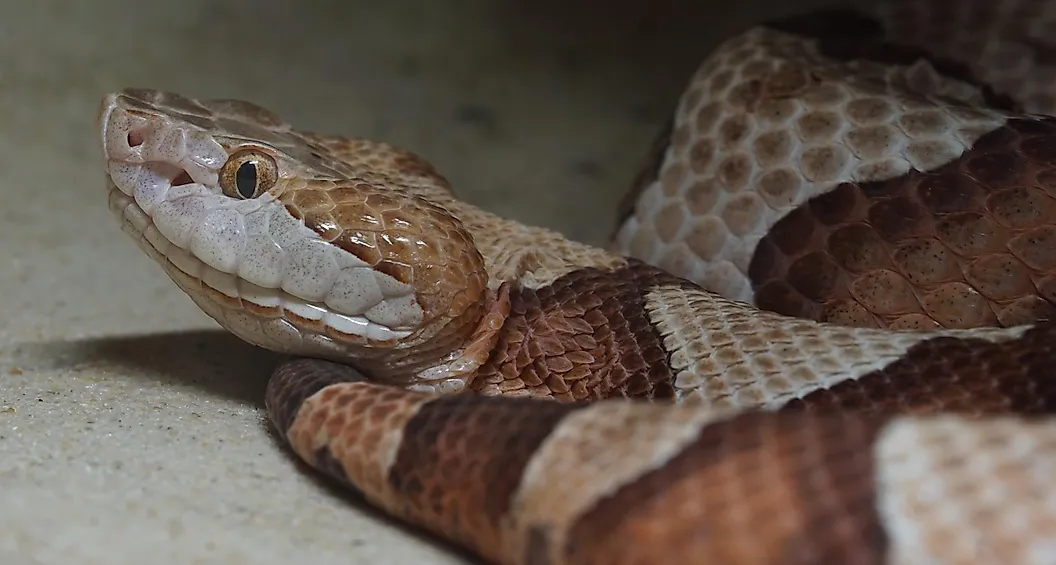
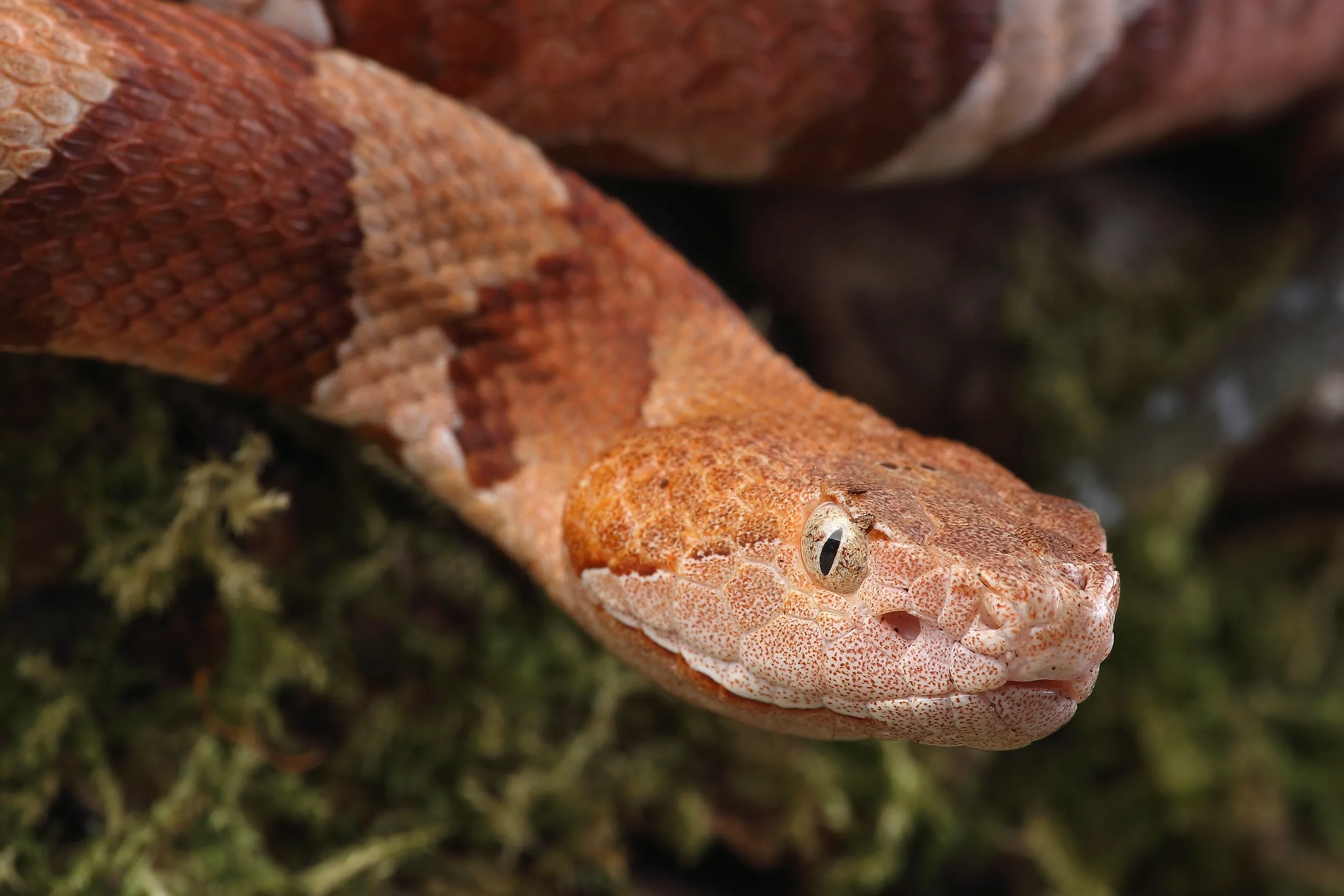
Copperheads get into crawl spaces because a crawl space answers every requirement at once. It sits below the frost line, stays above freezing thanks to the heated floor above, holds 50 to 90 percent humidity so the animal cannot dehydrate, and supports a rodent population through the same damp.
The entry points are unscreened vents and unsealed pipe penetrations, both of which also leak the moisture that makes the space attractive in the first place. Fix the damp in July, seal the openings afterwards, and the space stops being worth the trip.