12 Nicest Small Towns In The Appalachians
The Appalachians run from Alabama to Newfoundland, which means a list of their best small towns has to cover a chain older than the Atlantic Ocean and about 1,500 miles of it in the United States alone. These twelve span Georgia to Pennsylvania, and they have one thing in common beyond scenery. Each is small enough to walk across and has a specific reason to exist, whether that is a gold rush, a railroad, a mineral spring or a national forest at the end of the street.
Blowing Rock, North Carolina

Sitting at 3,500 feet on the Blue Ridge Parkway, Blowing Rock is the most compact walkable downtown on this list.
The town takes its name from a rock outcrop where the gorge wind reportedly returns light objects thrown from it. Main Street runs a few blocks of independent shops and restaurants, and Moses Cone Memorial Park sits immediately north with 25 miles of carriage trails.
Its elevation keeps summer temperatures roughly ten degrees below the piedmont, which is the reason it became a resort in the first place.
Abingdon, Virginia

Abingdon has a 20-block historic district and the oldest professional resident theater in the country.
The Barter Theatre opened in 1933, named for its Depression-era policy of accepting produce as the price of admission, and still operates. The town is also the southern trailhead of the Virginia Creeper Trail, a 34-mile rail-trail running up to Whitetop.
That combination of a working arts institution and a major trail is unusual in a town of 8,000.
Jim Thorpe, Pennsylvania

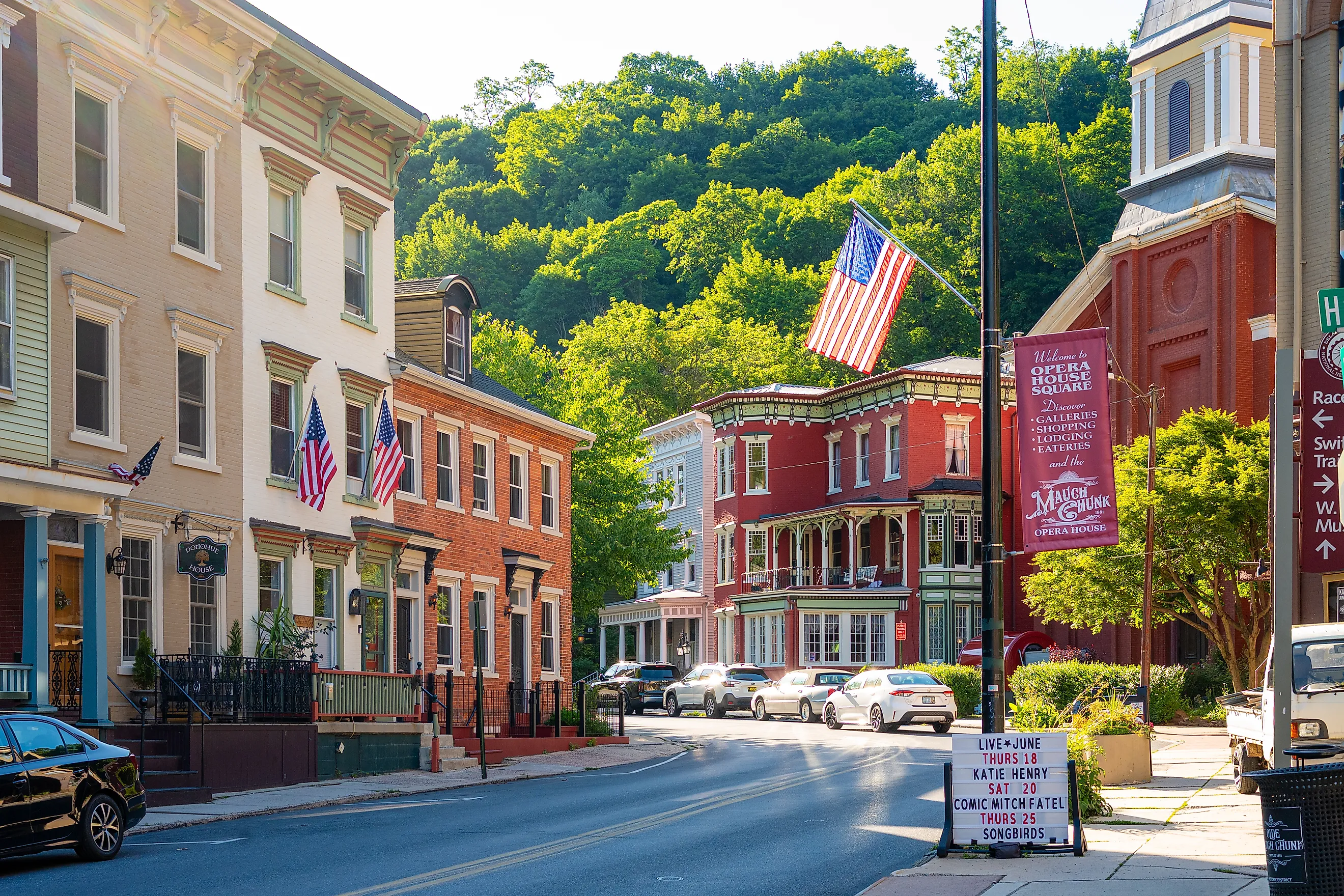
Formerly Mauch Chunk, the town renamed itself in 1954 in a deal to become the burial place of the athlete Jim Thorpe, who had never been there.
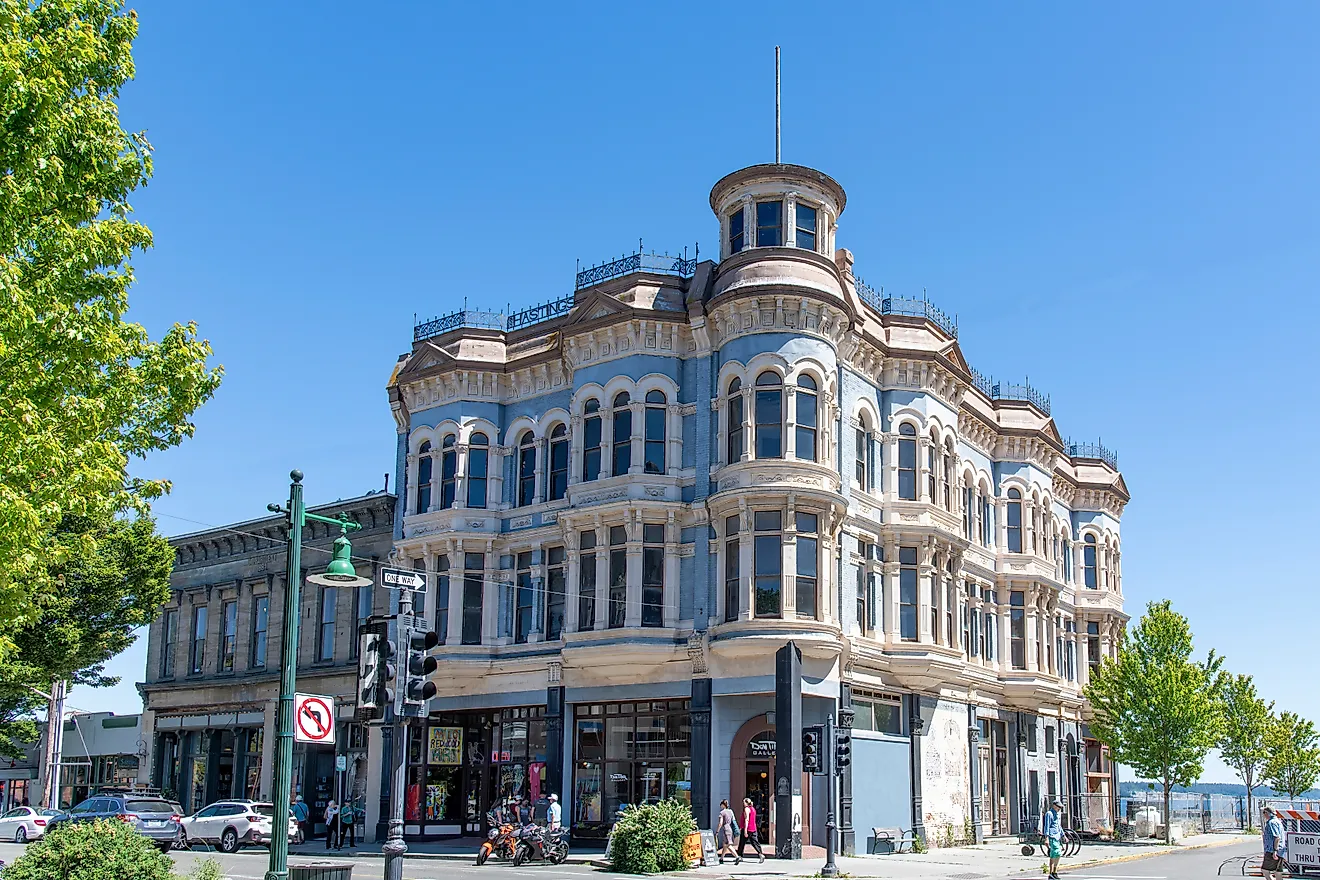
What it offers now is a Victorian downtown wedged into a steep Lehigh Gorge valley, with row houses climbing the hillsides and the Lehigh Gorge Scenic Railway running from the old station.
The setting does most of the work. There is very little flat ground, so the architecture stacks.
Lewisburg, West Virginia

Lewisburg sits in the Greenbrier Valley with a 236-acre National Register historic district and a disproportionate arts scene.
Carnegie Hall, one of only a handful worldwide still operating under that name, anchors the town alongside Greenbrier Valley Theatre, the state professional theater. Lost World Caverns is a short drive north.
It also has the Greenbrier River Trail, 78 miles of former railbed, running from nearby Caldwell.
Dahlonega, Georgia

The southern end of the chain holds the site of America's first major gold rush, twenty years before California.
Gold was found near Dahlonega around 1828, a federal mint operated here from 1838 to 1861, and the courthouse on the square is now the Dahlonega Gold Museum. The town square is still the center of everything.
It is now better known for wine. The Dahlonega Plateau is a federally recognized American Viticultural Area, and the tasting rooms sit within walking distance of the square.
Harpers Ferry, West Virginia

Harpers Ferry sits where the Potomac and Shenandoah meet, with Maryland and Virginia both visible across the water.
The lower town is a national historical park preserved largely as it stood in 1859, when John Brown raided the federal armory here. The Appalachian Trail runs directly through the streets, and the Appalachian Trail Conservancy headquarters is in town.
Jefferson Rock above the town is the viewpoint Thomas Jefferson called worth a voyage across the Atlantic.
Waynesville, North Carolina

Waynesville is the largest town west of Asheville and the practical base for the Great Smokies without the Gatlinburg traffic.
Main Street runs several blocks of galleries and bookshops, and the town sits between Great Smoky Mountains National Park and Pisgah National Forest with the Blue Ridge Parkway passing just east.
It is also where the Folkmoot international folk festival has run each summer since 1984.
Berkeley Springs, West Virginia

America's first spa town, and it has the paperwork to prove it.
George Washington surveyed and visited the warm mineral springs here as a teenager, and the town was formally established in 1776 as Bath. Berkeley Springs State Park sits in the middle of town, with the springs still flowing at a constant 74 degrees.
You can still bathe in them. The state park operates the bathhouse.
Brevard, North Carolina

Brevard calls itself the land of waterfalls, and Transylvania County backs it with more than 250 of them.
The town sits at the entrance to Pisgah National Forest, which puts Looking Glass Falls, Sliding Rock and the Cradle of Forestry within a short drive. The Brevard Music Center has run summer festivals since 1936.
It is also known for its white squirrels, an established local population descended from escaped animals in the 1950s.
Berea, Kentucky

Berea is the folk arts and crafts capital of Kentucky by act of the state legislature, which is a claim with a statute behind it.
Berea College, founded in 1855 as the first interracial and coeducational college in the South, charges no tuition and requires every student to work. The craft tradition grew out of its student labour program.
The result is a working craft economy rather than a souvenir one, with studios and galleries through the Old Town artisan district.
Highlands, North Carolina

At 4,118 feet Highlands is one of the highest incorporated towns east of the Mississippi.
It also sits in a temperate rainforest. The plateau receives upward of 80 inches of rain a year, which is why the Cullasaja Gorge road below town passes a string of waterfalls including Dry Falls, where the path runs behind the curtain.
The town itself is four blocks of shops and restaurants at an elevation that keeps August comfortable.
Boone, North Carolina

Five miles north of Blowing Rock and 300 feet higher, Boone is the college town of the High Country.
Appalachian State University gives it a downtown with more bookshops and music venues than a town of 20,000 would otherwise support. King Street runs the length of it.
Boone is named for Daniel Boone, who camped in the area, and it is the trailhead for a great deal of the surrounding national forest.
What They Have In Common

Every town here has a reason for existing that predates tourism, and that is what separates them from resort developments.
Dahlonega had gold, Berkeley Springs had water, Jim Thorpe and Abingdon had railroads, Harpers Ferry had an armory, Berea had a college. The scenery was always there. The towns were built for something else and kept their shape afterwards.
That also explains the walkability. All of them were laid out before cars, which is why a visitor can park once and leave it.