Why Coast Redwoods Only Grow In The Fog Belt
Coast redwoods are the tallest trees in the world, and they only grow naturally in one place on Earth. These evergreen conifers stick to the coast in California and Oregon, rarely growing outside the fog belt. This coastal strip provides the precise balance of moisture and mild temperatures that these green giants need to thrive. Inland planting is possible, but survival requires replicating the tree’s native environment. If the fog belt were a character in Goldilocks and the Three Bears, coast redwood trees would find it “just right.”
About Coast Redwoods

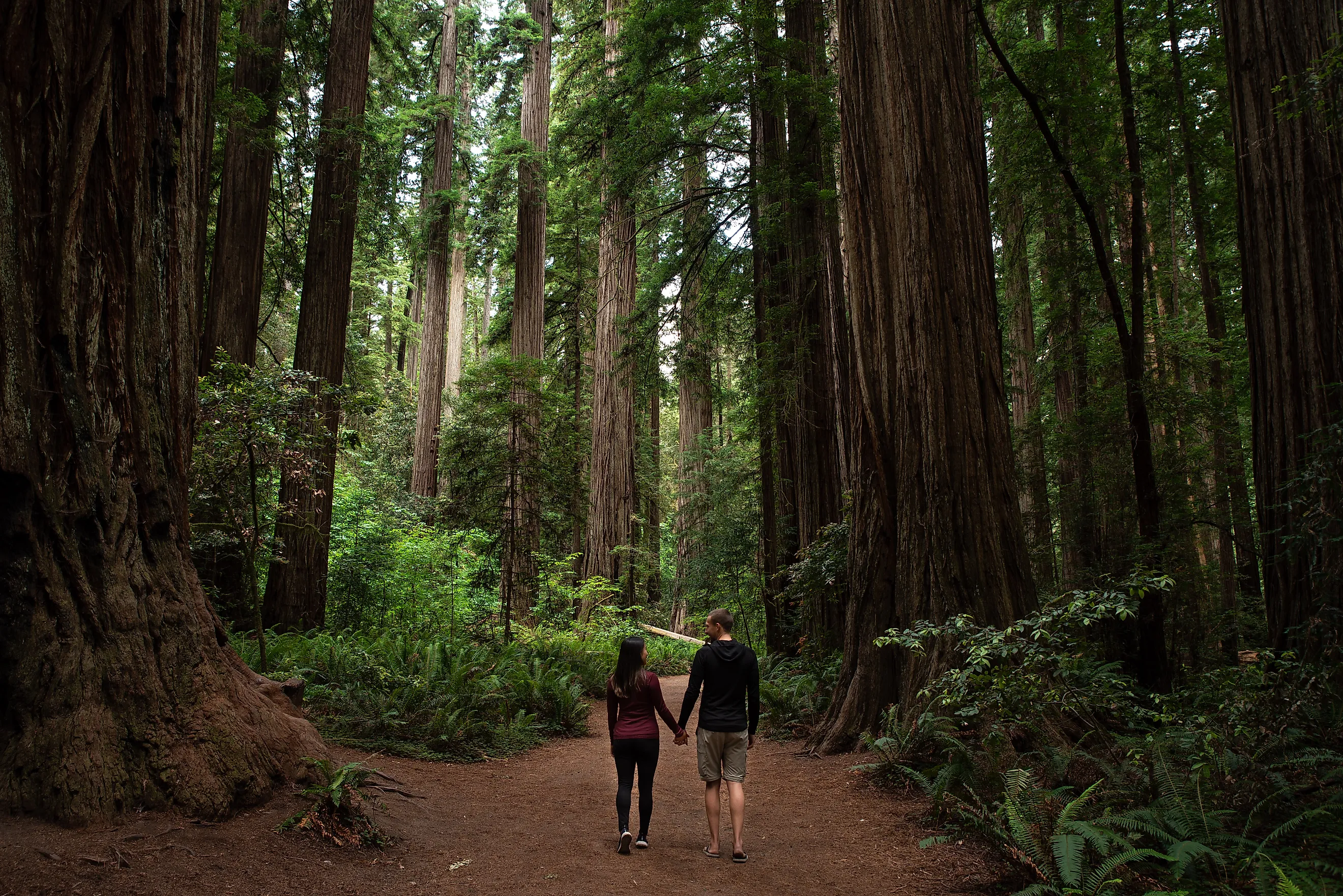
The tallest known tree in the world is a coast redwood called Hyperion, which stands over 380 feet tall. As a whole, the species is naturally large, with some specimens exceeding 300 feet in height and reaching 10 to 20 feet in diameter. A coast redwood takes about 400 to 500 years to mature, but it can live for over 2,000 years.
Once mature, a coast redwood's orange-brown bark darkens and dries out. Its bark grows up to 1 foot thick, making it largely resistant to fire damage. As it ages, the tree also sheds lower limbs as a form of natural self-pruning to conserve energy. Self-preservation also extends underground. The species has a shallow root system that extends 60 to 80 feet from its base. By intertwining its roots with other redwoods, the trees are more stable during extreme floods and winds.
Where Do Coast Redwoods Grow?

Coast redwoods and their ancient relatives grew across much of the Northern Hemisphere tens of millions of years ago. Gradual changes in climate over millions of years restricted the species to its current range: a narrow 450-mile-long strip along the US Pacific Coast. Today, coast redwoods grow on mountains and valleys from southern Oregon to central California. They can be found at sea level and up to 3,000 feet high, though most prefer elevations of 100 to 2,300 feet. It is rare to find coast redwoods growing naturally more than 45 to 50 miles inland.
How Fog Keeps Coast Redwoods Alive

Coast redwoods need massive amounts of water to grow, anchoring the species to the Pacific Coast's distinct climate. These giant trees can drink roughly 160 gallons of water per day, absorbing groundwater and rain with their widespread roots. When temperatures rise and rain becomes scarce in the summer, coastal fog is vital for a coast redwood's survival.
A fog belt is a narrow environmental band where cold ocean currents and warm inland air help create low-hanging fog. This phenomenon is one of the main ways redwoods survive the region's Mediterranean summers. During hot and dry stretches, the trees become fog catchers, absorbing moisture through their needles in a process called foliar uptake. Fog drip also factors in, with moisture collecting on leaves and dripping to the forest floor for roots to absorb. Overall, fog supplies up to 40% of a coast redwood's annual water intake, making its fog belt setting essential.
The Tree That Breathes

Redwoods get most of their needed fog from the regional climate, but they can also contribute moisture to their immediate surroundings. Large coast redwoods can transpire, or "breathe out," up to 500 gallons of water per day, releasing water vapor into the surrounding air. During summer months, this output helps establish a healthy microclimate. Coast redwoods also release chemical compounds called terpenes from their foliage, which may help promote condensation of moisture in the surrounding atmosphere.
The Main Threats To Coast Redwoods
Development And Logging

California's two native redwood species, the giant sequoia and coast redwood, have both been heavily affected by human activity. About 95% of the original old-growth coast redwood forest has disappeared since the 19th century, largely due to logging. According to the International Union for Conservation of Nature's World Heritage Outlook, only 22% of coast redwood forest is protected against commercial logging and development. With that said, nearly 40% of this ecosystem experiences impacts from surrounding roads, development, and agriculture.
Second-growth forests make up about 93% of the remaining coast redwood forest. These are forests that have been logged but have since grown back naturally or through planting. Coast redwoods are highly regenerative and will aggressively clone themselves after being logged. While this sounds like a natural solution, historic clear-cutting and some subsequent replanting practices have resulted in second-growth forests being unnaturally dense and crowded. In turn, many trees are unable to receive proper light or reach maturity.
Climate Change

Coast redwoods also face pressure due to climate change. Rising temperatures are a major threat, as the species is adapted to a cool, moist climate. In a study published in 2010, researchers estimated a 33% decline in summer fog frequency on California's Pacific Coast since the early 20th century. This may increase drought stress for redwoods.
Hotter, drier conditions and historic fire suppression can also increase the risk of severe wildfires in redwood groves. Both factors contribute to more dangerous fire conditions, as dry vegetation and organic debris accumulate and fuel more extreme fires. Mature coast redwoods are very fire-resistant due to their thick bark and can resprout if the crown of the tree is burned. Unfortunately, young trees are more vulnerable, lacking the thick protective bark. Dense second-growth forests are more at risk as a result.
Where To See Coast Redwoods
Redwood National And State Parks

Redwood National and State Parks protect about 45% of the remaining old-growth forests, including the record-breaking Hyperion tree. Although the world’s tallest tree is off-limits to protect its ecosystem, the Tall Trees Grove features many coast redwoods over 350 feet tall. Free reservations are required for this hike, which can be made online. Although popular, it’s important to note that this 4.5-mile trail is considered challenging, with a 1,600-foot elevation change.
The Lady Bird Johnson Grove

The Lady Bird Johnson Grove is a fantastic alternative if you want an easier hike without reservations. Considered a family-friendly trail, the 1.5-mile route loops through a mix of redwoods and other tall conifers. A sloped footbridge serves as a gateway between the parking area and main grove, letting hikers observe the contrast between old-growth and second-growth redwoods.
The Oregon Redwoods Trail

Outside California, the Oregon Redwoods Trail is a lesser-known hike if you want fewer crowds. A roughly 2-mile loop combines two trails through this rare northern redwood habitat. Its trailhead is near the city of Brookings, marked with a sign by its parking area. The route features a mix of trees, including Douglas-firs, before passing through groves of enormous old-growth redwoods. Along the shorter interpretive trail, a picnic area lets hikers relax before the trip back. It also features a wooden deck connecting to a hollowed-out redwood.
A Native Anchor
Coast redwoods are robust in their fire-resistant bark, yet without the region's summer fog, they would struggle to thrive along California's dry summer coast. As their home base, the fog belt shows us how intricate nature can be. Simultaneously, threats like climate change show how nature's balance can be interrupted.
As some of the world's largest carbon sinks, these old-growth groves are essential, storing up to 890 metric tons of carbon per acre. As a foundation species, these trees also help regulate microclimates and stabilize ecosystems. While coast redwoods can be planted inland, these fog belt natives do their best work at home.