10 Best Natural Wonders To Visit In California's Sierra Nevada This Year
One of the largest granite monoliths in the world. One of the tallest waterfalls in North America. The largest alpine lake in North America. The highest mountain in the contiguous United States. California's Sierra Nevada contains a smorgasbord of natural wonders, many of which hold impressive titles and distinctions. Some, like El Capitan and the General Sherman Tree, are easily accessible from national parks, while others like the Red Cones and Inyo Craters are a little more remote.
El Capitan

El Capitan is one of the most notable landmarks of Yosemite National Park, rising about 3,000 feet (914 meters) above the floor of Yosemite Valley. It is roughly 2.5 times taller than the Empire State Building and nearly 3 times taller than the Eiffel Tower. Its sheer granite face has long captivated rock climbers and documentary filmmakers. Scaling vertical rock is not for the average national park visitor. El Capitan can be observed from the valley floor, with El Capitan Meadow granting one of the clearest views. Alternatively, El Capitan Trail allows hikers to reach the top without technical rock climbing skills. This is a strenuous trail that takes between 8 and 12 hours. Due to the length of the trail, hiking in fall means fewer crowds and milder temperatures, both making for more comfortable hiking conditions.
Yosemite Falls

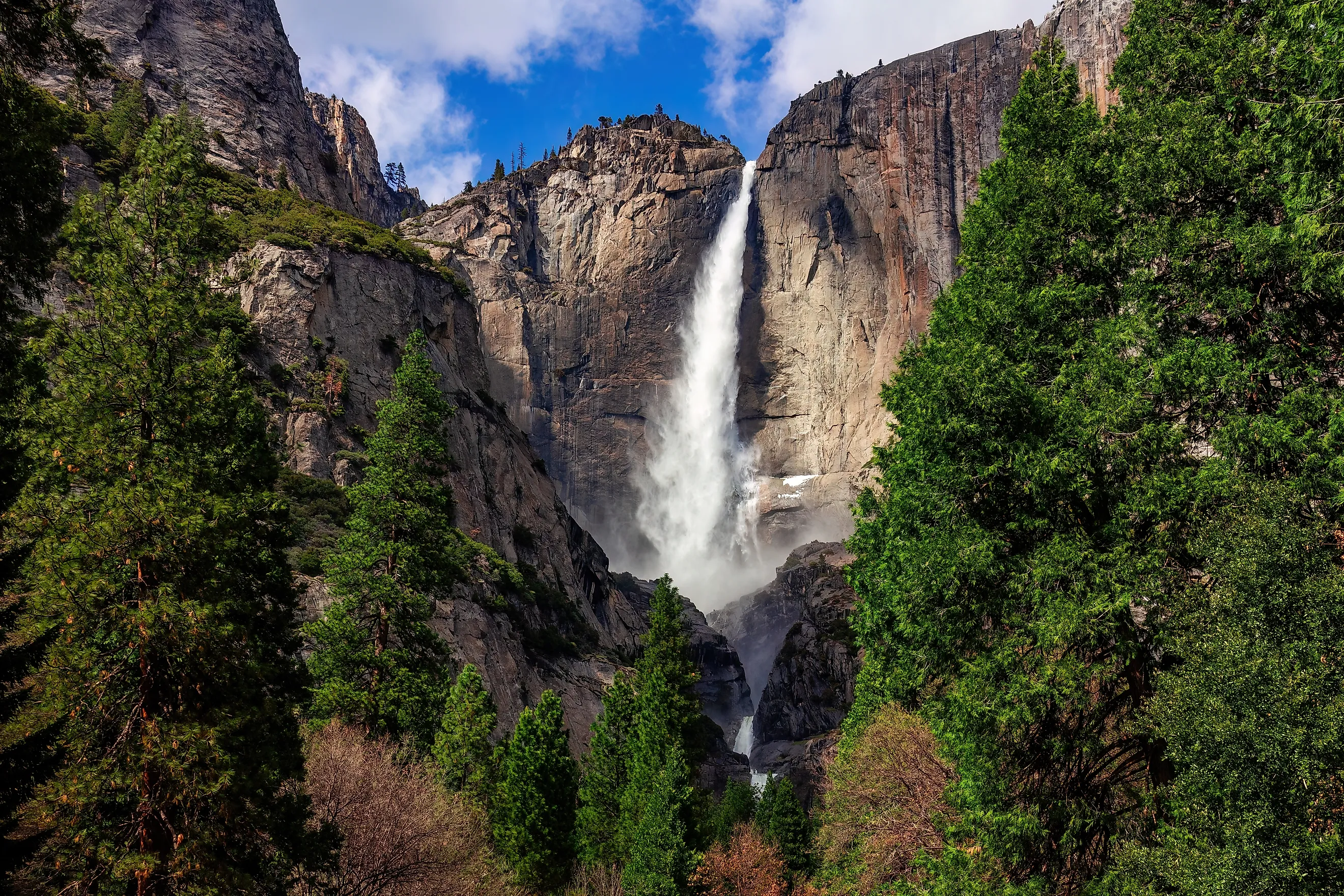
Further down the northern side of Yosemite Valley, Yosemite Falls drops 2,425 feet (740 meters) onto the valley floor. Together, its three separate sections, Upper Yosemite Fall, the middle cascades, and Lower Yosemite Fall, make it one of the tallest waterfalls in North America. The falls are snow-fed, flowing from November until July, peaking in May. The size of the falls makes them visible from various points around the valley, including Yosemite Village and Yosemite Valley Lodge. There are trails leading to both the lower and upper falls. Both of them are open year-round, and in spring, when the waterfall is at its peak, hikers may get wet from mist on sections of each trail.
Lake Tahoe

Lake Tahoe encompasses 193 square miles (500 square kilometers) along the border of California and Nevada. It is the largest alpine lake in North America, but its titles do not stop there. It ranks among the deepest lakes in the world, it is the second deepest lake in the United States, and it is also one of the purest lakes in the world, with a purity comparable to distilled water. Lake Tahoe is framed by the peaks of the Sierra Nevada. Several towns on the shore and near the lake are resort towns for year-round recreation. However, summer is the optimal season to experience the lake itself for swimming, boating, and beachcombing. This also coincides with the peak tourist season, when the lake receives the most crowds.
Mount Whitney

Mount Whitney is the highest mountain in the contiguous United States, surpassing all the peaks surrounding it at a height of 14,505 feet (4,421 meters). But despite being the tallest mountain in the lower 48, it is not easy to see. Mount Whitney is on the far eastern boundary of Sequoia National Park. Since the Great Western Divide runs through Sequoia National Park, views of Mount Whitney are blocked from park roads. The best place to view Mount Whitney is from the Interagency Visitor Center, south of Lone Pine. Climbing Mount Whitney requires a wilderness permit year-round, with a quota season in effect between May and November. While it does not require technical mountaineering skills, there is over 6,000 feet (1,828 meters) of elevation gain between the trailhead and summit.
General Sherman Tree

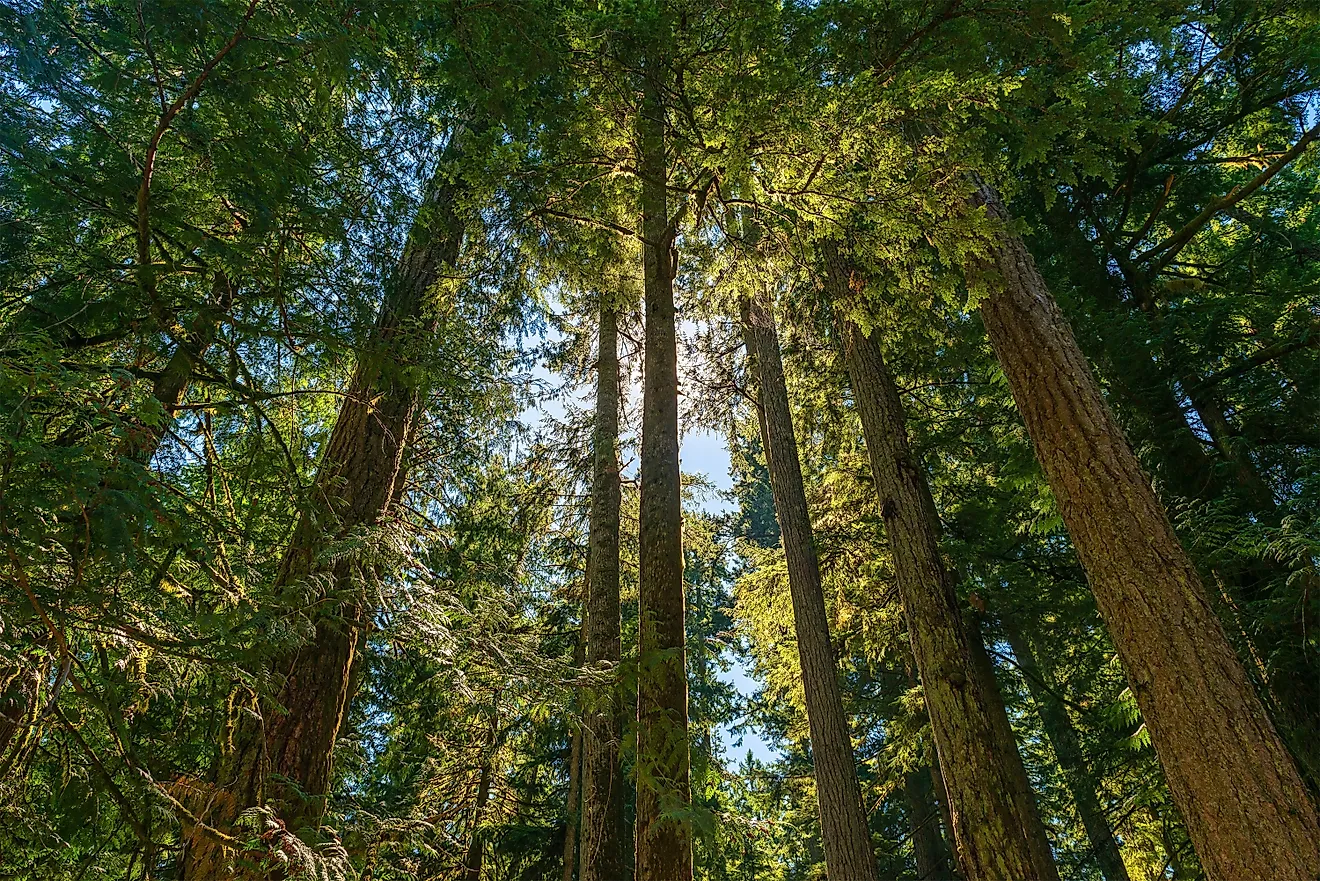
Although it stands nearly twice as tall as the Statue of Liberty, at 275 feet (83.8 meters), the General Sherman Tree is not the tallest in the world. It is, however, the largest tree in the world, by volume. It is estimated to have a volume of 52,500 cubic feet (1,486.6 cubic meters). This one tree alone contains approximately 630,000 board feet of wood. The trunk of the General Sherman Tree itself weighs close to 1,400 tons, or the equivalent of 15 adult blue whales. The tree stands in the Giant Forest of Sequoia National Park. June through August has the most stable weather for visiting the tree, but is also the most congested with crowds.
Crystal Cave

Out of more than 200 caves in Sequoia and Kings Canyon National Park, Crystal Cave is the only one open to public tours. The cave is still actively forming in a narrow band of marble rock. Tours take visitors into rooms covered in ancient crystalline formations, including stalactites hanging from the ceiling and stalagmites rising from the floor. In 2026, tours ran between late May and early November. They are led by park naturalists who discuss the cave's geology, history, and ecology. Regardless of the temperature outside, the cave consistently remains around 50 degrees Fahrenheit (10 degrees Celsius).
Devils Postpile

Approximately 90,000 years ago, lava flowed down the valley of the Middle Fork of the San Joaquin River and pooled into a large lava lake. As it cooled, it contracted into mostly hexagonal columns. When glaciers from the last Ice Age eroded the surface, they left behind the Devils Postpile, one of the finest examples of columnar basalt on Earth. The columns stand at 60 feet (18 meters) in height and are symmetrical in appearance. Due to the large amount of snowfall in the Sierra Nevada, the Devils Postpile National Monument is typically only open between mid-June and mid-October. The weather is generally unpredictable, with afternoon thunderstorms common, and temperatures fluctuating between below freezing and 90 degrees Fahrenheit (32 degrees Celsius) on the same day.
Red Cones

The Red Cones are a pair of cinder cones near Devils Postpile. They are a striking contrast to the surrounding jagged granite peaks associated with the Sierra Nevada. Each cone is 300 feet (91 meters) in height and reddish in color due to the iron in the volcanic rock oxidizing as it cooled and weathered. They were formed between 8,000 and 9,500 years ago. The cones can be seen from a distance along several portions of the John Muir Trail, or they can be accessed from the Devils Postpile trailhead. Peak visiting season is between mid-June and early September.
Inyo Craters

Like Red Cones, the Inyo Craters are another form of volcanic activity in the Sierra Nevada. They are among the youngest visible volcanic features in California. They were formed 600 years ago when partially molten rock came into contact with underground water, triggering eruptions that launched rock and ash into the air, leaving behind three volcanic craters, two of which hold small lakes. The Inyo Craters Trail is an easy to moderate hike that passes through old-growth ponderosa and Jeffrey pine forest before opening onto the rim of the southernmost crater. In the winter, the surrounding trees create cover from cold winds, making the craters a suitable snowshoe or cross-country ski destination.
Mono Lake

Mono Lake is in eastern California, between the Great Basin and the Sierra Nevada. It is estimated to be over one million years old, making it one of the oldest lakes in North America. This ancient saline lake covers 70 square miles (180 square kilometers). The lake is known for its tufa towers, mineral structures formed when the calcium-bearing freshwater springs and carbonate-rich lake water combined and precipitated out as limestone. These formations rise directly out of the surface of the water as well as on the shore. They can be viewed from different points around the lake. The lake is open year-round, although some access roads may be slippery after snow in the winter.
Sierra Nevada's Natural Wonders
California's Sierra Nevada may be known for jagged granite peaks, but its geographical diversity is more versatile, with alpine lakes, caves, and volcanic features. Some features are crowded with tourists in the summer, while others remain unknown and overlooked. Some are only open seasonally, like Crystal Cave, while access to Yosemite National Park is possible year-round. In the Sierra Nevada, there is no shortage of natural wonders.