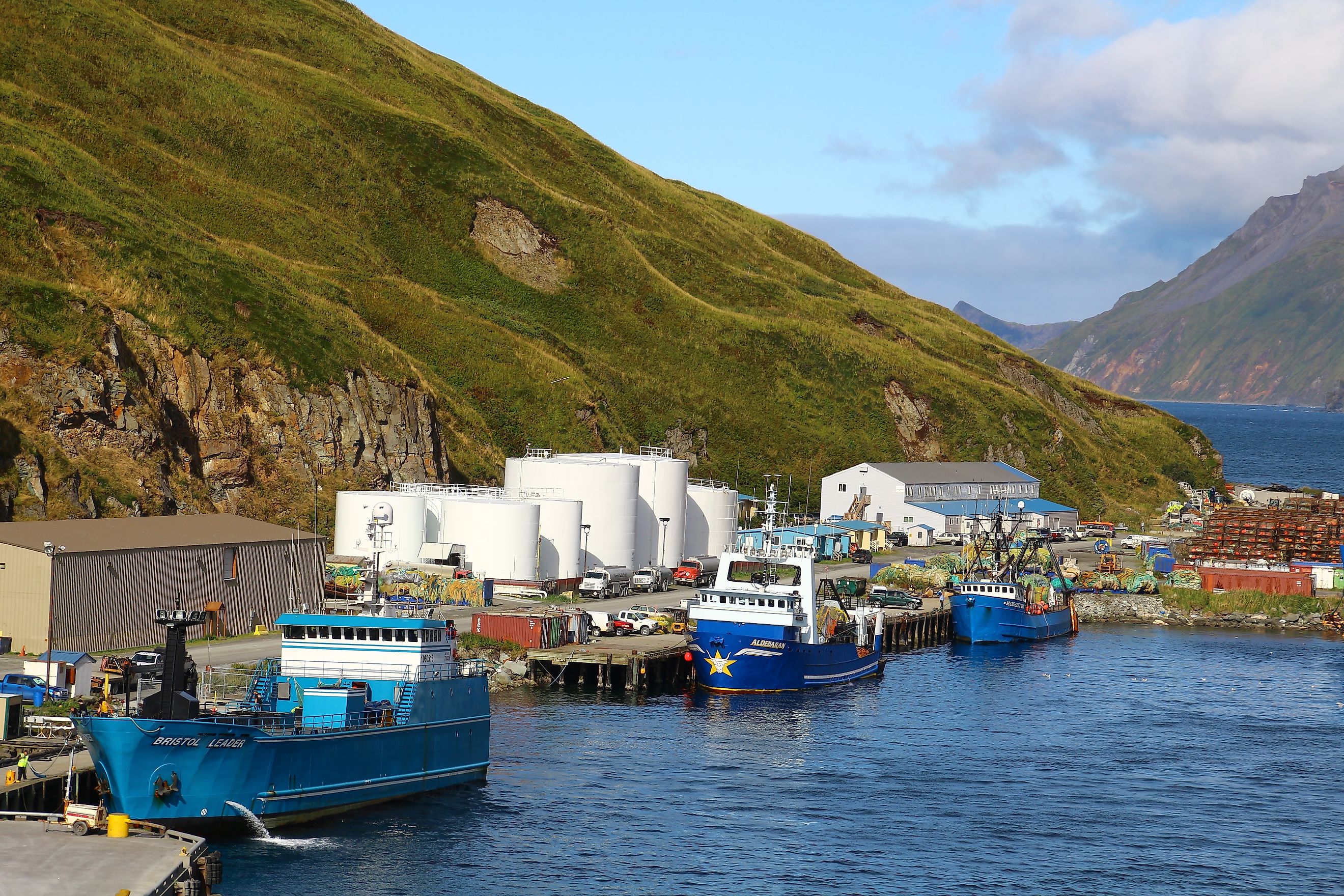
What Happens To The Bering Sea Crab Fleet In Winter
The Bering Sea crab fleet spends winter fishing some of Alaska's most valuable grounds, targeting snow and Tanner crab after the autumn Bristol Bay red king crab season. Hundreds of miles off Alaska's coast, commercial vessels operate in freezing temperatures, turbulent seas, and sea ice to retrieve baited pots from the ocean floor. Winter fishing involves more than simply continuing the autumn season. Vessels must adapt their equipment, and crews move between fisheries as annual catch limits dictate how much can be harvested. Recent environmental changes, such as the collapse of the Bering Sea snow crab population, have also transformed the industry. These combined factors make winter one of the most challenging and unpredictable periods for commercial crab fishing in the Bering Sea.
How the Bering Sea Crab Fleet Operates in Winter

The winter season begins with a transition from Bristol Bay crab to snow and Tanner crab fisheries. The red king crab season traditionally opens in mid-October, with much of the available quota harvested during the first few weeks. Afterward, participating vessels may return to port to unload their catch, maintain equipment, and prepare for the next fishery. This can involve reconfiguring their pots and gear to suit different species and fishing grounds.
Snow crab and Tanner crab operations then continue through winter and into spring. Not every vessel participates in every fishery, as opportunities depend on individual permits, allocated quota, and vessel capabilities. Some boats specialize in one species, while others move between fisheries throughout the year.
Fishing continues using large baited pots lowered to the seafloor and hauled aboard with onboard machinery. Crews must contend with freezing spray, powerful winds, rough seas, and limited daylight. Ice accumulating on decks and equipment creates additional hazards, while severe storms can delay operations or force vessels to relocate. These demanding conditions can make winter crab fishing strenuous.
Which Crabs are Caught During Winter?

Snow crab (Chionoecetes opilio) and Tanner crab (Chionoecetes bairdi) are the principal targets of the Bering Sea's winter fisheries. Snow crab, also known as opilio, inhabits the colder waters of the northern and central Bering Sea continental shelf. It is historically one of Alaska's most important commercial species, as it supports the processing facilities and seaside communities.
Tanner crab, commonly called bairdi, generally occupies somewhat warmer sub-Arctic waters. It occurs throughout the eastern and western Bering Sea, as well as parts of the Aleutian Islands and Gulf of Alaska. Its preference for relatively warmer conditions makes it an important commercial species as ocean temperatures change.
Red king crab (Paralithodes camtschaticus) is primarily associated with the autumn Bristol Bay fishery, although its permitted season extends into January. Meanwhile, golden king crab is harvested mainly in deeper waters around the Aleutian Islands, with fishing seasons that can run from August through April.
When Does the Winter Crab Season Take Place?

Most major Bering Sea crab fisheries open in October, although closing dates vary by species and management area. For the 2026-2027 season, Alaska's fishing calendar allows Bristol Bay red king crab harvesting from October 15, 2026, through January 15, 2027. Eastern and western Bering Sea Tanner crab fisheries run from October 15 through March 31, 2027. Eastern Bering Sea snow crab fishing is permitted until May 15, while the western fishery closes on May 31.
These dates represent authorized fishing windows rather than the length of time individual vessels remain at sea. Actual operations depend on available quota, weather, catch rates, and commercial decisions. Red king crab harvesting is generally concentrated in autumn and early winter, whereas snow and Tanner crab fishing can continue well into spring.
How Winter Sea Ice Impacts Crab Fishing

Seasonal sea ice is a defining feature of the Bering Sea winter, influencing both fishing conditions and the marine ecosystem. As temperatures fall, ice spreads across parts of the shallow continental shelf, although its extent varies considerably between years. Advancing ice can restrict access to fishing grounds and complicate navigation, while freezing spray and winter storms create further difficulties.
Sea ice also plays an important ecological role, especially for snow crabs. Winter ice formation helps cool the water near the seafloor. When the ice melts in spring, this cold water can remain trapped near the bottom, forming an area known as the cold pool. Generally characterized by temperatures below 2 degrees Celsius, this habitat provides favorable conditions for juvenile snow crab and helps separate colder Arctic species from warmer sub-Arctic communities.
When sea ice declines and bottom temperatures increase, suitable snow crab habitat can shrink. Tanner crab, which tolerates warmer conditions more readily, may be less affected. These environmental shifts influence crab distribution, population survival, and the locations where commercial vessels can find productive fishing grounds.
The Snow Crab Collapse that Disrupted Alaska's Fishing Industry

The Bering Sea snow crab fishery suffered an extraordinary population collapse following a marine heatwave in 2018 and 2019. NOAA Fisheries had established an eastern Bering Sea population of approximately 11 billion juvenile snow crab in 2018. By 2021, survey estimates had fallen to their lowest level since monitoring began in 1975, representing a decline of more than 90%.
Researchers identified starvation associated with warmer water and exceptionally high population density as a major contributing factor. Rising temperatures increase snow crab metabolism, forcing them to consume more food to meet their energy requirements. Laboratory experiments found that caloric needs nearly doubled as water temperatures increased from 0 to 3 degrees Celsius. With enormous numbers of crabs competing for limited resources, this increased demand contributed to widespread mortality.
Scientists also investigated fishing pressure, bycatch, predation, and disease. However, these factors could not explain the scale of the decline. Estimated snow crab bycatch mortality in groundfish fisheries between 2018 and 2021, for example, accounted for only around 0.06% of the estimated population decline.
The consequences for Alaska's fishing industry were severe. The commercial snow crab fishery closed for 2022-2023, disrupting an industry that had previously generated hundreds of millions of dollars. Communities such as St. Paul in the Pribilof Islands, which rely heavily on crab processing and fishing-related employment, experienced significant economic difficulties.
Why Tanner Crab and Hybrids are Attracting Attention

As scientists monitor changes in Bering Sea crab populations, Tanner crab has attracted increasing attention because of its ability to tolerate relatively warmer conditions. Another development is the growing abundance of snow-Tanner hybrid crabs, which display characteristics of both species.
In October 2026, NOAA Fisheries reported that hybrid crab abundance has increased more than 13-fold. Commercial-sized male hybrids represented 41.7% of harvestable male crabs in the 2025 eastern Bering Sea bottom trawl survey, compared historically to less than 10%. Researchers suggest that the collapse of the snow crab population may have reduced competition and predation, allowing more hybrids to survive.
This emerging population presents new management challenges. Existing regulations do not establish separate harvest limits for hybrids, although commercial-sized males can be landed during the snow crab fishery. Their increasing numbers raise important questions about how future stock assessments and catch limits should be determined.
Who Manages the Winter Crab Fleet?

Alaska's crab fisheries operate under shared state and federal management. The Alaska Department of Fish and Game establishes fishing seasons and annual catch limits, while NOAA Fisheries and the North Pacific Fishery Management Council oversee federal conservation measures and regulations designed to prevent overfishing.
The Crab Rationalization Program, introduced in 2005, transformed the industry by allocating quota shares to harvesters and processors, alongside opportunities for eligible coastal communities through the Community Development Quota program. The system reduced competition between vessels and helped control excess fishing capacity. A separate federal buyback program also permanently retired 25 vessels and 62 permits.
Annual scientific surveys remain essential to determining sustainable harvest levels. When crab populations fall below required thresholds, fisheries can close regardless of how many vessels are ready to operate.
The Future of Winter Crab Fishing in Alaska

The future of the Bering Sea crab fleet will depend largely on how populations respond to warming waters, changing sea ice, and shifting marine ecosystems. NOAA surveys recorded cooler bottom temperatures and increased juvenile snow crab in 2022, offering some encouragement for recovery. Nevertheless, scientists warn the favorable Arctic conditions for snow crab may become less frequent in the southeastern Bering Sea.
For fishermen, this could mean relocating fishing grounds, targeting different species, and facing increasingly unpredictable annual harvests. Although the traditional transition from the autumn king crab to winter snow and Tanner crab fisheries is likely to continue, the ecosystem supporting these operations is changing. The Bering Sea remains central to Alaska's commercial fishing industry, but its winter crab fleet must increasingly adapt to an environment that is becoming less predictable.