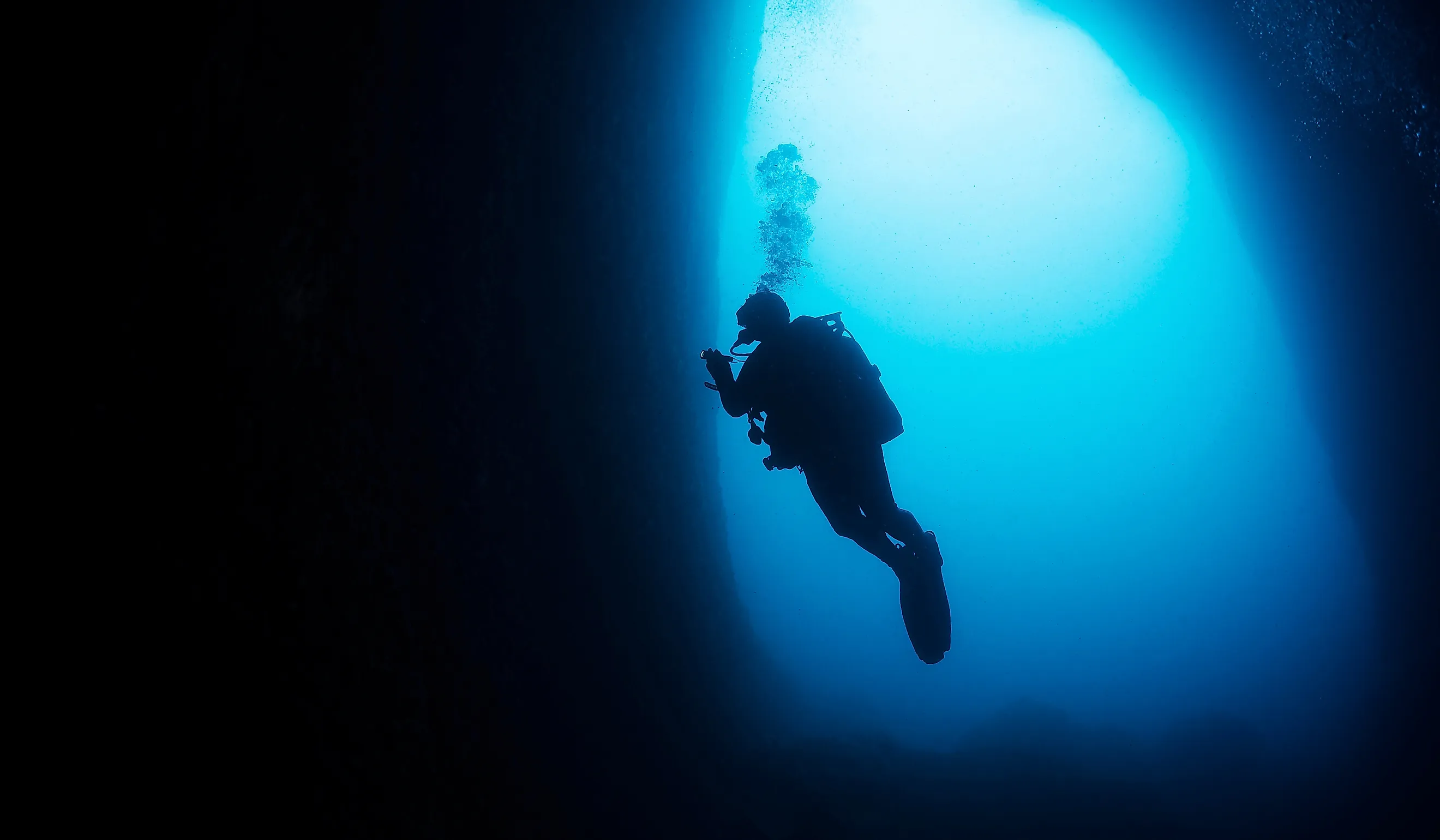
How Deep Scuba Divers Can Actually Go
Most recreational scuba divers stay within 130 feet (40 meters) of the surface, depending on their experience level. Extreme pressure and a lengthy return to the surface usually prevent divers from going further down. Professional technical divers can go deeper than 130 feet, but it depends on their training, gas type, equipment, and time underwater. Certifications limit the depths a diver is allowed to reach. An Egyptian man named Ahmed Gabr set the world record in 2014 by reaching 1,090 feet (332.35 meters) in the Red Sea, but that was an extreme isolated incident.
How Deep Can Recreational Scuba Divers Go?

The usual maximum scuba diving depth is 130 feet (40 meters). However, that limit applies to divers with deep-diving training, not beginners getting their first scuba certification. The Professional Association of Diving Instructors (PADI) sets its adult Open Water Diver limit at 60 feet (18 meters). Its Advanced Open Water Diver qualification extends to 100 feet (30 meters), and the Deep Diver specialty reaches 130 feet (40 meters).
These levels build skills progressively as pressure and planning increases. Recreational diving generally stays within no-decompression limits. This means divers plan their ocean depth and time so they do not need mandatory decompression stops during ascent. Going beyond those limits changes the dive. Technical training can be necessary because of time underwater as well as depth.
Water Pressure Changes Every Breath
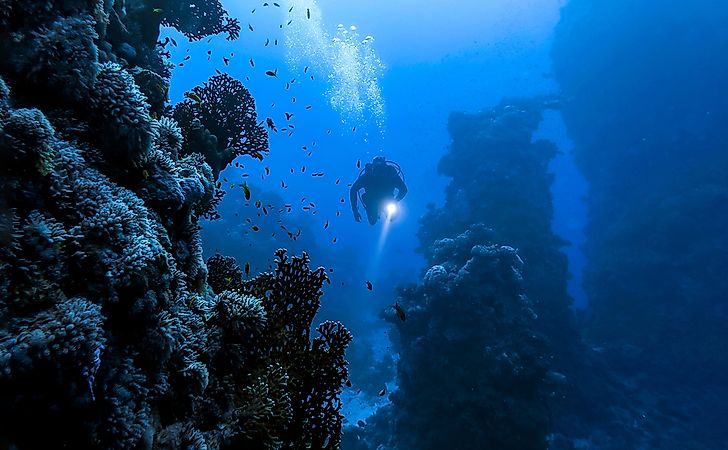
At 33 feet (10 meters) in seawater, a diver experiences approximately twice the pressure found at the surface. Every additional 33 feet adds roughly another atmosphere. This means that by 130 feet, the pressure surrounding a diver is close to five atmospheres, including the atmosphere already pressing down at sea level.
A scuba regulator delivers breathing gas at the same pressure as the surrounding water. Consequently, each breath at depth uses more gas molecules than the same-sized breath at the surface. With an otherwise unchanged breathing rate, a diver at approximately 130 feet uses gas about five times as quickly as at the surface. Stress and exertion can increase consumption further, so a scuba cylinder's duration shrinks as the diver descends.
Pressure also makes breathing gas denser and harder to move through the lungs. This increases breathing effort and can interfere with carbon dioxide removal. Retained carbon dioxide can impair a diver and raise the risks associated with narcosis and oxygen toxicity. Carrying more cylinders can address gas supply issues, but breathing at those depths can be a physiological challenge.
Different Limits For Nitrogen And Oxygen

The gases that sustain a diver can also restrict how deep that diver goes. At increased pressure, nitrogen contributes to nitrogen narcosis, which can impair thinking. Oxygen presents a separate problem: At high exposure, oxygen can become toxic to the central nervous system and cause a seizure underwater.
Many divers use enriched-air nitrox, but it's not a shortcut to deeper scuba diving. Nitrox contains more oxygen and less nitrogen than ordinary air. Divers can use it to extend no-decompression times, but its higher oxygen content means a shallower maximum operating depth.
For deeper technical dives, helium can replace some nitrogen in the breathing gas. Its lower density reduces breathing resistance, and it helps limit narcosis. However, helium has its own challenges, including decompression issues and neurological effects at extreme depths. Many divers with advanced technical certifications use a mixture called Trimix, which contains oxygen, nitrogen, and helium.
Technical Diving Extends The Depth Range

Technical diving extends beyond recreational limits through specialized training, equipment, and techniques. It allows divers to explore shipwrecks, caves, and other subterranean environments where a direct path to the surface isn't always possible. Within PADI's technical program, some courses reach 300 to 330 feet (90 to 100 meters).
Technical diving is not just recreational diving with a deeper destination; it requires skill and extensive training. A technical diver must account for the entire journey, including the gas needed to return, any required decompression stops, backup systems, and planning for equipment failures. They also sometimes use closed-circuit rebreathers, which have their own training, checks, and emergency requirements.
The Deepest Recorded Scuba Dive
Guinness World Records recognizes Ahmed Gabr's 2014 descent to 1,090 feet (332.35 meters) as the world's deepest scuba dive in seawater. Gabr, a PADI instructor, completed the attempt in the Red Sea off Dahab, Egypt. Reports differ on the precise timing and duration, listing 12 to 14 minutes for the descent and a shocking 14 to 15 hours spent returning to the surface.
The achievement later faced scrutiny, but after reviewing claims questioning the attempt, Guinness found no conclusive evidence of foul play and continues recognizing Gabr's record today. That verified depth remains an exceptional achievement, but it does not necessarily establish a safe operating limit for other divers or prove where the absolute human limit lies.
Returning To The Surface Takes Time
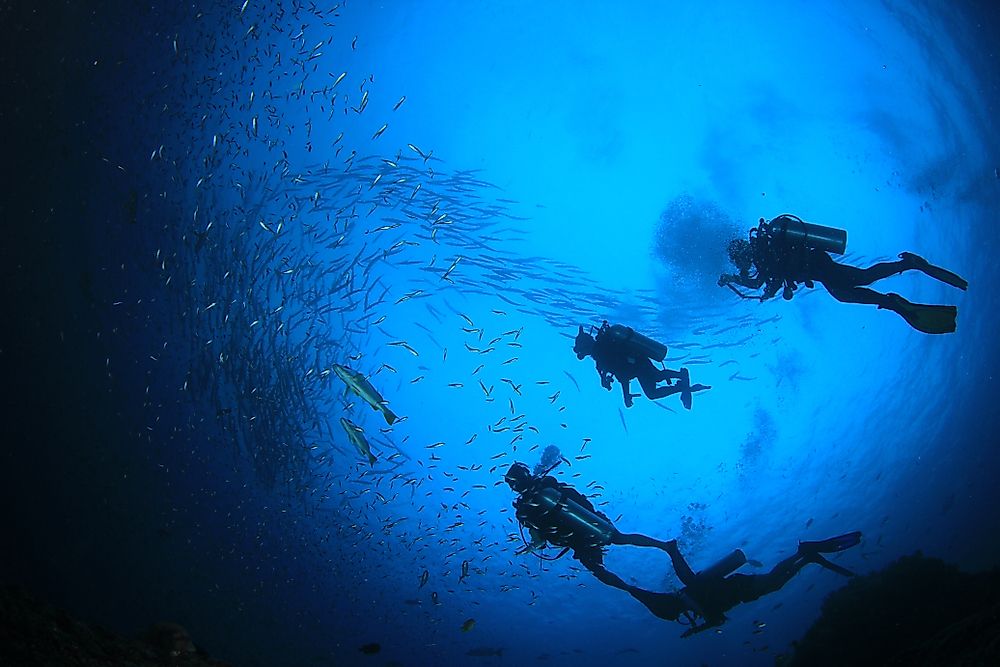
A deep scuba dive requires far more time ascending than descending because the body absorbs gas under pressure. During ascent, that gas leaves the tissues and passes through the bloodstream to the lungs. If this process cannot keep pace with the pressure reduction, bubbles can form in the blood and cause decompression sickness, or the bends.
Planned decompression stops mean a diver stops at specified depths to let inert gas leave the body instead of swimming straight to the surface. Divers must have access to enough breathing gas for the ascent and any stops. Depth affects the entire dive, and ascent rate contributes to decompression stress.
Limits Affect Exploring Shipwrecks

The USS Monitor rests approximately 240 feet (73 meters) beneath the Atlantic, about 16 miles south-southeast of North Carolina's Cape Hatteras Lighthouse. That places the Civil War ironclad ship beyond the standard recreational scuba depth limit. NOAA describes it as a site for qualified technical divers, and diving within Monitor National Marine Sanctuary requires a permit.
The wreck of the nearby Lancing, a vessel lost in 1942, sits at roughly 160 feet (49 meters). Although substantially shallower than Monitor, it also exceeds the usual recreational ceiling. The distance between these two wrecks' depths illustrates how technical diving opens access to sites that would be beyond the reach of standard, casual divers.
Saturation Diving Is Different
Some professional divers can spend extended periods working under pressure without making a complete ascent after every work session. Saturation diving allows the body's tissues to reach equilibrium with the inert gas pressure. Divers remain in a pressurized environment between underwater tasks, then complete a lengthy decompression at the end of the assignment.
Most saturation work takes place between approximately 65 to 1,000 feet (20 to 304 meters). These complex operations depend on specialized support systems and surface-supplied breathing gas for long underwater work periods. Aquarius Reef Base, for example, is a research habitat off Key Largo in Florida Keys National Marine Sanctuary, in roughly 60 feet of water. It's the world's only operating undersea research lab, conducting training and testing for NASA and the US Navy. Scientists can live underwater and work for extended periods there. Its comparatively modest depth shows that human underwater operations are limited by the combination of pressure, time, and support.