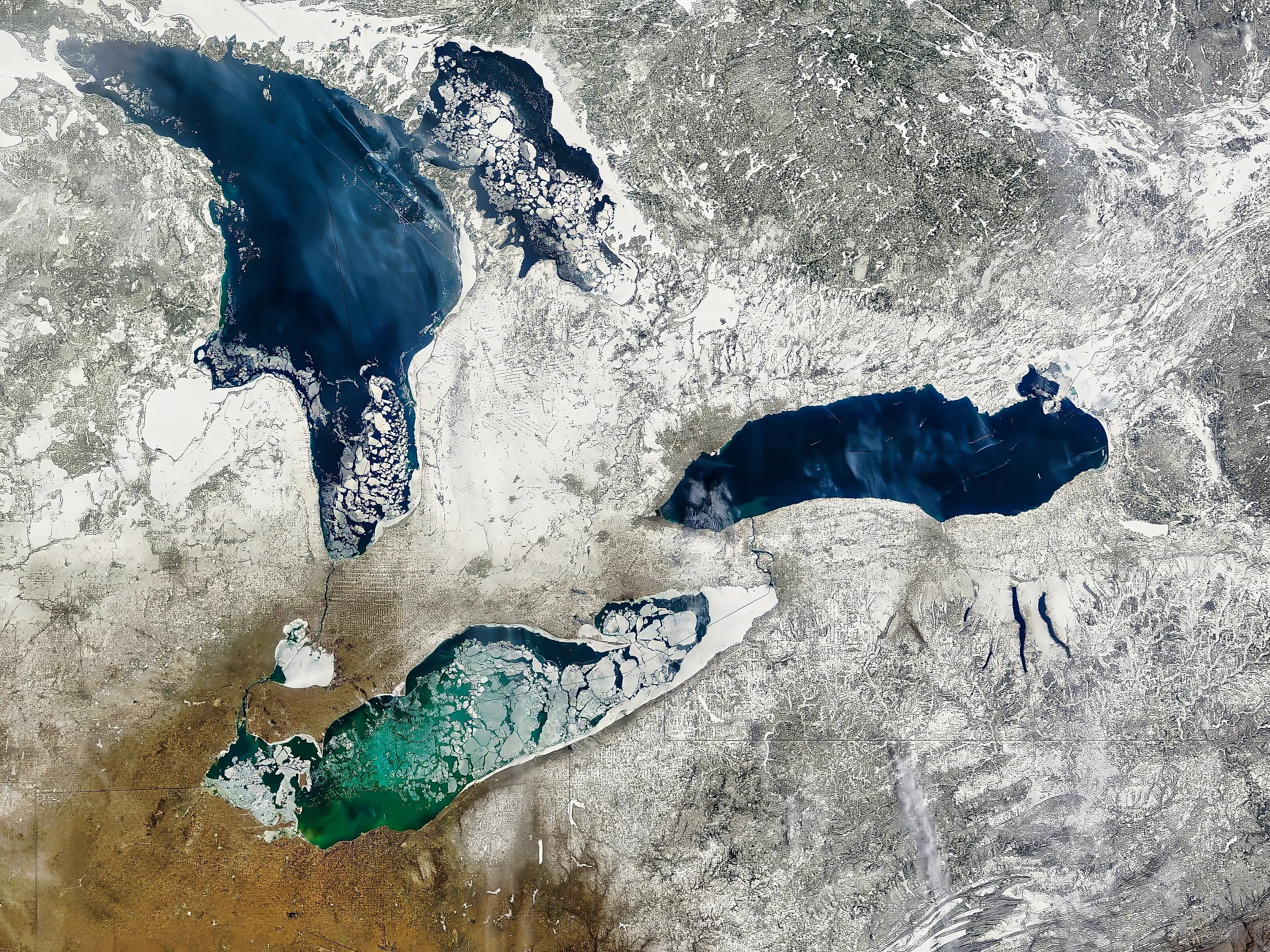
Why Lakes Freeze From The Top Down
When a lake freezes over in winter, the ice forms a solid sheet across the top while the water underneath stays liquid. It seems so obvious that we never think to question it, but it is actually one of the strangest and most important tricks in all of nature. Almost everything else in the world gets denser and sinks as it freezes, which should send ice plunging straight to the bottom. Water, famously, refuses to play along. Here is why lakes freeze from the top down, and why fish everywhere should be grateful that they do.
Most Liquids Freeze From the Bottom

To see why water is so weird, it helps to know what "normal" looks like. For nearly every substance on Earth, cooling makes the molecules pack closer together, so the material grows denser and denser right up to the moment it solidifies. The cold, solid version is heavier than the warm, liquid version, so it sinks. If water behaved this way, ice would form at the bottom of a lake and pile upward, and lakes in cold climates would eventually freeze into solid blocks. Water, thankfully, is a rule-breaker.
Water Breaks the Rules

The quirk that saves the day is water's "density anomaly." As water cools, it does get denser for a while, just like other liquids, but only down to a point. That point is 4 degrees Celsius, roughly 39 degrees Fahrenheit. Cool water below that temperature and something bizarre happens: it starts getting less dense again as it heads toward freezing. In other words, the very coldest water is actually lighter than slightly warmer water.
Why 4°C Is the Magic Number

That magic figure of 4 degrees is the key to the entire process. Because water is at its heaviest at 4 degrees, that is the temperature the deepest, densest water settles into. Any water colder than that, including the near-freezing water at the surface, is lighter, so it stays up top rather than sinking. On a big lake like Lake Winnipeg, this sets up a stable arrangement with the chilliest water on top and a warmer 4-degree layer resting quietly below. It is the exact opposite of what you might expect.
The Lake Turns Over, Then Stops

The sequence plays out the same way every autumn. As the air chills, the surface water cools, grows denser, and sinks, pushing warmer water up to take its place, a process called turnover that slowly mixes the whole lake. This keeps going until the entire lake has cooled to that dense 4 degrees. After that, the surface keeps cooling but no longer sinks, because it is now lighter than the water below. The mixing stops, the lake settles into layers, and the top is left to freeze.
Ice Floats

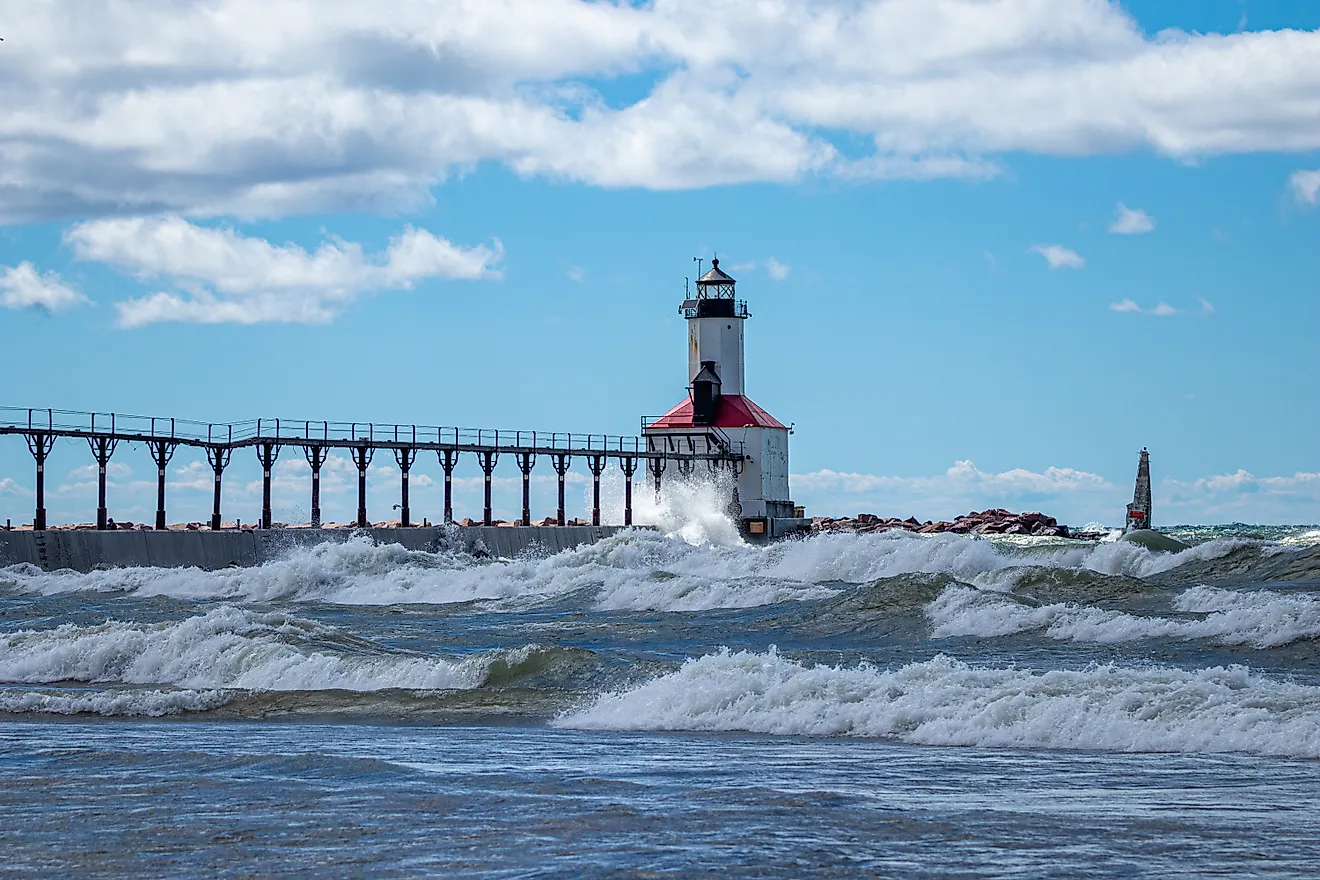
When the surface finally drops to 0 degrees and freezes, the last piece of the puzzle clicks into place: ice floats. As water freezes, its molecules lock into an open, spacious crystal structure that takes up about 9 percent more room than liquid water. That makes ice roughly 9 percent less dense, which is why ice cubes bob in your drink and why a frozen sheet forms on top of a lake like Lake Winnebago instead of sinking to the bottom. Floating ice is the whole reason lakes freeze downward rather than up.
A Blanket on the Water

Once that first sheet of ice forms, it does far more than just sit there. The ice acts like an insulating blanket, sealing off the water underneath from the frigid air above and dramatically slowing any further freezing. The thicker the ice grows, the better it insulates, which is why most lakes build up a cap of ice only a few feet thick at most and then stop. Beneath it, the water stays liquid, protected from the deep cold.
Life Survives Below

This is where the whole arrangement becomes a genuine lifesaver. Thanks to the floating ice and the stable layering, the deep water of a frozen lake stays at a relatively balmy 4 degrees all winter long. Fish, frogs, turtles, insects, and plants all ride out the season in that unfrozen refuge, which is exactly why you can see people ice fishing on a lake like Lake Erie, pulling very-much-alive fish up through the ice. If lakes instead froze solid, that entire underwater world would die every single winter.
The Molecular Magic

All of this traces back to the strange way that water molecules hold hands. Each molecule can link to its neighbors with up to four hydrogen bonds, and as water cools toward freezing, those bonds pull the molecules into an open, six-sided lattice. That lattice is beautifully regular but full of empty space, which is precisely why ice expands and floats. The same bonding is why clear lake ice, like the famous ice on Lake Baikal, can form in such striking sheets and patterns.
Why It All Matters

It is genuinely hard to overstate how important this one quirk really is. If water froze from the bottom up like a normal liquid, lakes, ponds, and even parts of the ocean in cold regions would freeze into solid ice, wiping out aquatic life on a massive scale. The top-down freezing of water is one of the quiet reasons Earth is so livable, keeping winter water worlds alive year after year. A single weird property of a very common molecule helps hold entire ecosystems together.
Not Every Lake Freezes the Same

Of course, no two lakes freeze in quite the same way. Shallow ponds can freeze thickly and quickly, and in extreme cold they occasionally freeze most of the way down, while enormous, deep lakes may barely freeze at all. Giant, deep lakes like Lake Superior hold so much stored heat that they often stay mostly open water even through brutal winters. But wherever ice does form, it always forms on top, obeying the same elegant rule. The surface may freeze over, yet underneath, thanks to water's beautiful weirdness, life quietly carries on.