Why The Niagara River Runs Emerald Green
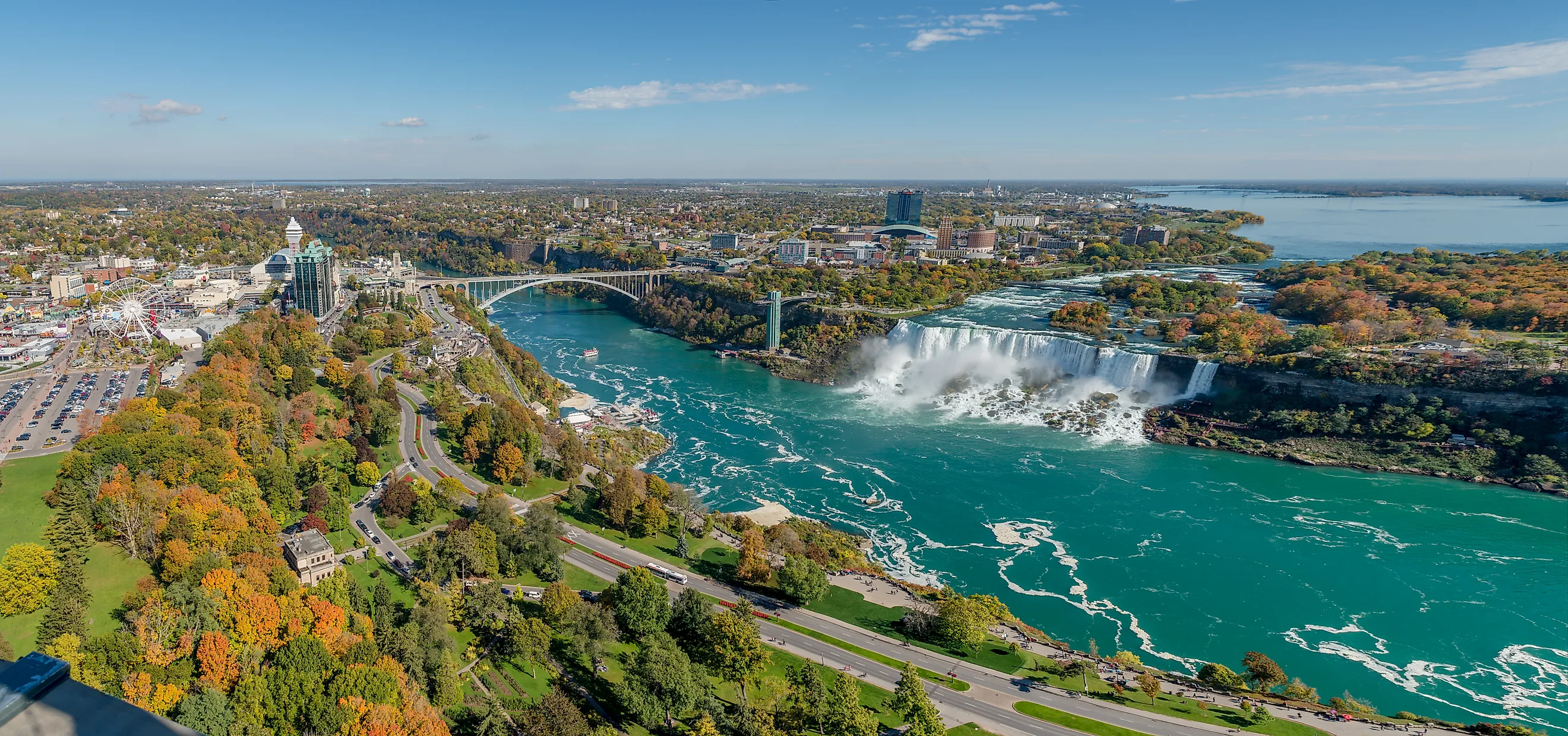
On Christmas Eve 2022, Niagara Falls turned brown. A blizzard was blasting across Lake Erie, and Environment Canada reported that the water pouring over the falls had gone chocolate brown. That is a strange look for the Niagara River. The river is famous for a deep emerald green that most big American rivers never show. The Missouri, by comparison, is nicknamed the Big Muddy for all the sediment it carries. The Niagara's green is surprisingly easy to lose. The color comes from something the river picks up on its way to the brink, and that storm buried it under mud.
Crushed Limestone Tints the Water

The color comes mostly from the riverbed. The green is produced by dissolved salts and rock flour, very finely ground rock, picked up primarily from the limestone bed. Once that powder is in the water, it keeps moving. Surveys found almost no fine-grained sediment on the river bottom outside a few spots in the lower river, so the powder stays in the current. Algae have little to do with it. Plankton, which clouds many lakes in summer, stays extremely scarce in the river all season long.
The Falls Grind Out Even More Rock Powder

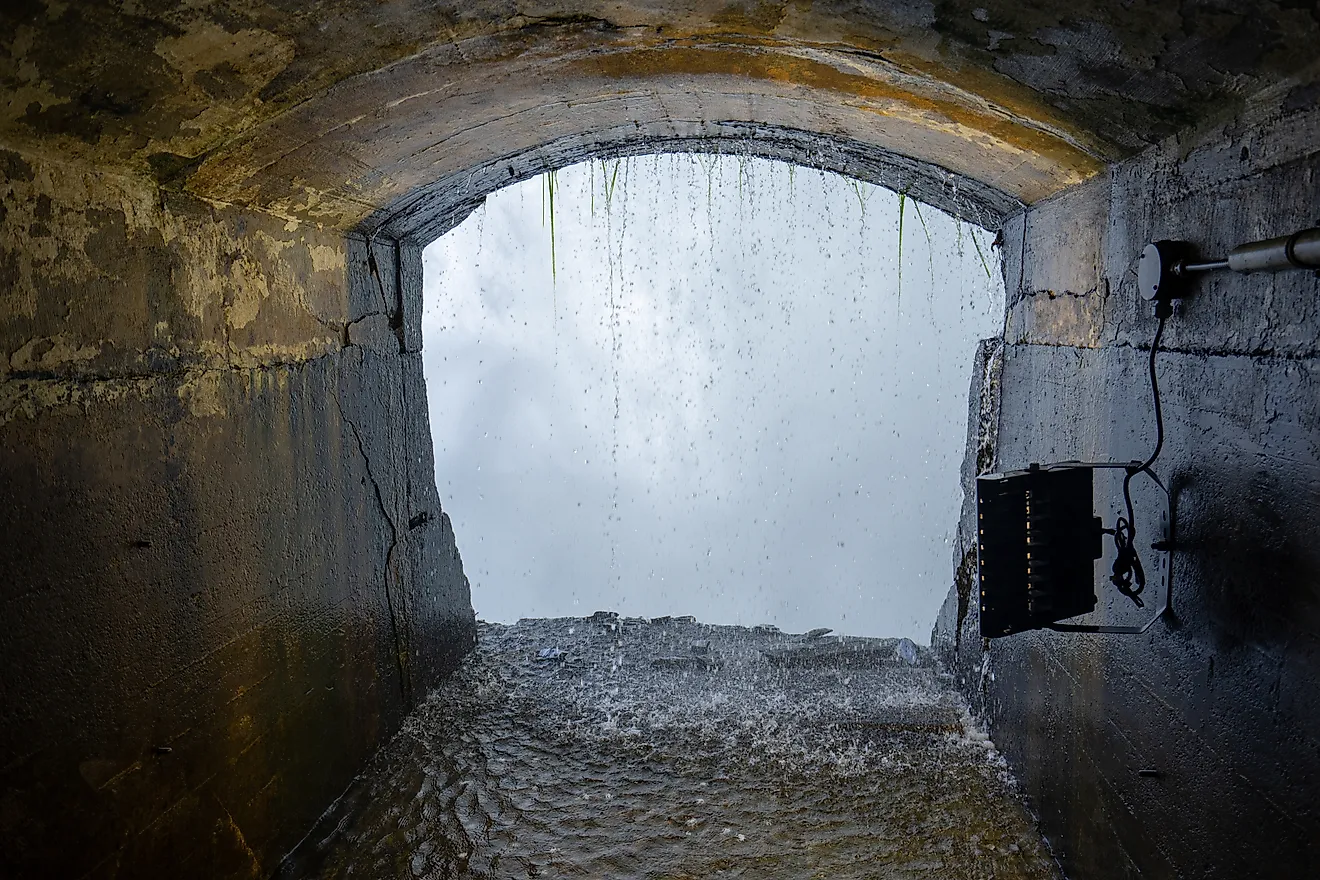
At the brink, the erosion turns violent. The Horseshoe Falls drops an average of 188 feet into the lower river, over a cap of hard Lockport limestone and dolomite that sits on the soft Rochester Shale. Water racing toward the drop forms tiny vapor cavities. When the water comes to rest, those cavities collapse and send shock waves into the surrounding rock, which breaks it apart. As the rock breaks away, the falls move upstream roughly a foot a year.
Large blocks of fallen rock collect at the base, and the finest material washes downstream. The shales and sandstones under the cap probably add their own rock flour to the limestone powder already in the water. By the time the river goes over the edge, it is carrying a heavy load. An estimated 60 tons of dissolved minerals are swept over the falls every minute.
Tiny Particles Scatter Green Light

Rock flour colors the Niagara the same way glacial flour tints the turquoise lakes below glaciers. The particles are so fine that they sink very slowly and stay suspended. Water absorbs the long wavelengths of sunlight, from red through yellow, and the floating grains scatter the remaining blues and greens back up to the eye.
Depth matters at the crest. In 1931, a joint U.S.-Canadian board reported that the Horseshoe showed its correct color only when enough water poured over it at enough depth. That finding is one reason the two countries later cut the crest back by 355 feet.
Settled Lake Erie Water Keeps Mud From Hiding the Color

All of this depends on the water starting out clear. It spends about 2.6 years in Lake Erie before reaching the Niagara. The lake's shallow western basin, averaging just 24 feet deep, is its murkiest part, because wind and waves easily stir up the fine sediment on the bottom. The river drains the deepest basin, at the eastern end near Buffalo, and by then much of the suspended material has settled out. Phosphorus cuts and the arrival of zebra and quagga mussels, which strain plankton from the water, helped raise Lake Erie's August clarity by about 8 feet between 1968 and 2002.
A storm can undo that in a day. On December 23 and 24, 2022, winds of nearly 70 mph blew off Lake Erie and waves reached almost 30 feet, which left the water flowing into the Niagara little chance to settle. Environment Canada traced the brown at the falls to debris washing down the river, and four days after Christmas Eve, webcams still showed the falls without their usual color.
The Niagara's green says two things about the water passing the falls. It is carrying limestone ground fine enough to stay afloat, and very little mud came with it out of Lake Erie. The first condition holds all year, because the current keeps scouring the riverbed and the brink keeps breaking apart. The second depends on calm weather over Lake Erie. The water stays distinct well past the gorge. Where the river empties into Lake Ontario, between Youngstown, New York, and Niagara-on-the-Lake, Ontario, Landsat images from the 1970s showed it fanning out in a plume of up to about 190 square miles, the largest such feature in the lake. After a 36-mile run and a 325-foot drop, the Niagara still enters the lake as a clear-water plume, easy to tell apart from the water around it.