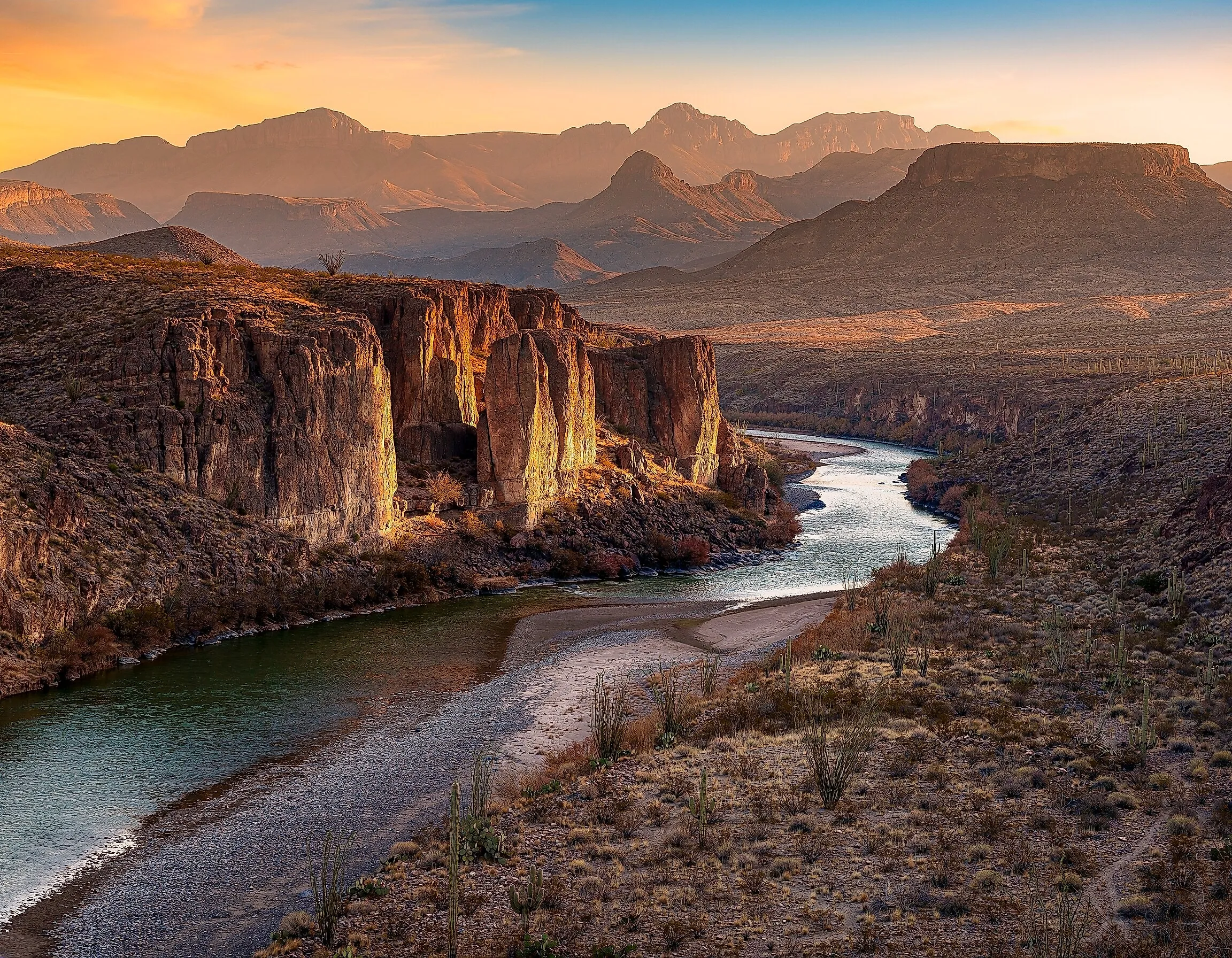
Why The Rio Grande Is The Rio Bravo In Mexico
El Paso, Texas, and Ciudad Juárez, Mexico, sit on opposite sides of the same river. On the American side, it is the Rio Grande, or "big river." Across the border, it is the Río Bravo del Norte, or "wild river of the north." The split is older than the international border itself. Spanish explorers and mapmakers were already calling the river by different names in the 1500s, and neither name ever won out. When the Treaty of Guadalupe Hidalgo turned the river into a boundary in 1848, it did not choose between them, calling it the "Rio Grande, otherwise called Rio Bravo del Norte." But the river had names long before either country existed, and the first ones didn't come from Spain.
How The Rio Grande Got Its Name
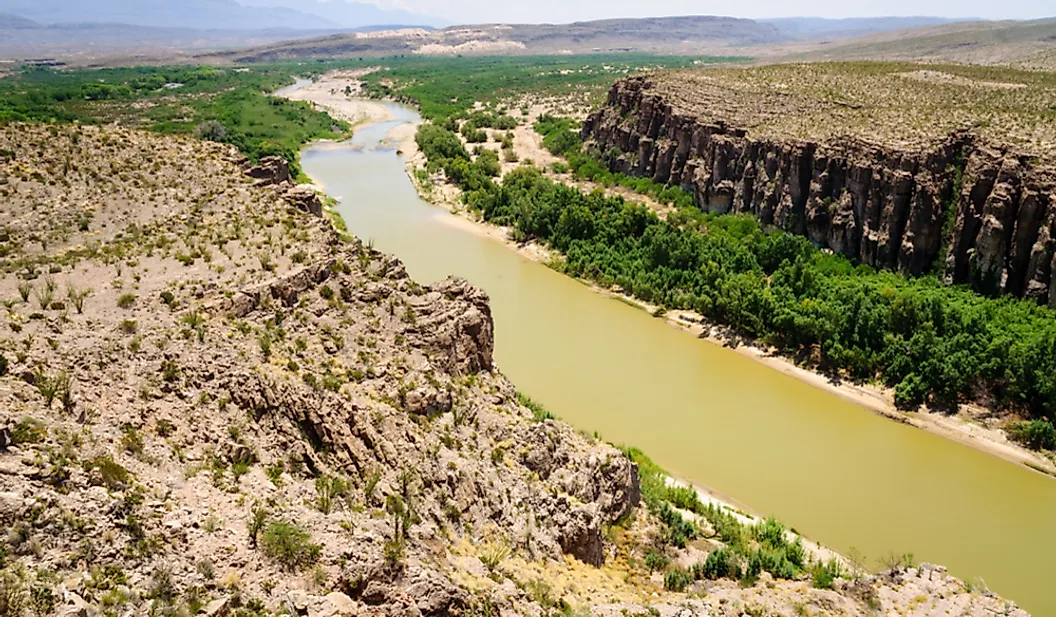
Long before Spanish explorers arrived, Indigenous peoples had their own names for the river. The Pueblo people of northern New Mexico called it P'osoge, meaning "big river." The Navajo called it Tó Ba'áadii, or "female river," because south is associated with femaleness in Navajo tradition, and the river flows south through New Mexico. Indigenous communities along the lower Rio Grande used the name Ganapetuan, meaning "large body of water."
Spanish explorers used several names for the Rio Grande during the 1500s. In 1540, an expedition led by Hernando de Alvarado called it Río de Nuestra Señora, or "River of Our Lady." In 1582, Antonio de Espejo named the river Río del Norte, meaning "River of the North." He also called it Río Turbio, or "turbulent" or "muddy" river. Juan de Oñate is often credited with the name Rio Grande after he reached the river near present-day El Paso in 1598, though New Mexico historians trace its first use to an expedition led by Gaspar Castaño de Sosa in 1591.
Other names appeared in early Spanish records, including Río San Buenaventura, or "River of Saint Bonaventure," and Río Caudaloso, meaning "river carrying abundant water." The names Rio Grande and Río del Norte also came together in the longer form Río Grande del Norte.
Where The Name Río Bravo Came From

Río Bravo is older on paper than Rio Grande. The name appeared on a map of New Spain drawn by a royal Spanish cartographer in 1536, years before any expedition reached the river's upper stretches. The Spanish word bravo can mean wild, fierce, turbulent, or restless. When Castaño de Sosa's party crossed the river near present-day Ciudad Acuña in 1590, they already knew it as the Río Bravo. By 1598, Spanish settlers were using the name for the river's lower course, and by 1602 it had become the standard Spanish name for the river below its junction with the Río Conchos. The Spanish colonists who settled the upper river in New Mexico originally knew it as the Río del Norte or Río Grande del Norte, a name later shortened to Rio Grande by American settlers. Colonization along the lower river did not begin in earnest until 1749, growing out of the provinces of northern Mexico, where Río Bravo was already the established name. It remains the official name on Mexican maps today.

Maps from the following century show how loosely the names were applied. A map from around 1687 or 1688 labeled the river "Río Bravo or del Norte" and depicted settlements including Monterrey and Monclova, as well as Indigenous communities on both sides of the river. In 1689, Carlos de Sigüenza y Góngora prepared a map of Alonso de León's expedition across southern Texas that identified the river as Río Bravo. A complete picture of how the river's many stretches connected would not come until the boundary surveys of the 1800s.
How The River Became The US-Mexico Border

Today, the river forms approximately 1,250 miles of the US-Mexico border. The history of that boundary dates back to 1836, when Texas declared independence from Mexico and claimed the Rio Grande as its southern boundary. Mexico claimed the boundary was the Nueces River, farther north, so the territory between the two rivers remained in dispute.
That dispute fed into the Mexican-American War. Fighting began in 1846, after the United States annexed Texas, and the Treaty of Guadalupe Hidalgo ended the war in 1848 with the Rio Grande set as the international boundary between the Gulf of Mexico and El Paso.
The American surveyors who mapped the new border used the Mexican name. Maps prepared by the US Army Corps of Topographical Engineers in 1852 and 1853 to document the treaty surveys labeled the river Río Bravo del Norte.
When The River Moved

Setting a border along a river created a problem of its own, because rivers do not always stay in the same place. In 1884, the US and Mexico agreed on rules for determining the boundary when the river changes course. One dispute lasted nearly a century after an 1864 flood shifted the river near El Paso and Ciudad Juárez.
The disputed territory included El Chamizal, a tract of Mexican land that ended up north of the river after its course shifted south. In 1911, an international arbitration commission considered the dispute, with representatives from the US, Mexico, and Canada. The Mexican and Canadian commissioners voted to divide the tract, awarding Mexico the land that had been south of the river before the 1864 flood, but the US rejected the ruling on legal grounds. The disagreement continued for another five decades. Under the 1963 Chamizal Convention, the US and Mexico agreed to transfer most of the disputed territory to Mexico and relocate approximately 4.3 miles of the Rio Grande into a concrete channel to keep the boundary in place.
Two Names, One River

Concrete eventually held the border in place at El Paso, but no agreement ever settled the name. Río Bravo took hold among the settlements spreading along the river's lower course from northern Mexico, while Río del Norte was long used upstream in New Mexico, before American settlers and Texas usage cemented Rio Grande across the United States. Each country inherited the name its own frontier had favored, and neither had much reason to give it up. The water running between El Paso and Ciudad Juárez is the same on both banks, and each side still calls it by the name its own history left behind.