The Day Taum Sauk Reservoir Burst
On December 14th, 2005, the Taum Sauk Reservoir, located in Reynolds County, Missouri, overflowed and burst. A facility once honored as an engineering milestone failed, causing severe damage to the surrounding area. Not only were large swaths of the nearby forest destroyed, but the cost of cleanup, damages, and rebuilding ran to hundreds of millions of dollars. At the foot of the mountain, one family was still inside their home when the flood arrived. The breach was not the reservoir's first warning, however. Less than three months earlier, workers had watched water spill over its rim in a scene one of them compared to Niagara Falls. What went wrong came down to a set of sensors that were higher than they should have been. Taum Sauk was also not the first American reservoir to fail after showing signs of trouble, and two earlier disasters in California and Idaho tell a strikingly similar story.
A Brief History Of The Taum Sauk Reservoir

The Taum Sauk Reservoir was constructed between 1960 and 1963, about 90 miles southwest of St. Louis, to provide hydroelectric power to the surrounding towns and cities during peak energy consumption. At the time, it was considered one of the most advanced reservoirs in the United States. It was also one of the first pumped-storage plants designed to be operated remotely, without personnel on-site.
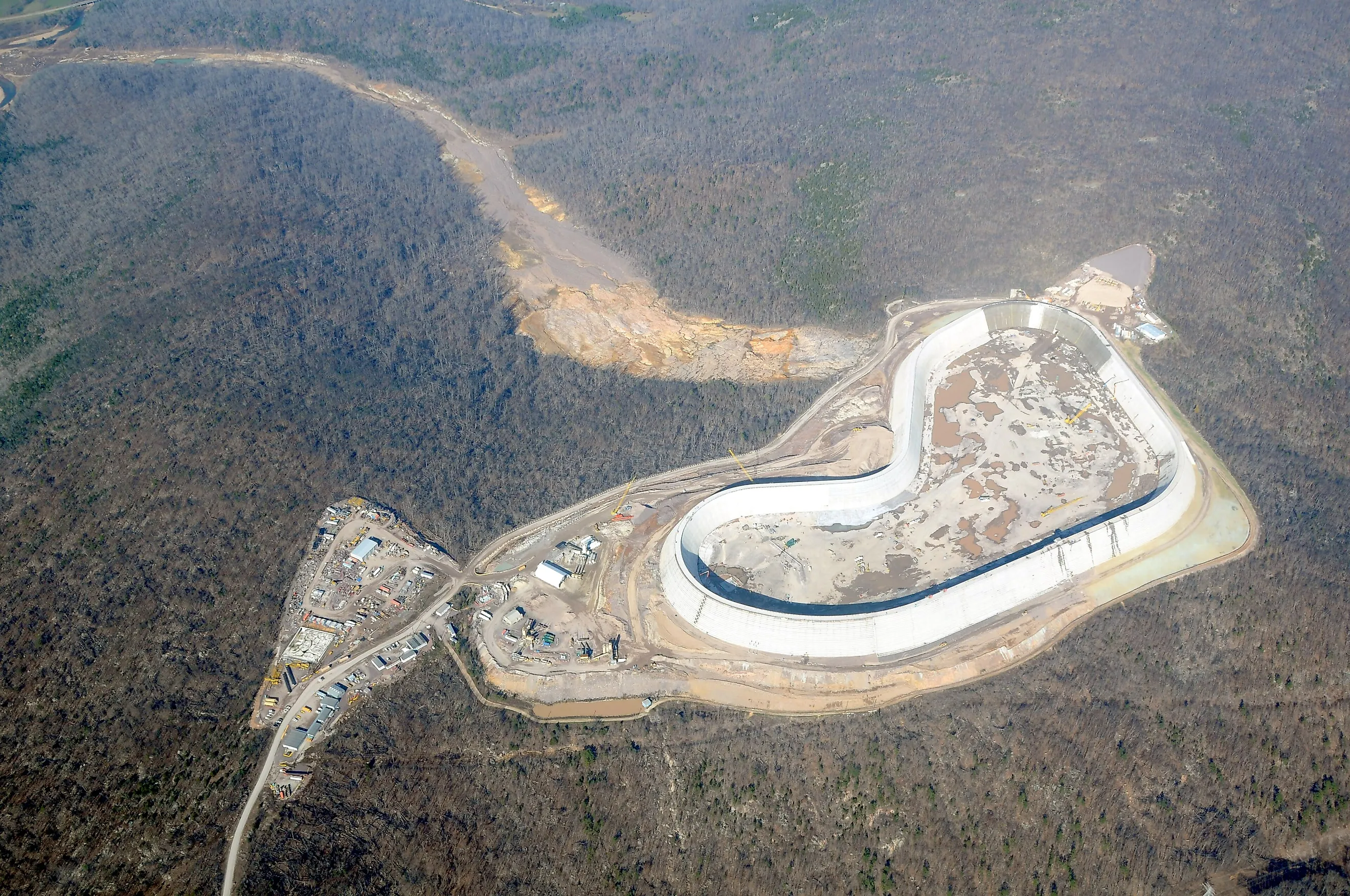
The plant was designed with upper and lower reservoirs. The upper reservoir sat atop Proffit Mountain, enclosed by a kidney-shaped rockfill dike about 90 ft high. During construction, material from Proffit Mountain was used as fill and for the dike that ran along the reservoir's perimeter. Water-level sensors, backed by fail-safe probes, were meant to shut off the pumps should water levels ever reach a point where overflow was possible.
A Timeline

In 2004, a year before the disaster, the dam had been outfitted with a new geomembrane liner to control a handful of leaks that had developed in the thin layer of shotcrete. At the time, these cracks were of little concern and were attributed to simple wear and tear from the more than 40 years the reservoir had been operational. During these repairs, the reservoir was also given new pump shutdown mechanisms.
On September 25, 2005, just one day before the Taum Sauk Plant was set to receive an award from the Institute of Electrical and Electronics Engineers for its innovation, some AmerenUE workers visited the plant and commented on its dike system. They had noticed water spilling over the edges and remarked that it resembled "Niagara Falls." At that moment, the pumps were manually disabled, lowering the water level and preventing a potential catastrophe. When investigating what could have caused the overflow, divers concluded that the sensors in the reservoirs had failed to read the water level accurately, giving employees false information and indicating that the water levels were much lower than they actually were. The operators then reprogrammed the control system to stop the pumps two feet lower, in hopes of making sure something like this never happened again.
Disaster Strikes

Only a few months later, on December 14th, during the plant's routine morning pump cycle, water levels once again reached a critical level, and neither the primary sensors nor the fail-safe probes stopped the pumps in time. The fail-safe probes on the parapet wall had been installed too high to provide a proper reading, and the emergency shutoff for the pumping system would activate only if both probes were triggered. At around 5 a.m., the water began to overflow across the northwest lip of the reservoir. The pressure eventually eroded the unprotected rockfill embankment beneath the parapet wall, which caused an entire portion of the reservoir to collapse and release whatever water remained.
The surrounding wilderness was washed away as about 1.3 billion gallons of water came cascading down the mountainside, uprooting trees and pushing aside rocks and boulders the size of small homes. The flood tore through Johnson's Shut-Ins State Park and into the East Fork of the Black River, damaging the park and its campground and sweeping vehicles off Highway N before the water was contained in the lower reservoir. Aside from the upper reservoir itself, the hardest-hit structure was the park superintendent's home, which was swept away along with him, his wife, and their three children. The family survived with injuries and exposure, and no one was killed. Ameren estimated the cost of rebuilding the upper reservoir at about $480 million, in addition to more than $200 million for cleanup, damages, and liabilities.
Other American Reservoirs That Gave Way

Taum Sauk joined a long list of American reservoirs that failed after showing signs of trouble. Just before midnight on March 12, 1928, the St. Francis Dam collapsed in San Francisquito Canyon, north of Los Angeles, California. That morning, the dam keeper had reported a new leak to William Mulholland, the chief engineer of the Los Angeles Bureau of Water Works and Supply, who inspected the dam for about two hours and judged it safe. The flood that followed killed more than 400 people, and the disaster led California to create an updated dam safety program.
Nearly five decades later, on June 5, 1976, the Teton Dam in southeastern Idaho collapsed while its reservoir was filling for the first time. Workers had spotted seepage that morning, and by 11:57 a.m., the dam had given way, sending a flood down the Teton River. The disaster killed 11 people and was the first dam collapse in the Bureau of Reclamation's nearly 75-year history.
Aftermath Of The Taum Sauk Disaster

In the wake of the disaster, investigations found that the calamity was due to a series of mistakes and outdated or faulty technology. Despite decades of operation, it only took a small set of errors to lead to such a devastating event. After the investigations concluded, the Taum Sauk Dam began reconstruction in 2007 and was finally repaired and made operational in 2010, with the entire reservoir outfitted with the latest series of sensors and safety measures.
Today, the reservoir continues to operate and supply power to nearby areas. The burst remains a valuable safety lesson, and, as in many other industries, it took a large-scale accident to establish new and revised safety regulations. Much like the sinking of the Titanic reshaped maritime safety, the burst at Taum Sauk had a profound impact on other similar reservoirs across the United States and beyond.