The Fishing Towns Still Working The Great Lakes
In 1890, Erie, Pennsylvania, was the busiest freshwater fishing port in the world. Today, only a fisherman or two still works out of its harbor. Across much of the Great Lakes, commercial fishing has faded, undone by overfishing, invasive species, and pollution. But it has not disappeared. In a handful of towns, fishing tugs still head out before dawn, and fresh whitefish and perch still land on the docks. These are the fishing towns still working the Great Lakes.
Wheatley, Ontario

Wheatley, a village of about 2,000 people on the north shore of Lake Erie, is home to what is often called the largest freshwater commercial fishing fleet in the world. About 45 fishing tugs, many nearly 70 feet long, work out of its harbor, crewed by some 300 commercial fishers.
They bring in yellow perch, walleye, bass, and smelt, much of which is processed locally and shipped across Canada and the United States. Fishing shapes village life, and the community celebrates its heritage each summer with a fish festival. Point Pelee National Park, at the southern tip of mainland Canada, sits just to the south.
Kingsville, Ontario

Kingsville, a few miles west of Wheatley on Lake Erie, is one of Canada's major hubs for processing freshwater fish. Its plants clean, fillet, and pack the catch brought in by fishing tugs from across the western basin of the lake.
Ontario's Great Lakes fishery is one of the largest freshwater fisheries in the world, contributing hundreds of millions of dollars to the provincial economy, and Kingsville is at the heart of it. The town also has a pretty harbor, a walkable main street, and nearby wineries, and it is a popular stop for birdwatchers headed to Point Pelee during spring migration.
Port Dover, Ontario

Port Dover, on the north shore of Lake Erie farther east, was founded on commercial fishing, and fishing boats still work out of its harbor. The town is especially known for Lake Erie perch, served fresh in local restaurants and fish shops.
Its lighthouse stands at the end of a long pier, and a sandy beach draws summer crowds. The town's harbor museum tells the story of the fishing families who built the community. For visitors, a plate of fresh perch at a waterfront restaurant is a delicious way to taste the fishery's long tradition.
Gills Rock, Wisconsin

Gills Rock, at the very tip of Wisconsin's Door Peninsula, is a tiny fishing village where commercial boats still bring in whitefish from the waters of Lake Michigan and Green Bay. Local smokehouses turn the catch into smoked fish sold right at the docks.
Door County is famous for its traditional fish boils, where whitefish and potatoes are cooked in a kettle over an open fire until the pot boils over in a dramatic burst of flame. Gills Rock's small harbor also offers ferry and boat tours to nearby islands, and its rocky shoreline is one of the quietest corners of the peninsula.
Bayfield, Wisconsin

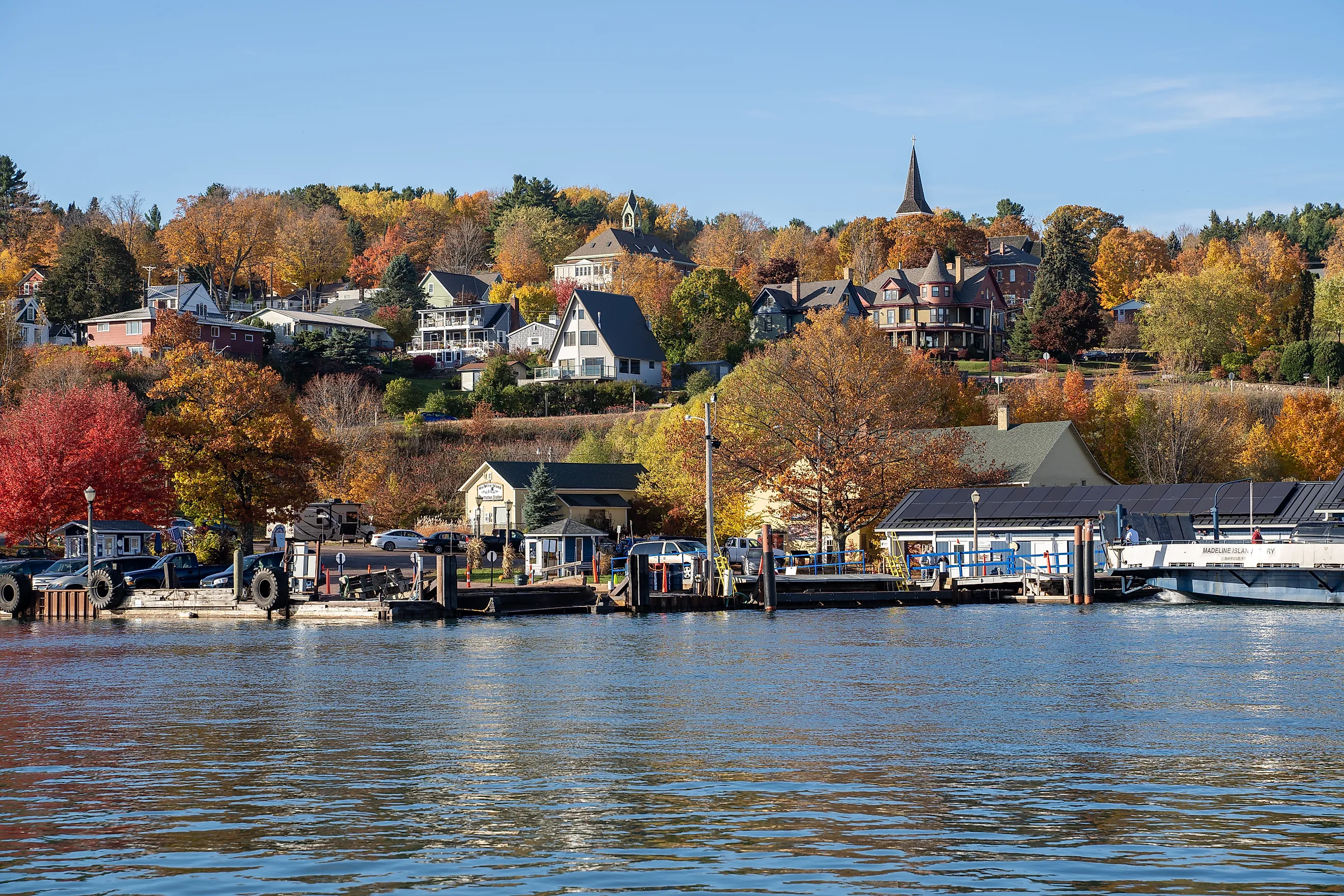
Bayfield, on Lake Superior at the gateway to the Apostle Islands, has been a fishing town since the 1800s, and commercial boats still set nets for whitefish and lake trout. Fresh and smoked fish are sold at local markets, and whitefish is a staple on restaurant menus.
The Bayfield Maritime Museum tells the story of the town's fishing and boatbuilding heritage, including the families who fished these cold waters for generations. Ferries leave the harbor for Madeline Island, and kayakers explore the sea caves of Apostle Islands National Lakeshore, but fishing remains part of the town's working identity.
Leland, Michigan

Leland, on Michigan's Leelanau Peninsula, is home to Fishtown, a cluster of weathered wooden shanties along the Leland River where commercial fishing has continued for more than a century. A family-run fishery still operates here, bringing in whitefish from Lake Michigan.
A local preservation group maintains the historic shanties and fishing tugs, keeping the working waterfront alive even as tourism has grown. Visitors can buy smoked fish straight from the fishery, watch boats come and go, and catch a ferry to the Manitou Islands. The scene offers a rare glimpse of a traditional Great Lakes fishing village.
Brimley And Bay Mills, Michigan

On the shores of Lake Superior's Whitefish Bay, the small community of Brimley and the neighboring Bay Mills Indian Community are home to one of the most important tribal fisheries on the Great Lakes. Under treaty rights dating back to the 1800s, tribal fishers still harvest whitefish and lake trout commercially.
Their catch supplies local markets and restaurants and supports families across the eastern Upper Peninsula. The area's historic Point Iroquois Lighthouse overlooks the bay, and Brimley State Park offers sandy beaches with views of passing freighters. Here, commercial fishing is not just a job but a cultural tradition passed down through generations.
Erie, Pennsylvania: A Reminder Of What Was Lost

Erie's story shows how much the Great Lakes fishing industry has changed. In 1890, the city was the largest freshwater fishing port in the world by tonnage, with fleets of boats hauling in huge catches from Lake Erie. Today, only a single commercial fisherman is believed to still operate there.
Overfishing, pollution, and invasive species such as the sea lamprey devastated many Great Lakes fish populations in the 20th century, and many American states later restricted commercial fishing in favor of sport fishing. The towns that still fish today are survivors, carrying on a tradition that once defined dozens of lake ports.
Keeping The Tradition Alive
The Great Lakes commercial fishery is smaller than it was a century ago, but it remains an important part of life in towns like Wheatley, Bayfield, and Leland. Much of today's catch comes from Canadian waters, especially Lake Erie, while tribal fisheries keep the tradition strong in Michigan and Wisconsin. Visitors can support these communities by buying fresh or smoked fish locally, eating at waterfront restaurants, and learning the stories behind the boats tied up in the harbor. Each fresh fillet sold at the dock helps keep a centuries-old way of life afloat on the lakes.