The Single Crop That Uses The Most Water In California
Almonds get the blame. Alfalfa does the drinking. In the last year with consistent statewide crop-by-crop data, California's Department of Water Resources recorded alfalfa taking about 5.2 million acre-feet of applied water, the largest single figure for any crop in the state. Almonds and pistachios together took 3.8 million. Alfalfa is hay, grown mostly to feed cattle and dairy cows, and it earns a fraction of what the nuts do per drop.
Five Point Two Million Acre-Feet

The headline number comes from state water accounting rather than an advocacy estimate.
In 2010 the single largest user of water was alfalfa, with an estimated 5.2 million acre-feet of applied water. That is roughly 16 percent of all the water applied to California agriculture.
Irrigated pasture and rice come third and fourth. Almonds and pistachios, counted together, were second at 3.8 million acre-feet.
It Occupies A Million Acres

The volume comes from a combination of large acreage and heavy per-acre application.
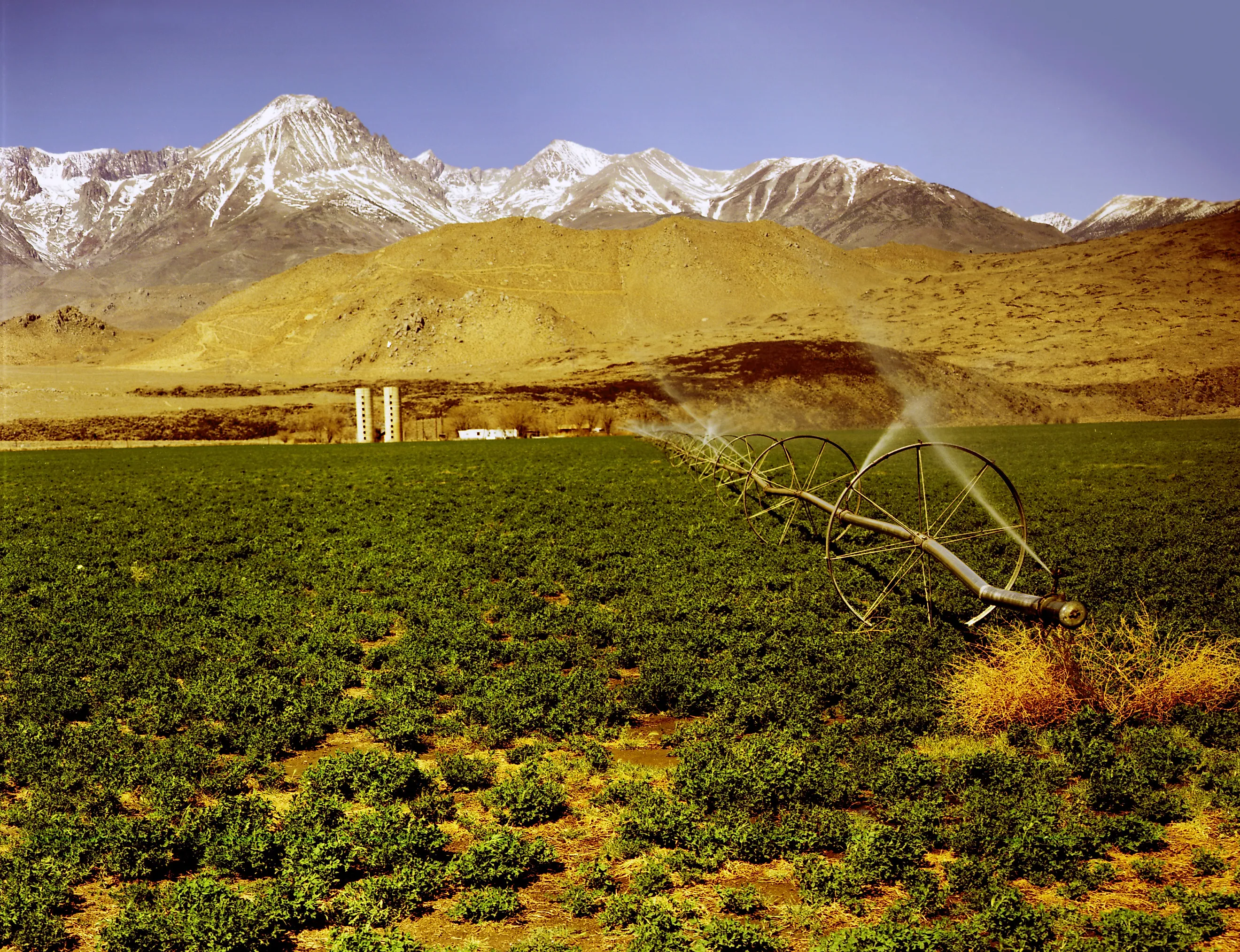
Alfalfa occupies almost a million irrigated acres in California, with around 5.0 acre-feet of water applied per acre. Multiply those together and you get the 5 million acre-feet figure directly.
Ownership is concentrated. Just 15 percent of alfalfa farms control 63 percent of the total irrigated alfalfa acreage.
The Value Per Drop Is The Real Story

Volume alone is a weak measure. What that water earns is the comparison that stings.
Almonds and pistachios returned roughly 1,200 dollars for every acre-foot of applied water in 2010, on a crop worth 4.4 billion dollars. Alfalfa, on 5.2 million acre-feet, generated about 910 million dollars, or roughly 170 dollars per acre-foot.
Rice sits between them at about 374 dollars per acre-foot. On that measure the almond is among the most productive uses of water in the valley and the crop nobody complains about is nearly the least.
Per Acre, The Ranking Flips
Change the denominator and the answer changes, which is why this question produces contradictory headlines.
Measured as acre-feet applied per acre in a growing season, California's most intensive category is irrigated pasture at 4.92. Almonds and pistachios come next at 4.49, with alfalfa just behind at 4.48 and citrus at 4.23.
So almonds are marginally thirstier per acre than alfalfa. Alfalfa wins the total because there is so much more of it.
The Data Is Older Than You Would Like

Every clean crop-by-crop comparison traces back to the same source, and it is not recent.
The 2010 figures remain the last year for which consistent and comprehensive data are available at this level of detail. Almond acreage has changed enormously since.
Anyone quoting a crop ranking for California is almost certainly quoting 2010, whether or not the article says so.
Almonds Have Closed The Gap

The honest caveat is that the gap may no longer exist.
California's roughly 1,389,000 bearing acres of almonds now draw an estimated 4.7 to 5.5 million acre-feet a year according to a September 2024 analysis, which is 14 to 16 percent of all irrigated agricultural water in the state.
That range overlaps alfalfa's 5.2 million entirely. On current estimates almonds alone may have caught alfalfa, even though the last authoritative head-to-head count still says otherwise.
Almond Acreage Is Now Falling

The trend has reversed, which complicates the usual narrative about relentless almond expansion.
California's almond acreage peaked at around 1.65 million acres in 2021 and has fallen every year since, to roughly 1.5 million. Something like 210,000 acres were pulled out of the ground between 2022 and 2024, with new plantings at a multi-year low.
Alfalfa acreage has no comparable collapse. The crop that actually uses the most water is the one attracting the least attention.
Agriculture Is Eighty Percent Of Managed Water

The scale of the farming sector is what makes any single crop matter statewide.
In an average year California agriculture irrigates 9.6 million acres using roughly 34 million acre-feet of water, out of the 43 million acre-feet diverted from surface water or pumped from the ground.
That is about 40 percent of the state's total water use, and 80 percent of the water California actively manages for human use as distinct from environmental flows.
The Comparisons Are Easy To Weaponize
Both sides of this argument reach for household comparisons, and both are technically accurate.
Almond production uses more water than all indoor water use in California, and more than all exterior landscape watering in the state. Alfalfa irrigation uses more than enough to meet the daily recommended needs of every Californian for over a year.
Neither statistic tells you anything about which use is more valuable. They are scale comparisons dressed as moral ones.
It Is Cattle Feed, Not Food

What makes alfalfa unusual among the big water users is where it ends up.
Alfalfa is forage, grown largely as feed for cattle and dairy cows rather than for direct human consumption. A substantial share of California's crop is also exported.
The embedded water in California beef has been estimated at 2.7 trillion gallons a year. The crop is a step in a longer chain rather than a product in itself.
Groundwater Hides The Cost

Not all of this water arrives through a canal where it can be counted easily.
The Westlands Water District in the southwestern San Joaquin Valley, the largest agricultural water district in the state, pumped more than 1 million acre-feet of groundwater between 2015 and 2020.
Applied-water figures capture what reaches the field. They say less about whether that water was sustainable to take.
The Short Answer

Alfalfa, at about 5.2 million acre-feet a year, is the single largest crop water user in California on the last comprehensive state accounting. It covers nearly a million acres at around 5 acre-feet each, and it returns roughly 170 dollars per acre-foot against 1,200 for almonds and pistachios.
Two caveats matter. Per acre, almonds are fractionally thirstier than alfalfa and irrigated pasture is thirstier than both. And current estimates put almonds alone at 4.7 to 5.5 million acre-feet, a range that now overlaps alfalfa's total entirely.