The Two Rivers Canada Turned Around To Send Hudson Bay's Water Into Lake Superior
Somewhere in northern Ontario there is a concrete dam on the Kenogami River whose entire job is to stop the river flowing north. It has been doing that since 1939, and it works.
A few years later Canada did the same thing to the Ogoki. Two rivers that had drained toward Hudson Bay since the ice left now drain into Lake Superior instead, and from there run the long way round through four more lakes and the St. Lawrence to the Atlantic.
The reason, broadly, was turbines at Niagara.
The Kenogami Goes South

The Long Lac diversion came first, begun in 1939 and completed in 1941. The Kenogami River is a tributary of the Albany, which empties into James Bay, and the engineering problem was that its headwaters sat tantalisingly close to a basin that drained the other way.
A control dam was built about ten miles north of Long Lake to prevent and reverse the northward flow. The water was then pushed through Long Lake and a canal cut across the continental divide into the Aguasabon River, which discharges into Lake Superior at Terrace Bay, roughly 250 kilometres east of Thunder Bay.
It moves an average of around 1,400 cubic feet per second. It also had a second job that gets left out of the hydrology papers: floating pulpwood down to the mills on the lake, which is a very Ontario reason to redirect a river.
Then The Ogoki

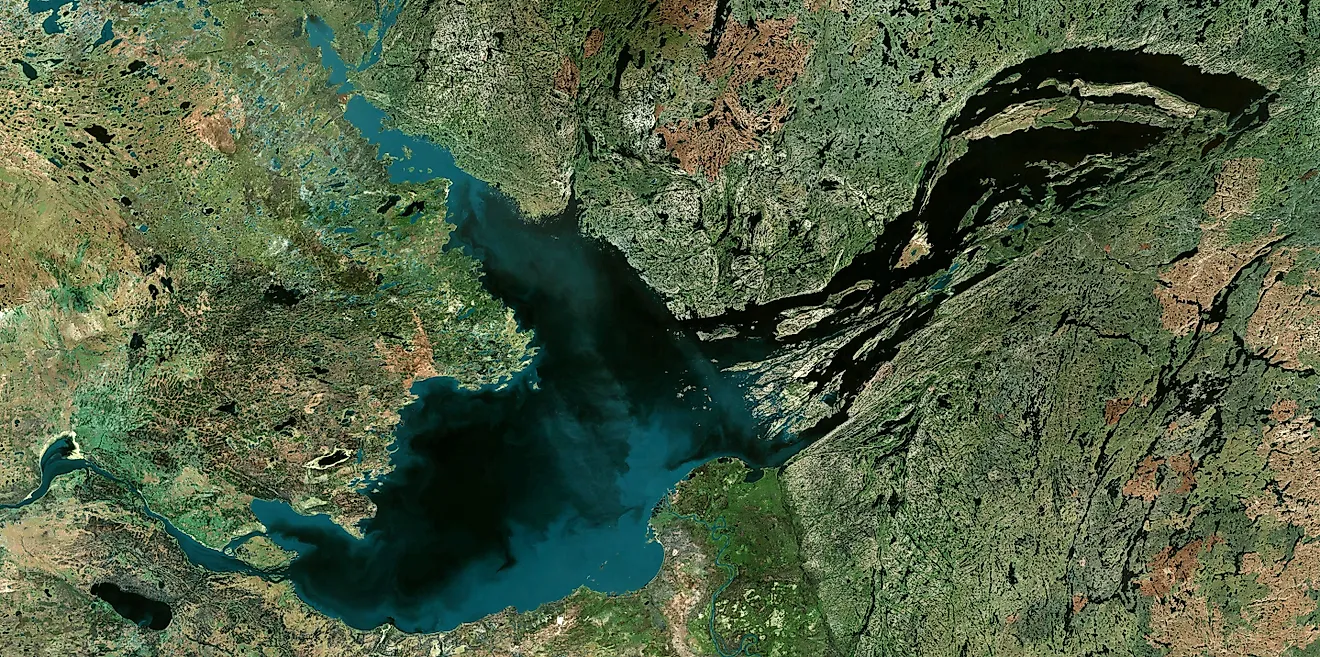
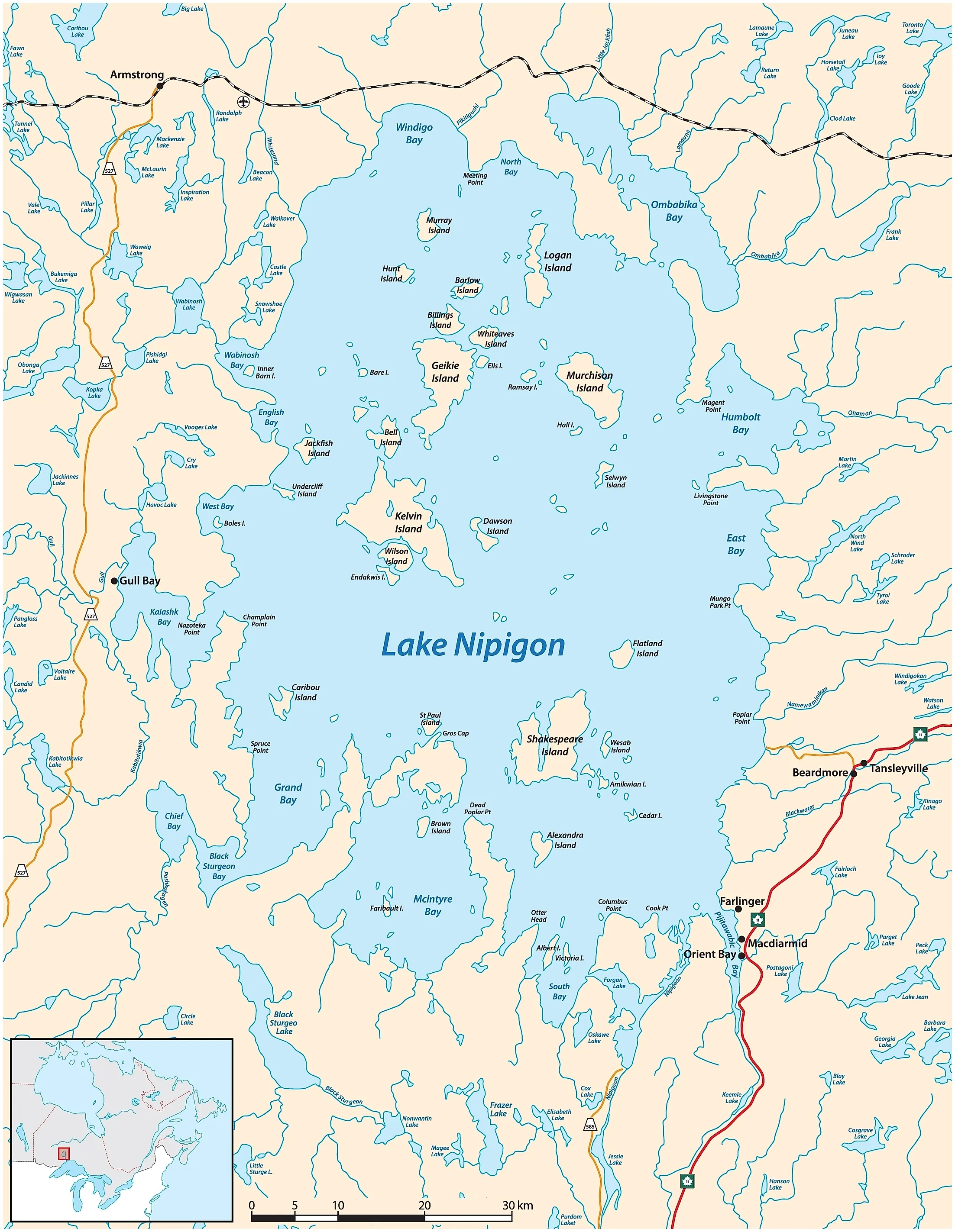
The Ogoki diversion is the bigger one. Initiated in 1940 and completed in 1943, it takes another Albany tributary and sends it into Lake Nipigon, which drains naturally into Lake Superior by way of the Nipigon River.
Average flow is around 4,000 cubic feet per second, but it has ranged from nothing at all to 16,000, because the water is stored in Lake Nipigon and released when the hydroelectric plants downstream want it. The lake is the battery.

There is a pleasing historical footnote here. The Ogoki was already part of a canoe route between the two watersheds, running from James Bay up the Albany and the Ogoki, over a portage to the Ombabika, then through Lake Nipigon and down to Lake Superior. People had been carrying boats across that divide for a very long time. Canada eventually got tired of the carry and made the water do it.
It Was Built For Niagara

Both projects went ahead during the Second World War, when demand for electricity to run war industry was effectively unlimited. More water in the Great Lakes meant more water over the generating stations at Niagara, and more power out the other end.

The arrangement was formalised between Canada and the United States through an exchange of diplomatic notes in 1940, and the 1950 Niagara River Diversion Treaty specified that water diverted at Long Lac and Ogoki would continue to be governed by those notes rather than by the treaty itself.
So the legal basis for permanently redirecting two rivers out of an ocean basin is a set of letters. Not a treaty article, not legislation. Letters, which are still the operative instrument more than eighty years later.
It Almost Exactly Cancels Chicago

Together the two diversions put roughly 5,000 to 5,400 cubic feet per second into the Great Lakes, which makes them the largest human-made diversion into the basin.
At the other end of the system, Chicago takes water out of Lake Michigan and sends it down the Illinois River toward the Gulf of Mexico, at a rate capped by Supreme Court decree at 3,200 cubic feet per second.
The International Joint Commission has noted the symmetry directly: the Ogoki and Long Lac diversions put in roughly the same amount of water the Chicago diversion takes out. Ontario has, in effect, been quietly covering Chicago's tab since 1943, using water borrowed from the Arctic watershed.
The Numbers Are Smaller Than They Sound

Adding a river's worth of water to the largest freshwater lake on earth by surface area does less than you would expect. The estimates vary by source and by method, but they cluster between about 2 and 7 centimetres of extra depth on Lake Superior, which is somewhere between an inch and three.
That is the scale of it. Two rivers permanently redirected, two reservoirs, dams across a continental divide, an international agreement, and the lake came up by roughly the height of a paperback.

Superior holds about 2,900 cubic miles of water. On that scale, almost any human intervention disappears into the rounding, which is exactly why engineers were willing to try.
Lake Nipigon Noticed
The lakes in the middle of the arrangement absorbed the real impact. The Ogoki diversion increased Lake Nipigon's watershed by almost 60 percent, raised the lake level by around 35 centimetres, and increased flows in the Nipigon River by about half.
That submerged shoreline on Nipigon and caused erosion at the north end of Long Lake. The Nipigon River is not an obscure stretch of water either: the all-tackle world record brook trout was caught there in 1915, and the river's character changed considerably once it was carrying 50 percent more water on a hydroelectric schedule.

North of the divide the effect ran the other way, with reduced flows on the Ogoki and unnatural flooding patterns where the reservoirs sit. The Albany system lost water it had carried to James Bay for ten thousand years, and the communities along it were not meaningfully consulted in 1940.
Nobody Is Undoing It

Reversing the reversal has been raised, usually during high-water years when Great Lakes shoreline property owners want the taps turned down. The International Joint Commission has looked at it. Nothing has happened.
The obstacles are not really engineering. The diversions underpin hydroelectric generation that Ontario has built around for eight decades, and the IJC has pointed out that changing the outflows now would dramatically alter ecosystems in both directions: in the Albany system to the north, and in the Long Lac and Nipigon basins to the south. Eighty years is long enough for the artificial arrangement to become the one everything is adapted to.

So it stays. Two northern rivers continue to run the wrong way, a lake near Thunder Bay continues to work as a battery, and water that set out for the Arctic finds itself going over Niagara Falls instead and out the St. Lawrence to the North Atlantic, roughly 3,000 kilometres from where it was headed.
It is the largest thing anyone has ever done to the Great Lakes, it was authorised by an exchange of letters, and almost nobody who lives on those lakes has heard of it.